Sibelius lines: Botox treatment, results, and risks
The glabellar line is caused by the activity of the muscles between the eyebrows. Botox is the primary treatment for the glabellar line because it relaxes the muscles that cause the line. Fillers can be used in select cases, but filler treatments carry more risks, especially in the forehead area.
A frown line is a vertical crease that forms between the eyebrows. Botox treatment can reduce the activity of the facial muscles, which may cause the crease to become less pronounced or smooth out.
Who is this treatment suitable for?
Botox is particularly effective for the glabellar line, which appears when you make facial expressions (dynamic wrinkle) or has already begun to show when your face is at rest. The treatment can be used preventatively or to reduce the appearance of an existing wrinkle.
How much does the treatment cost?
Botox treatment for a Sibelius wrinkle costs €270. You can find more detailed prices on the Botox Pricing page.
Why is Botox the treatment of choice for the glabellar line?
Botox is the treatment of choice for the glabellar line because it directly affects the muscle activity that causes the line.
The treatment relaxes the muscles between the eyebrows, which reduces constant furrowing of the skin and may cause the lines to soften or smooth out over time.
How does Botox help with the glabellar line? The glabellar line forms when the muscles between the eyebrows repeatedly contract during facial expressions. In particular , the corrugator supercilii and procerus muscles pull the eyebrows together and crease the skin between them.
Botulinum toxin relaxes these muscles, allowing the skin to smooth out and vertical lines to fade.
For more information on Botox treatments, see my Botox guide.
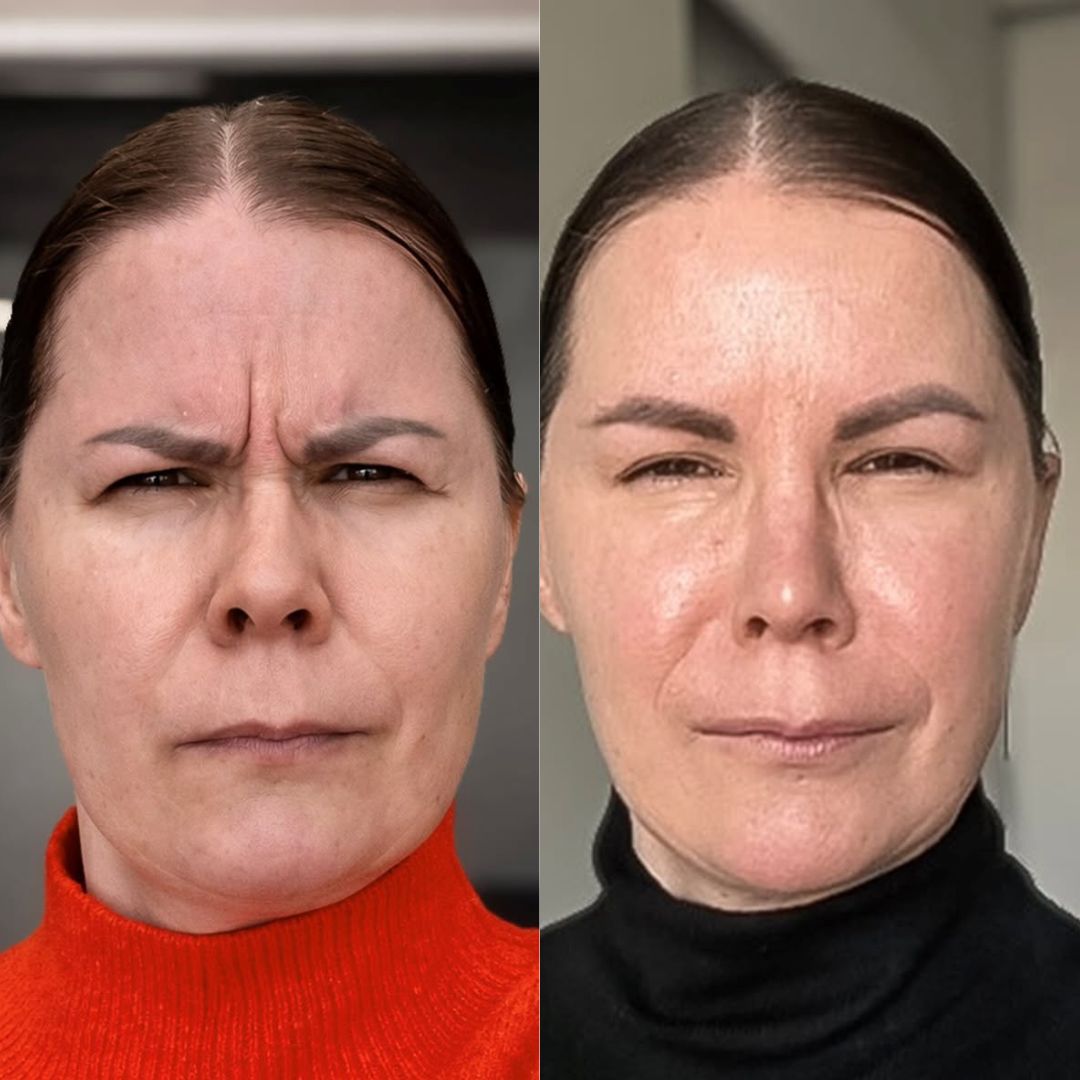
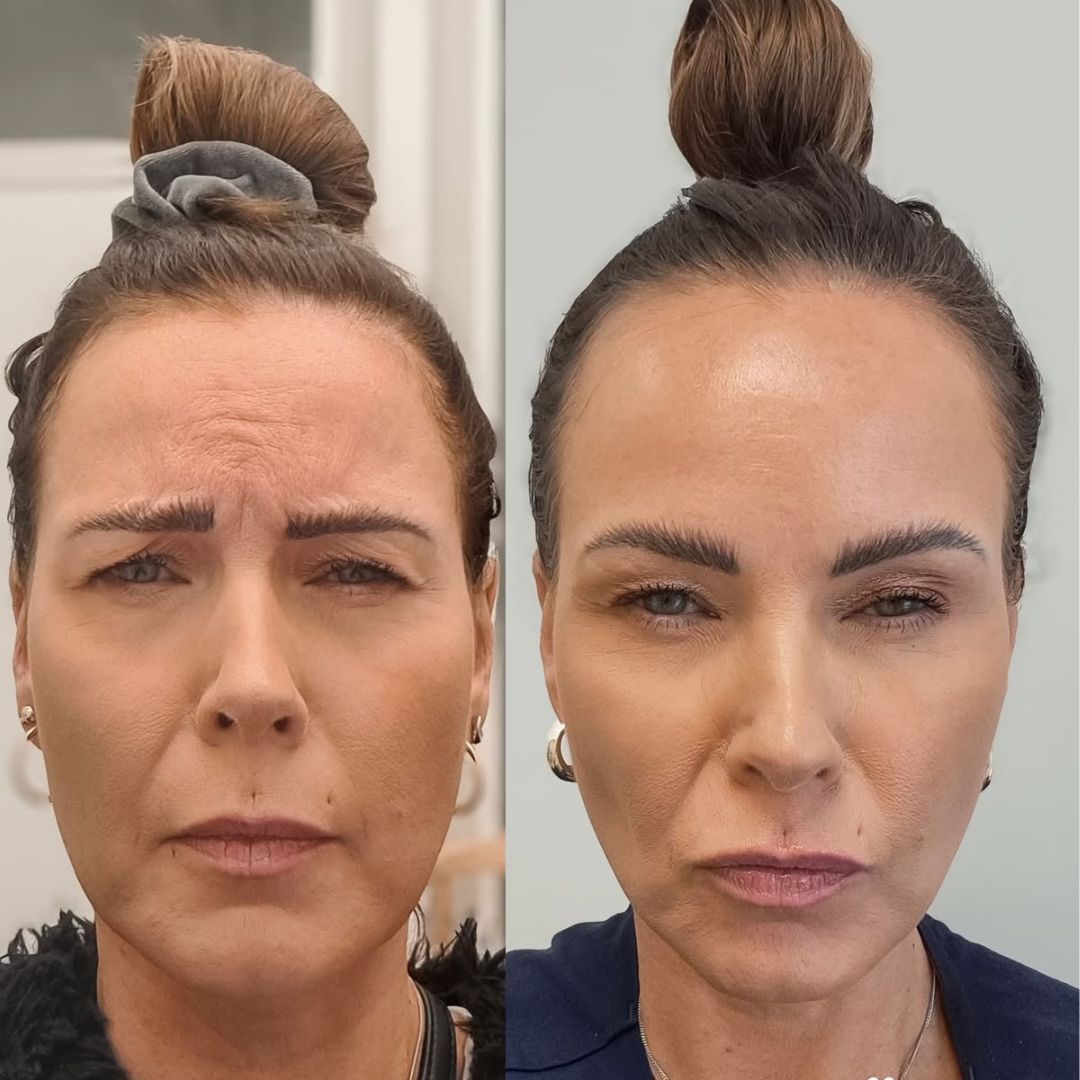
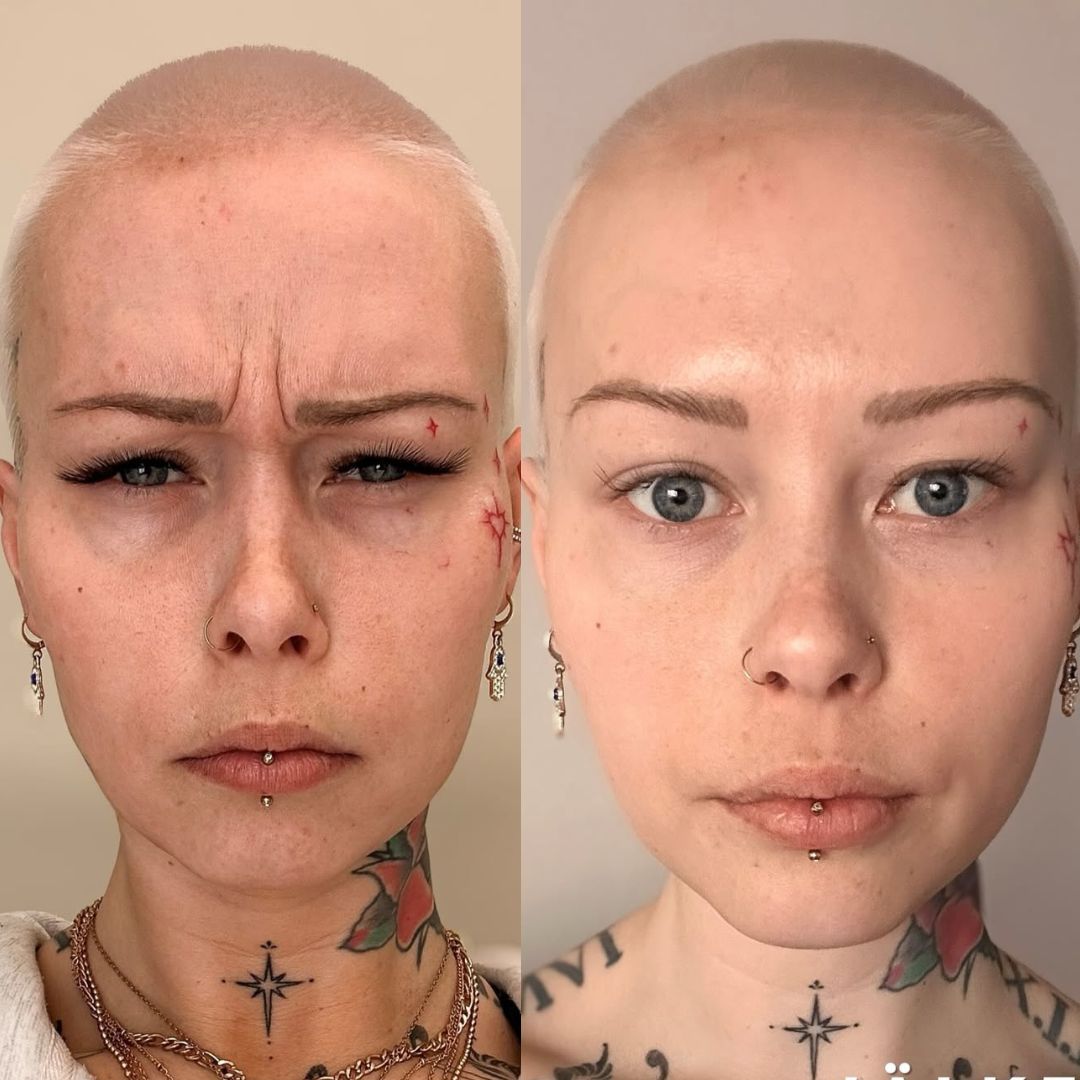
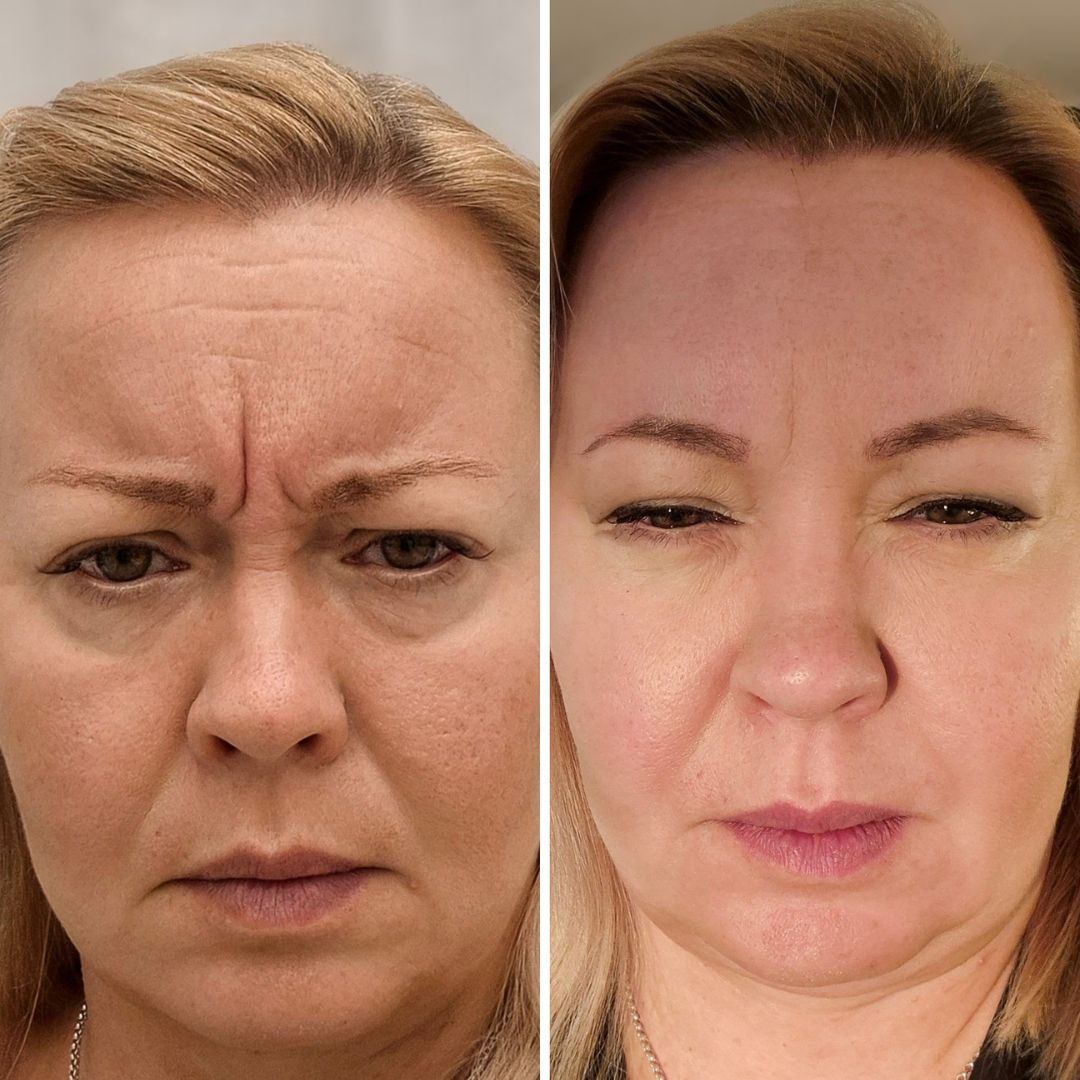
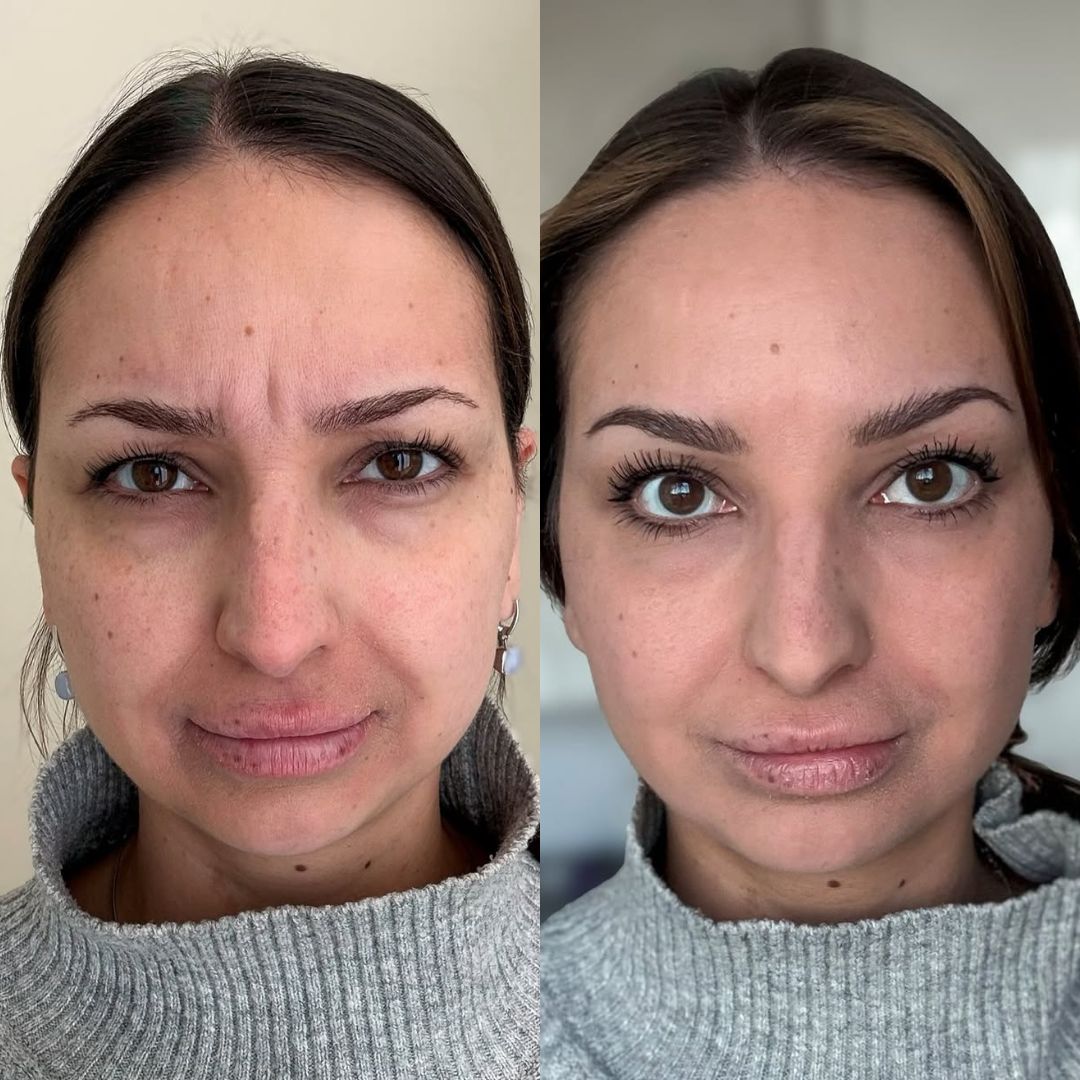
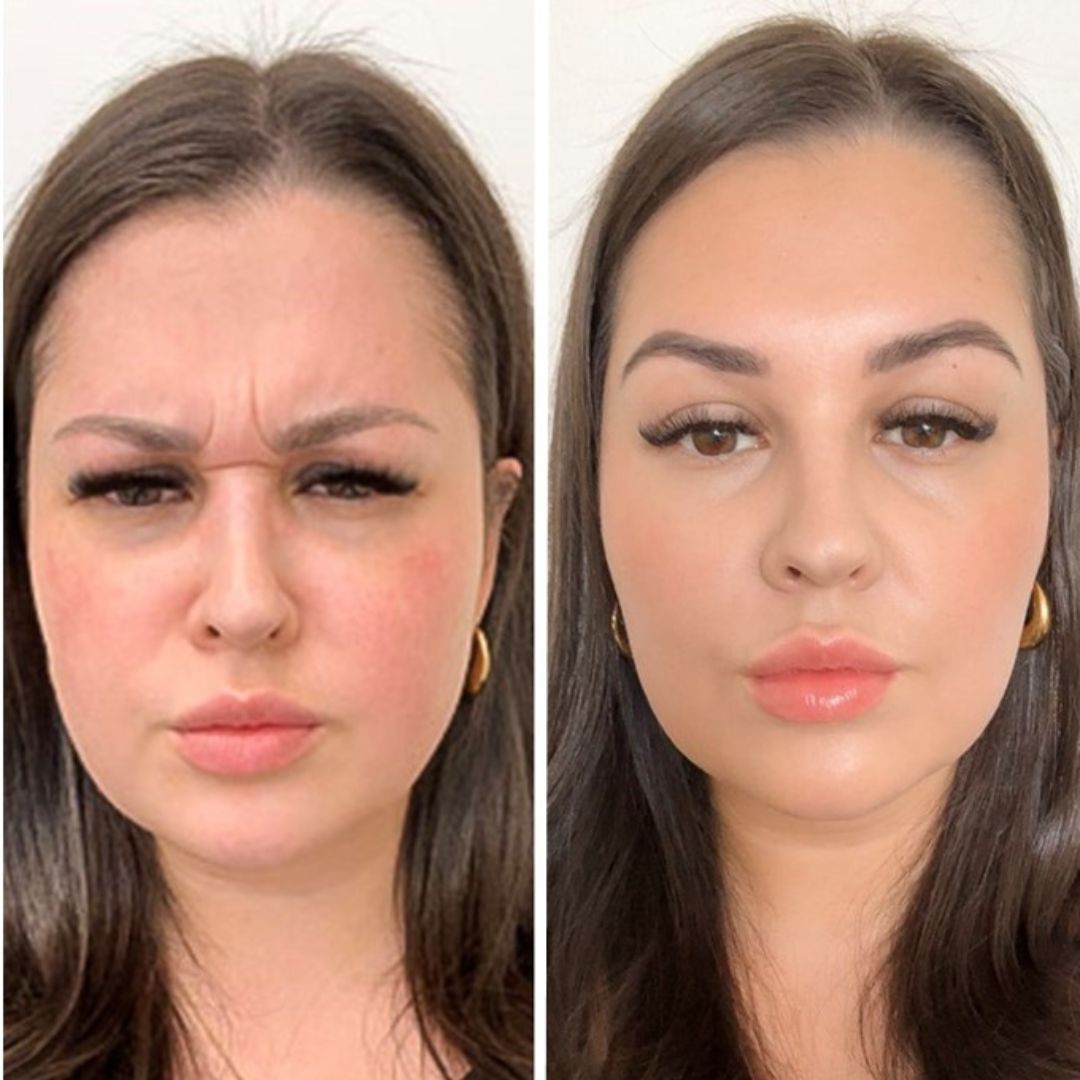
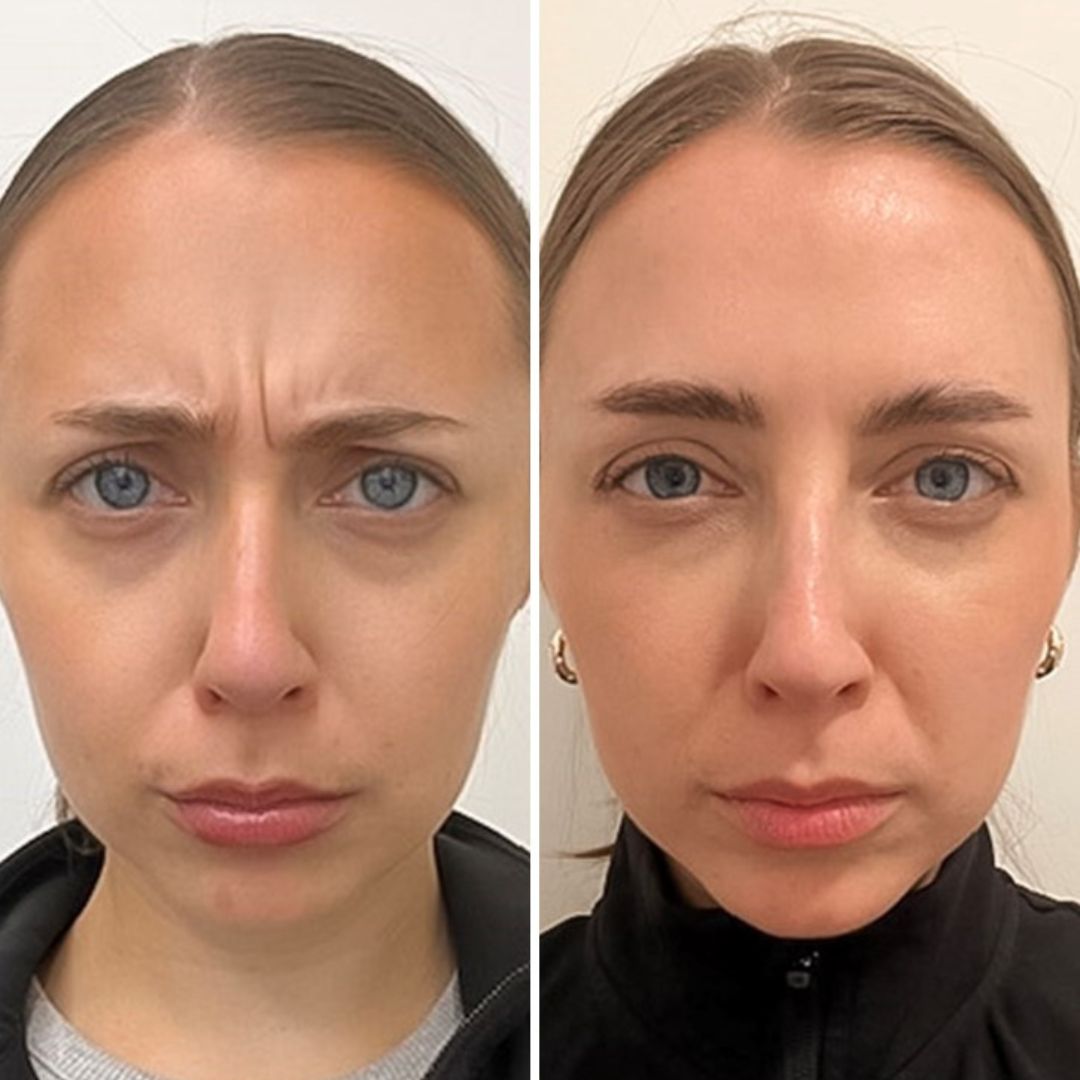
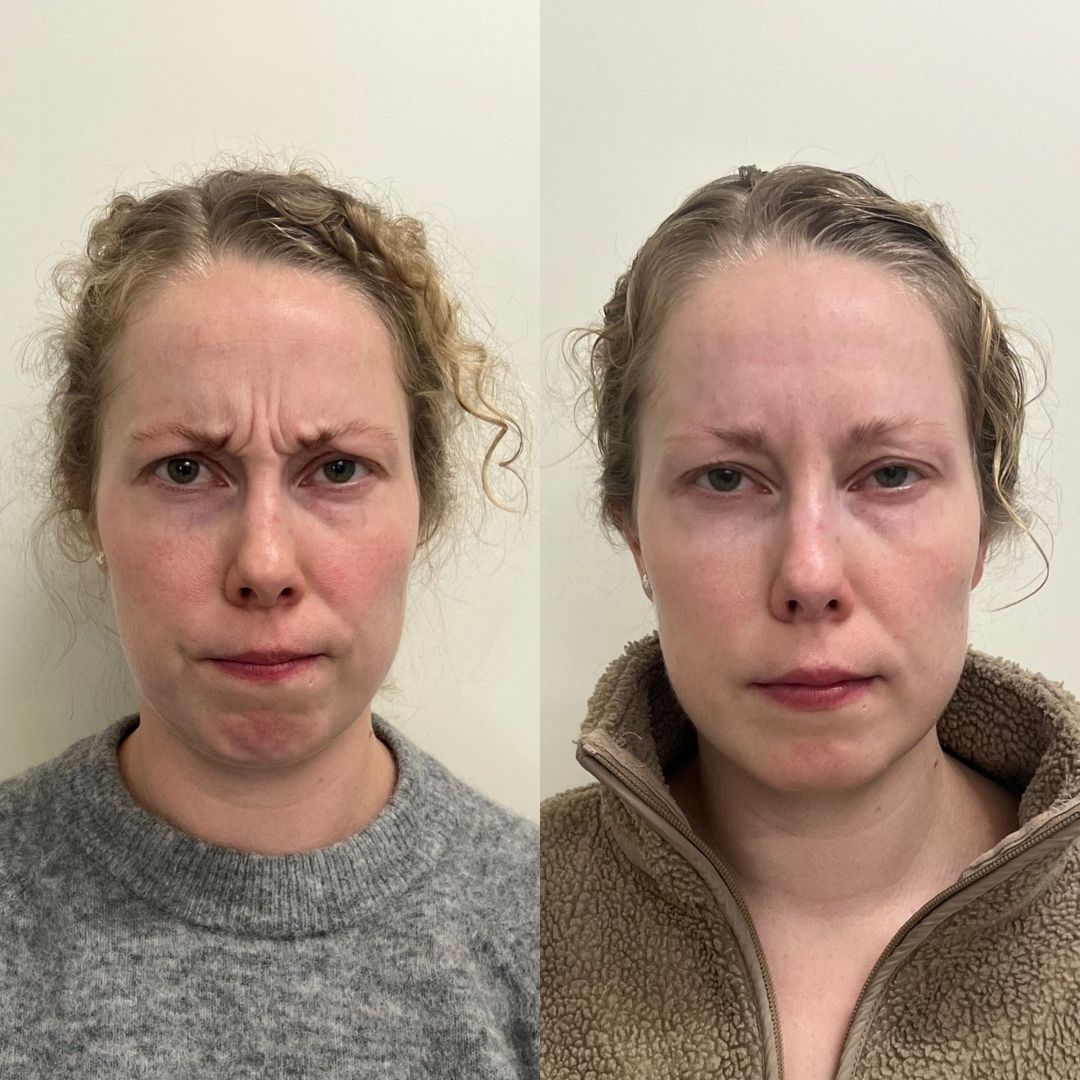
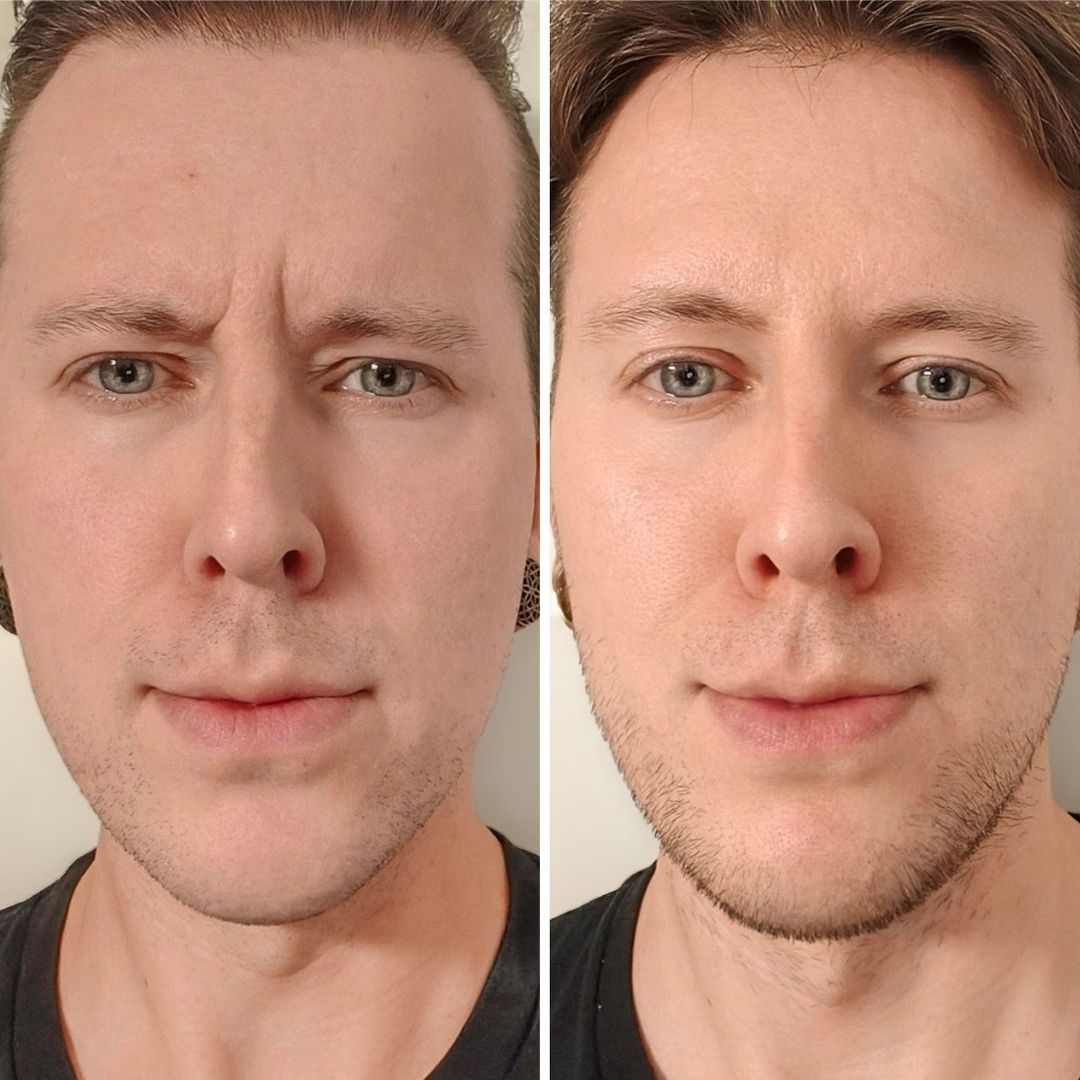
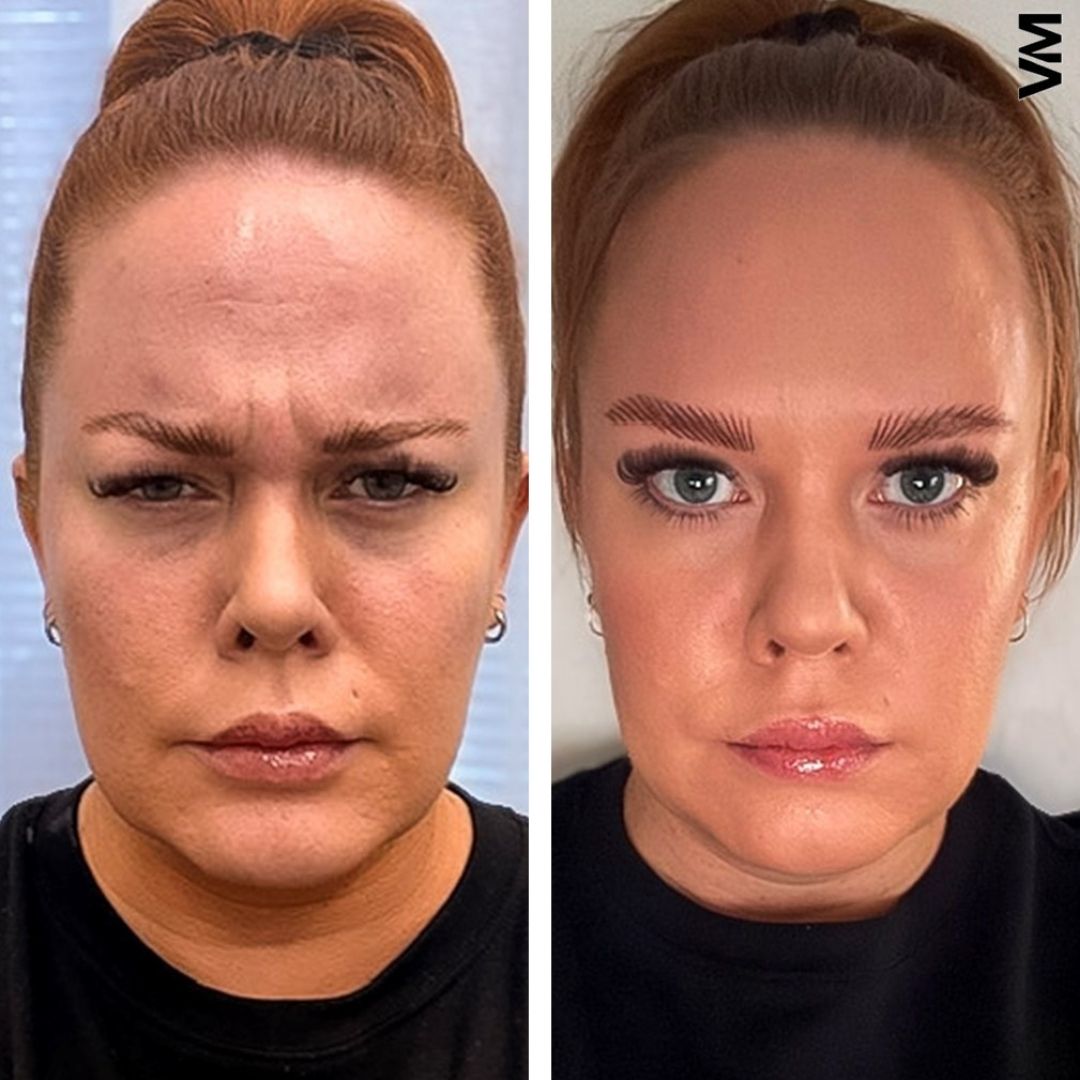
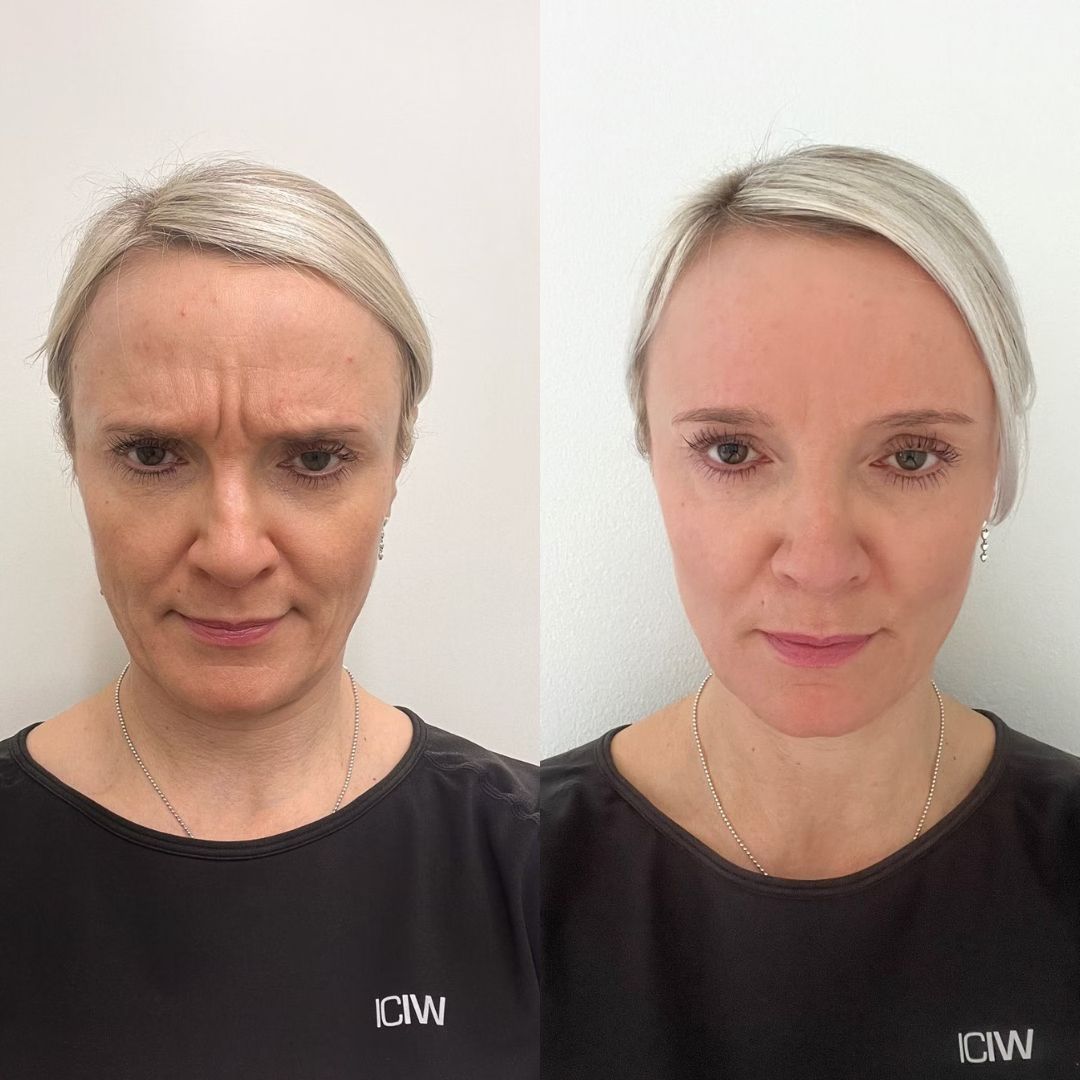
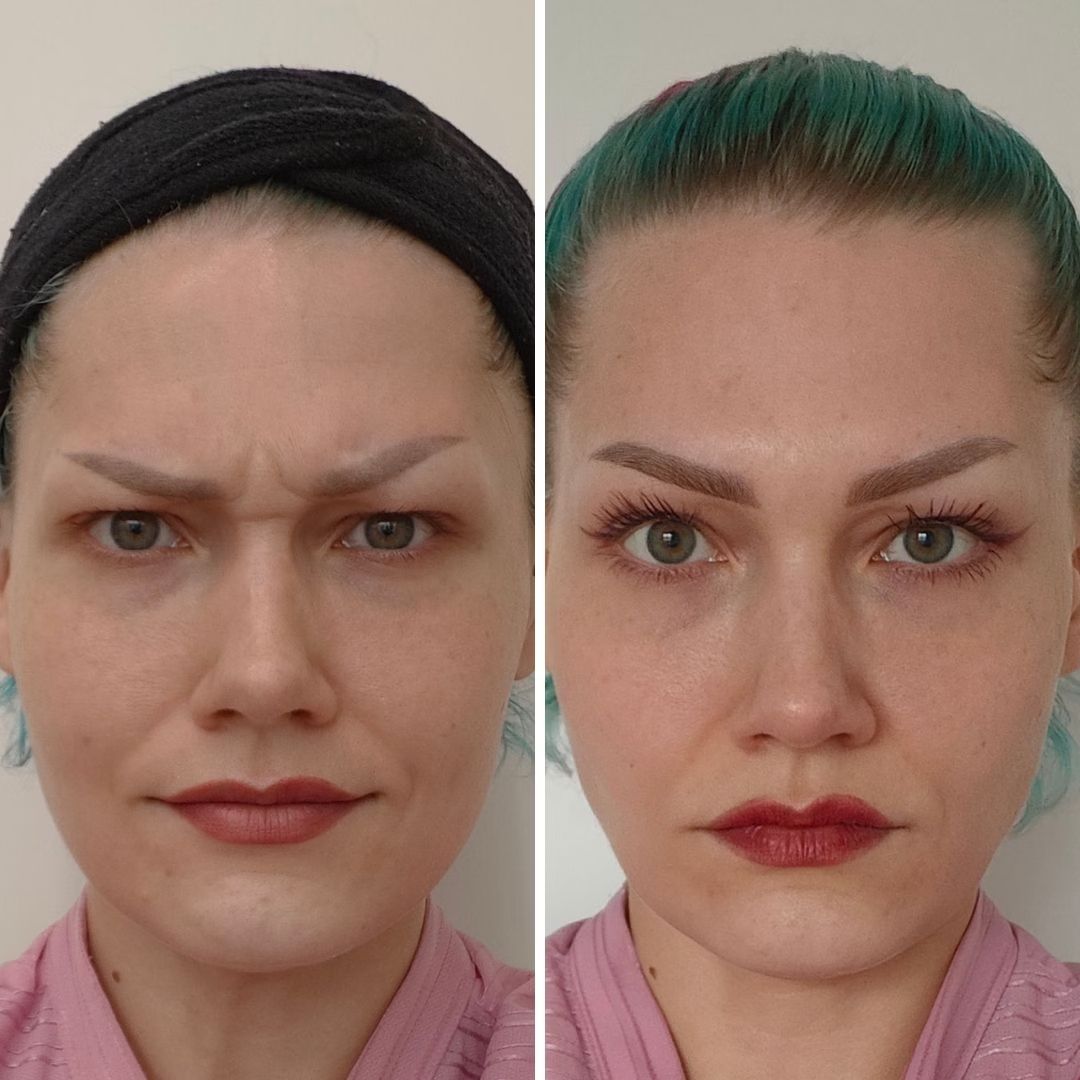
Botox for the glabellar lines: before and after
After Botox treatment, the vertical lines between the eyebrows may smooth out as the activity of the muscles that cause wrinkles decreases.
The change depends on whether it is a dynamic line that is visible only when the face is in motion, or a deepened static wrinkle that is visible even at rest.
- dynamic patterns may disappear almost entirely
- Deeper lines become less pronounced, but they don't always disappear completely
Ville Männistö, oral and maxillofacial surgeon
Specializes in facial anatomy and disorders of the masticatory muscles, and is certified in botulinum toxin treatments. Clinical work focuses on the safe use of botulinum toxin for both aesthetic and medical indications.
I am a member of a research group whose study on botulinum toxin treatments for masticatory muscles has been published in an international peer-reviewed scientific journal. Check out the study in the PubMed database.
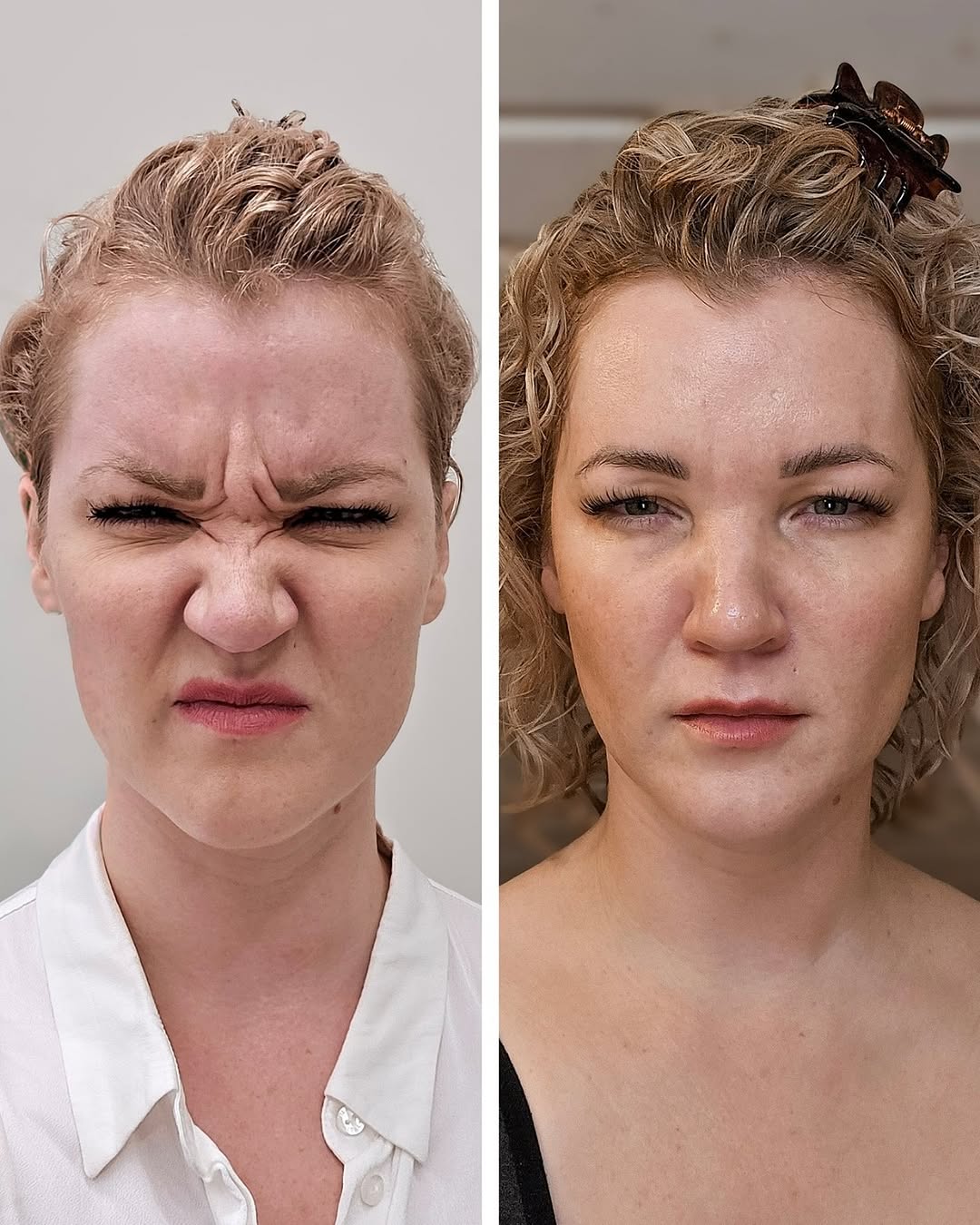
How is Botox injected into the glabellar lines?
Botox is injected between the eyebrows into the muscles that cause wrinkles.
The exact location of the injection sites is determined on a case-by-case basis. The treatment takes into account, for example,
- the position of the eyebrows
- muscle strength
- the patient's facial expressions
- facial symmetry
The correct injection technique is important for preserving the natural movement of the eyebrows.
A Surgeon's Perspective
In Botox treatment for the area between the eyebrows, it is important to accurately identify the muscles that cause wrinkles.
Training as an oral and maxillofacial surgeon provides a solid foundation for understanding the anatomy of the facial muscles and nerves, which helps in safely planning injection sites.
How does Botox affect the Sibelius wrinkle?

The glabellar line is primarily caused by the action of the corrugator superciliiand procerus muscles . When these muscles pull the eyebrows together and downward, a vertical crease forms between the eyebrows.
The vertical lines between the eyebrows are often caused by the repeated contraction of facial muscles. Botulinum toxin treatment can temporarily reduce the activity of these muscles, allowing the skin to relax and the lines to smooth out.
The Sibelius wrinkle is primarily caused by the action of two muscles, as follows:
- The corrugator muscle pulls the eyebrows toward the midline
- procerus pulls the eyebrows downward and wrinkles the skin between the eyebrows
Contraction of these muscles causes the skin to wrinkle vertically between the eyebrows. Botox treatment reduces muscle activity, which can smooth out the lines.

Hyaluronic Acid & Nasolabial Folds – Before and After
Sibelius lines can be treated with hyaluronic acid-based fillers, but the forehead is a high-risk area for filler treatments. Filler treatments in high-risk areas should always be performed by an experienced professional.

Simply put: The filler fills in the lines from below. Botox treatment relaxes the muscles that cause the Sibelius lines.
In practice: Treatment almost always begins with Botox, which targets the root cause of the lines. Fillers are used only when necessary as a complementary treatment.
Medically speaking: a hyaluronic acid-based filler increases tissue volume in the dermis and subcutaneous tissue. This can reduce static wrinkles but does not affect the activity of the corrugator and procerus muscles.
Why is the Sibelius Ridge considered a high-risk area?
The forehead contains more major blood vessels than usual. If filler enters a blood vessel, it can lead to serious complications, such as tissue damage or, in extremely rare cases, vision problems.
- There are blood vessels in the area near the injection site
- Complications can be serious, although rare
- Filler treatment for a Sibelius fold requires a thorough understanding of anatomy
Important note:
Filler treatment for the glabellar lines is not the primary treatment option; rather, it is used judiciously in cases where botulinum toxin treatment alone is insufficient.
Frequently Asked Questions: Sibelius Wrinkle and Filler
Can you put filler in a Sibelius wrinkle?
Yes, but only in certain cases. In most cases, treatment begins with Botox, which targets the root cause of the wrinkle—namely, muscle movement.
Which is better: Botox or hyaluronic acid?
Botox treatment is the primary option because it targets the muscle activity that causes wrinkles. Fillers are used as a complementary treatment when necessary.
Is filler treatment for the nasolabial fold safe?
An experienced professional trained in hyaluronidase can perform the procedure safely, but filler treatments in this area undoubtedly carry more risks than botulinum toxin treatments.
How long does Botox for a frown line last?
The effects of Botox treatment for a frown line usually last about 3–5 months.
Factors affecting the duration of the effect include, for example
- muscle strength
- dose of botulinum toxin used
- individual metabolism
- frequency of treatments
For more information on how long the effects last, see the article: How long does Botox last?
Is Botox for the glabellar lines safe?
Botox is one of the most extensively studied aesthetic treatment methods. When performed correctly, the treatment is safe and well-tolerated.
Any side effects are usually mild and temporary.
For more information on potential risks, see the article:
Botox side effects
Are you considering Botox treatment for your frown lines?
You can submit your photo for a free consultation. I’ll let you know if Botox treatment could help with the wrinkles between your eyebrows.
Botox Treatments – More Information and Related Pages
If you’d like to learn more about Botox treatments, you can find additional information in the following articles: