
Botox in Espoo
Aesthetic and Medical Botox Treatments in Tapiola (Espoo):
doctor, surgeon, nurse
Botox at a Glance
Botox is often one of the most effective treatments for preventing, reducing, and softening wrinkles, fine lines, and other visible signs of ageing. It works by temporarily relaxing the targeted muscles responsible for these lines.
As the muscles responsible for wrinkling the skin or pulling facial features downwards relax, the visible signs of ageing caused by these muscle movements become less noticeable.
The results of Botox treatment last 3–6 months. If you wish to maintain the results, the treatment can be repeated two or three times a year, for example. Our Botox treatment packages are particularly cost-effective in such cases .
Aesthetic Botox treatment areas

- Frown lines
- horizontal lines on the forehead
- the crow's feet at the corners of the eyes
- eyelid lift
- lower ribs (surface ribs, jelly roll)
- horizontal lines on the nose (bunny lines)
- nose tip lift
- narrowing of the nostrils
- Botox lip flip
- gummy smile
- vertical lines on the upper lip (smoker's lines)
- Lifting the corners of the mouth (DAO Botox)
- Lower face slimming (masseter Botox)
- tip of the jaw (leveling, slight extension)
- Jawline contouring (Nefertiti lift)
- Vertical neck lines (platysma Botox)
- horizontal wrinkles on the neck
- Botox facelift
- Microbotox / Botox Facial
- Preventive baby botox

Medical Botox Treatment at a Glance
Many people primarily associate Botox treatments with aesthetics. However, botulinum toxin is first and foremost a prescription medication, and it is also used to treat various health conditions. Medical uses for Botox include, for example, bruxism, migraines, and excessive sweating. Medical botulinum toxin treatments are almost always accessed through a free consultation.

Bruxism is primarily treated with a bite splint. When a splint is not sufficient, the problem can be addressed with Botox. A possible side effect of botulinum toxin treatment for the masticatory muscles is that the lower face may become slightly narrower.
Excessive sweating is another common but often overlooked condition. Botox treatment can help when sweating in the armpits, palms, or on the face causes problems in daily life.
New medical applications for botulinum toxin are constantly being discovered. Ville Männistö has used botulinum toxin to treat conditions such as white finger, among others.
Prices for Botox Treatments
Helsinki, Espoo, Vantaa, Pori
| Botox / micro-Botox / baby Botox | Price |
|---|---|
| Cosmetic Botox with Another Treatment | €100 per area |
| 1 Area | 270 € |
| 2 Areas | 360 € |
| 3 Areas | 450 € |
| 4 Areas | 530 € |
| 5 Areas | 590 € |
| Full-face Botox (~200 Botox units) | 790 € |
| 3 Botox Treatments (3 Areas per Treatment), Valid for 2 Years | 1200 € |
| 3 Botox Treatments (4 Areas per Treatment), Valid for 2 Years | 1400 € |
| 3 Botox Treatments (5 Areas per Treatment), Valid for 2 Years | 1500 € |
| 3 full-face Botox treatments, valid for 2 years | 1900 € |
One Botox treatment area is one of the following:
- Frown lines
- horizontal lines on the forehead
- the crow's feet at the corners of the eyes
- Rhinoplasty (nose tip lift and narrowing of the nostrils)
- bunny lines
- Botox lip flip
- gummy smile
- lifting the corners of the mouth
- vertical lines on the upper lip (“smoker’s lines”)
- Trimming the tip of the chin / slight lengthening
| Other cosmetic Botox treatments | Price |
|---|---|
| Masseter Botox (V-shape Botox) | 500 € |
| Nefertiti Lift | 500 € |
| Barbie Botox / Traptox | 420 € |
| Botox facelift | 1000 € |
| Medical Botox treatments | Price |
|---|---|
| Doctor's appointment (prescription) | 90 € |
| Injection fee, includes procedure, does not include medication | 290 € |
| Botulinum toxin treatment for bruxism, including procedure and medication (Dysport 300U) | 490 € |
| Botulinum toxin treatment for bruxism, including procedure and medication (Botox 100U) | 520 € |
| Botulinum toxin treatment for migraines, including procedure and medication (Botox 200U) | 690 € |
| Botulinum toxin treatment for excessive sweating, including procedure and medication (Botox 200U) | 690 € |
| Cosmetic Botox at the Same Appointment | €100 per area |
- Payment methods on site:
- Cash
- Card
- Contactless payment
- Payment methods in the online store:
- Online bank transfer
- Payment card
- Mobile payment
- Klarna Invoice and Installment Plan
- Walley Invoice and Installment Payment
Flexible Payment Options for Botox Treatment
If you'd like more flexibility when paying for your Botox treatment, you can purchase the treatment through our online store. We accept bank transfers, credit and debit cards, and mobile payments. You can also choose to pay by invoice or in installments through Klarna or Walley.
Before and after
Botox in Espoo
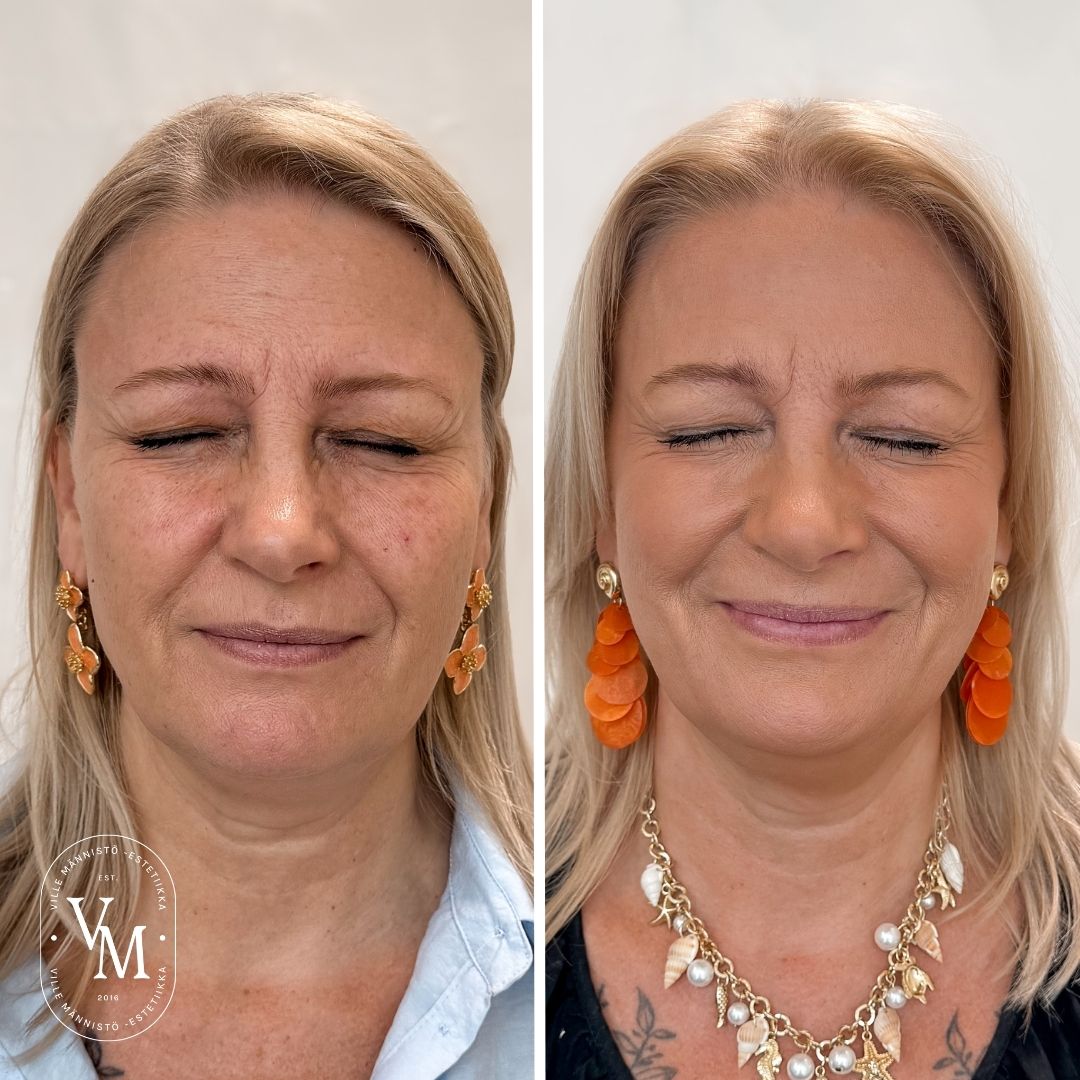
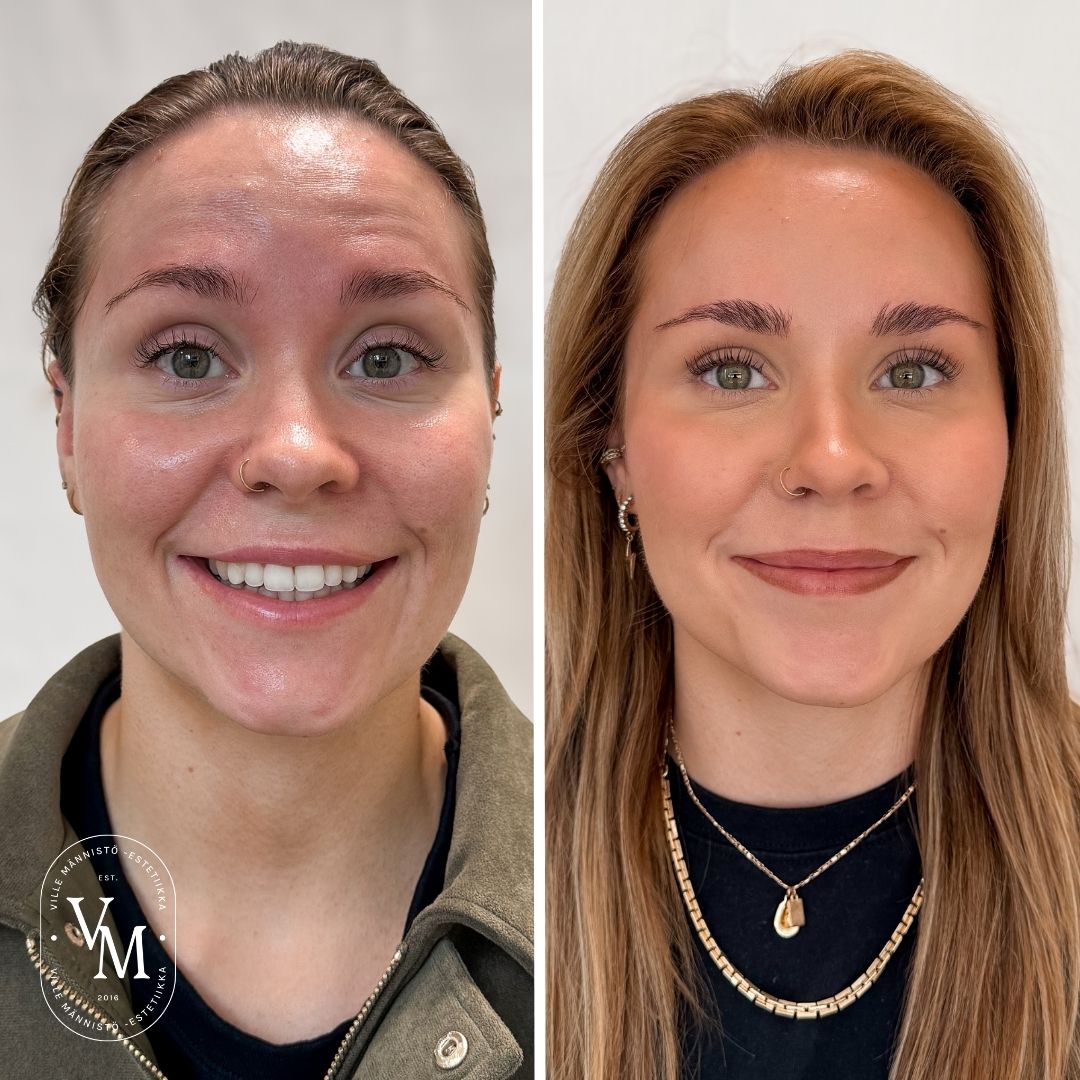
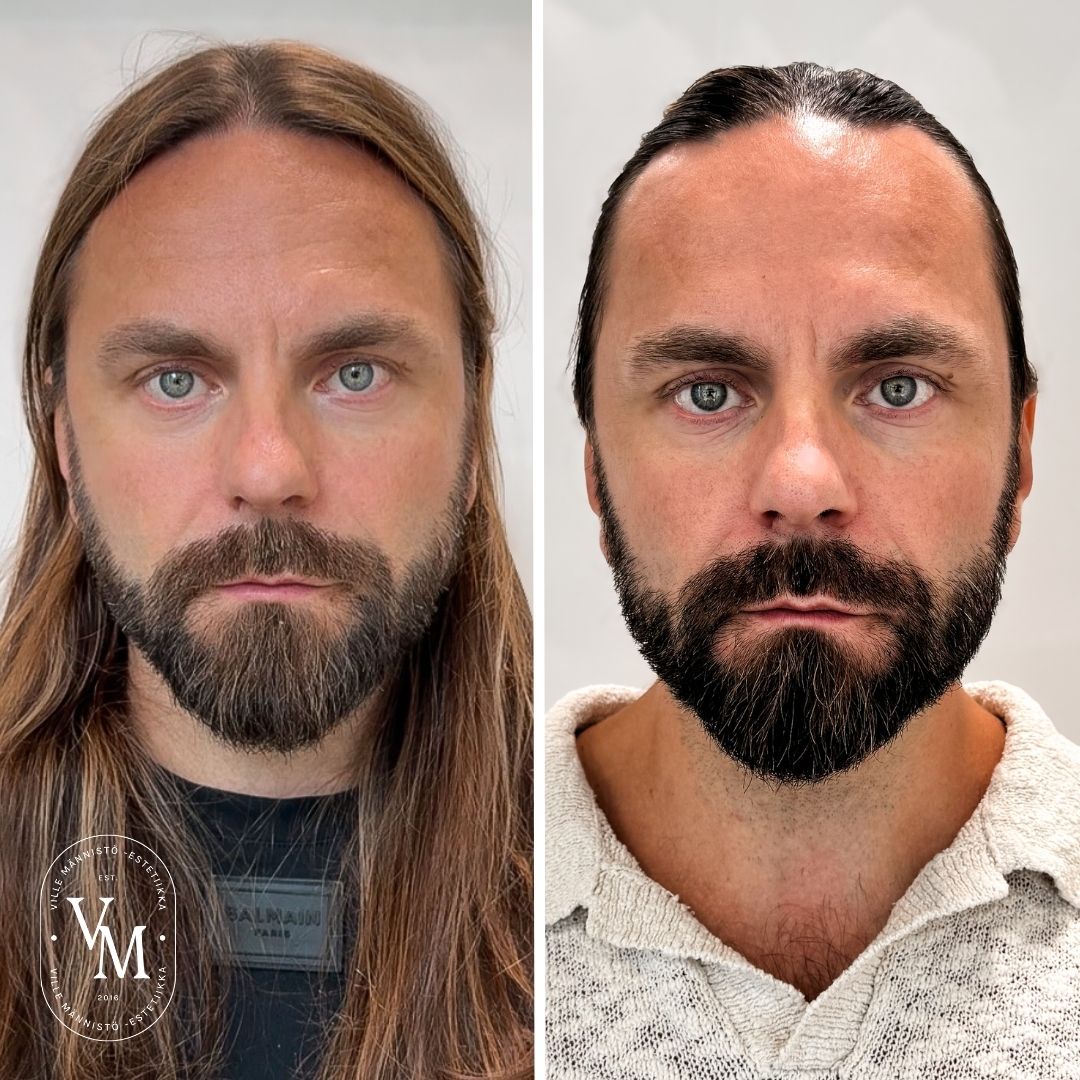
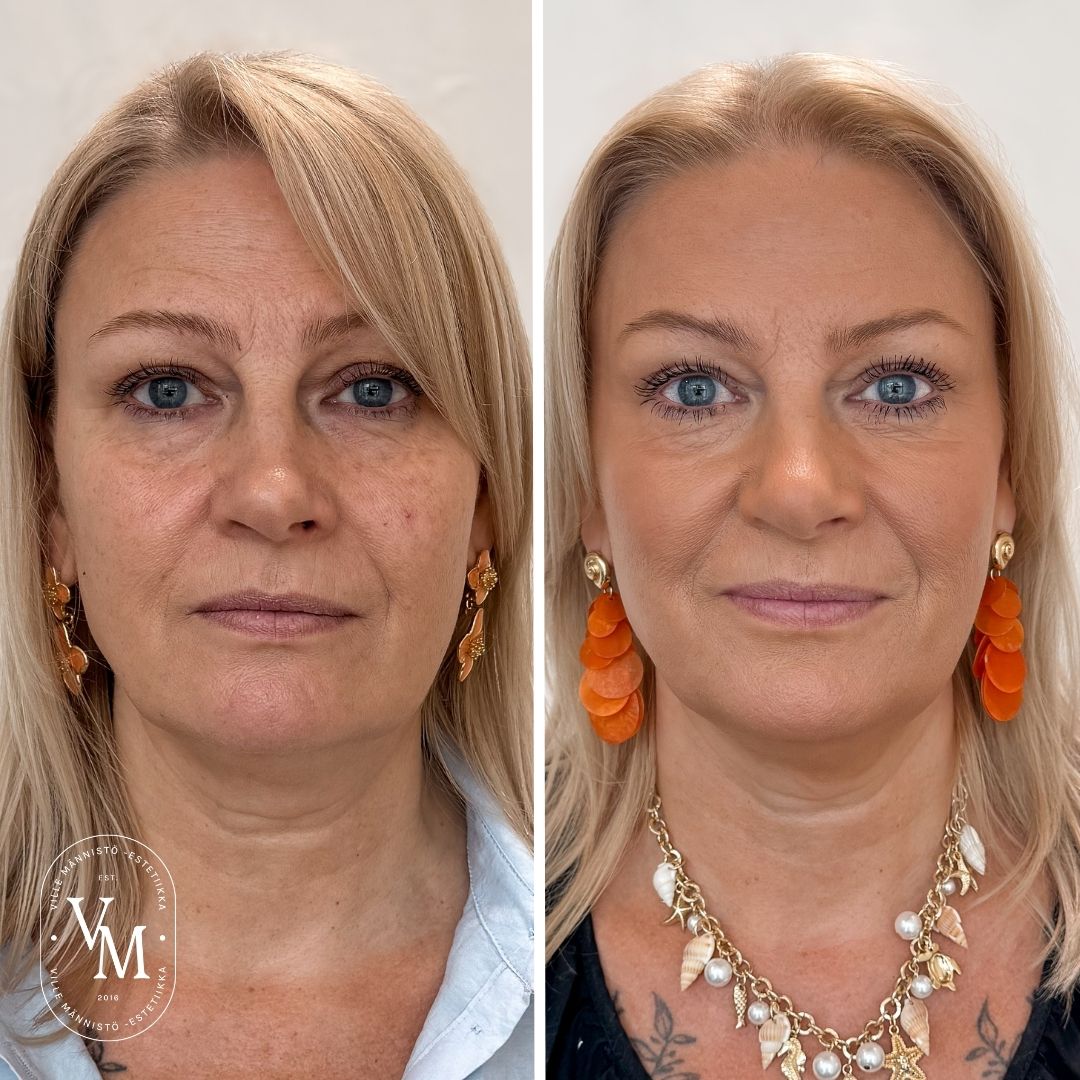
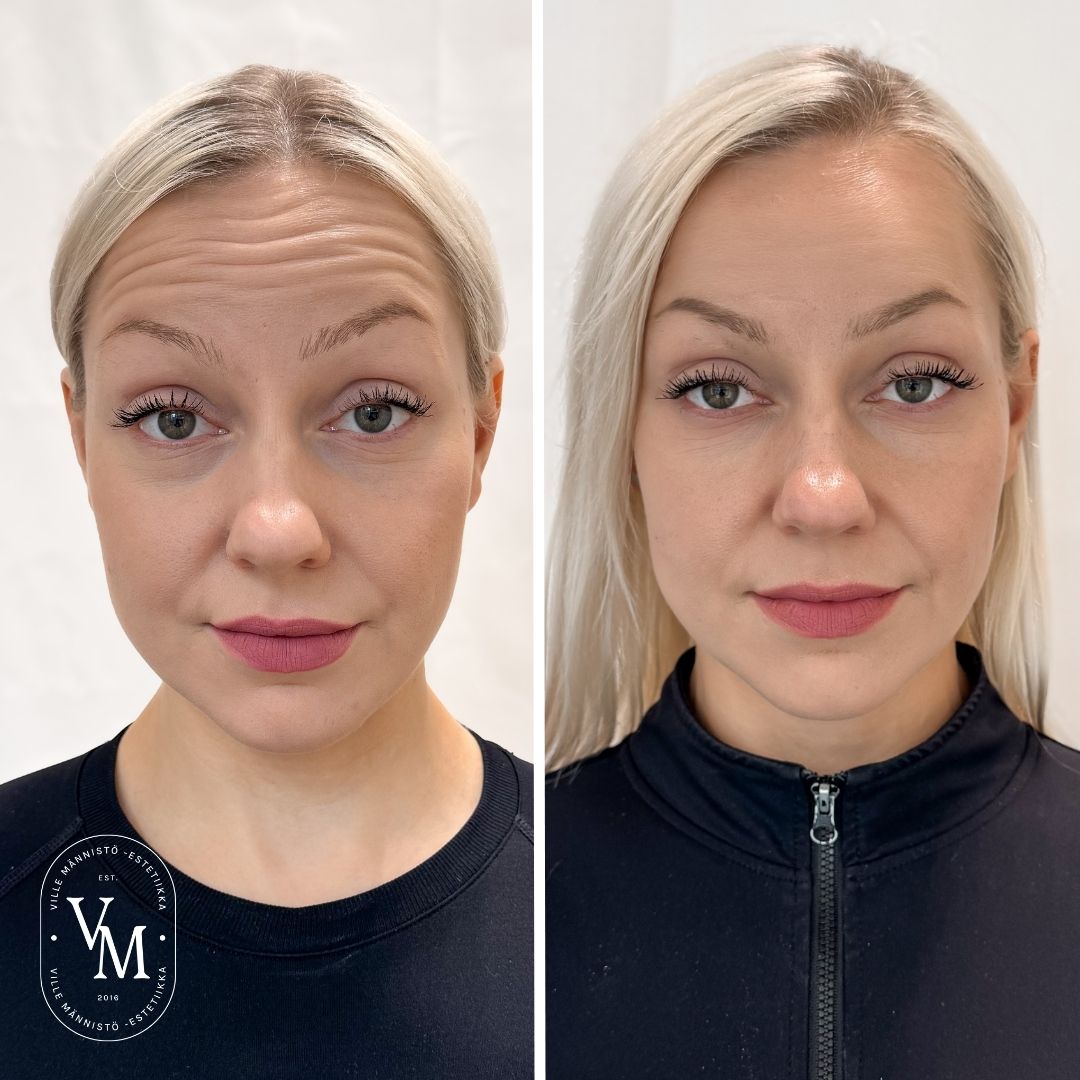
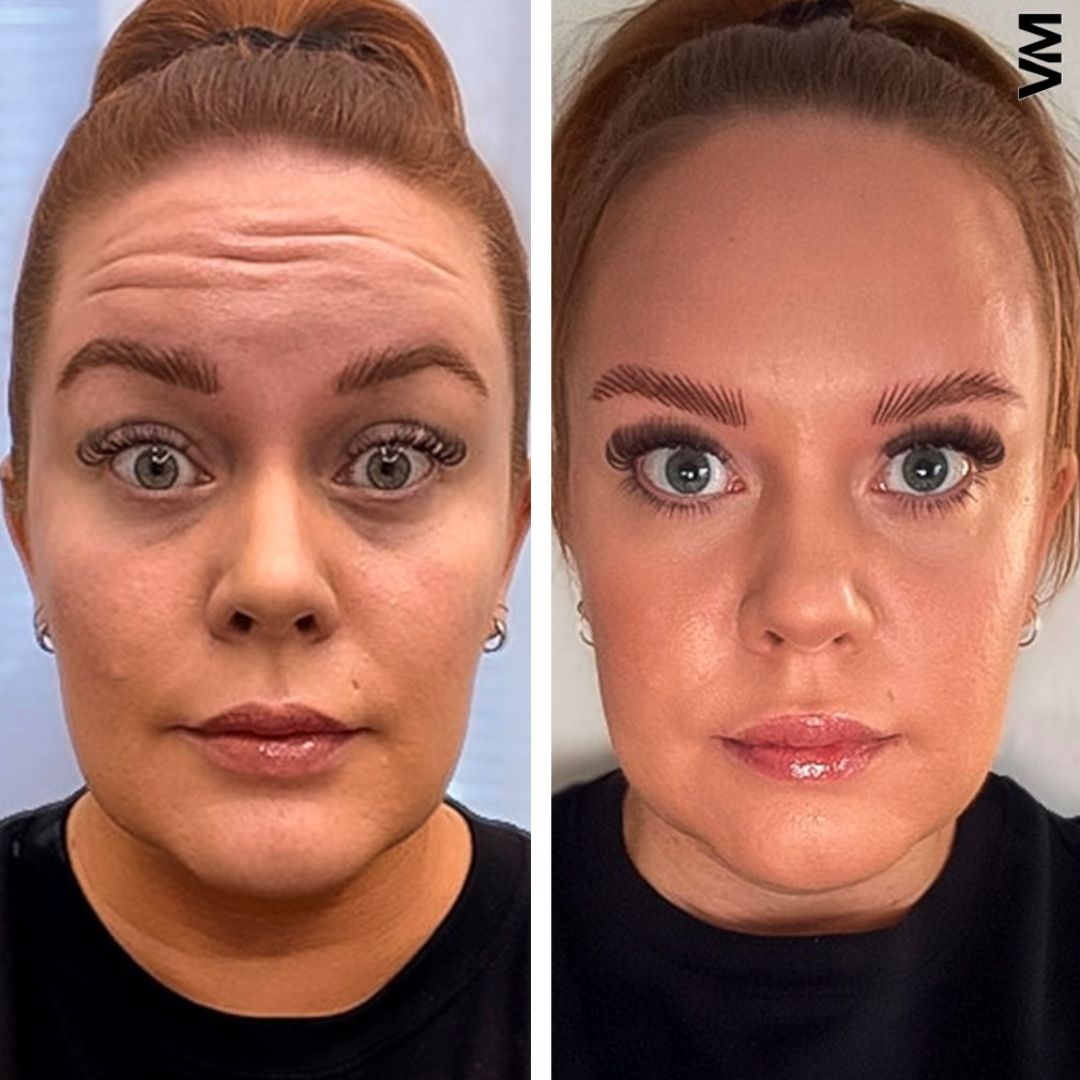
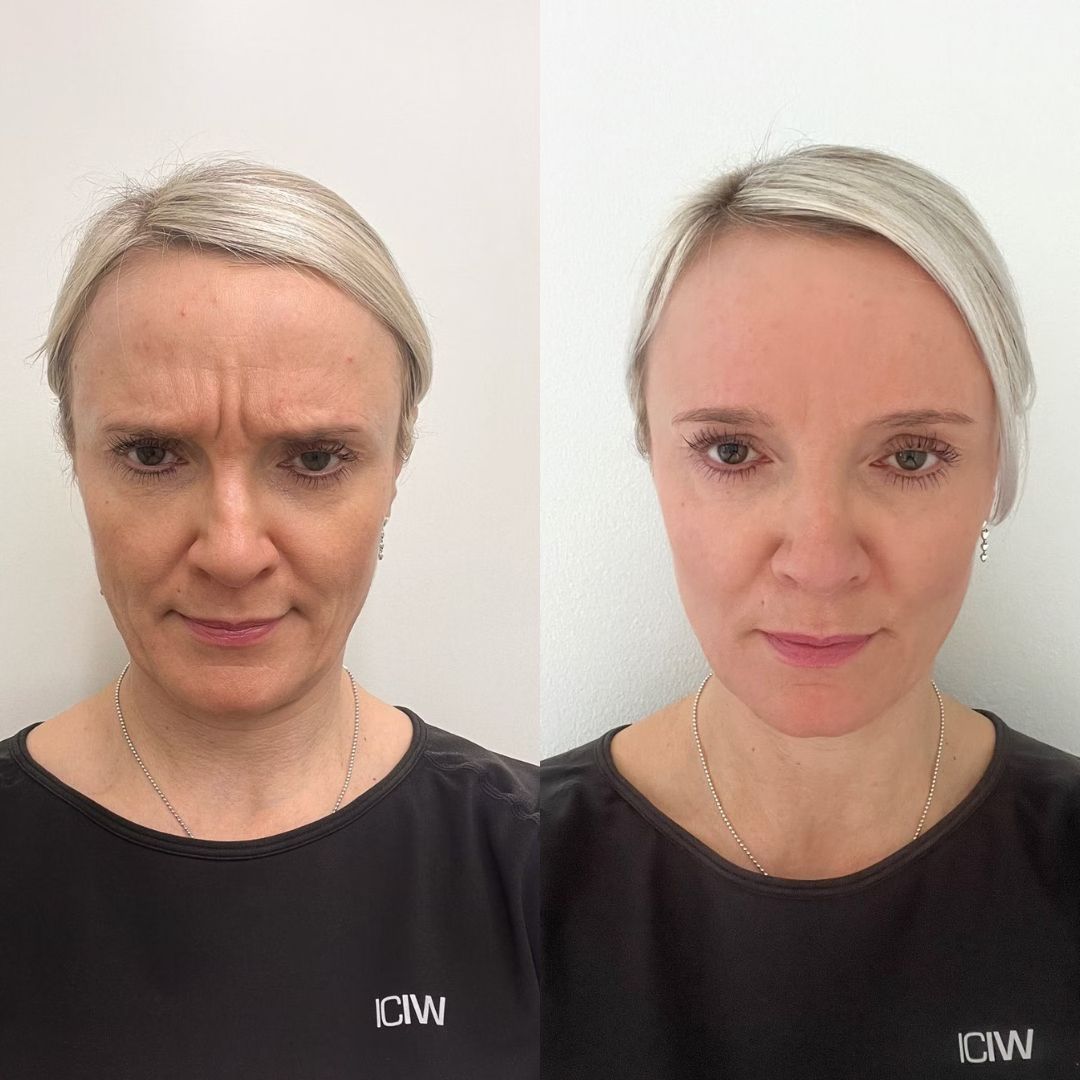
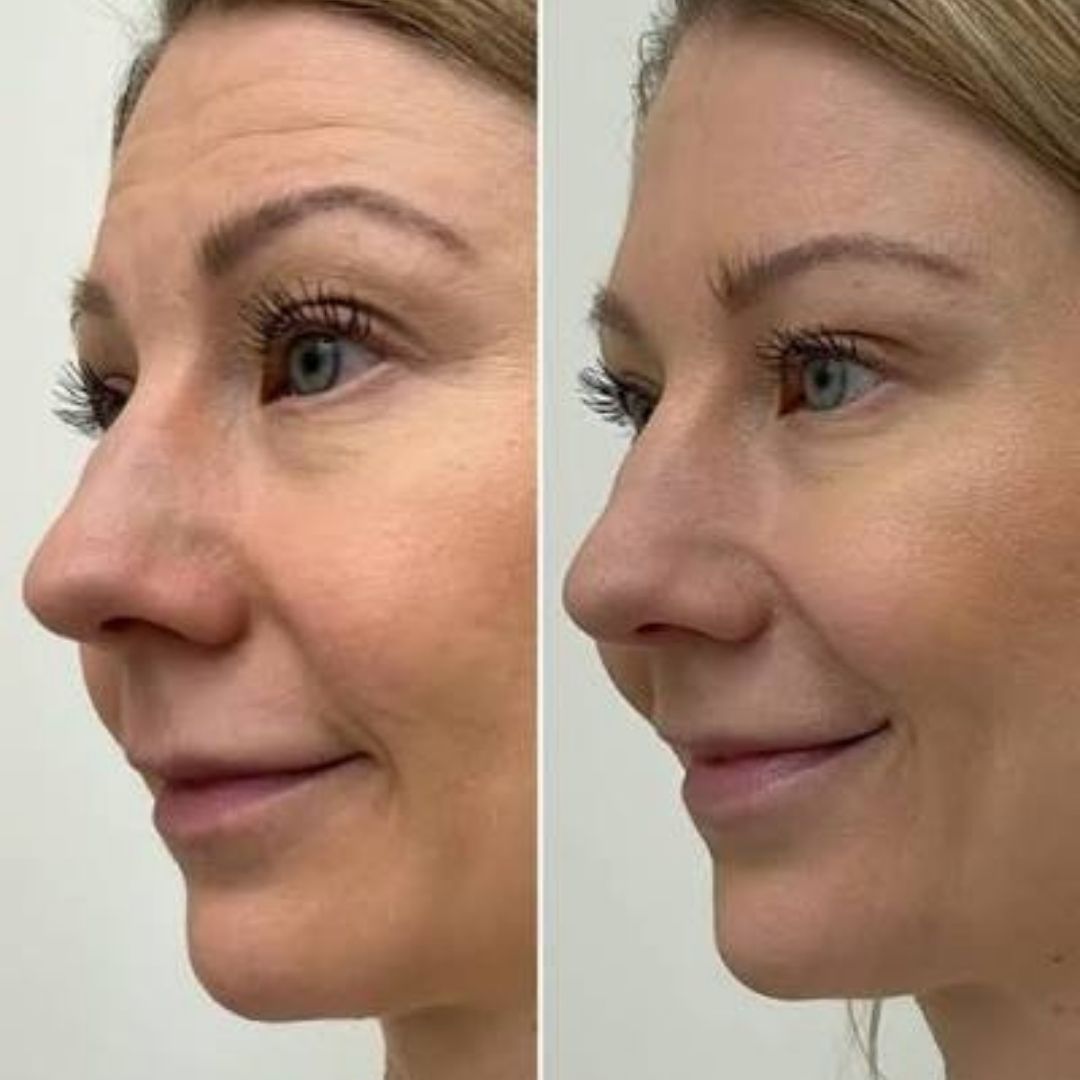
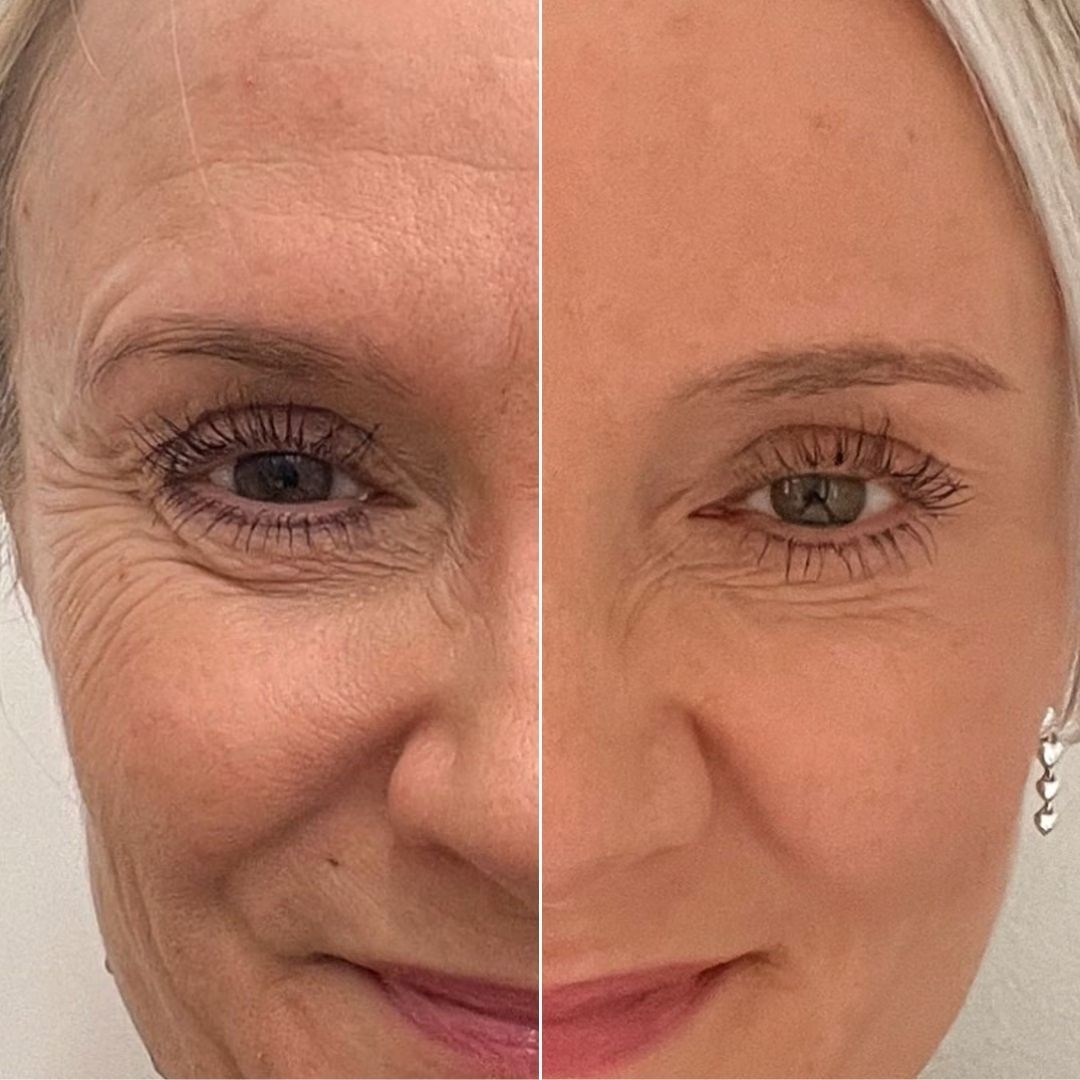
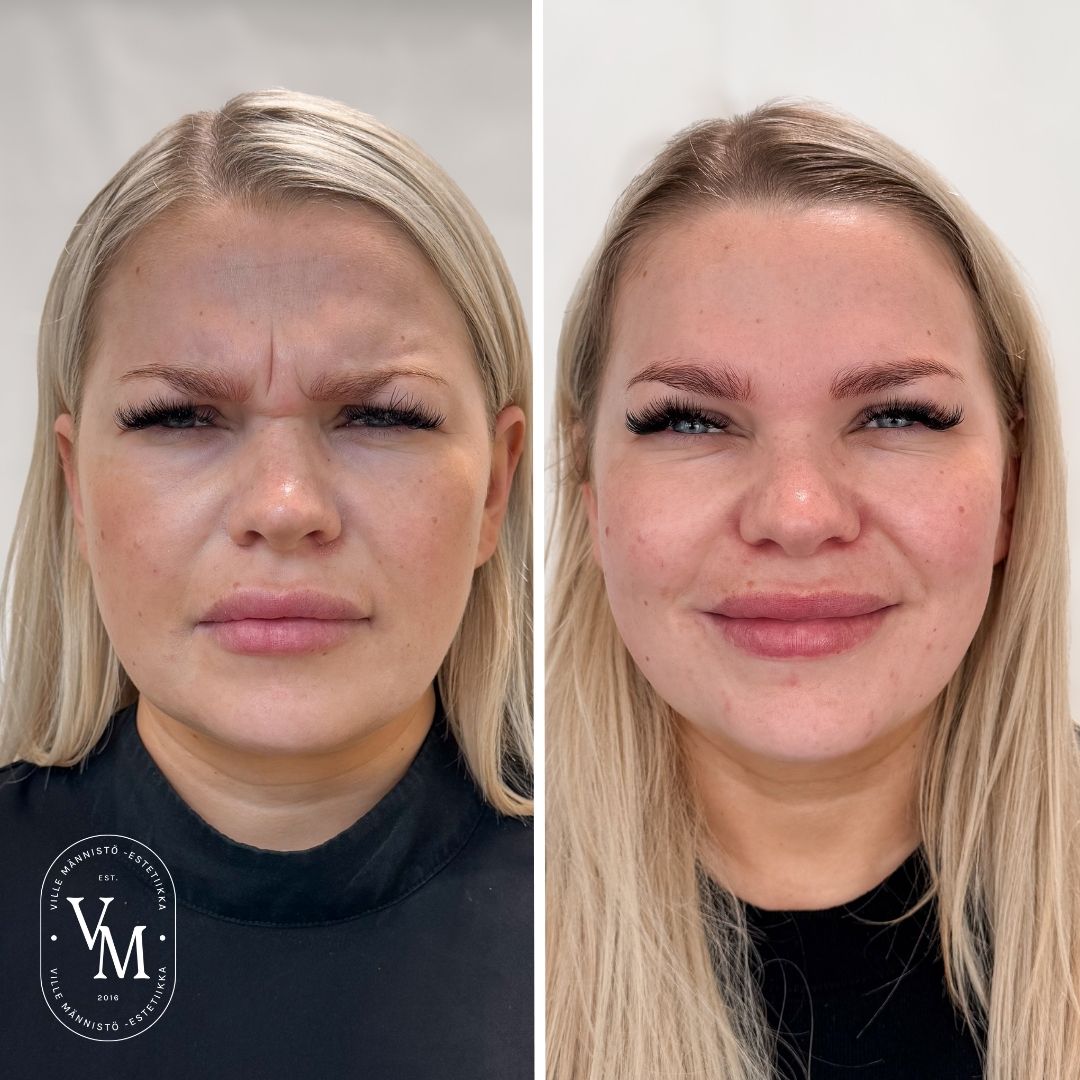
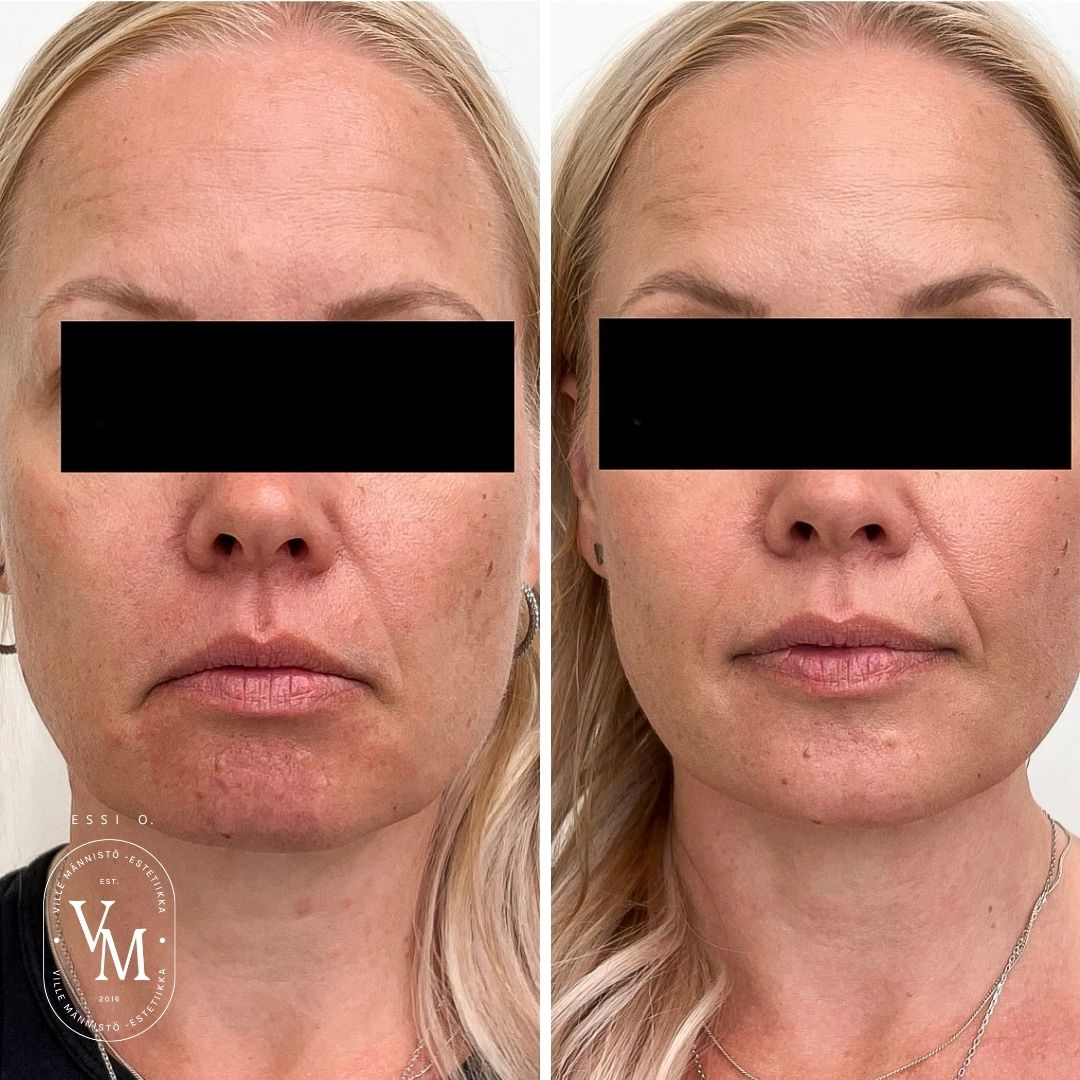
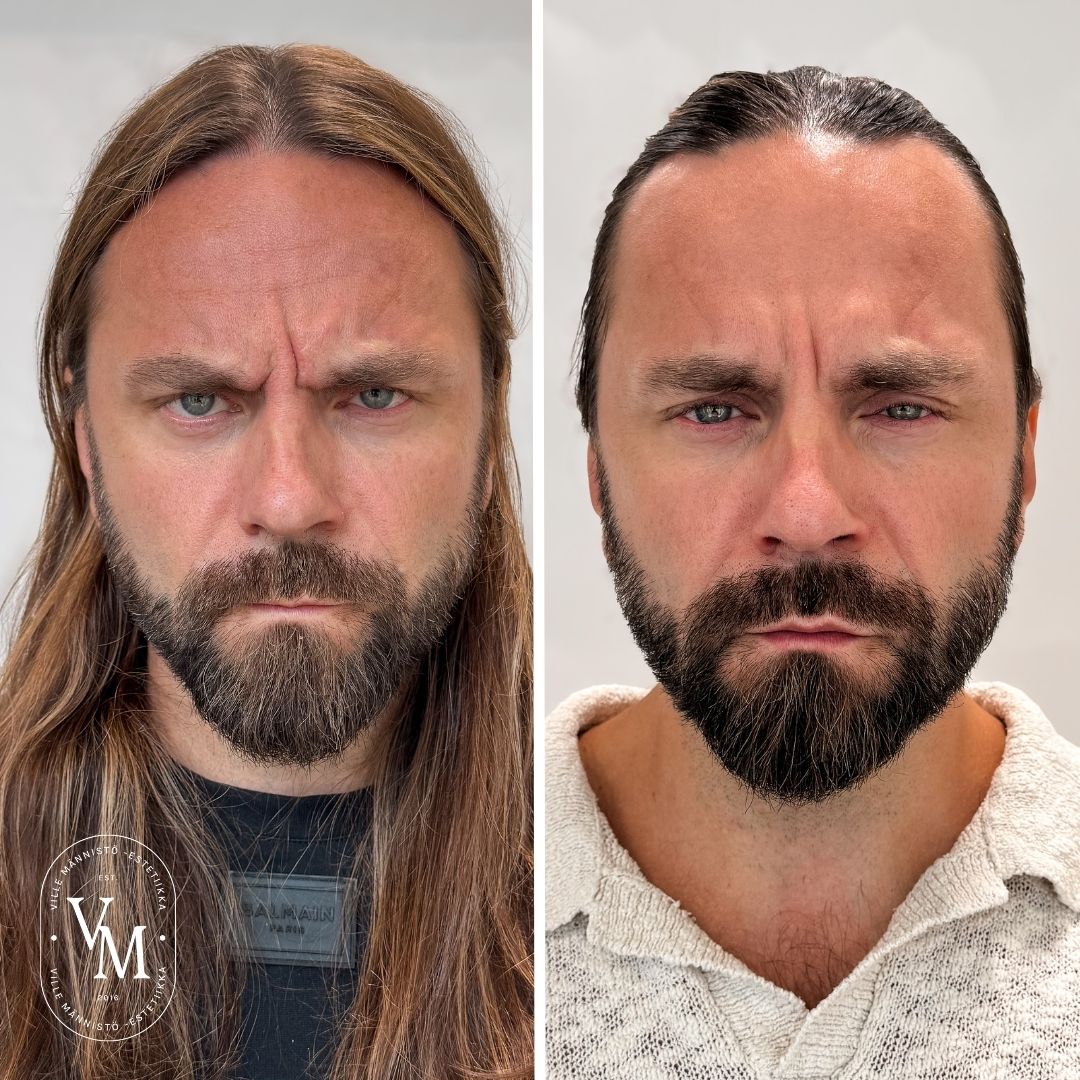
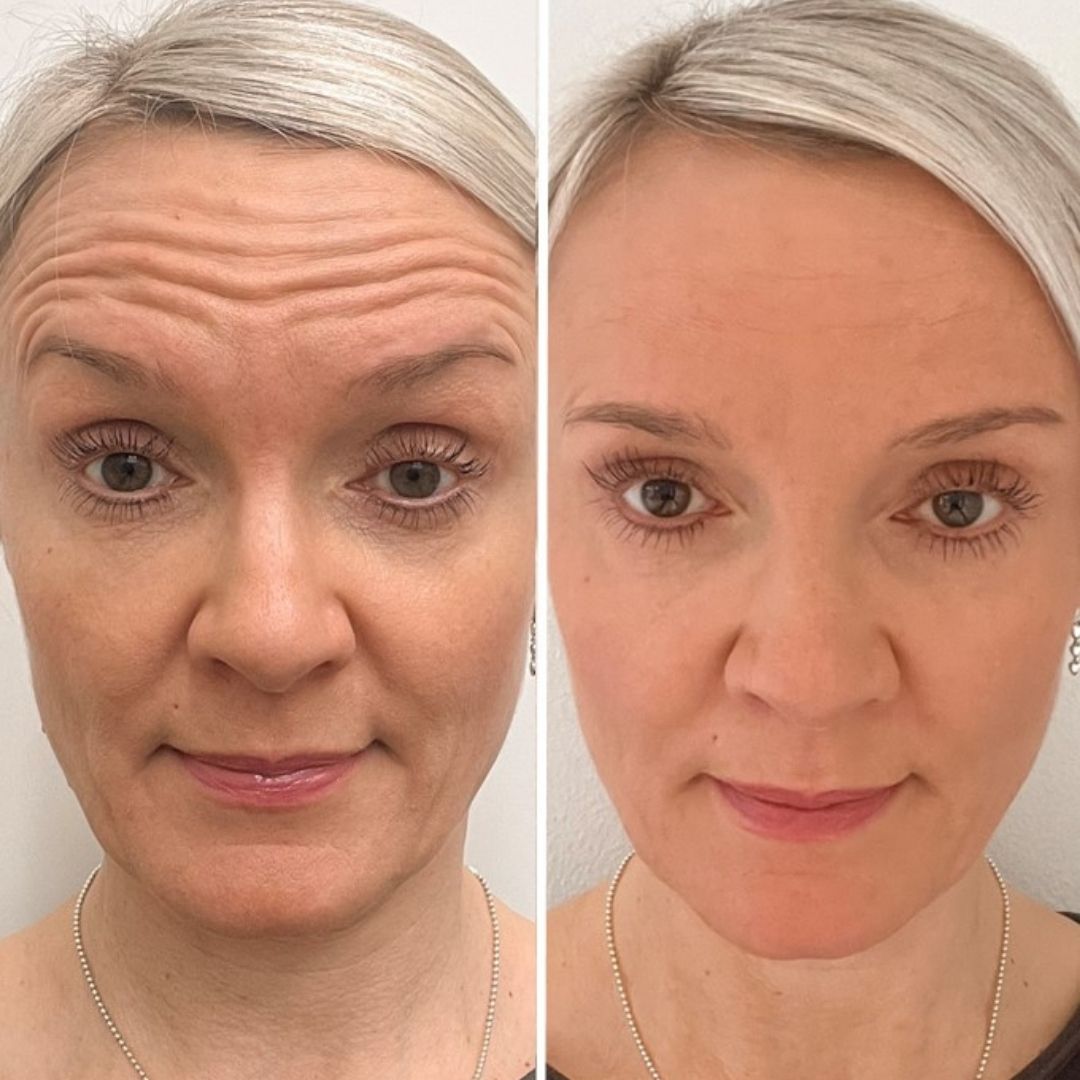
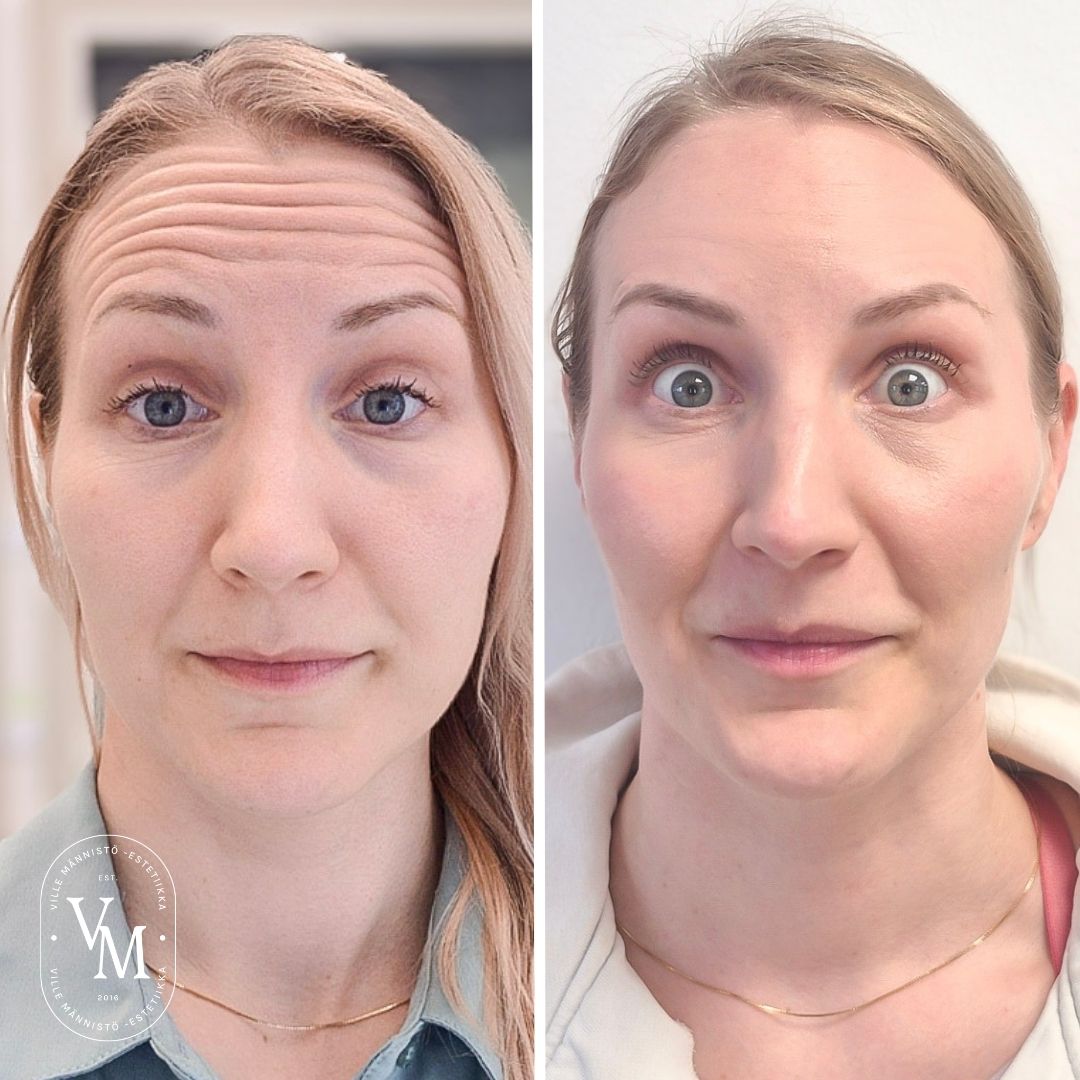
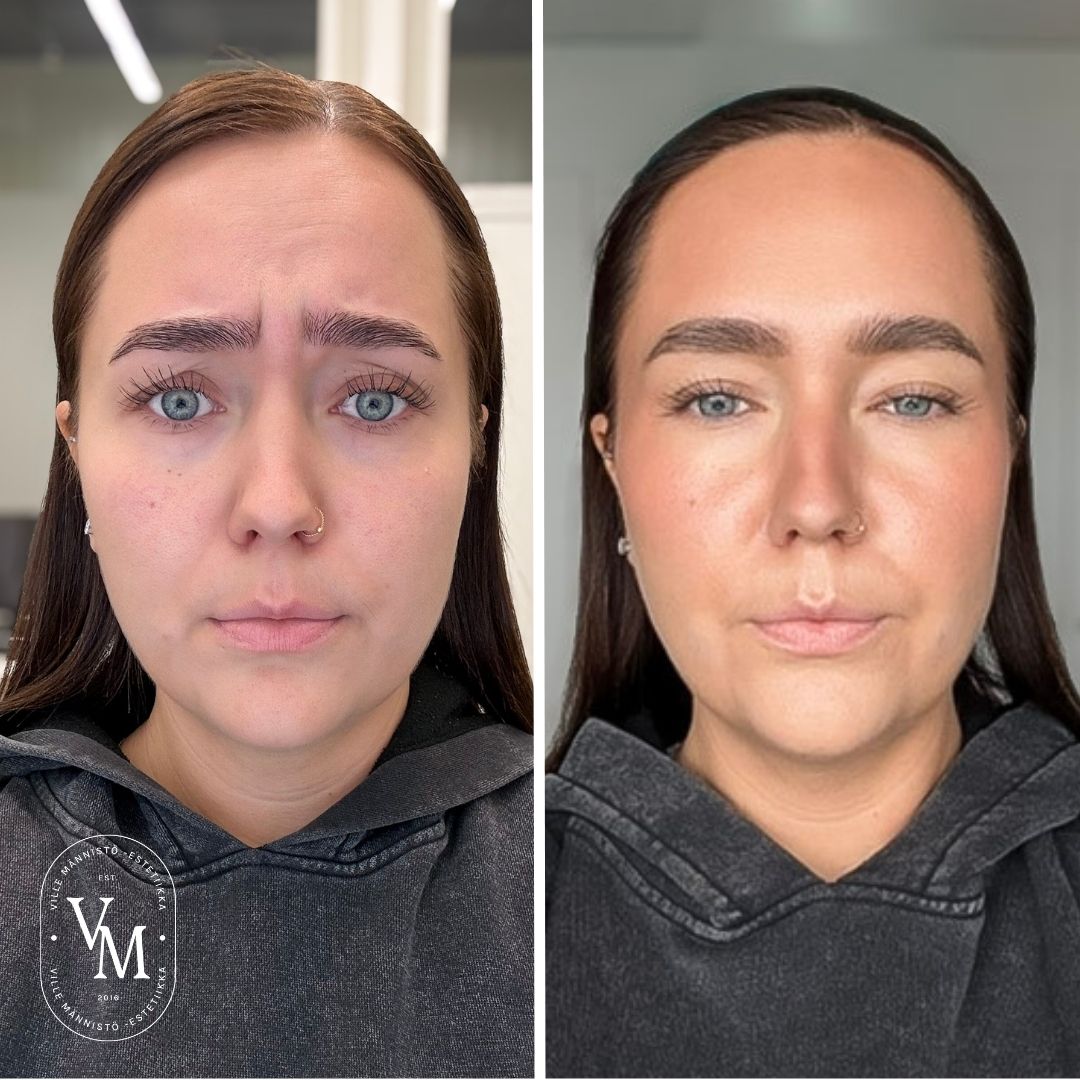
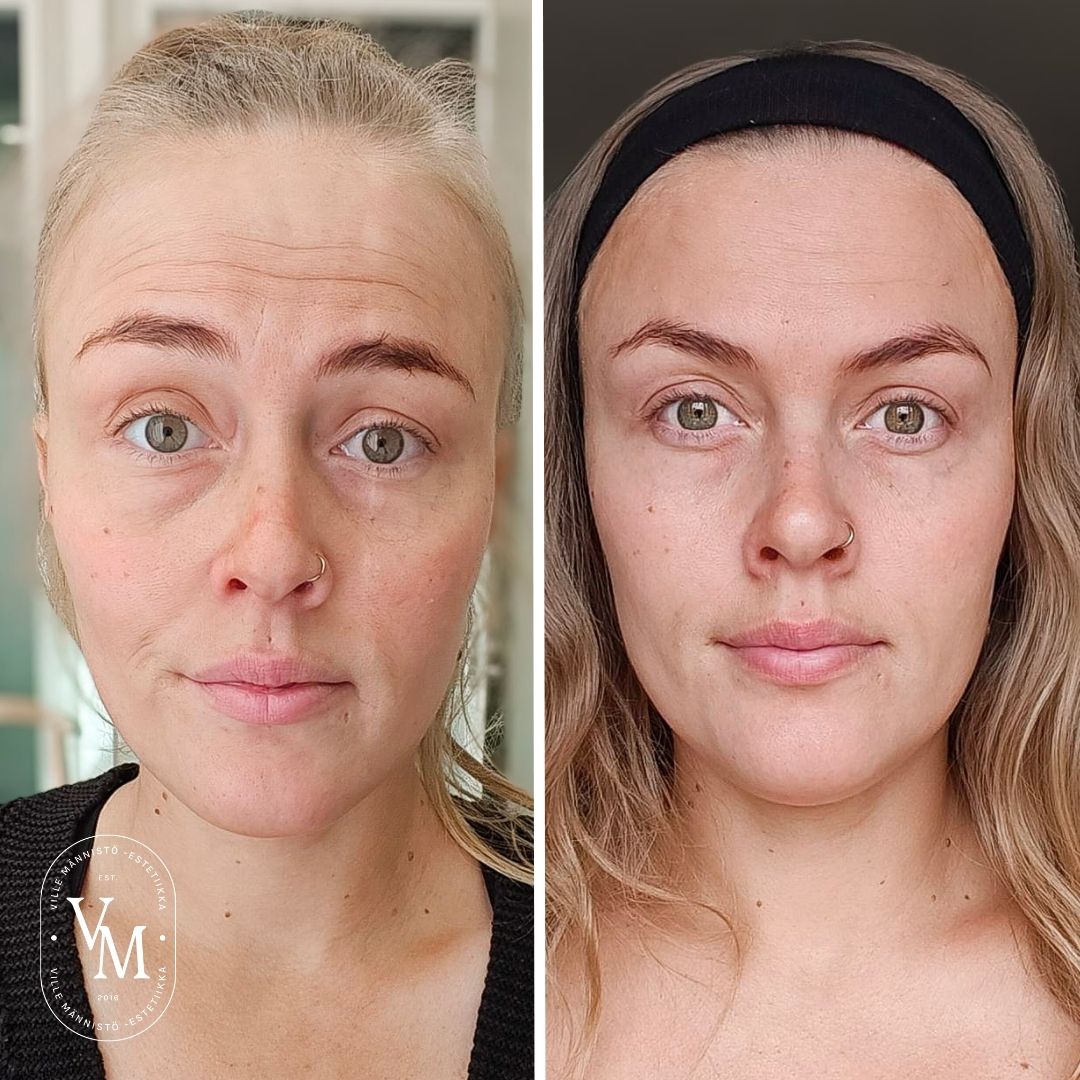
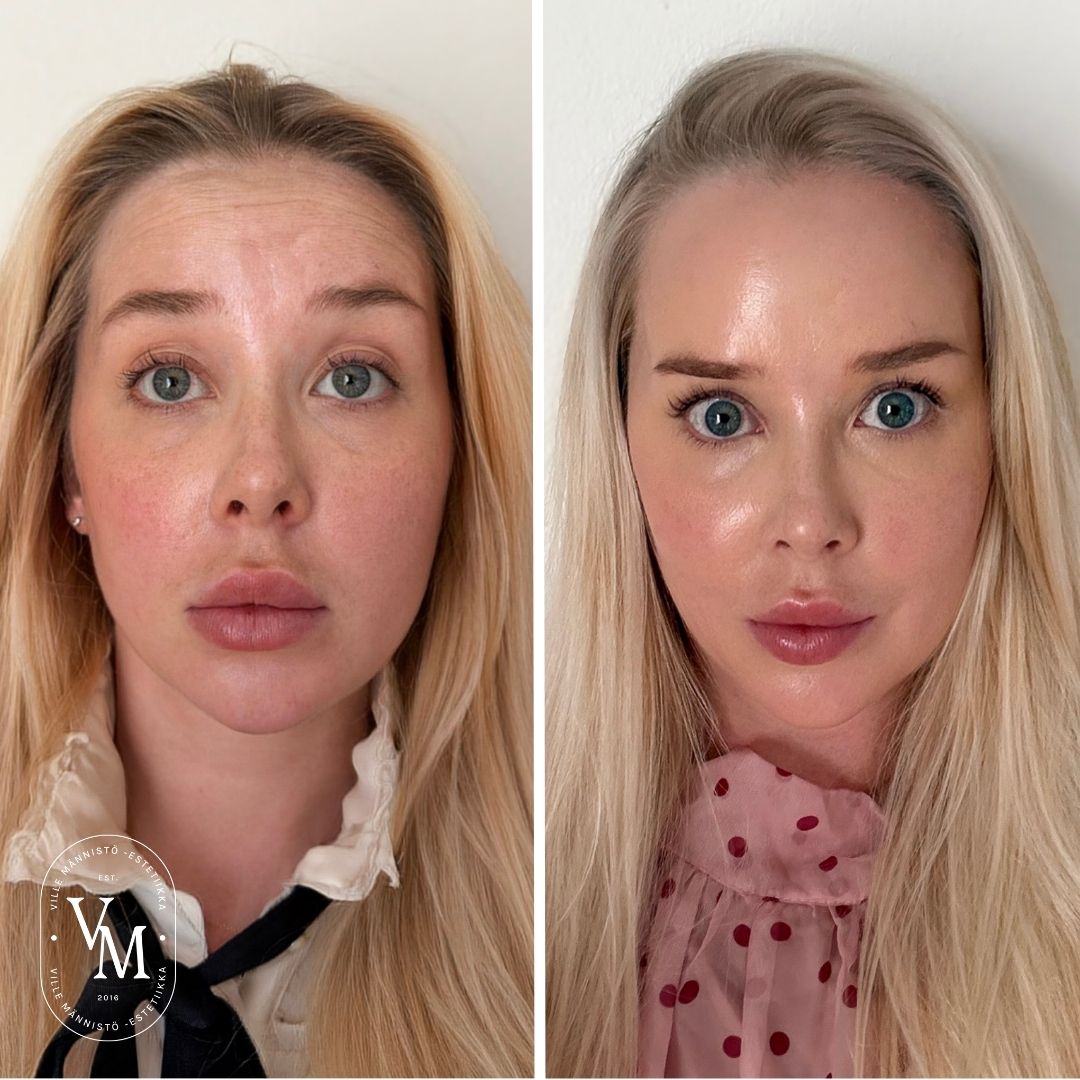
Ville Männistö performed a standard Botox treatment for the patient. Forehead lines were softened, the eyes appeared more open, and the overall appearance of the face looked more refreshed.

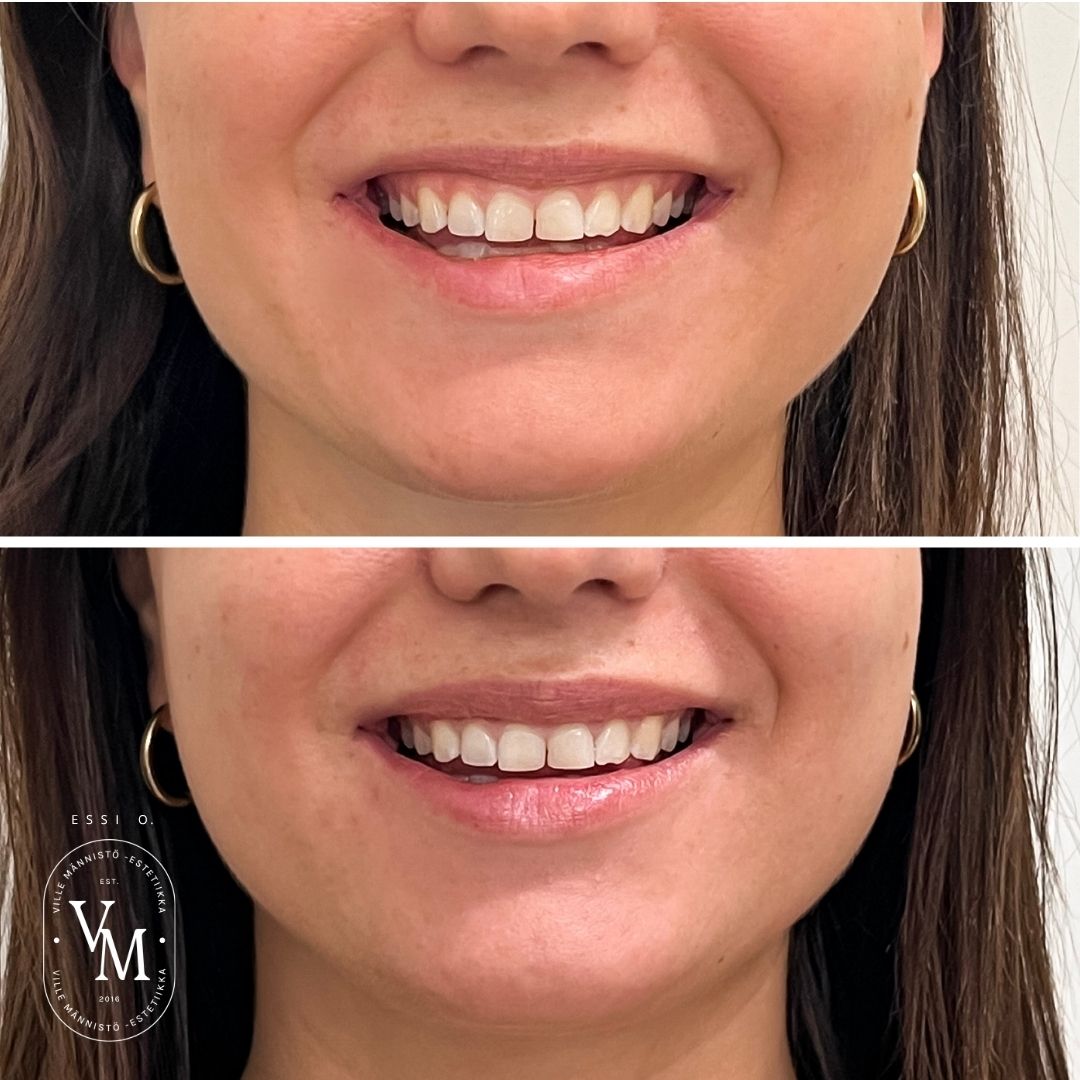
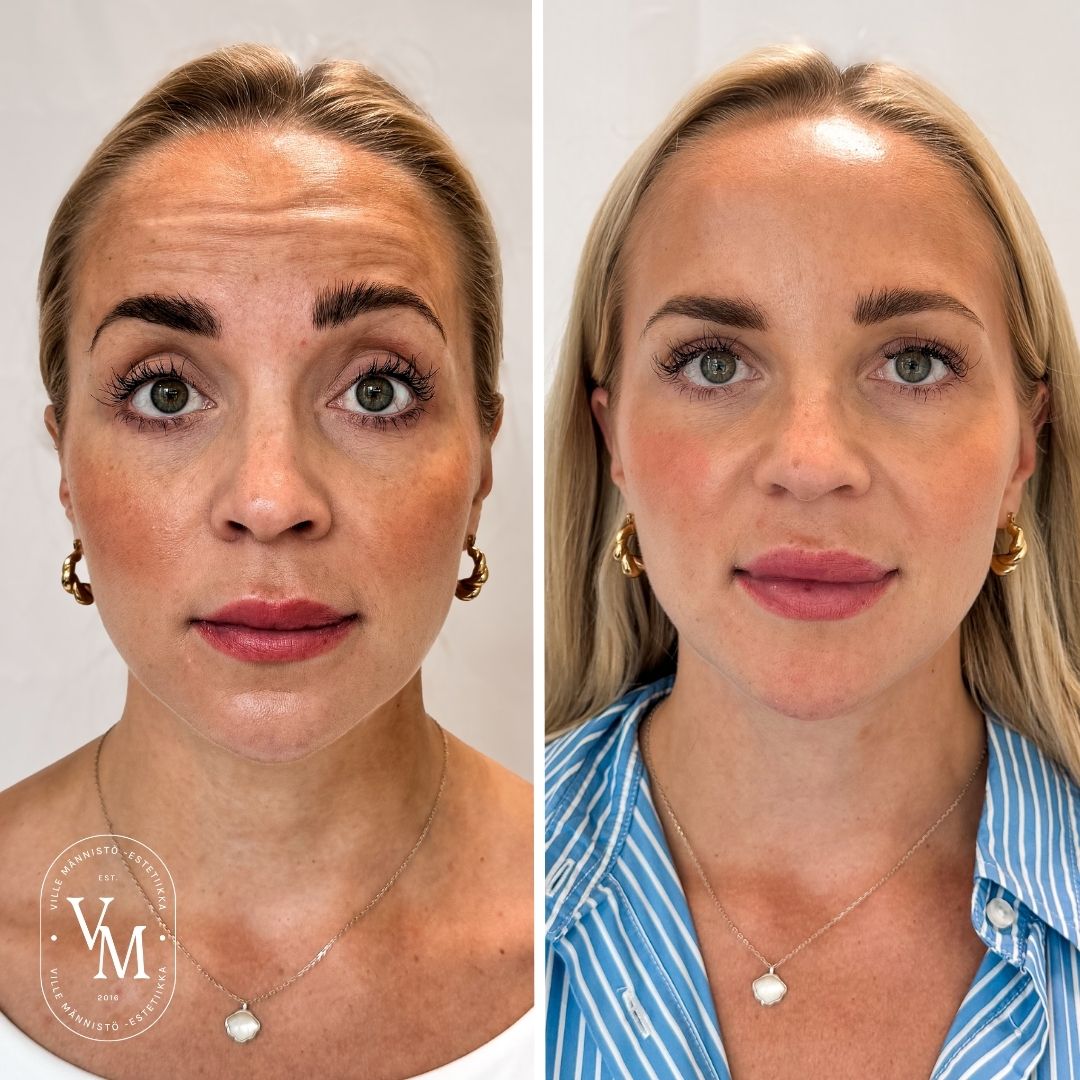
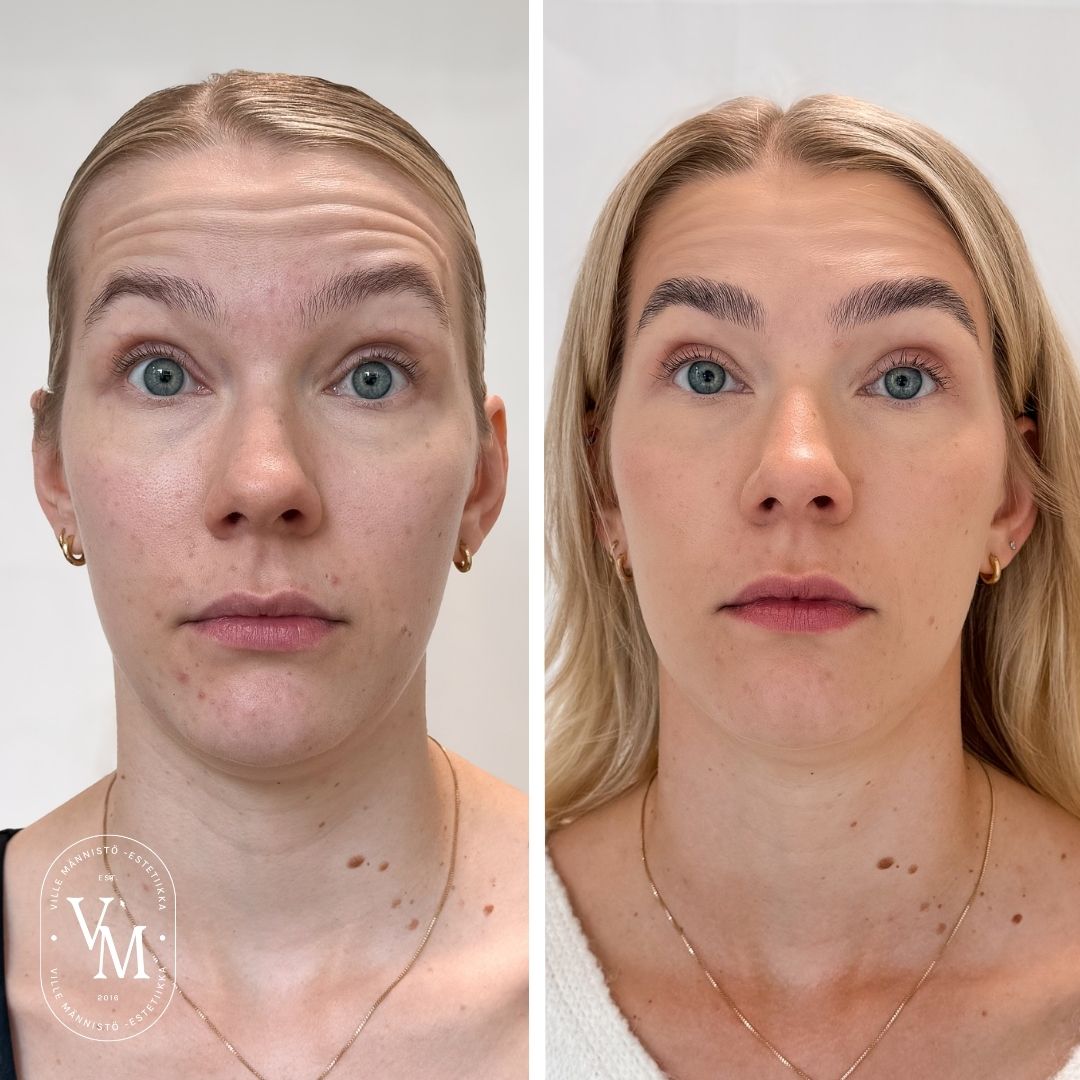
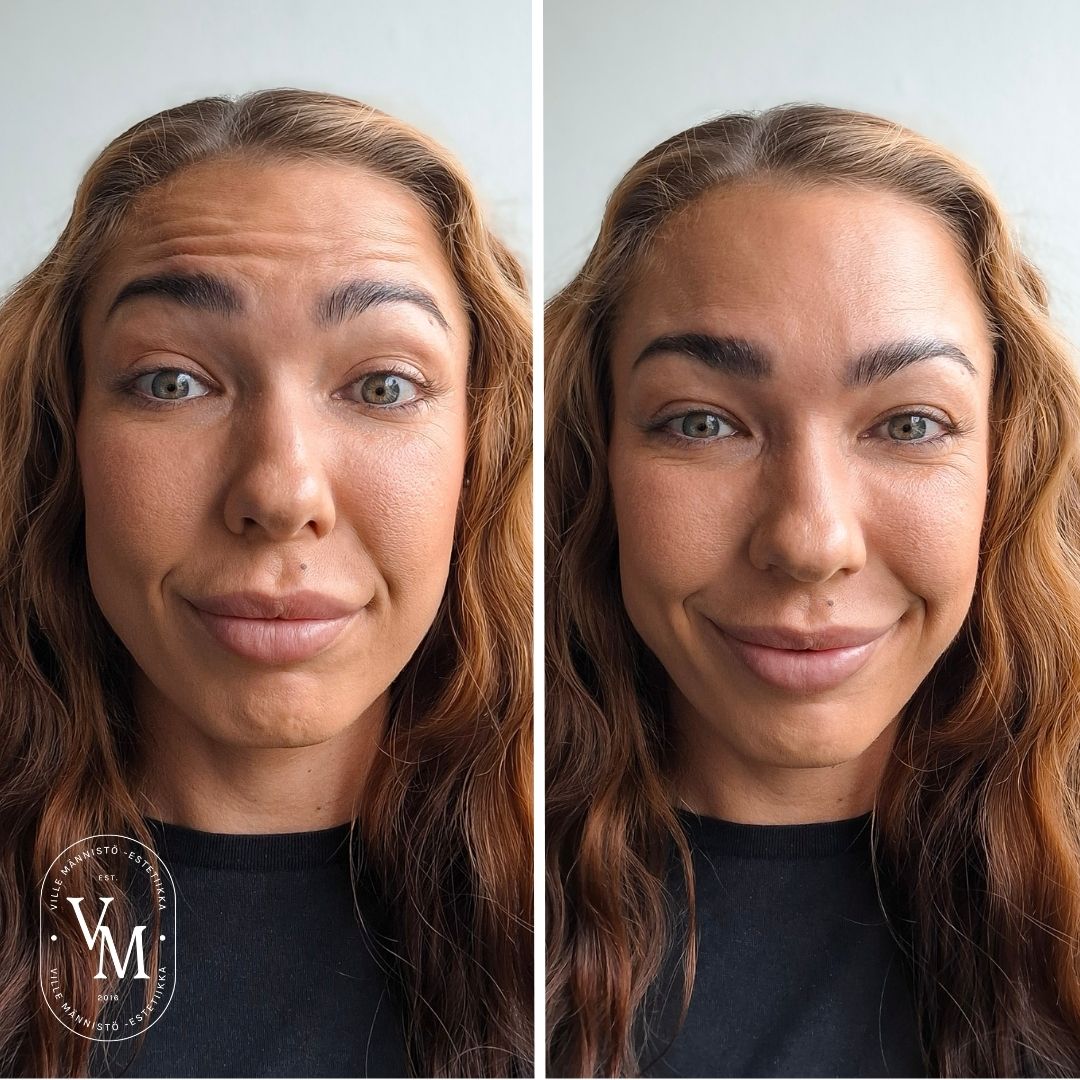
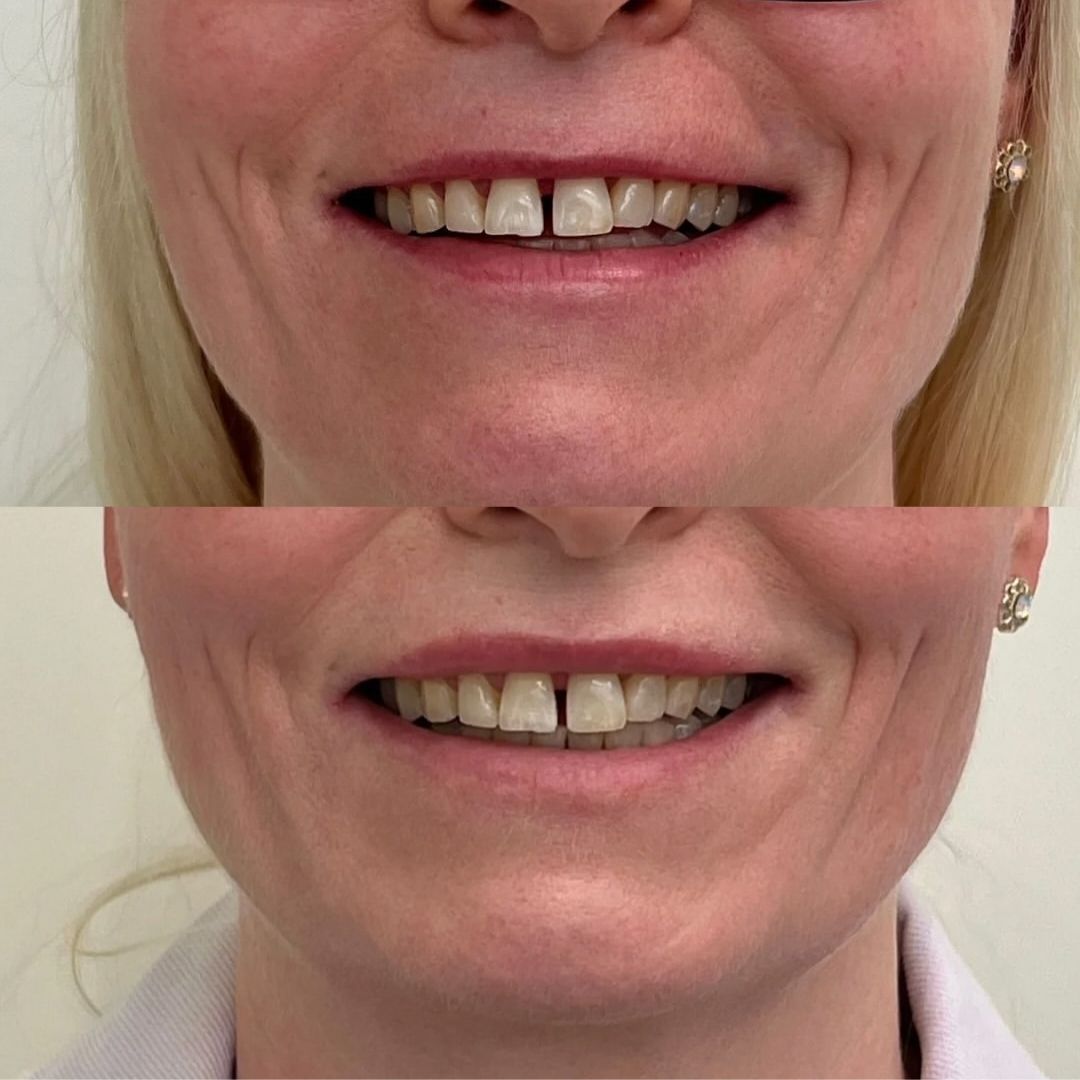
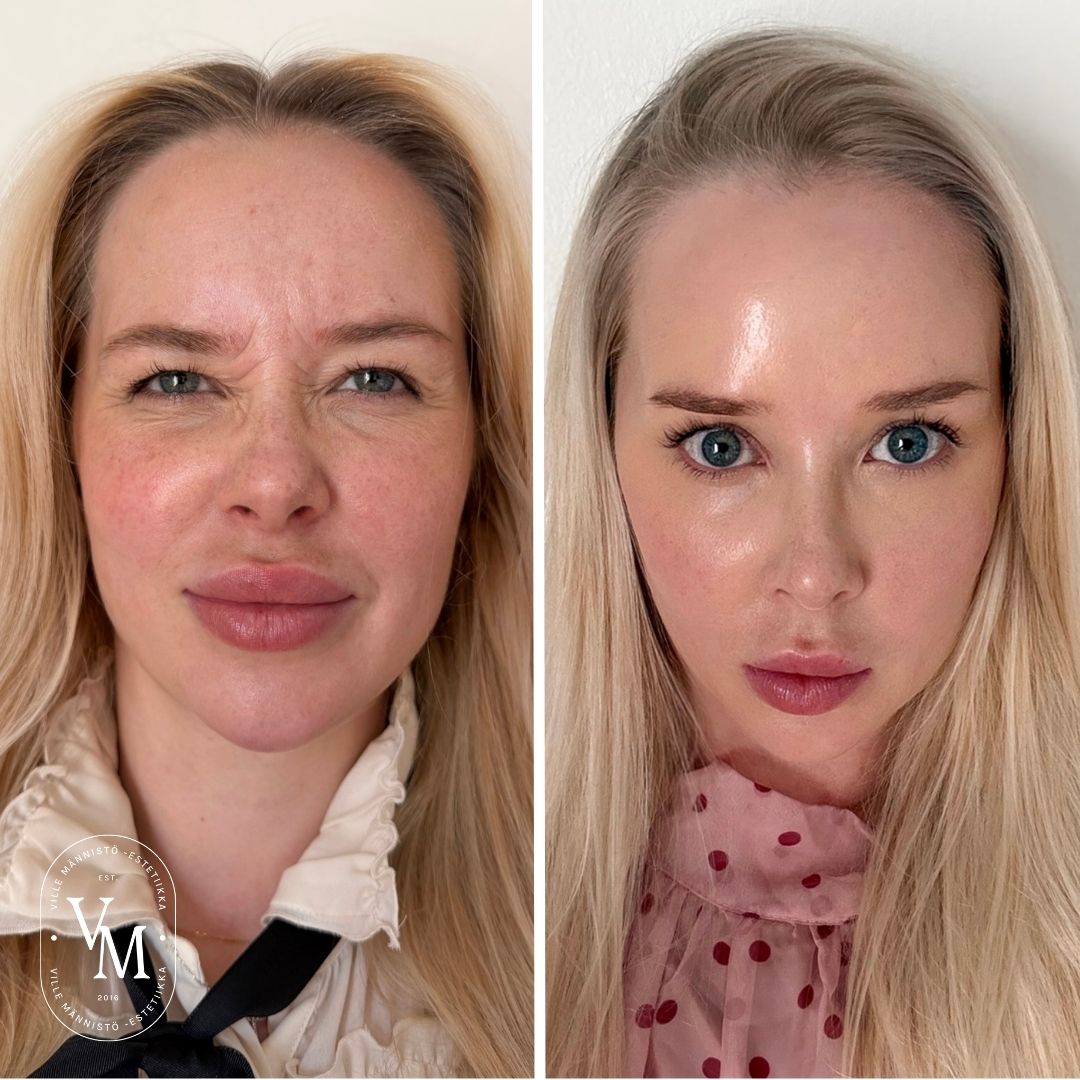
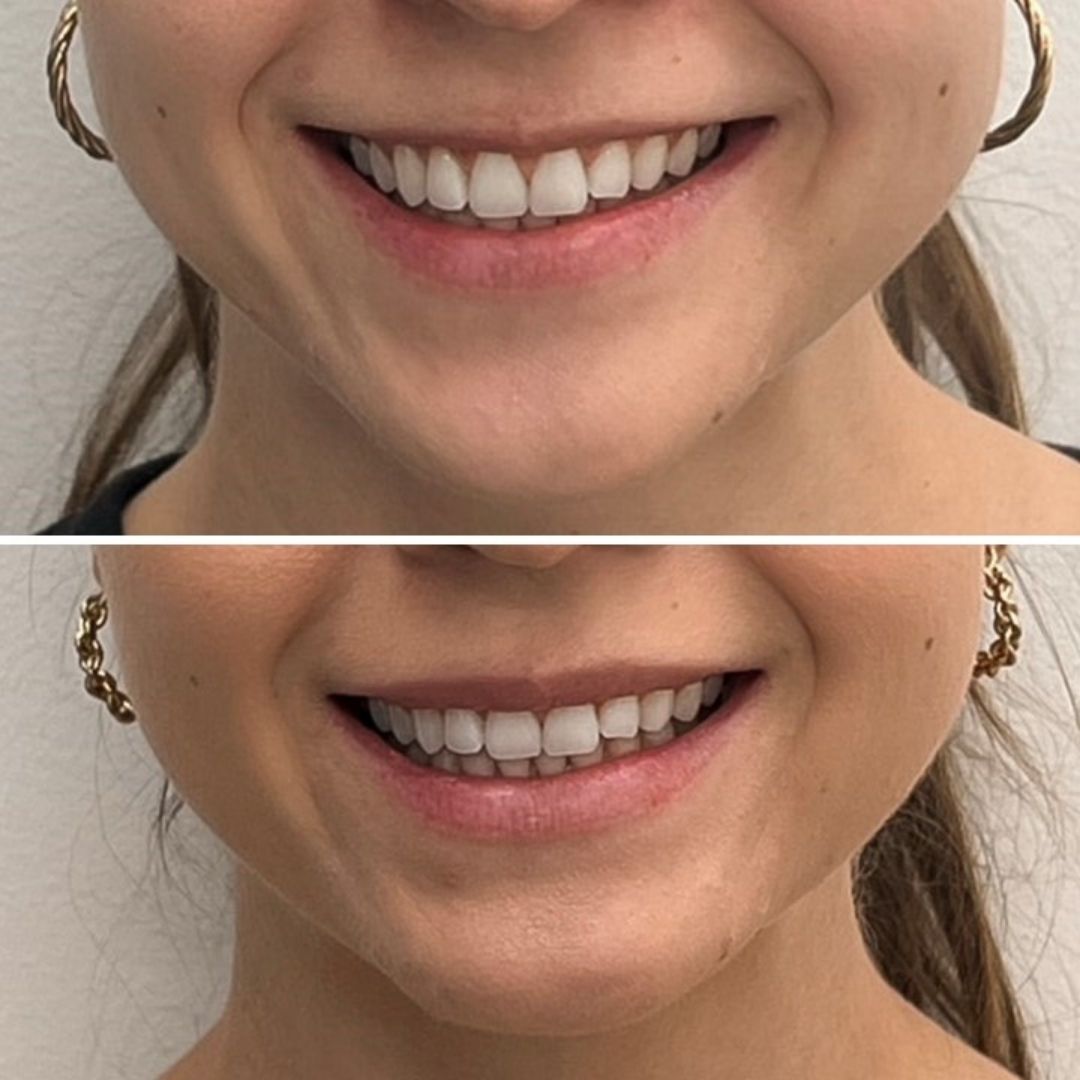
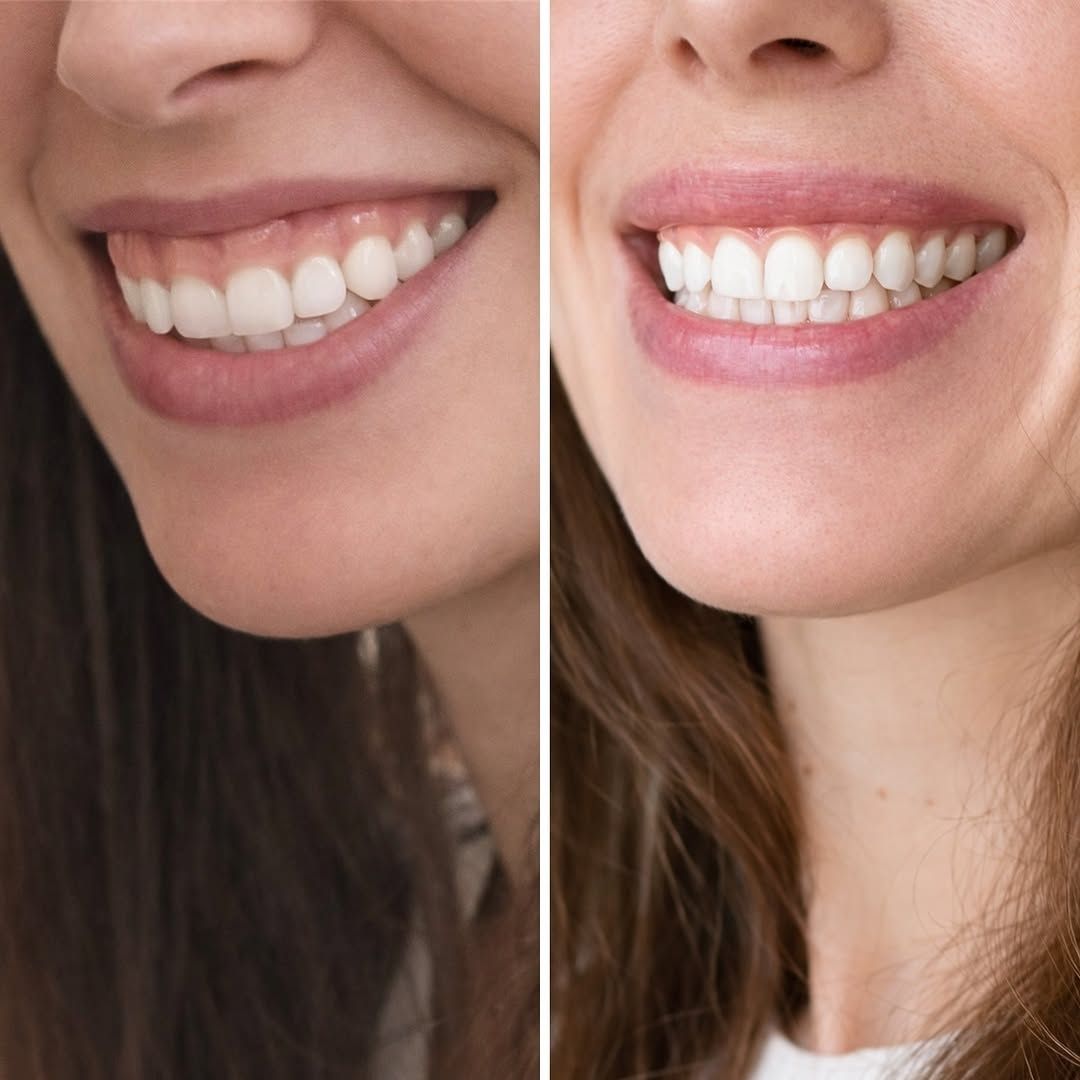
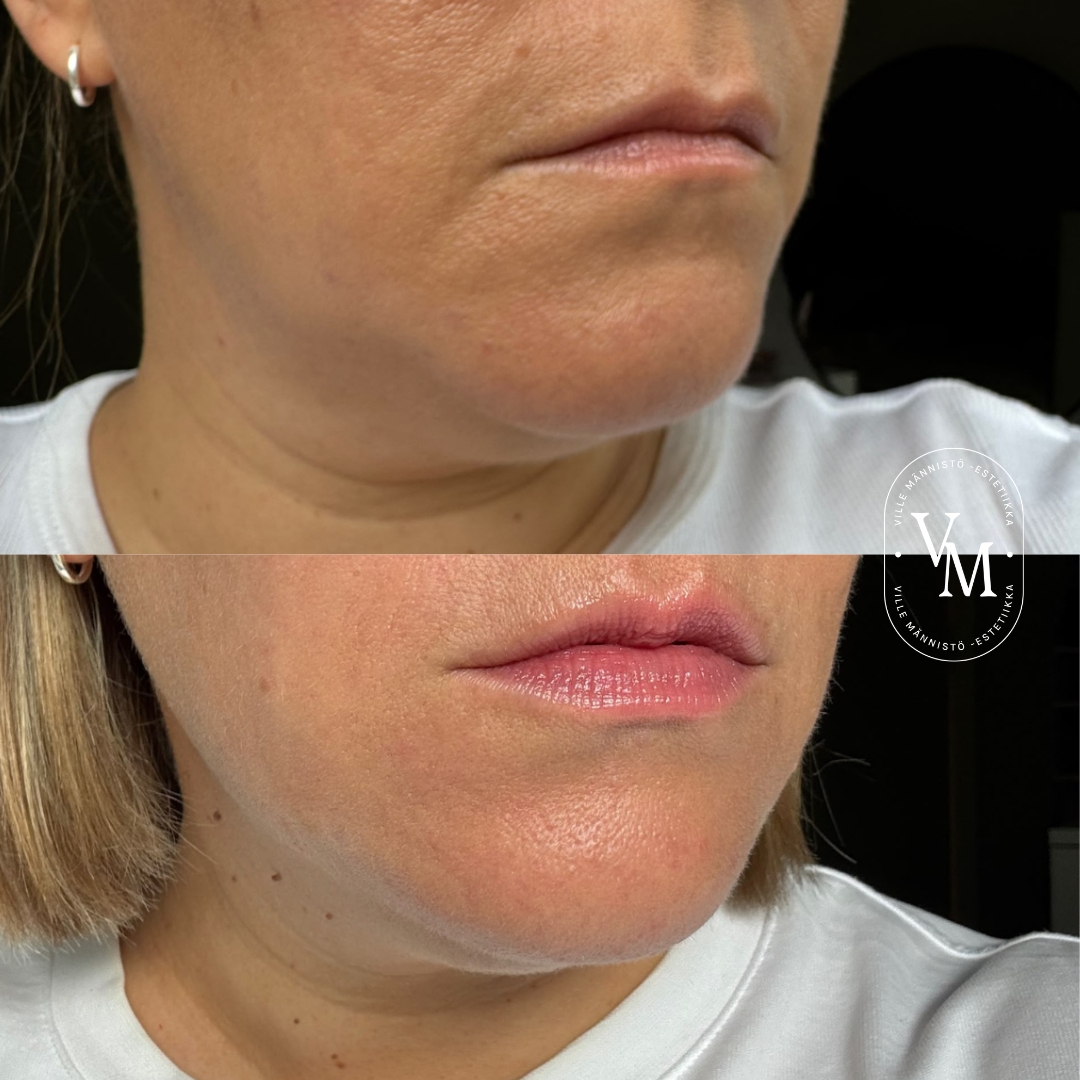
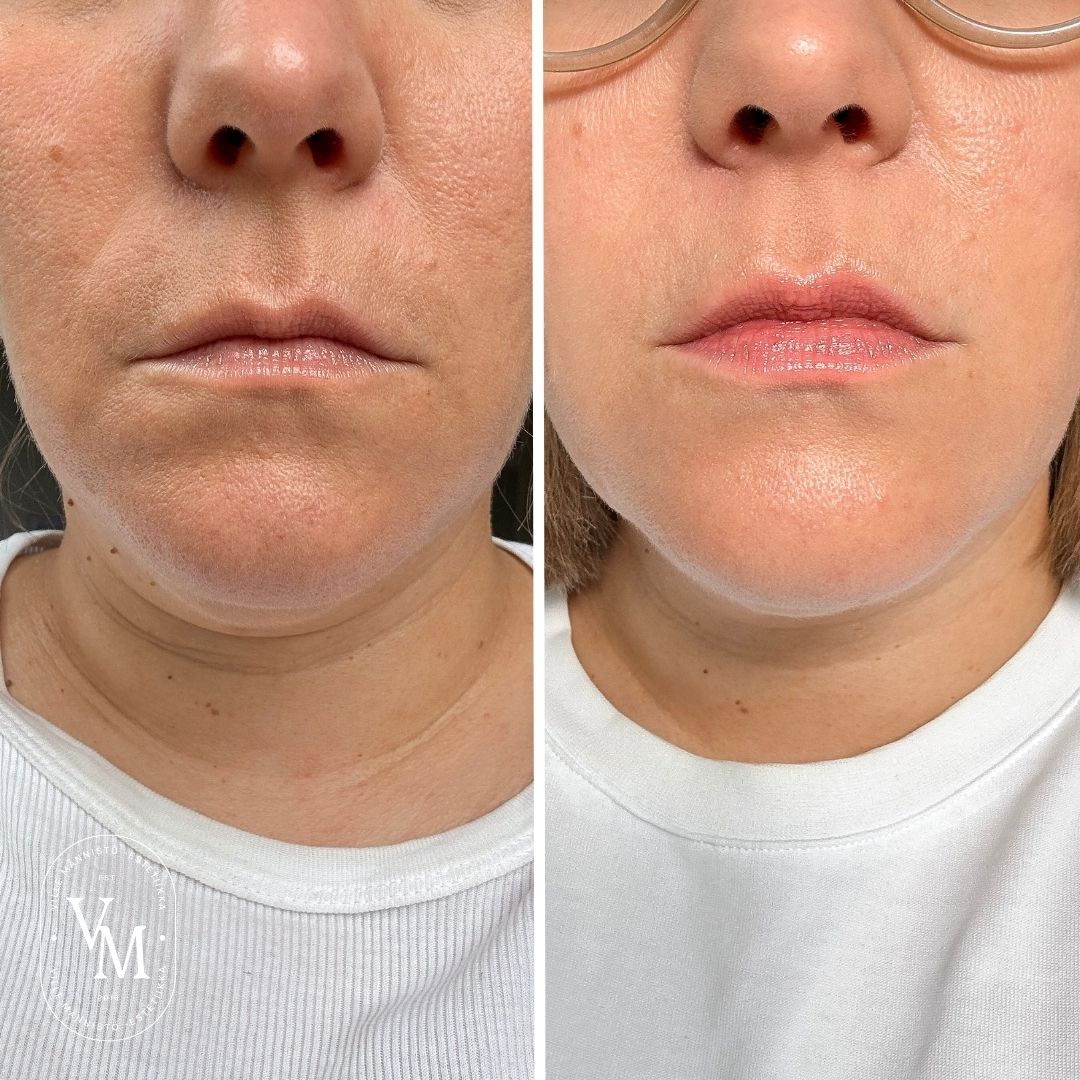
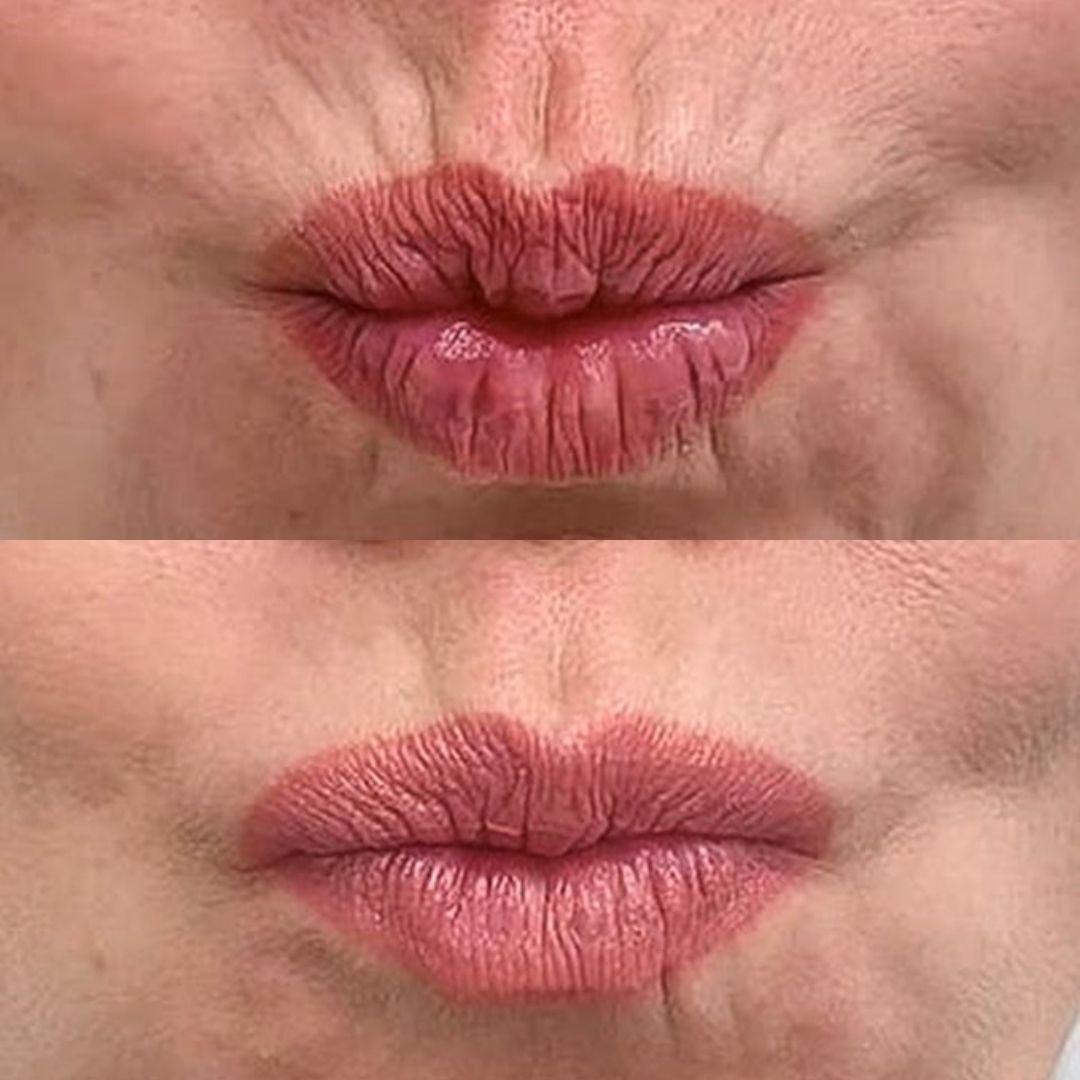
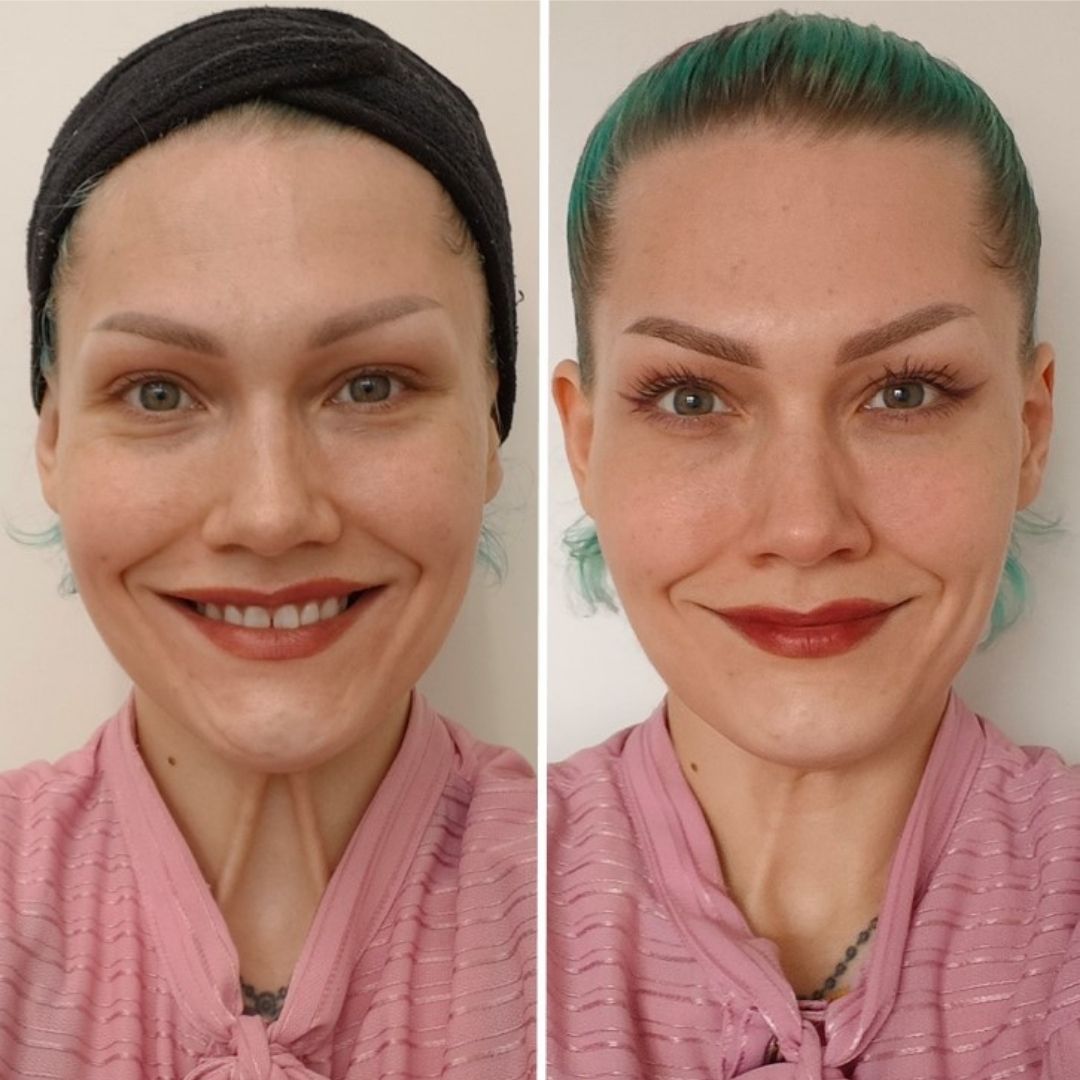
Botox can also be used to subtly enhance the shape of the lips. This lip flip treatment was performed by aesthetic nurse Essi Ojala.

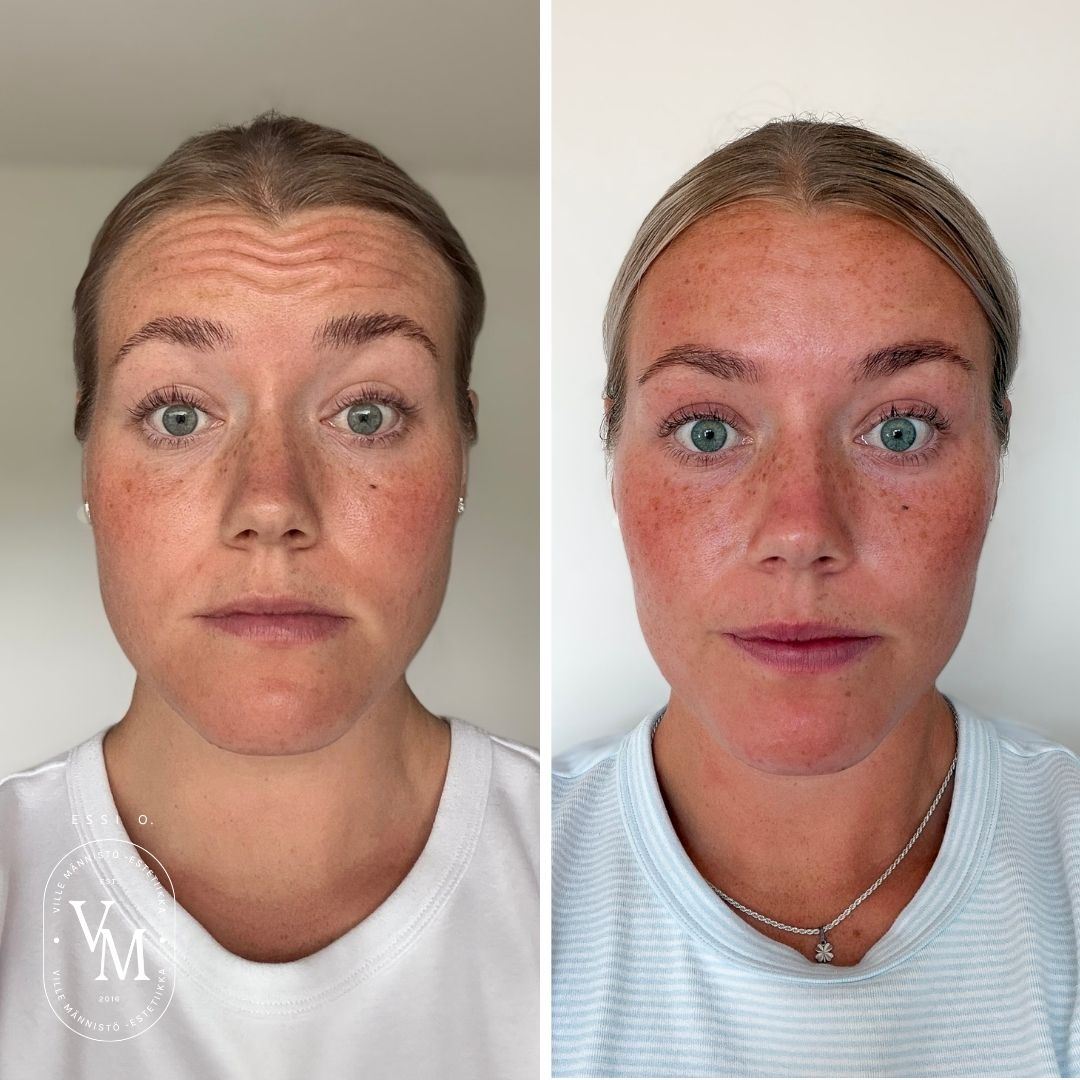
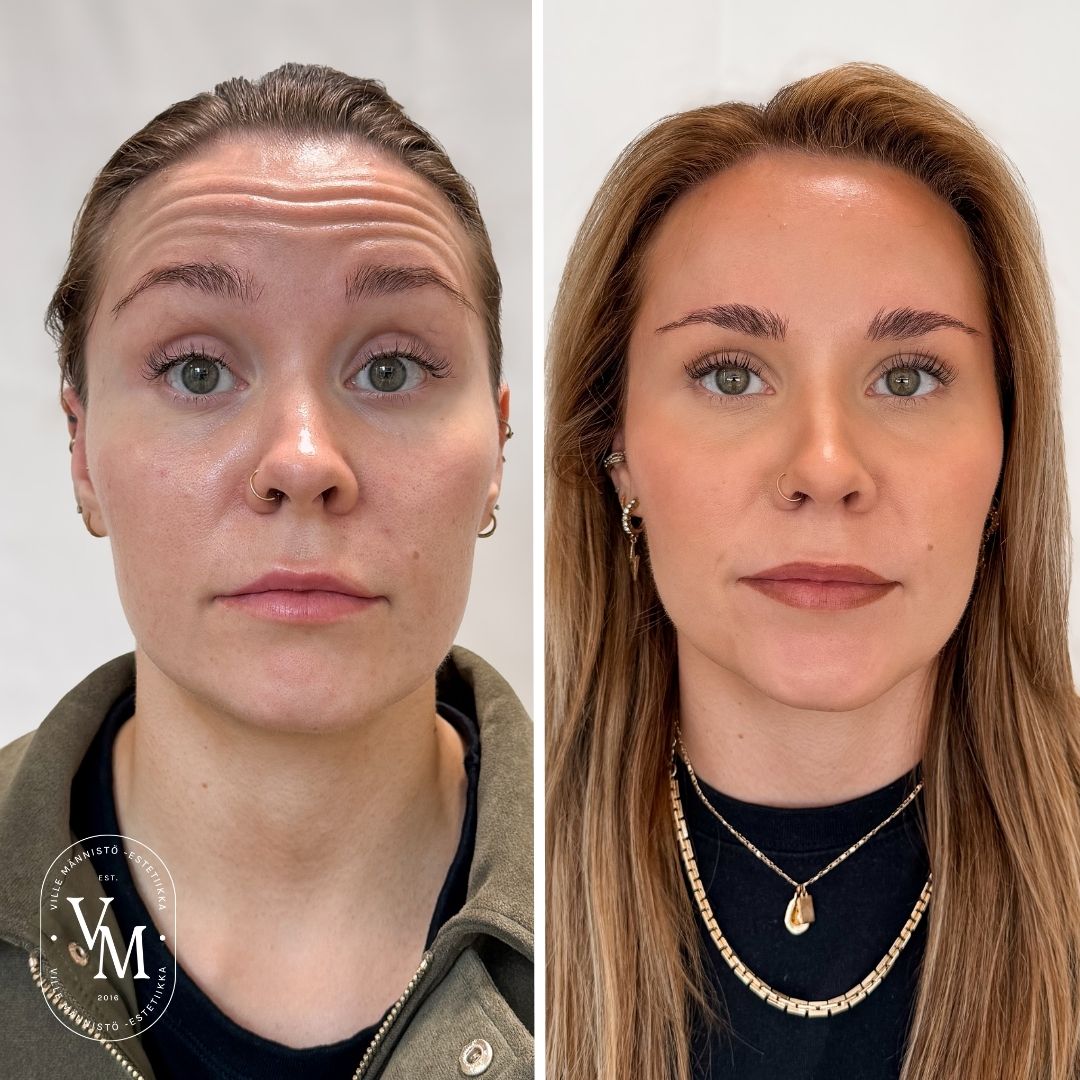
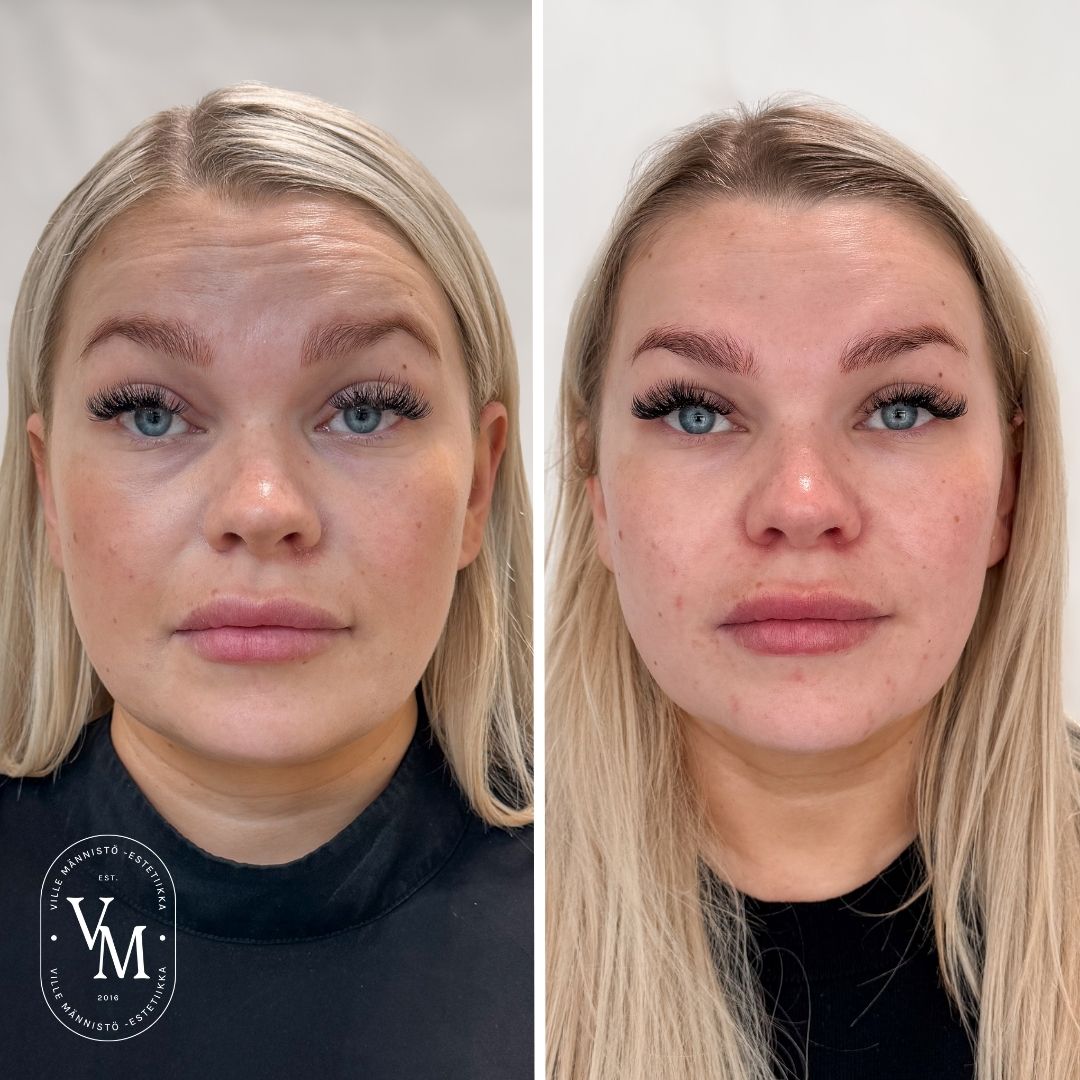
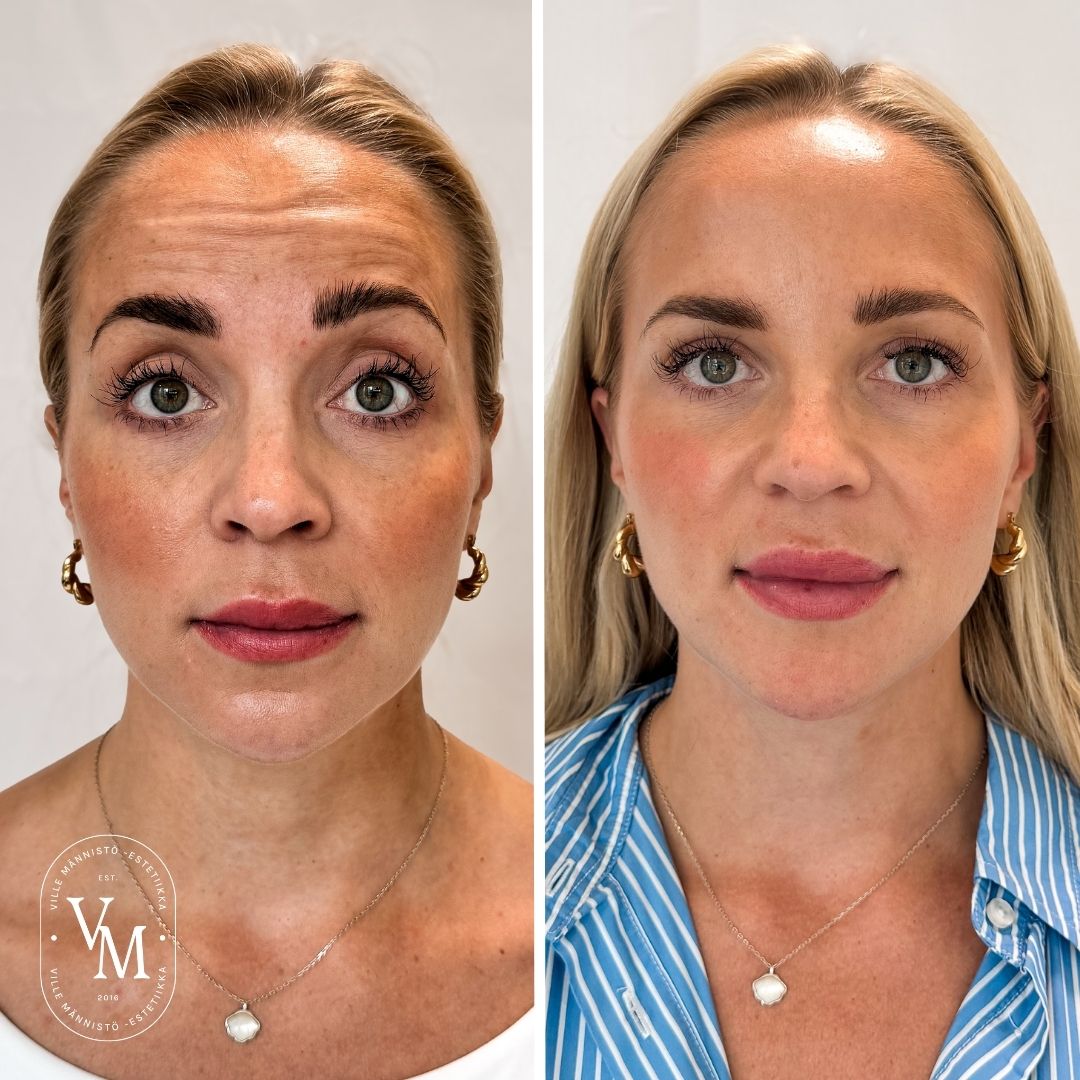
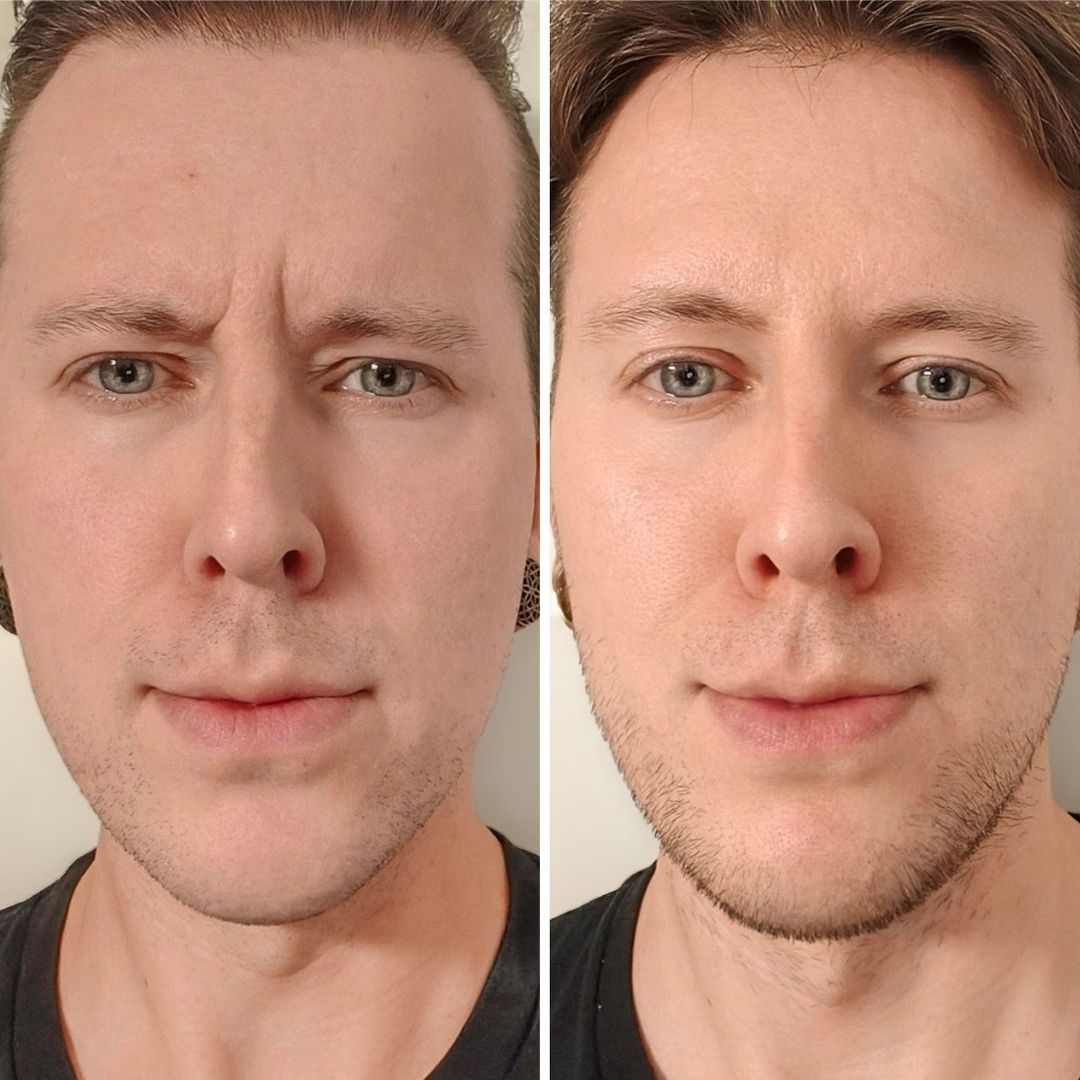
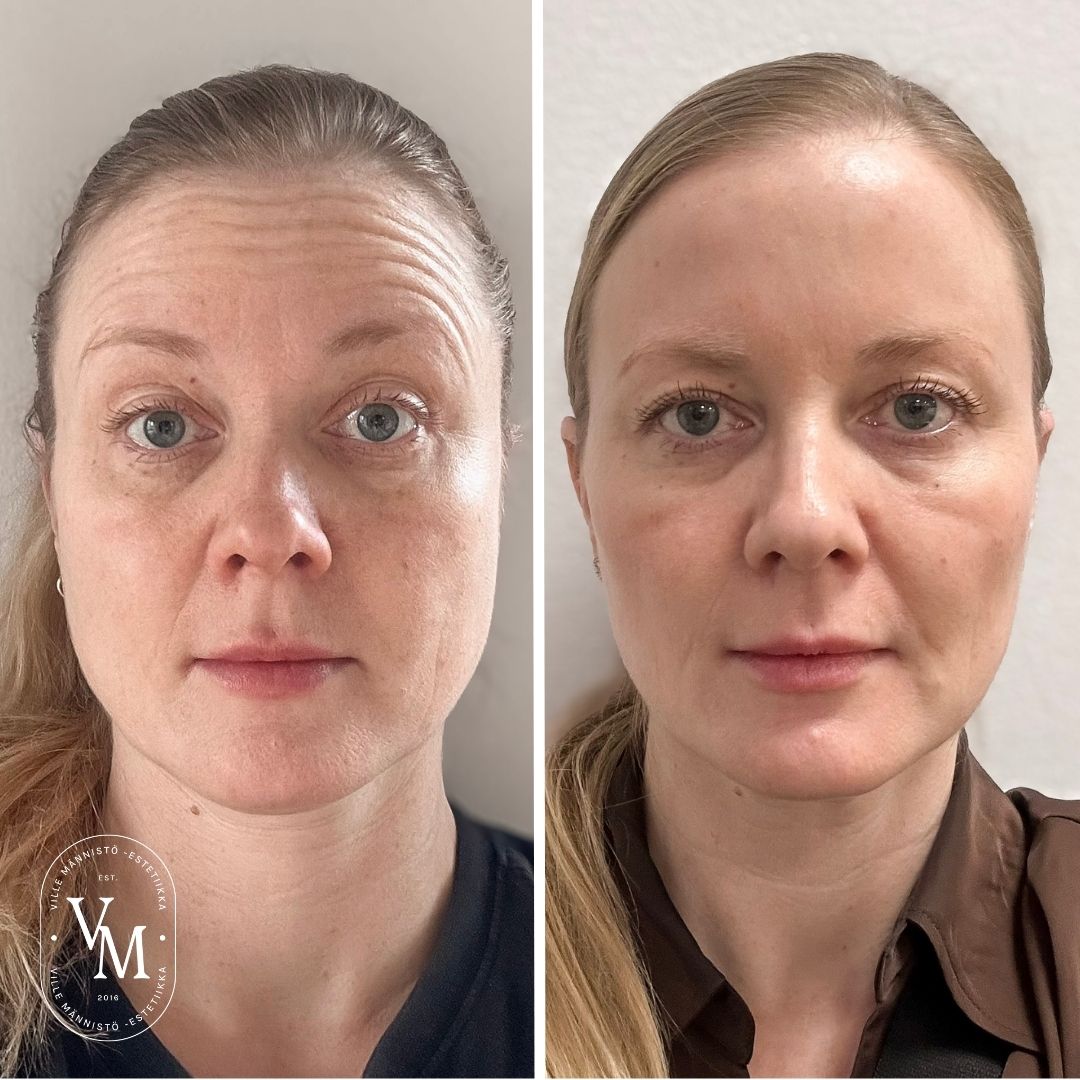
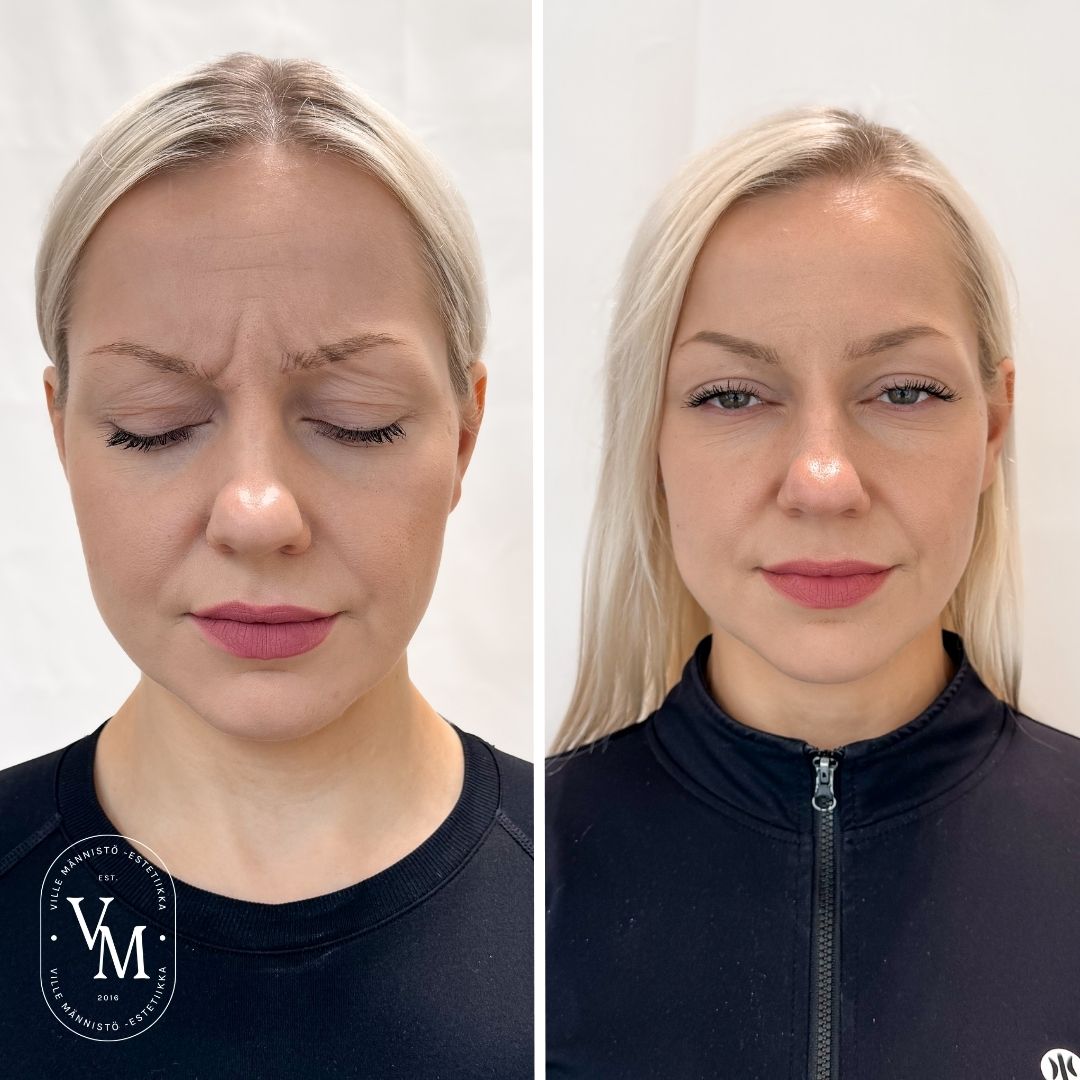
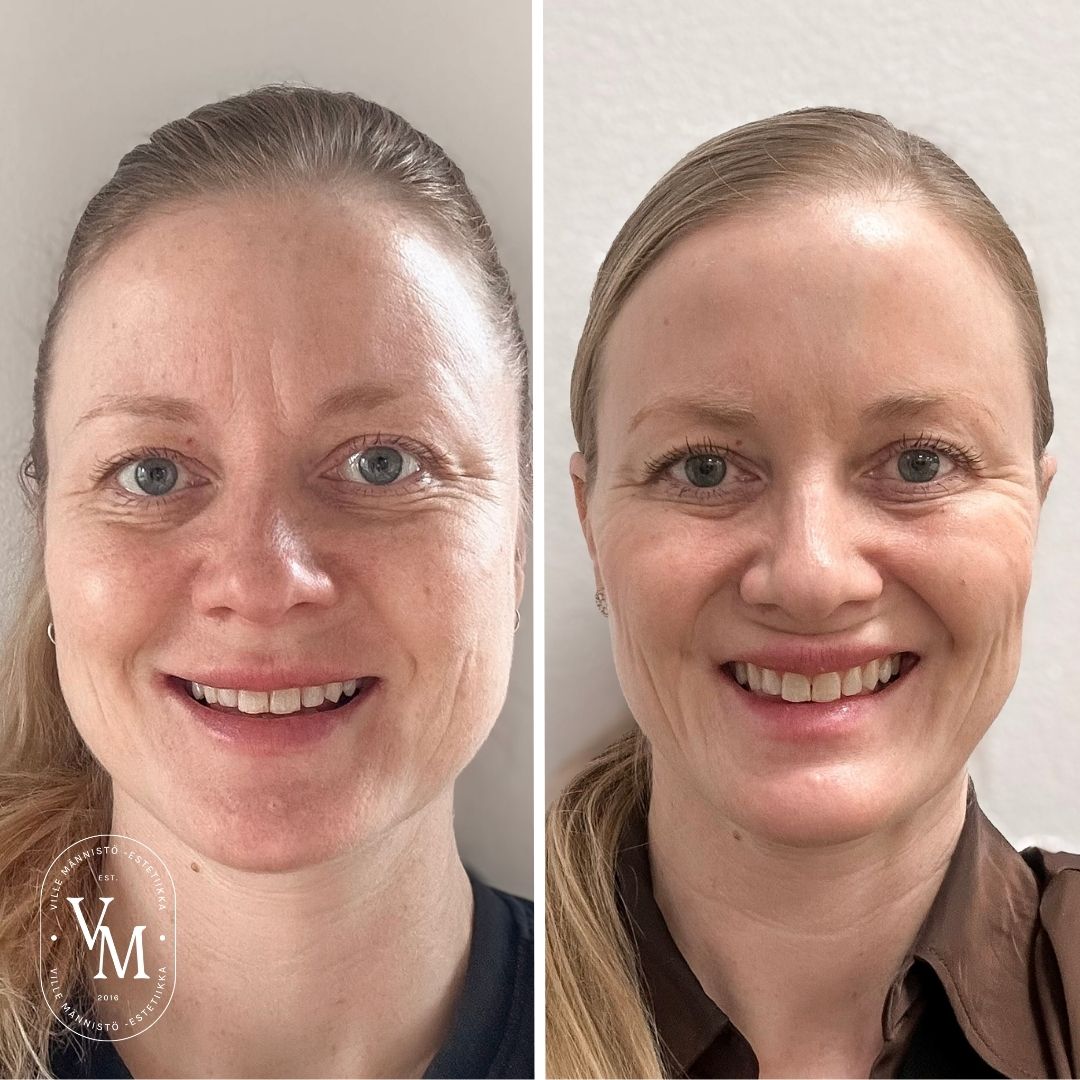
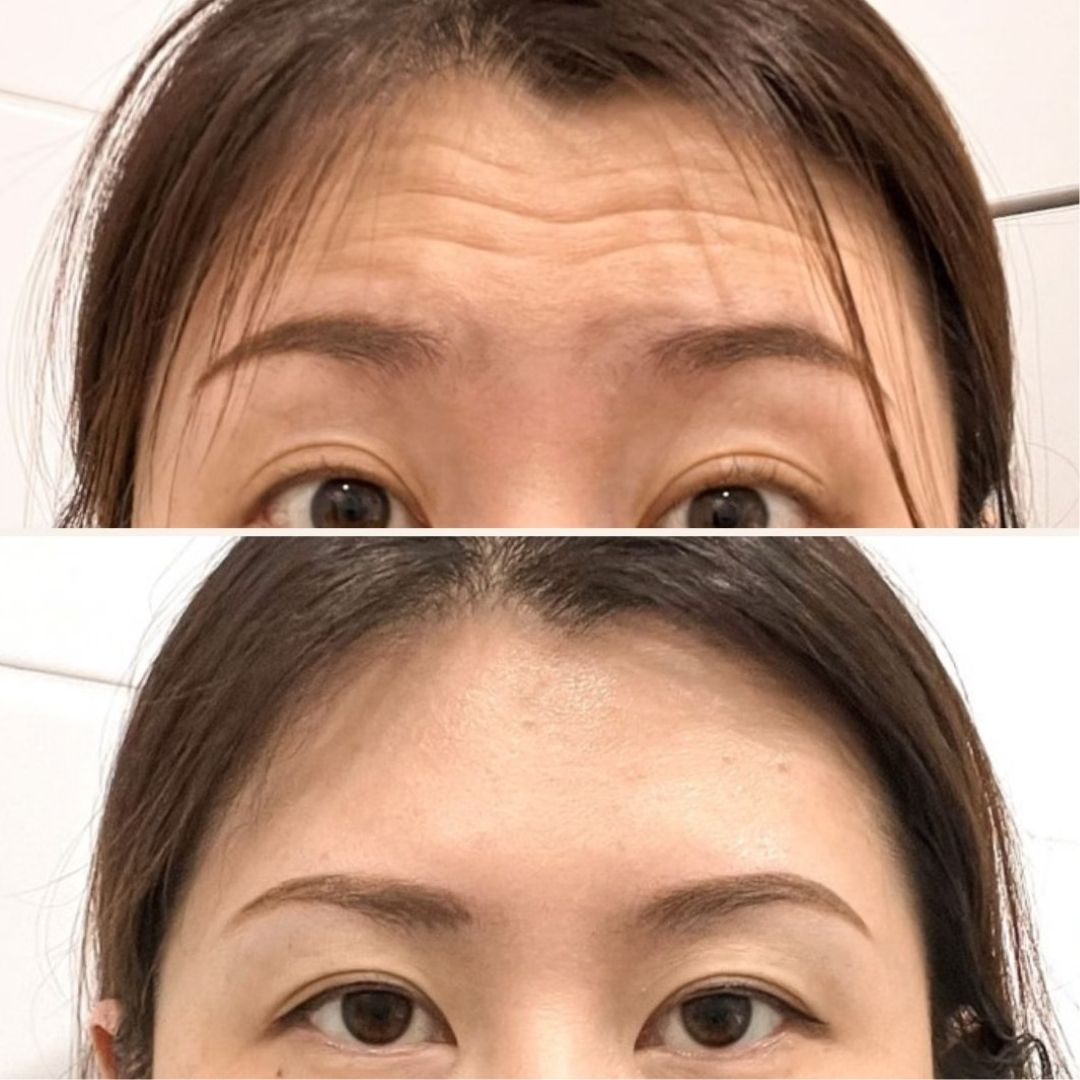
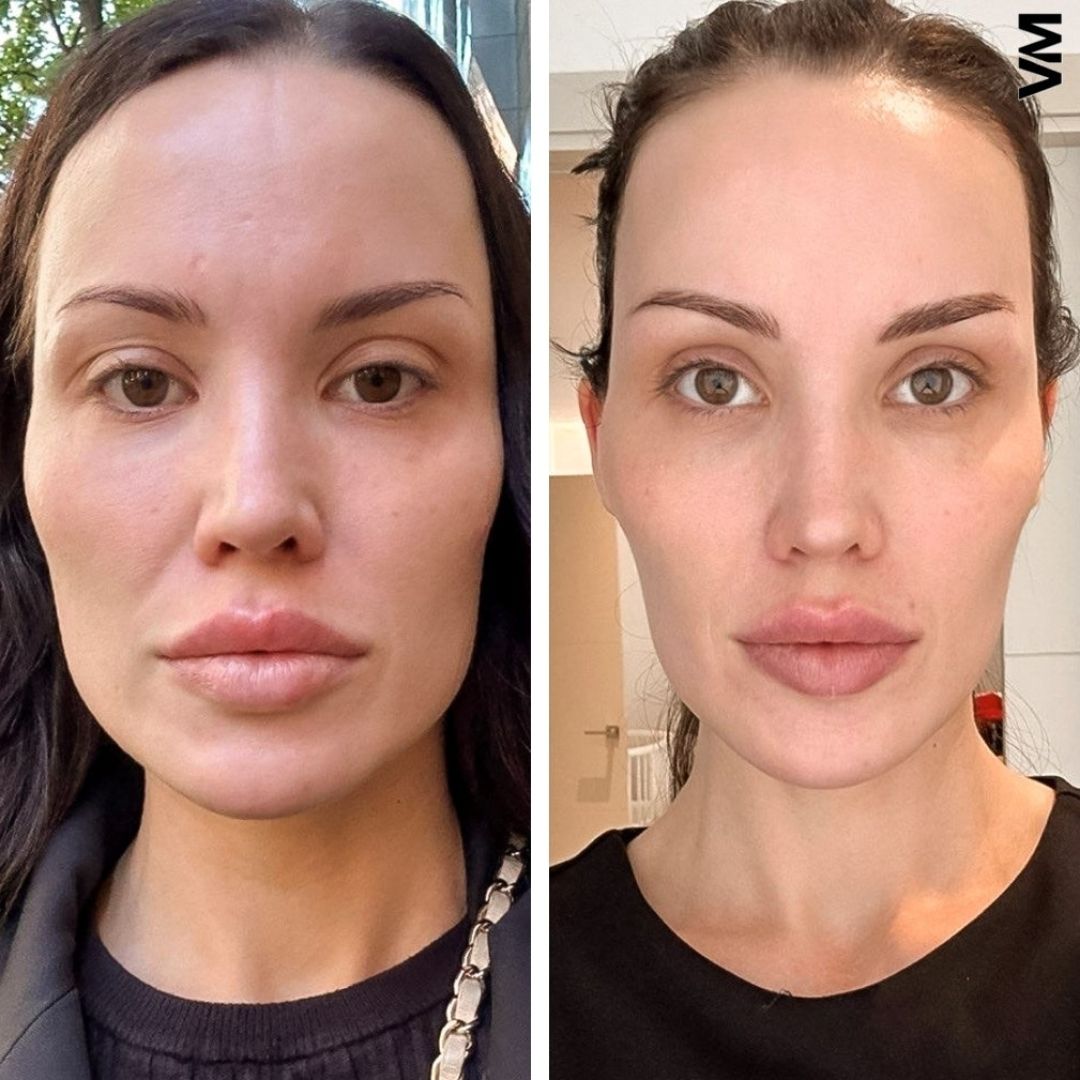
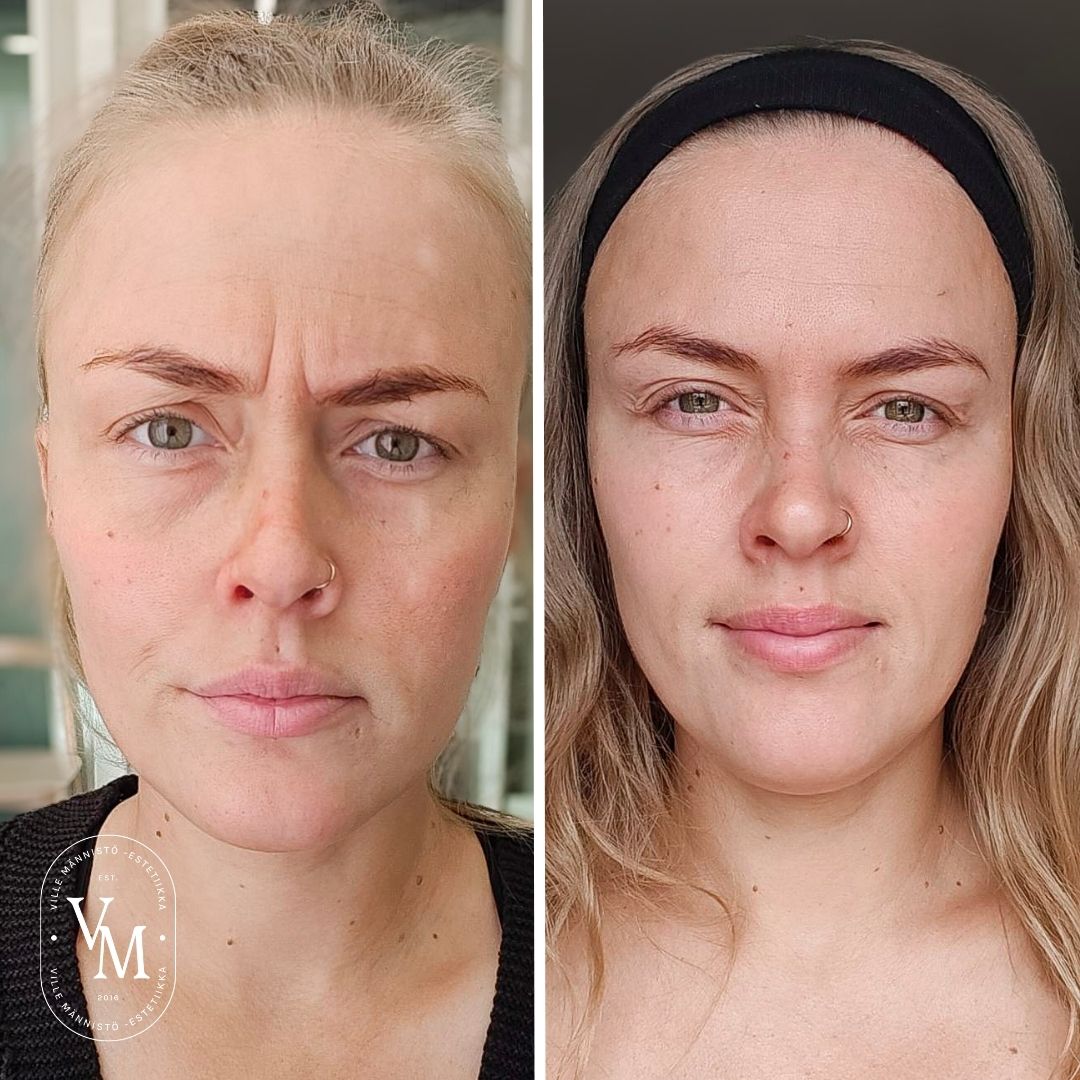
Forehead lines may sometimes require two or three moderate botulinum toxin treatments to achieve optimal results. This result was achieved by surgeon Ville Männistö.

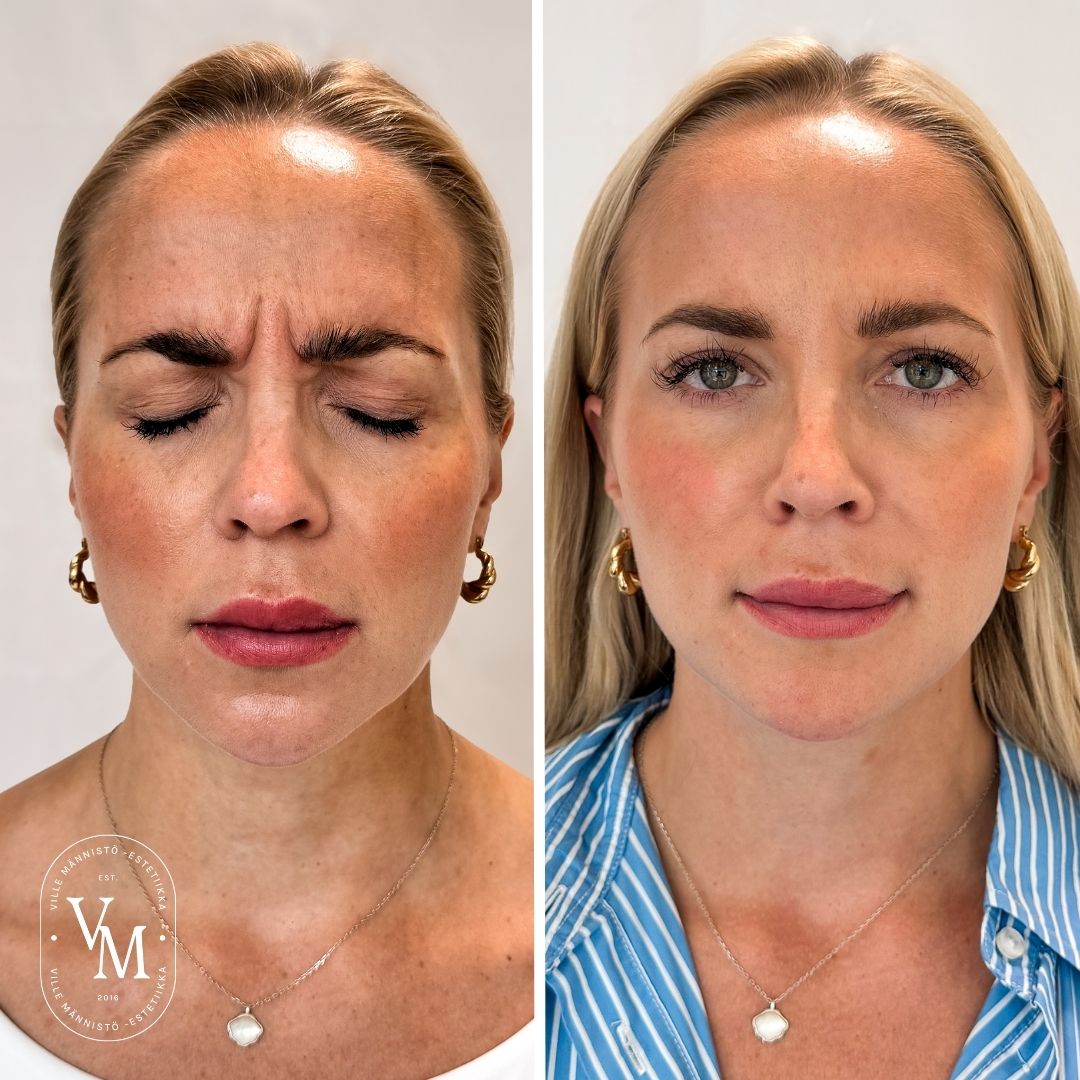
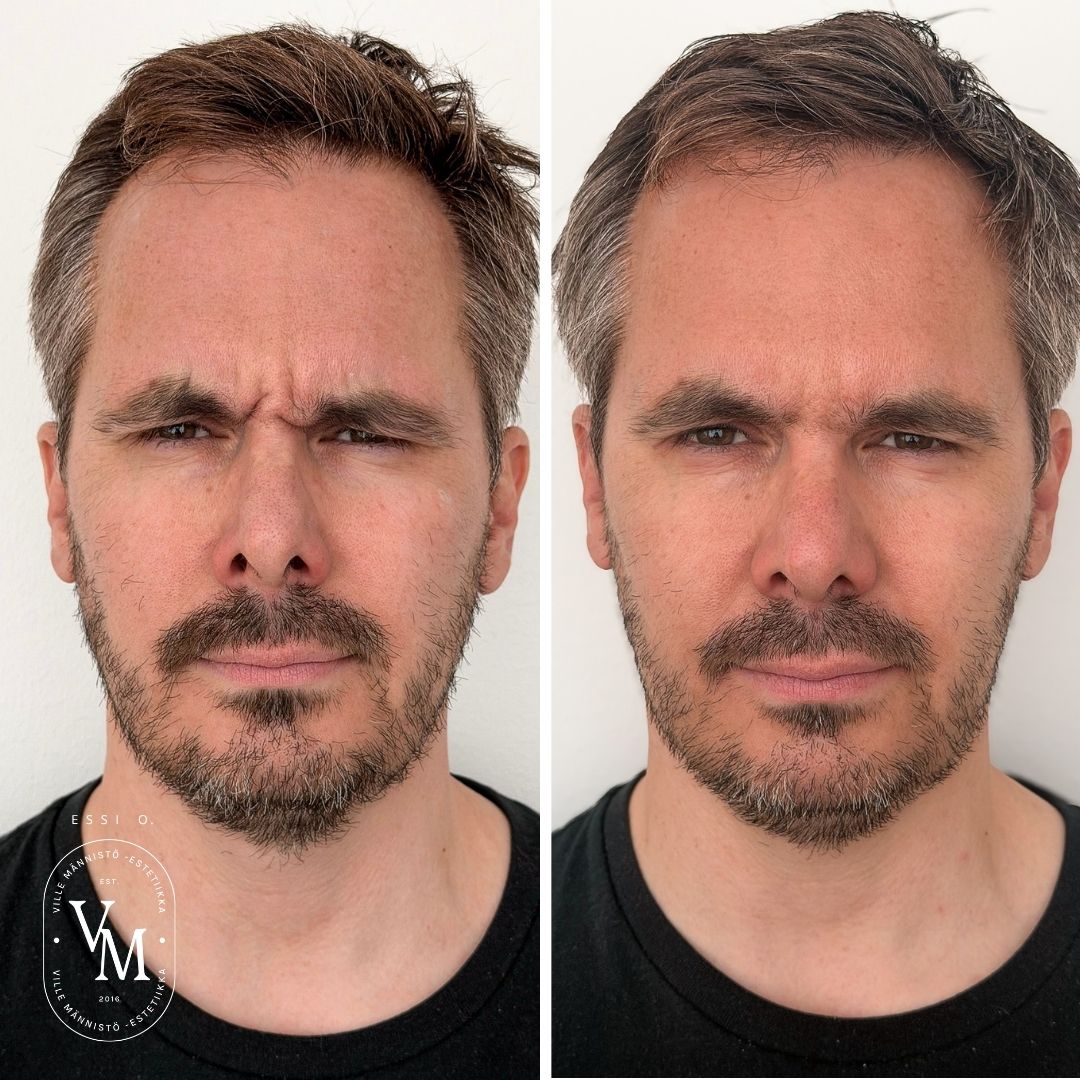
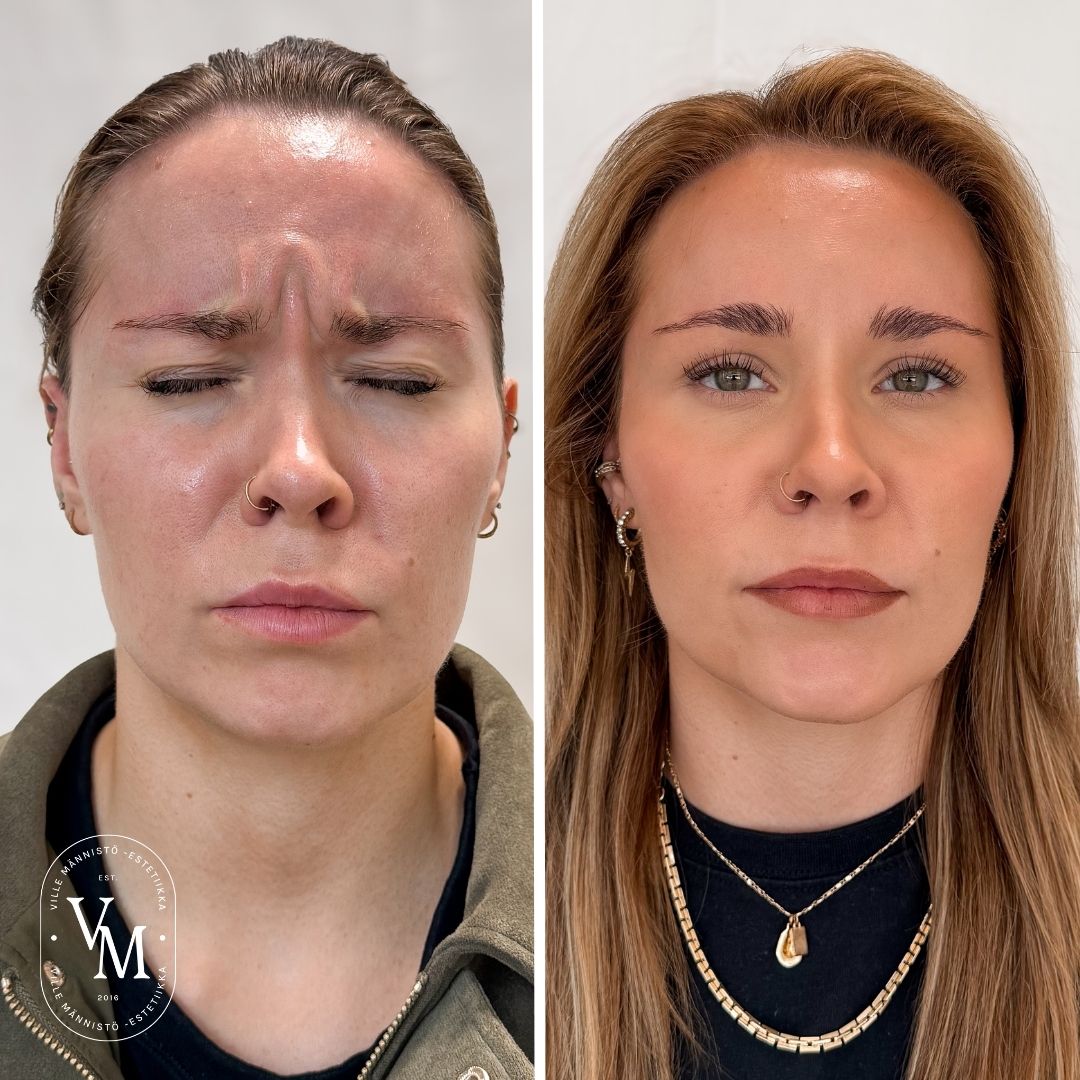
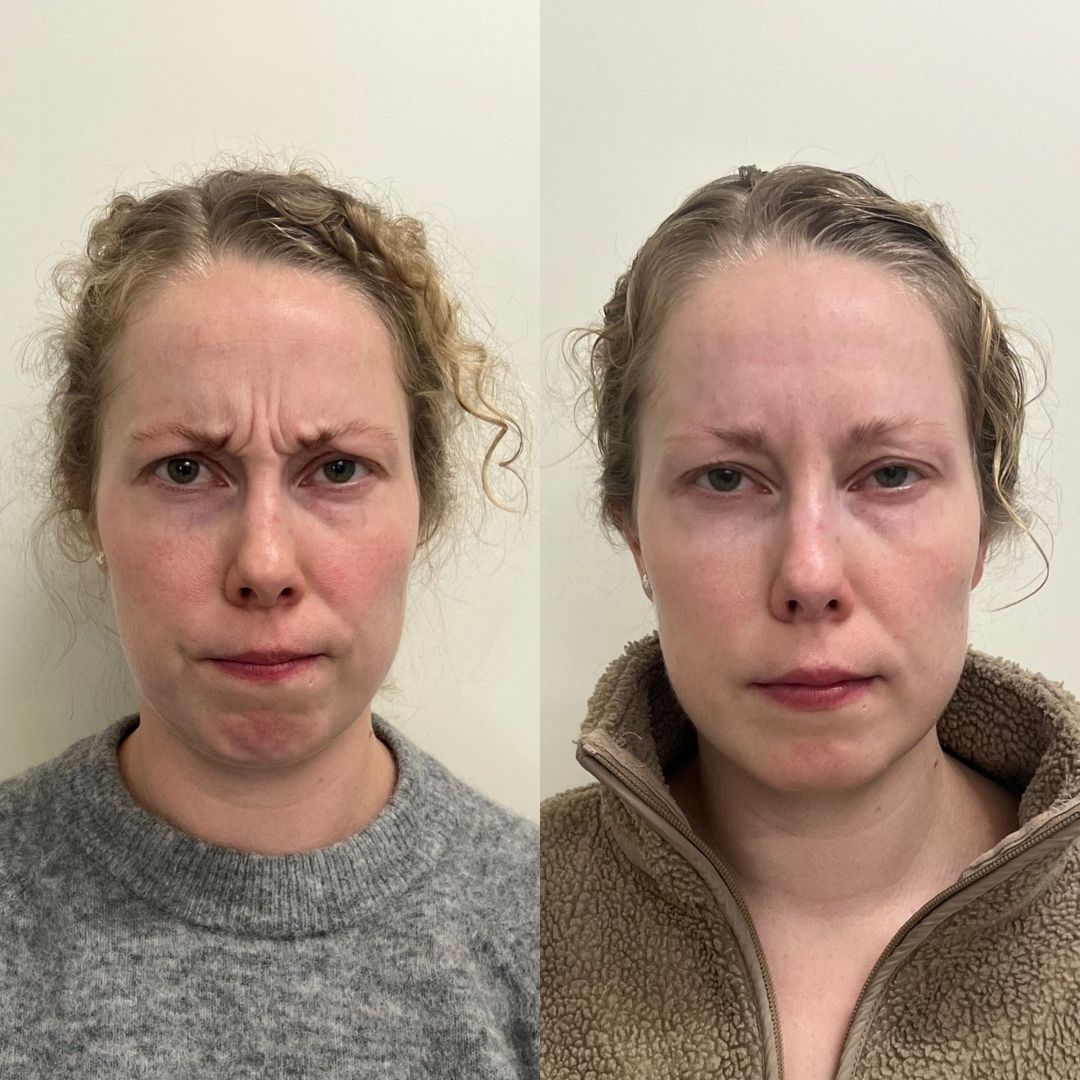
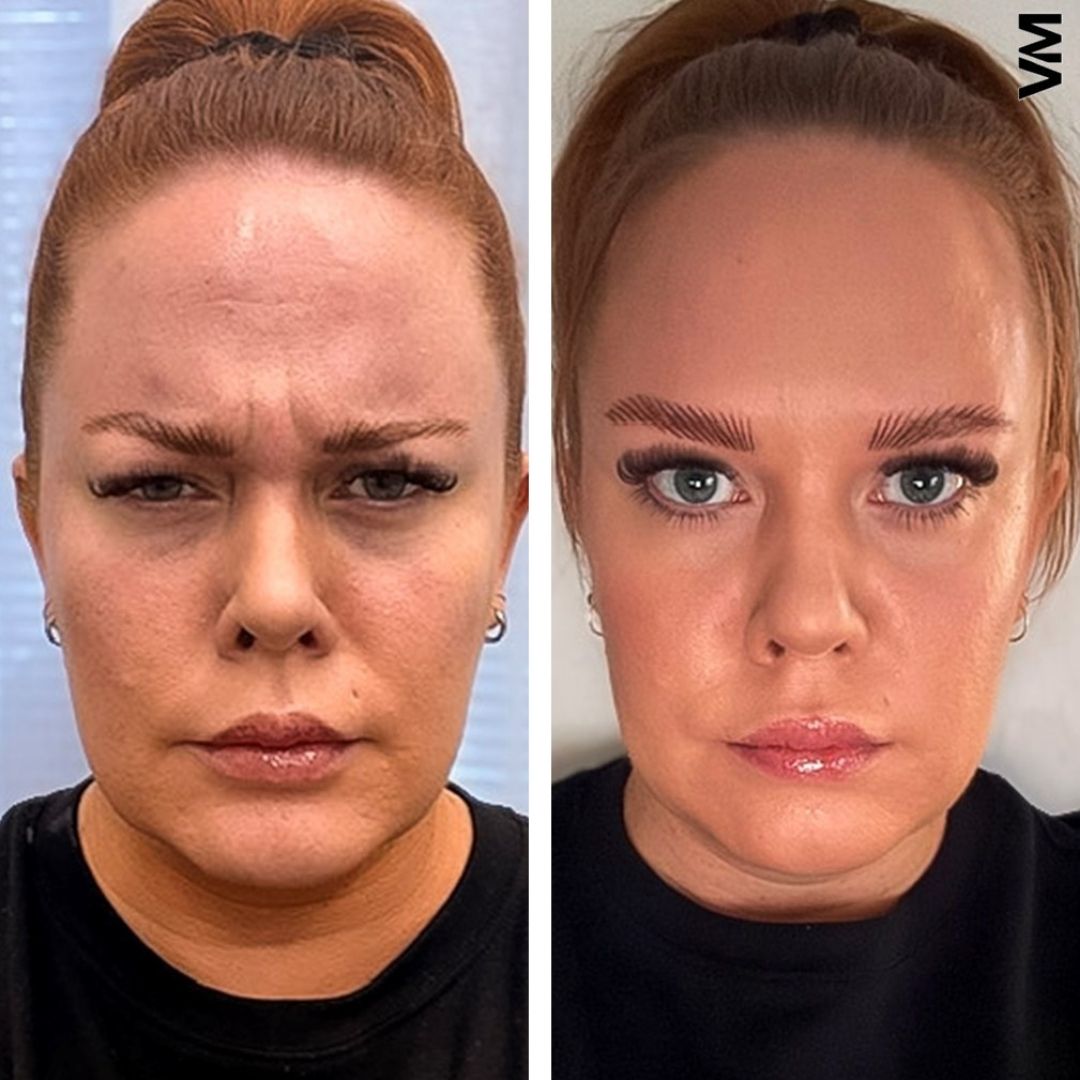
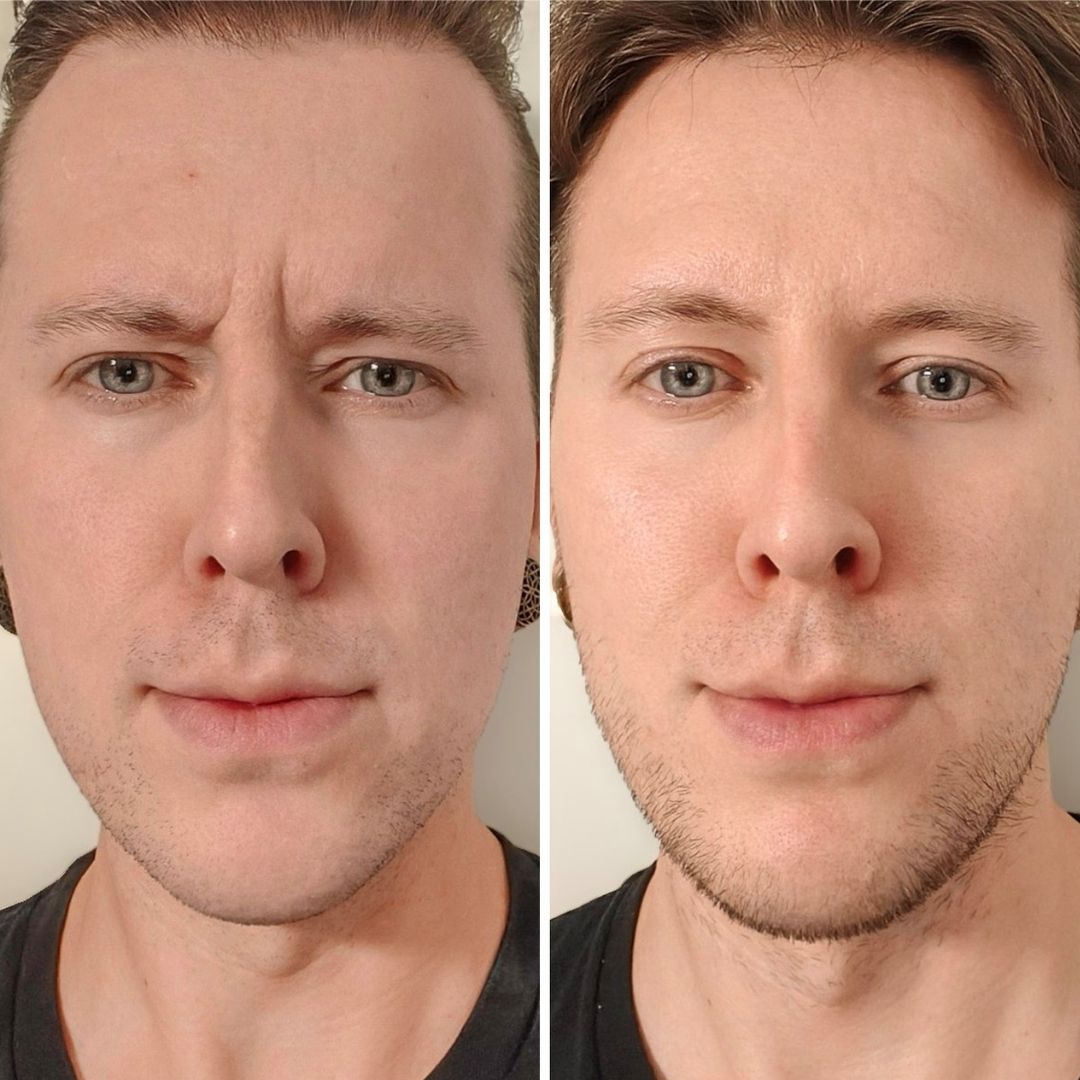
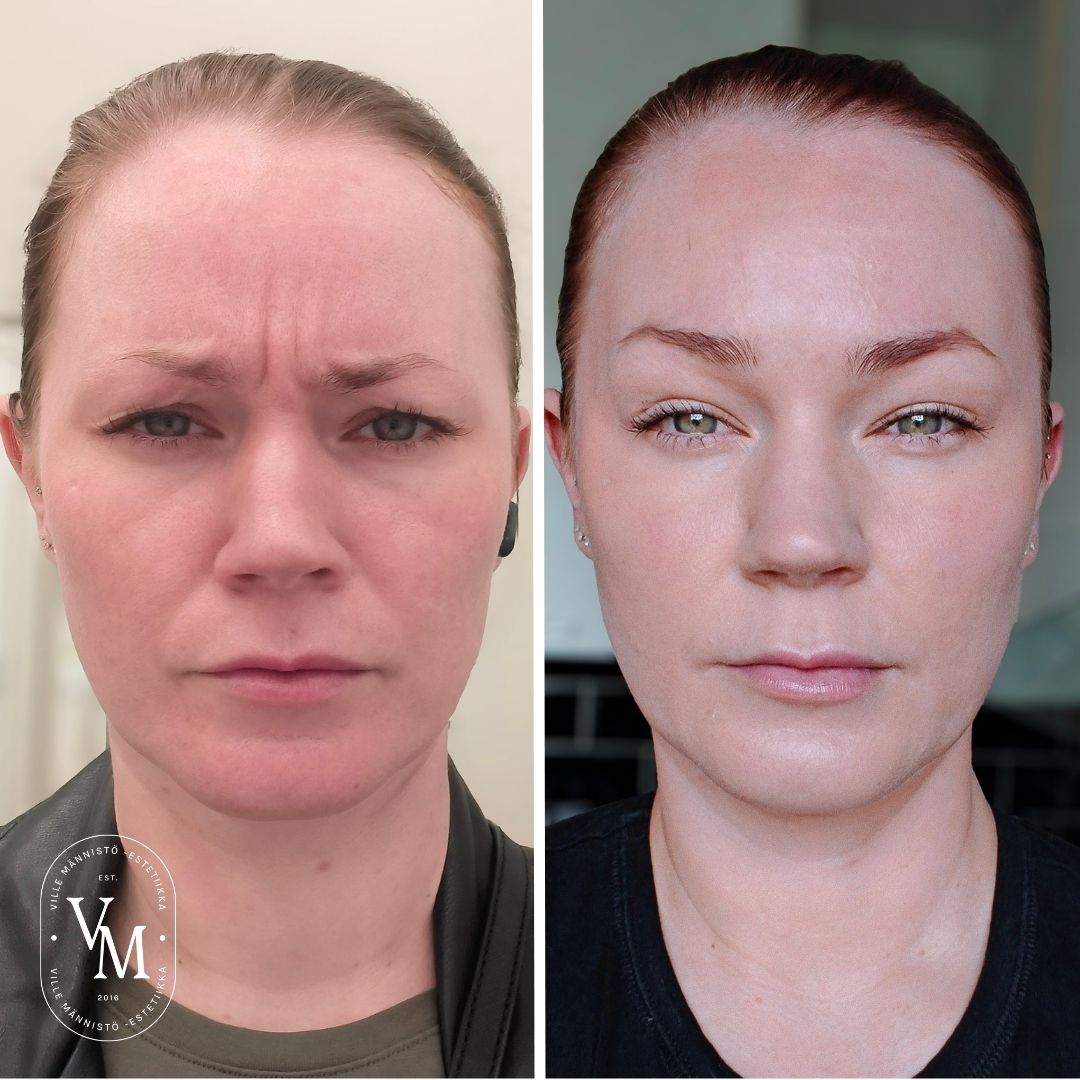
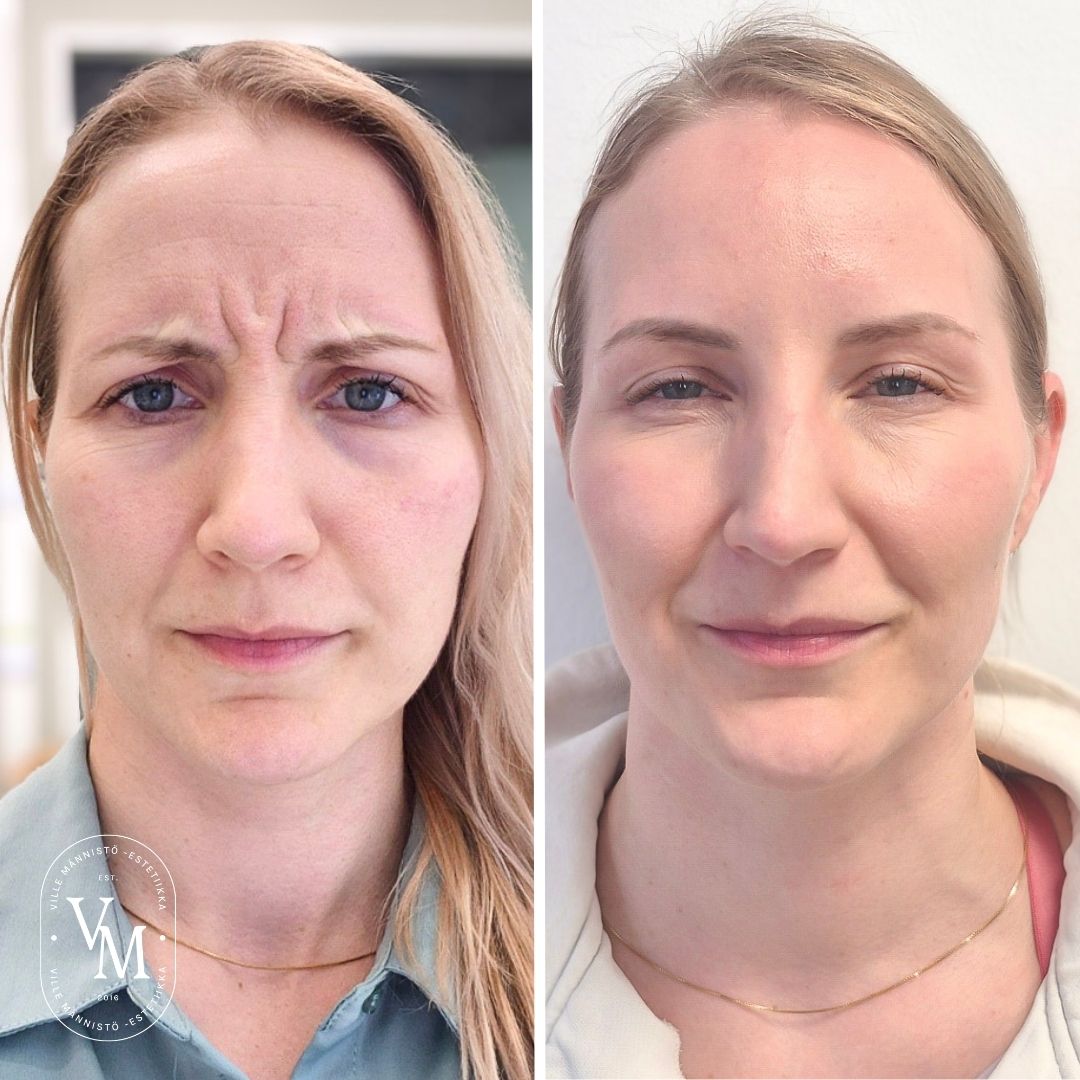
The "11 lines" are one of the most common reasons people seek Botox treatment. Following treatment by Ville Männistö, the patient was unable to frown, even when trying her hardest.
Contact Information
VM Aesthetics | Itätuulenkuja 10 A | 02100 Espoo
info@vmestetiikka.fi | 044 901 3411
VM Aesthetics in Tapiola, Espoo, with excellent public transportation links. It is easy to reach the clinic by car or by metro.

Botox Feedback
Helsinki, Espoo, Vantaa
Free Botox consultation
Espoo and Vantaa
(Helsinki starting November 1)
Are you considering Botox treatment? You can book an appointment directly for Botox treatment or start with a free, no-obligation consultation. The consultation can also be conducted using photos.
Frequently Asked Questions
Botox in Espoo
What is Botox treatment?
Botulinum toxin, or Botox, treatment is a cosmetic or medical injection procedure in which type A botulinum toxin is injected into a muscle.
Common aesthetic indications for Botox treatment include facial wrinkles and other signs of aging. The most well-known medical indications include bruxism, migraines, and excessive sweating.
Treatment results are always temporary.
What does Botox do?
Relaxes the muscle
Botox, or botulinum toxin, blocks the release of a neurotransmitter called acetylcholine from the nerve ending. When the release of acetylcholine is blocked, the muscle treated with Botox does not receive the signal to contract. As a result, it remains relaxed for 3–6 months.
Reduces wrinkles
The skin over the relaxed muscle also relaxes. As a result, the expression lines in the treated area disappear for a few months.
Gently enhances facial features
If botulinum toxin treatment is used to relax the downward-pulling muscles (e.g., the platysma or DAO muscles), the facial features in the treated area will lift slightly.
Can a nurse administer Botox?
A nurse may administer Botox under the following conditions:
- Training. Nurses must have received training in administering botulinum toxin injections and possess sufficient practical skills.
- Authorization from a physician or dentist. A licensed physician or dentist must verify the caregiver’s competence and provide written authorization to administer injections.
- Prescription. Botulinum toxin treatment requires an evaluation by a doctor or dentist. The same doctor also writes the prescription.
- Presence of a physician or dentist. Botulinum toxin treatment must be performed under the direction and supervision of a physician or dentist. A physician must be immediately available on site.
- Healthcare facility. A nurse may administer Botox only at a healthcare facility (license issued by the Licensing and Supervisory Authority).
at VM Aesthetics , the treatment protocols at VM Aesthetics are designed by surgeon Männistö or Dr. Laura Juopperi. These treatment protocols are available in written form as part of our internal training materials. When nurse Essi Ojala administers a botulinum toxin treatment, she does so in accordance with a treatment plan approved by a physician.
Is Botox a neurotoxin?
Yes. Botulinum toxin is the world's most potent neurotoxin. However, when administered in the correct dosage, it is an effective and safe medication.
In medical treatments, botulinum toxin is injected into muscles in extremely small doses, and in cosmetic Botox treatments, the substance is used in even smaller amounts.
“What is not poison? All substances are poisonous, and nothing is free of poison. It is only the dose that determines whether a substance is poisonous,” stated Paracelsus, known as the father of toxicology, hundreds of years ago.
What are the side effects of Botox treatment?
Most common risks and side effects:
- redness at the injection site
- bruises
- a brief stinging sensation at the injection site
- an undesirable outcome if botulinum toxin is injected in the wrong place
How long does Botox last?
For most people, the effects of Botox last 3 to 6 months.
The effects usually begin within a few days of the injection and reach their full strength after about two weeks.
What should you avoid doing after Botox?
Botox aftercare:
- Do not rub the injection site
- Stay upright for four hours after treatment
- Avoid strenuous exercise for the first 48 hours
- Also avoid saunas, extreme temperatures, and alcohol for the first 24 hours
How much does Botox cost?
Botulinum toxin is an expensive substance…
- Botox, or botulinum toxin, is an incredibly valuable substance that costs approximately 200 trillion euros per kilogram.
- A lethal dose of Botox would cost about 200,000 euros.
… but Botox treatment is a fairly affordable procedure
- The amounts of Botox used in medical and cosmetic treatments are extremely small, which is why it is possible to use this substance—which is more expensive than gold—for such procedures
- at VM Aesthetics Botox treatments cost between 270 and 790 euros
- Our medical botulinum toxin treatments cost between 490 and 690 euros
Botox or Dysport?
Botox is a botulinum toxin product manufactured by Allergan, while Dysport is manufactured by Galderma. Both are high-quality botulinum toxin products. However, there are individual differences. For some clients, one brand produces better and longer-lasting results than the others.
The term "Botox treatment" is used as a synonym for all botulinum toxin treatments. We often refer to a treatment as "Botox" even when it is performed using a product such as Dysport, Xeomin, or Vistabel.
Is Botox covered by Kela?
If your doctor has prescribed medical Botox treatment for you, you can receive your botulinum toxin medication with Kela reimbursement (-40%) provided that the initial copayment of 70 euros has been exceeded.
Cosmetic Botox treatments are not covered by Kela.
How do I get a prescription for Botox?
If you suffer from migraines, excessive sweating, or any other health condition that can be treated with Botox, here’s what you can do:
- Please contact us either by email or by phone
- If the diagnostic criteria are met, Dr. Laura Juopperi will write you a Botox prescription
- After that, you can purchase your botulinum toxin medication at a pharmacy with Kela coverage
Botulinum Toxin Treatment for Masticatory Muscles and Kela Reimbursement
Kela reimbursement for Botox treatment for bruxism ended in spring 2025. However, if bruxism is associated with functional headaches, Kela reimbursement may still be available in certain cases.
Can medical Botox treatments be performed using VM Aesthetics’ botulinum toxin?
Yes.
The first medical botulinum toxin treatment is almost always performed using the clinic’s own product. Follow-up treatments can also be performed using VM-Esthetics products.
Is Botox treatment suitable for everyone?
Botox treatment is a safe and well-tolerated procedure when performed by a doctor or dentist. However, it is not suitable for everyone.
Contraindications
- pregnancy
- breastfeeding
- some neuromuscular disorders
- Hypersensitivity to botulinum toxin or to any of the drug’s excipients
- active skin inflammation in the area where Botox is to be injected
What is Botox used for?
Botox is most commonly used to treat forehead lines, frown lines between the eyebrows (glabellar lines), and crow’s feet around the eyes.
Botox is also suitable for treating migraines, bruxism, and excessive sweating.
Does Botox treatment hurt?
The treatment usually feels like small pricks or pinches. The discomfort is minimal and lasts only a moment.
How quickly does Botox start to work?
The effects usually begin within a few days of treatment. The most noticeable results appear after about 1–2 weeks.
How often should you get Botox?
One treatment session is sufficient, but to maintain the results, the treatment is usually repeated every 3 to 6 months.
Can I go to work after getting Botox?
Yes, you can. The procedure usually doesn't require any recovery time, and you can get back to your daily routine right away.
Can Botox go wrong?
The treatment results may be uneven or too intense if the dosage is not balanced. For this reason, the treatment is carefully planned and monitored two weeks after the procedure.
Does Botox look natural?
The natural look depends on the dosage. When administered in moderation, Botox smooths out wrinkles without making facial expressions look stiff.
Who is Botox suitable for?
Botox is suitable for adults who want to reduce expression lines or prevent them from deepening.
What is full-face Botox?
Full-face Botox is a comprehensive botulinum toxin treatment in which botulinum toxin is injected throughout the entire face. The treatment plan is always tailored individually based on the client’s desired results.
A full-face Botox treatment may require approximately 150 to 200 Allergan units of botulinum toxin. This amount is typically sufficient to treat either the entire face or the neck and jawline.
Price: 790 €
What is a Botox facelift?
A Botox facelift is a more comprehensive procedure than a full-face Botox treatment, in which botulinum toxin is used to relax all the muscles in the face and neck that pull the skin downward.
A typical Botox facelift:
- Nefertiti lift for the neck and jawline
- lifting the corners of the mouth
- lip flip
- brow lift (full forehead Botox treatment)
- lifting the tip of the nose
Price: 1,000 €
Is a full-face Botox treatment the same as a Botox facelift?
No, there isn't.
Both are extensive botulinum toxin treatments, but a Botox facelift is a more comprehensive procedure than a full-face Botox treatment.
Full-face Botox targets the entire face.
A Botox facelift targets the entire face and neck.
Free, no-obligation Botox consultation
Are you considering Botox treatment for cosmetic or medical reasons?
You’re warmly welcome to a free Botox consultation at VM-estetiikka in Tapiola or Tikkurila
— and, starting in November, also in Kalasatama, Helsinki.
We can also provide you with convenient remote consultations using photos.
Free photo consultation
