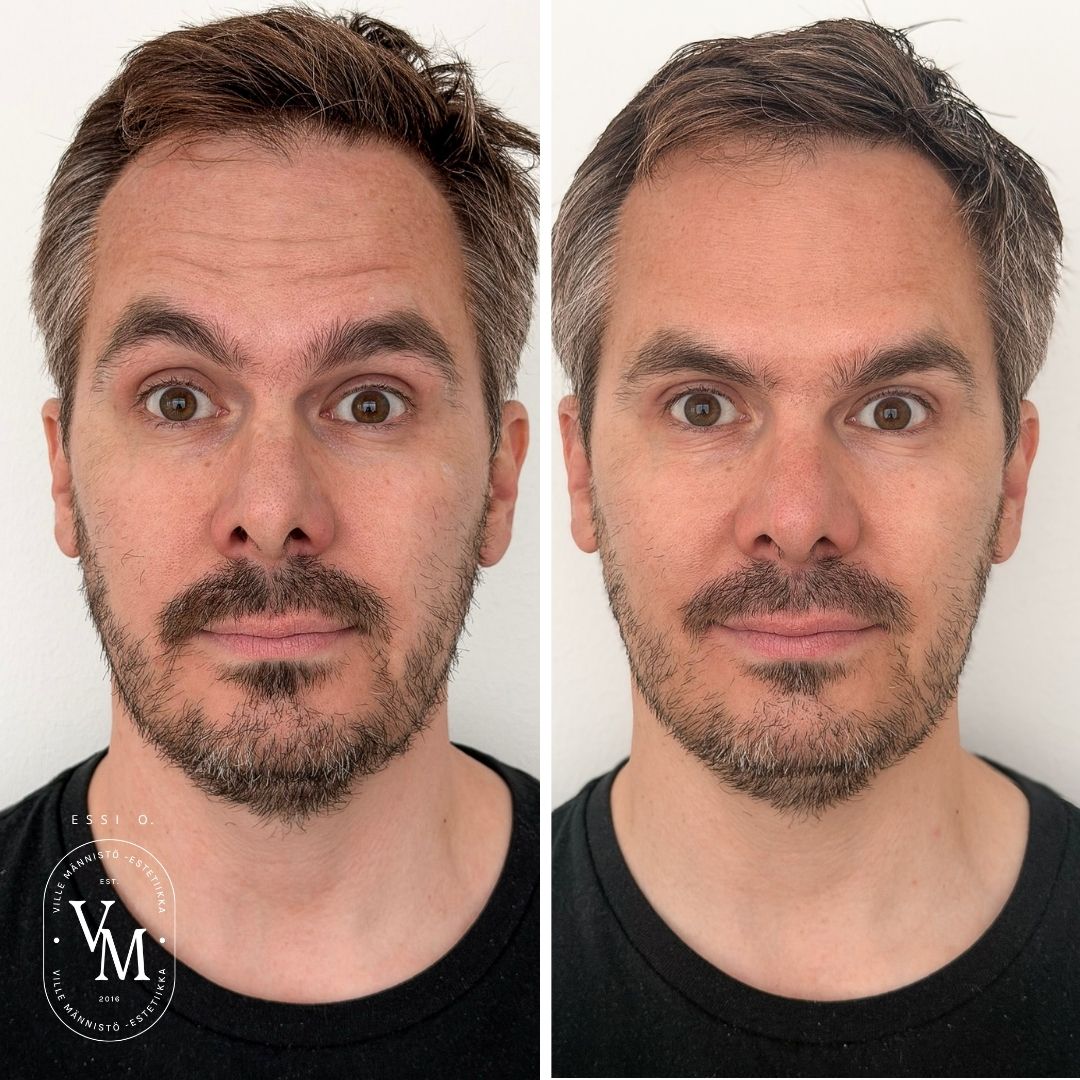
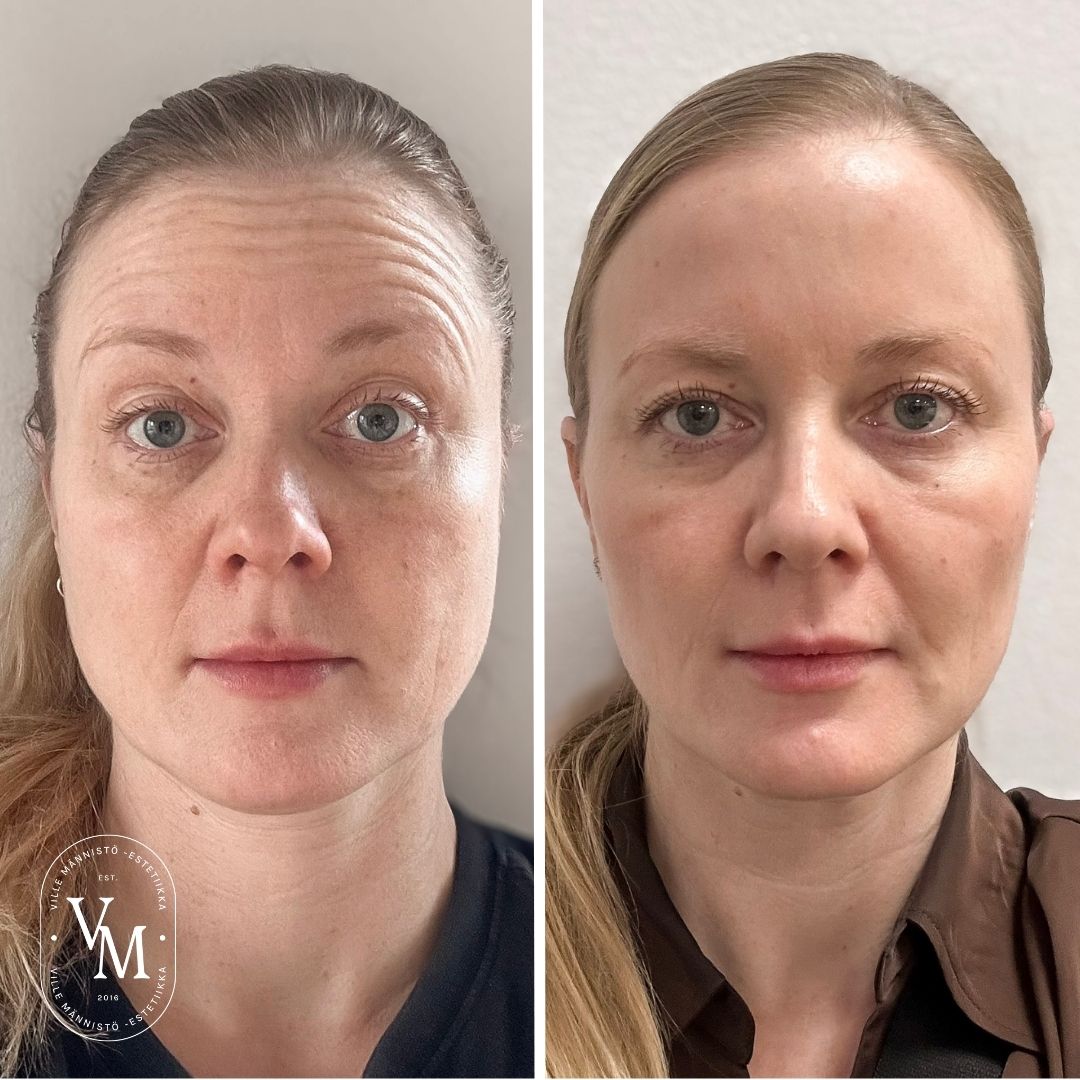
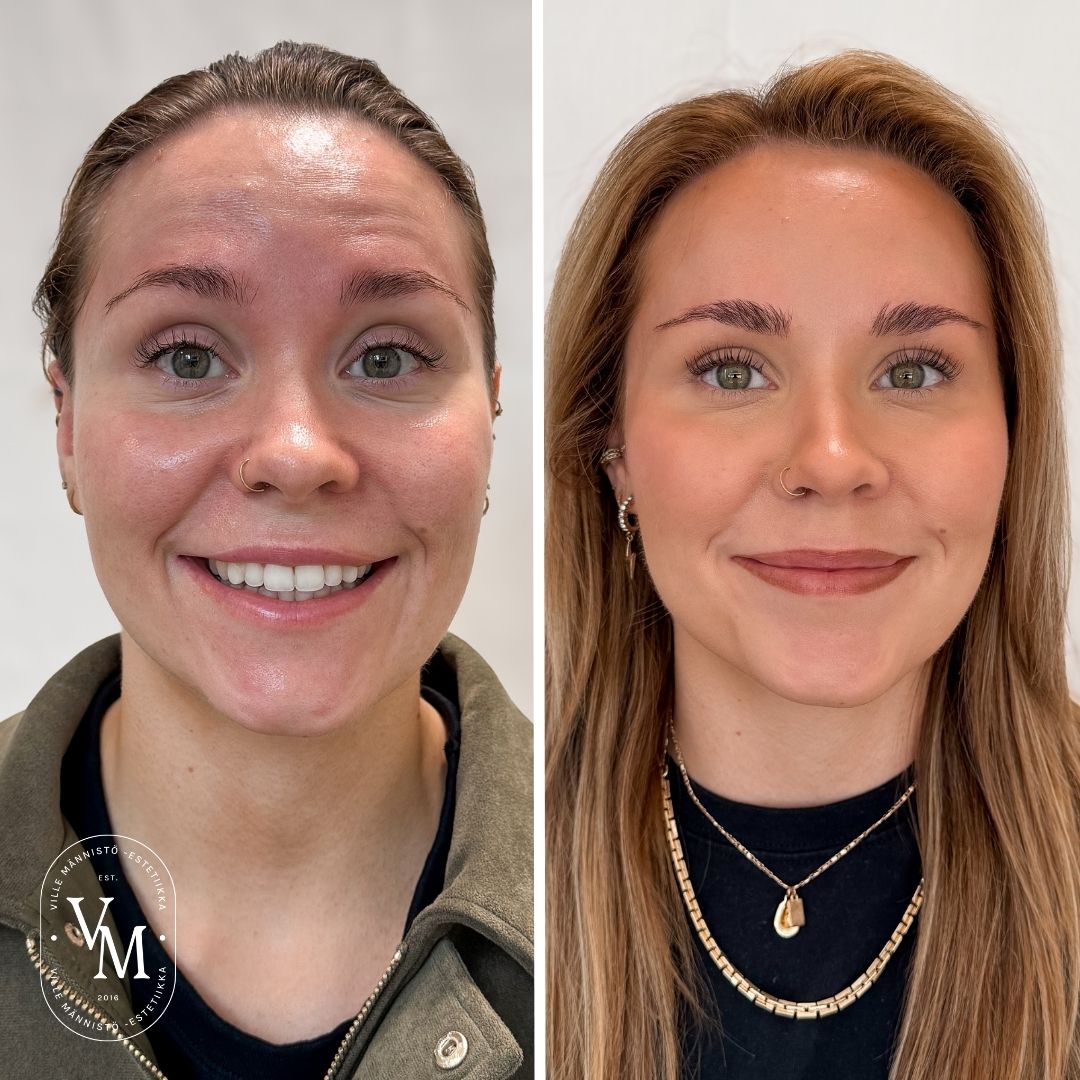
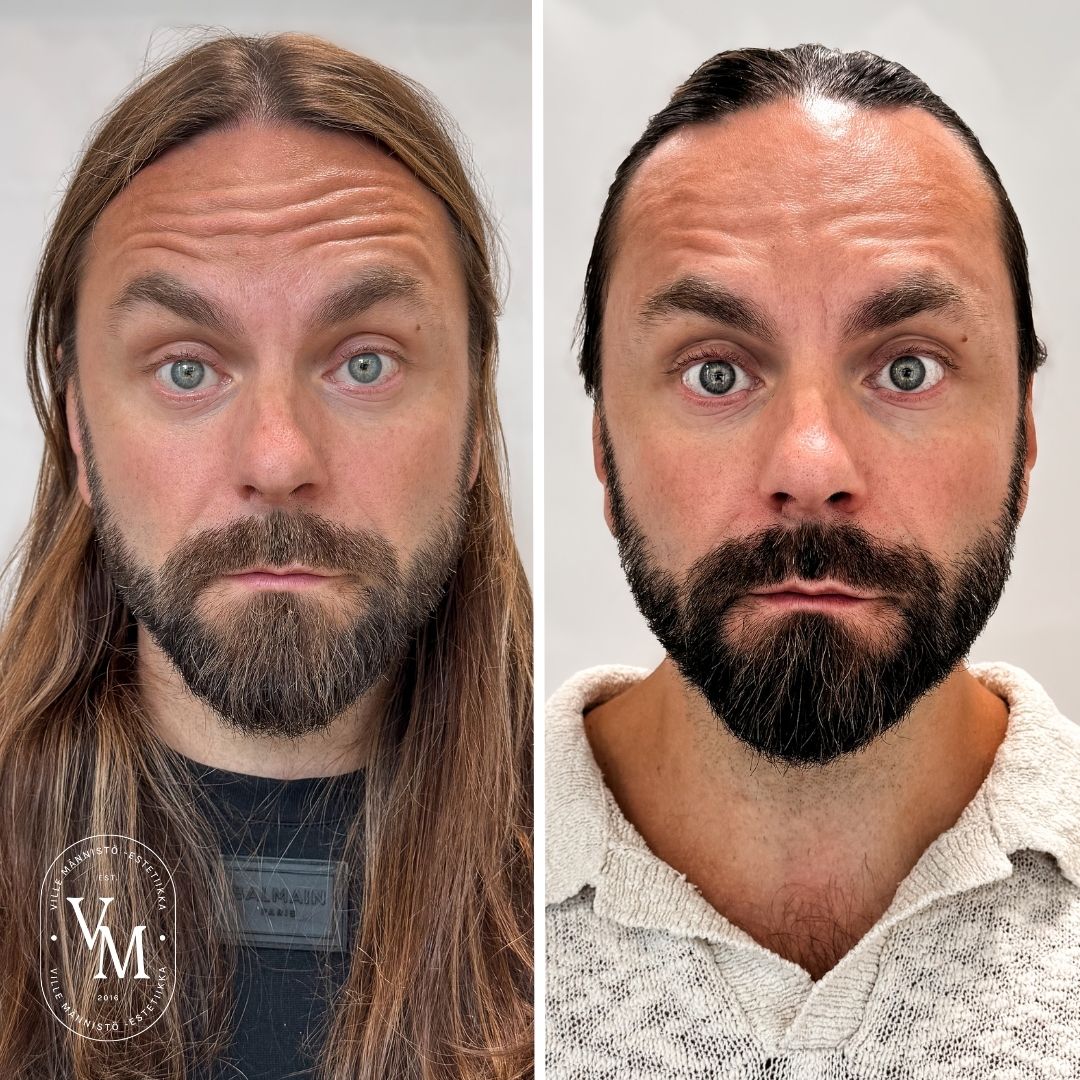
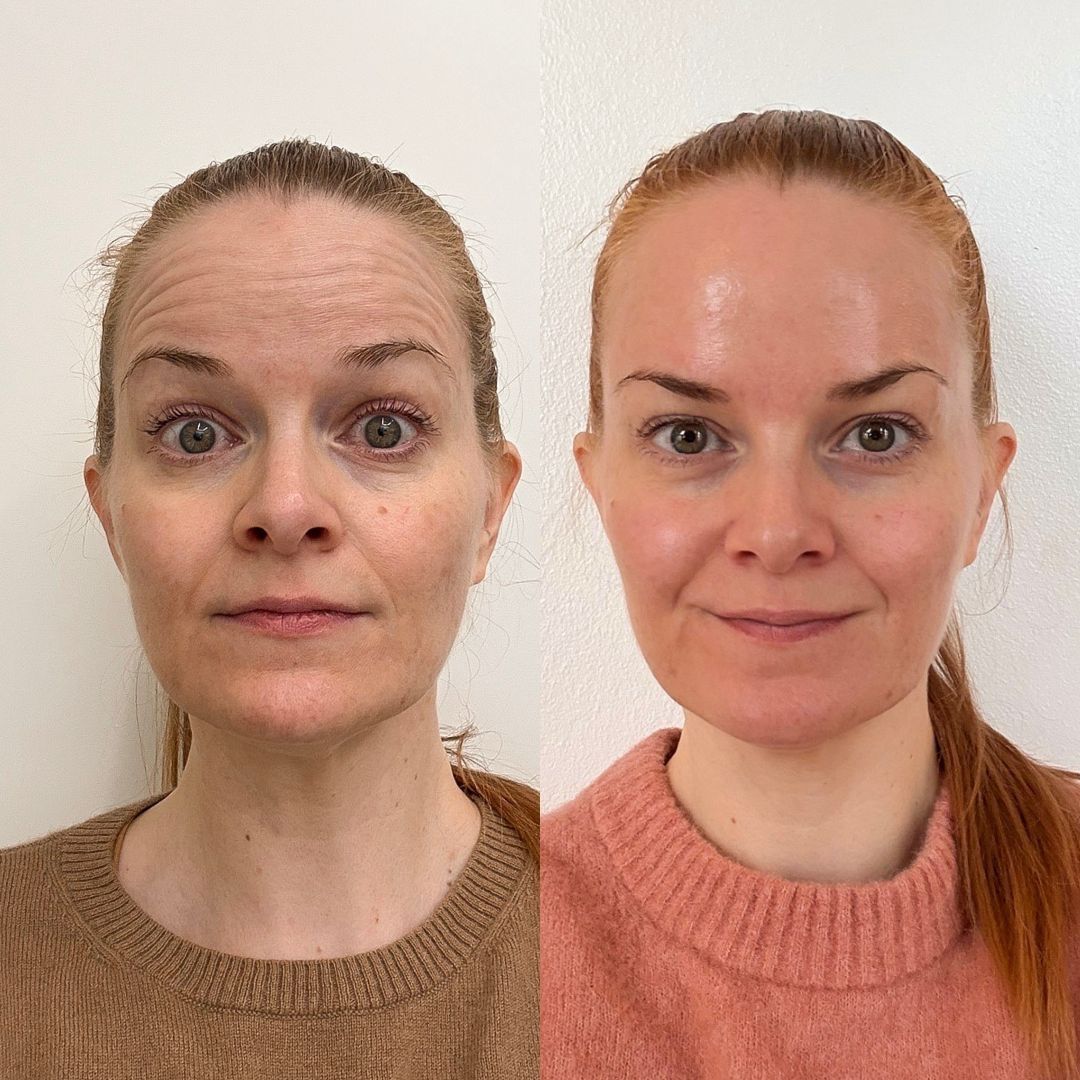
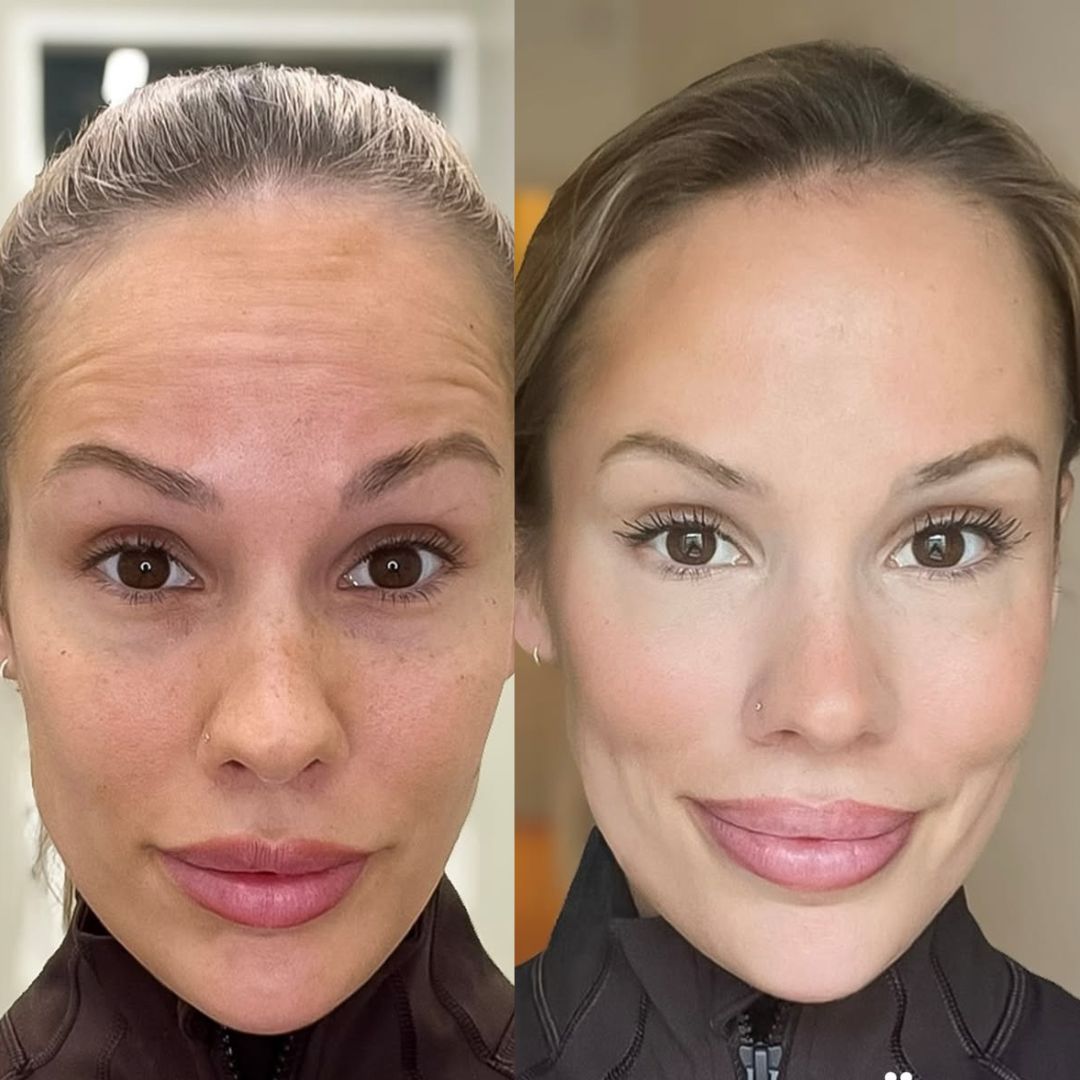
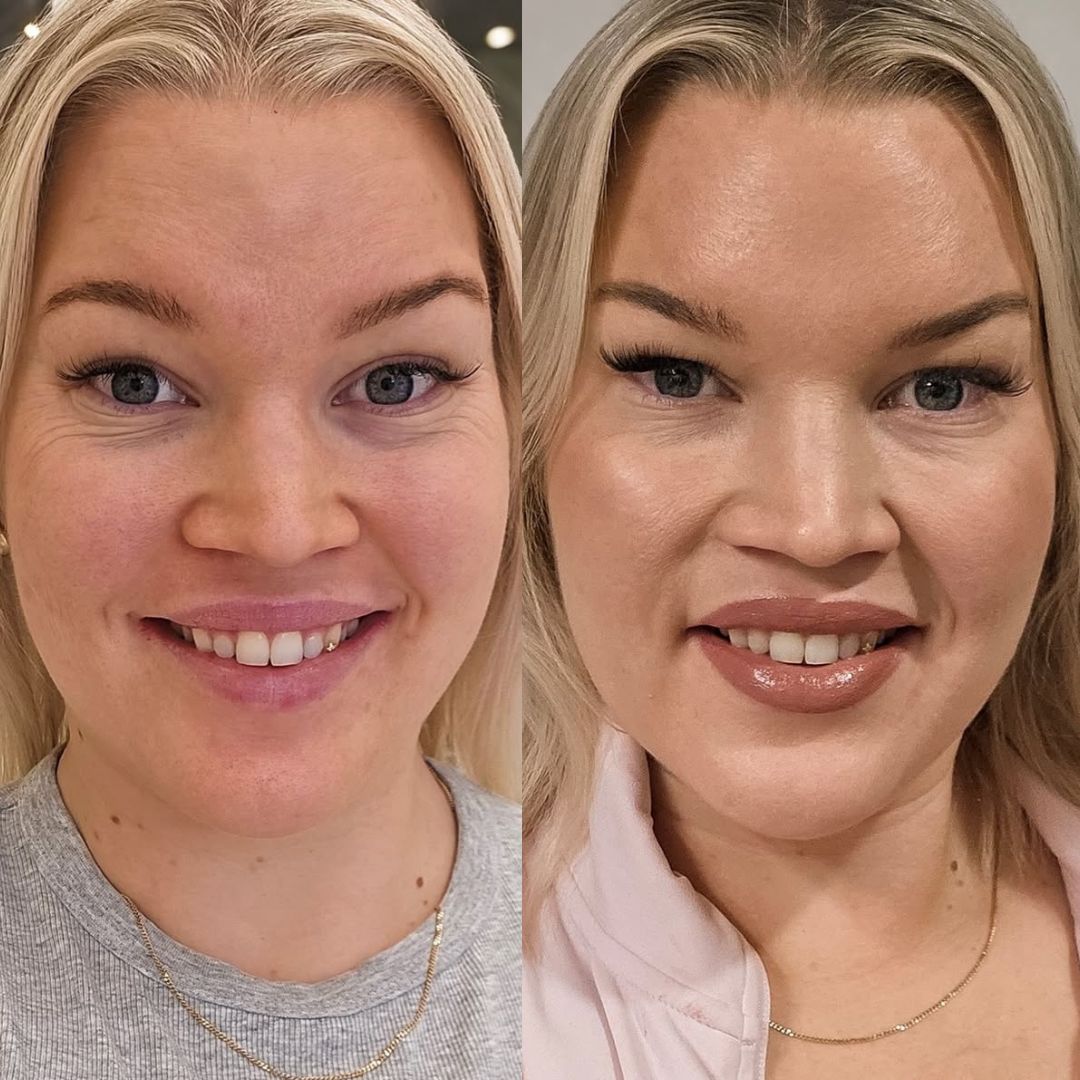
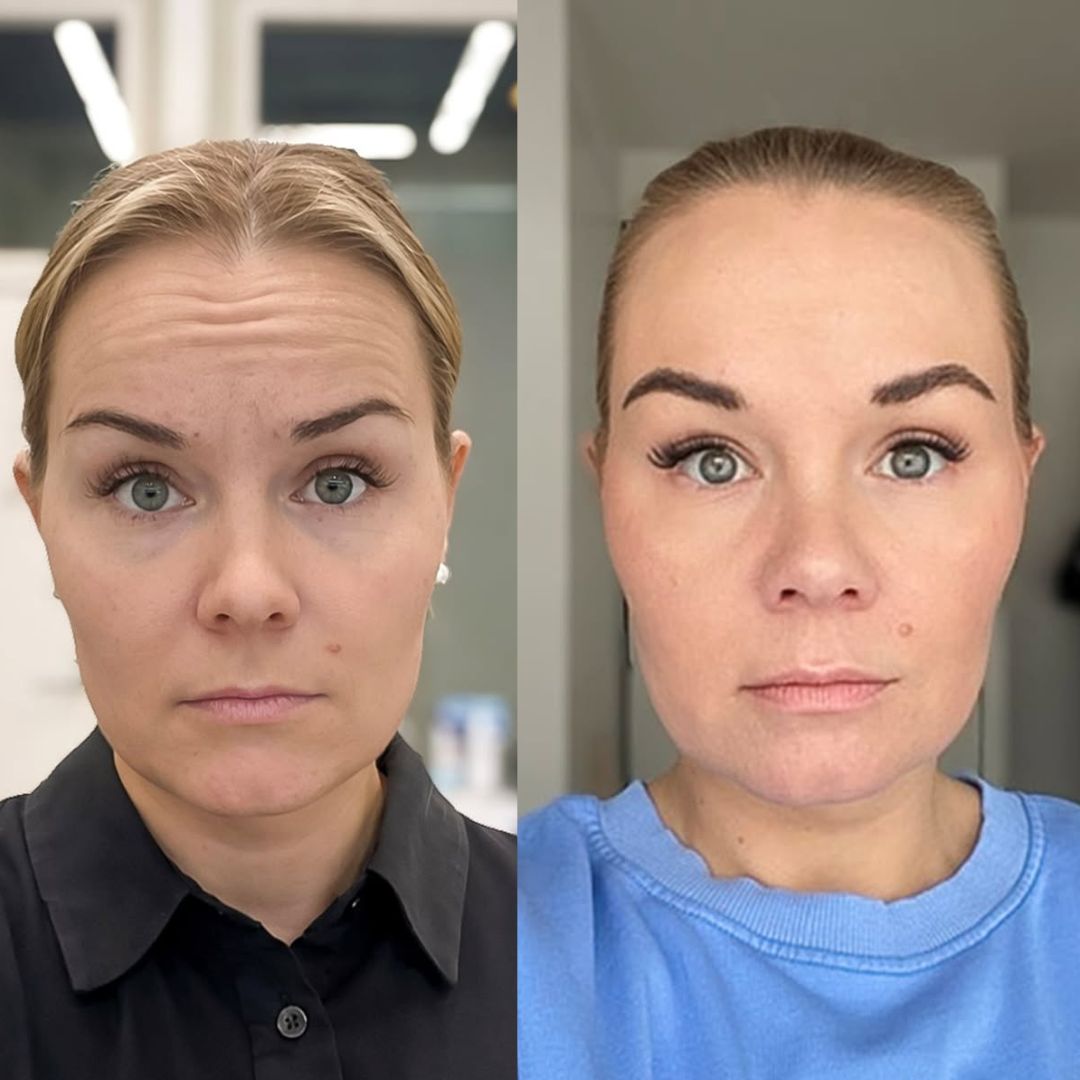
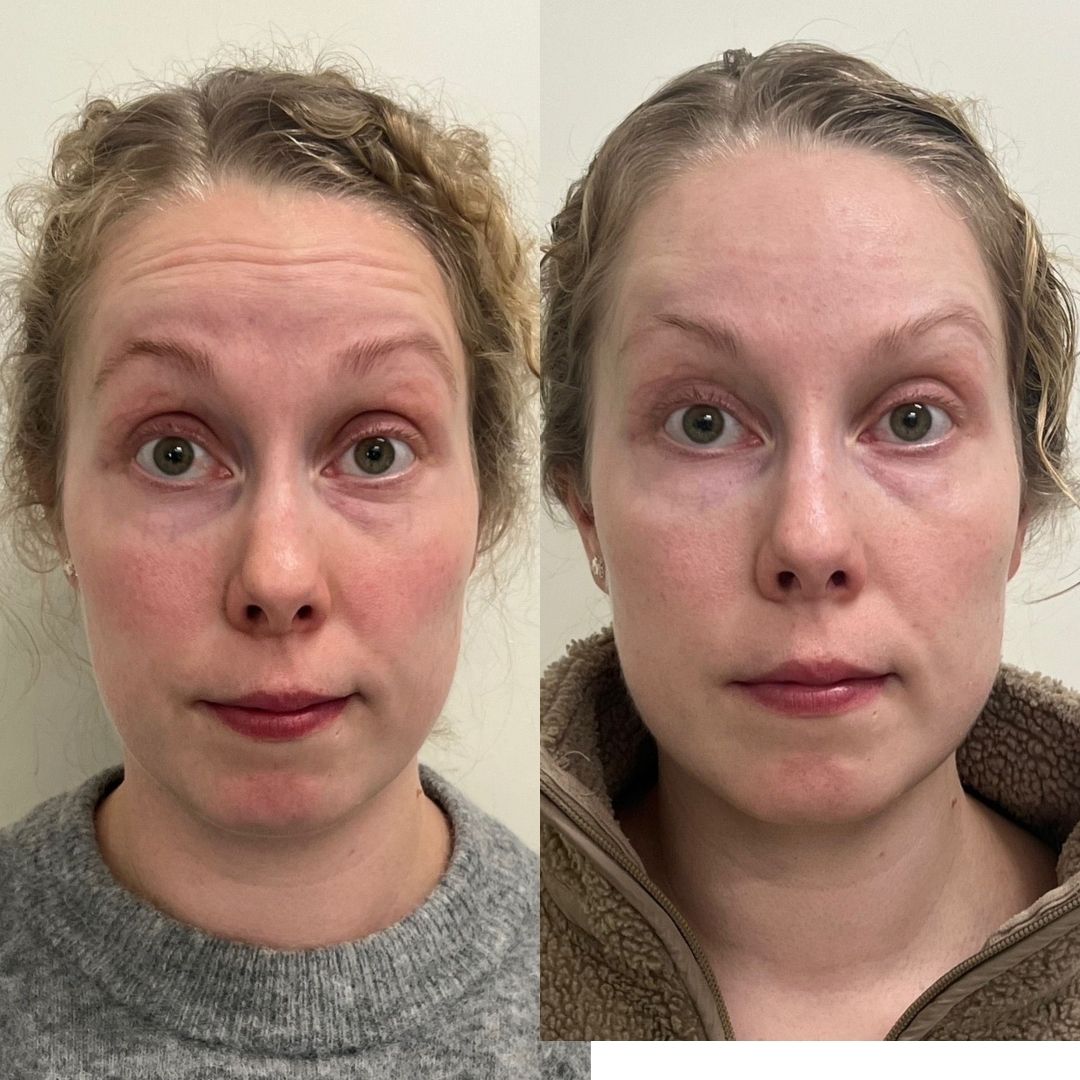
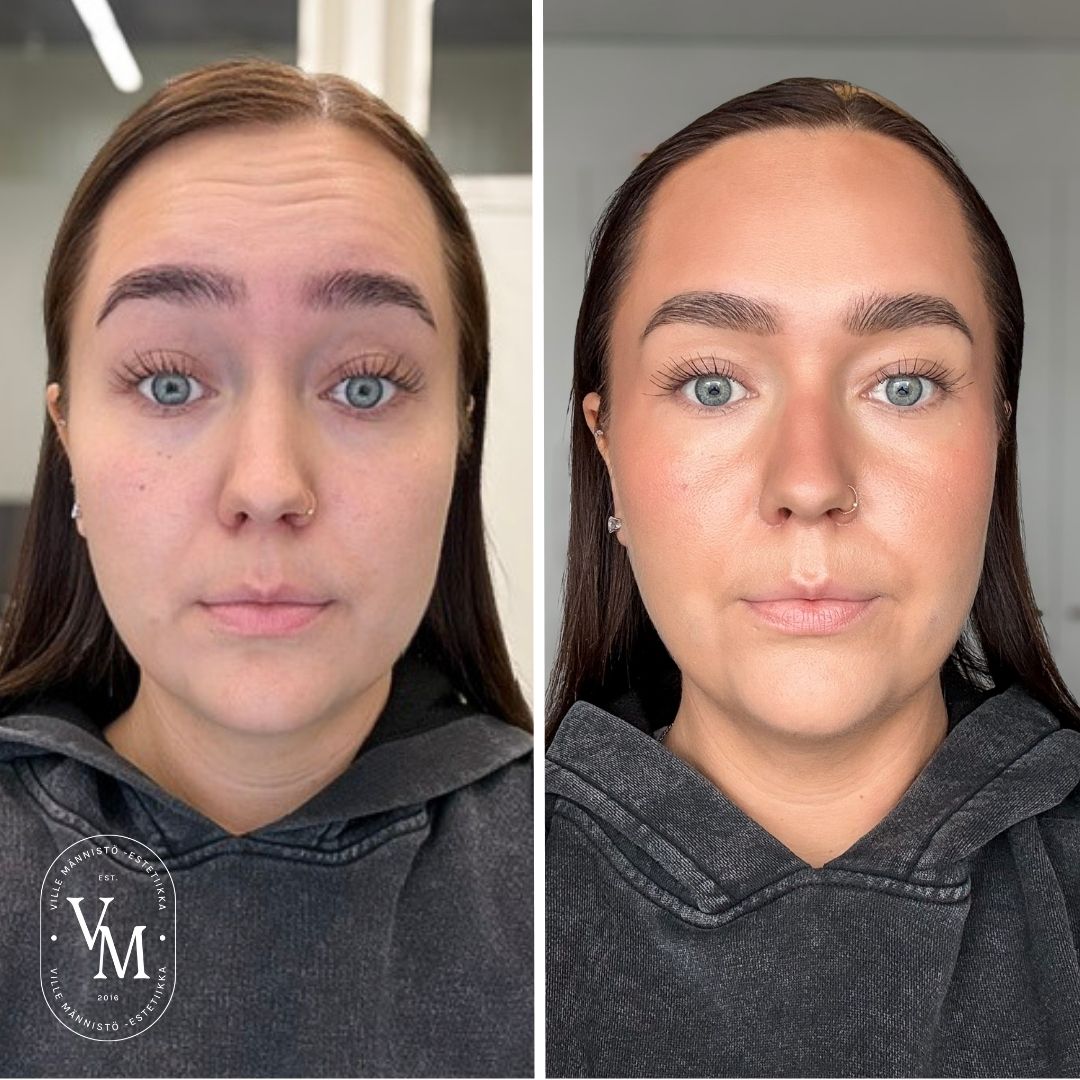
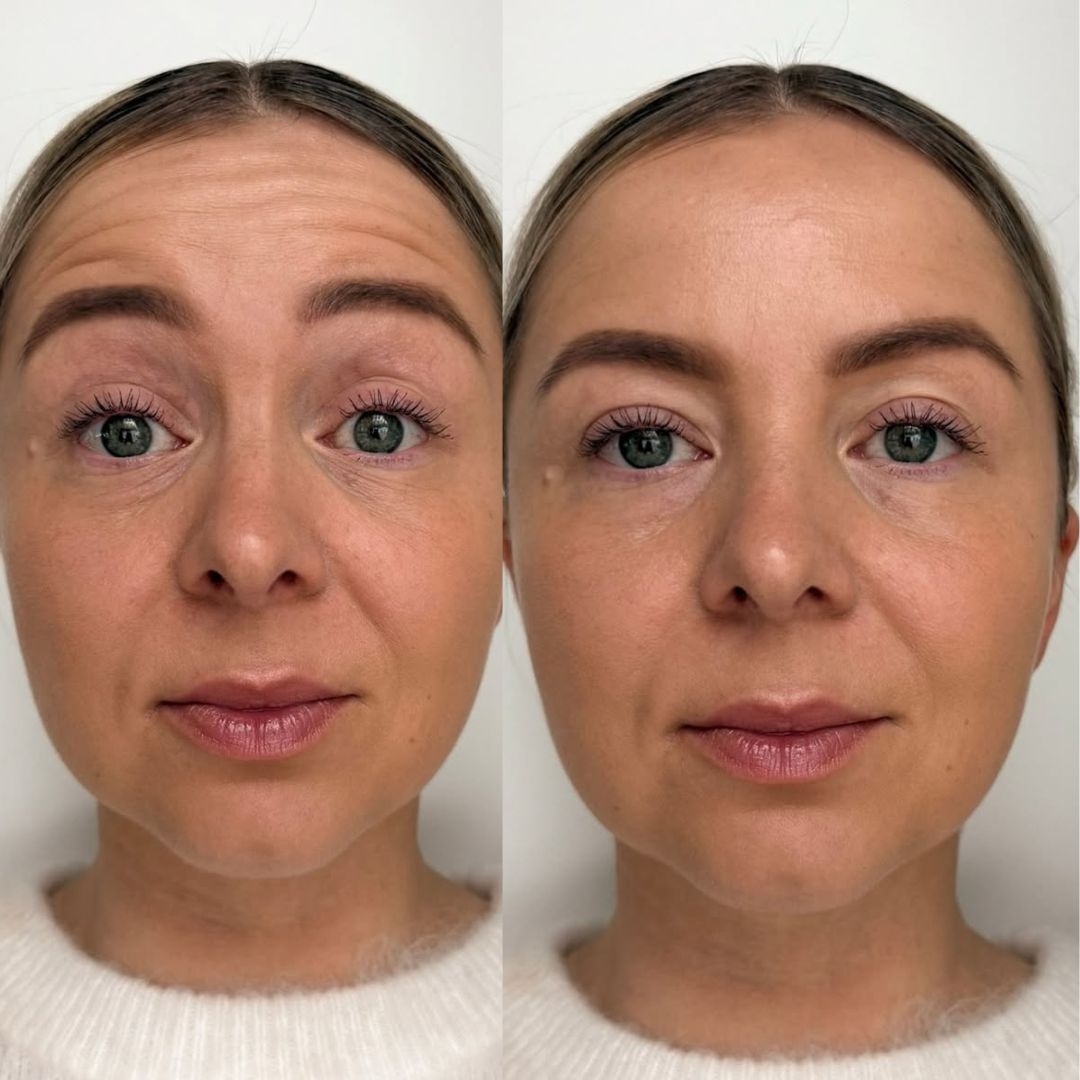
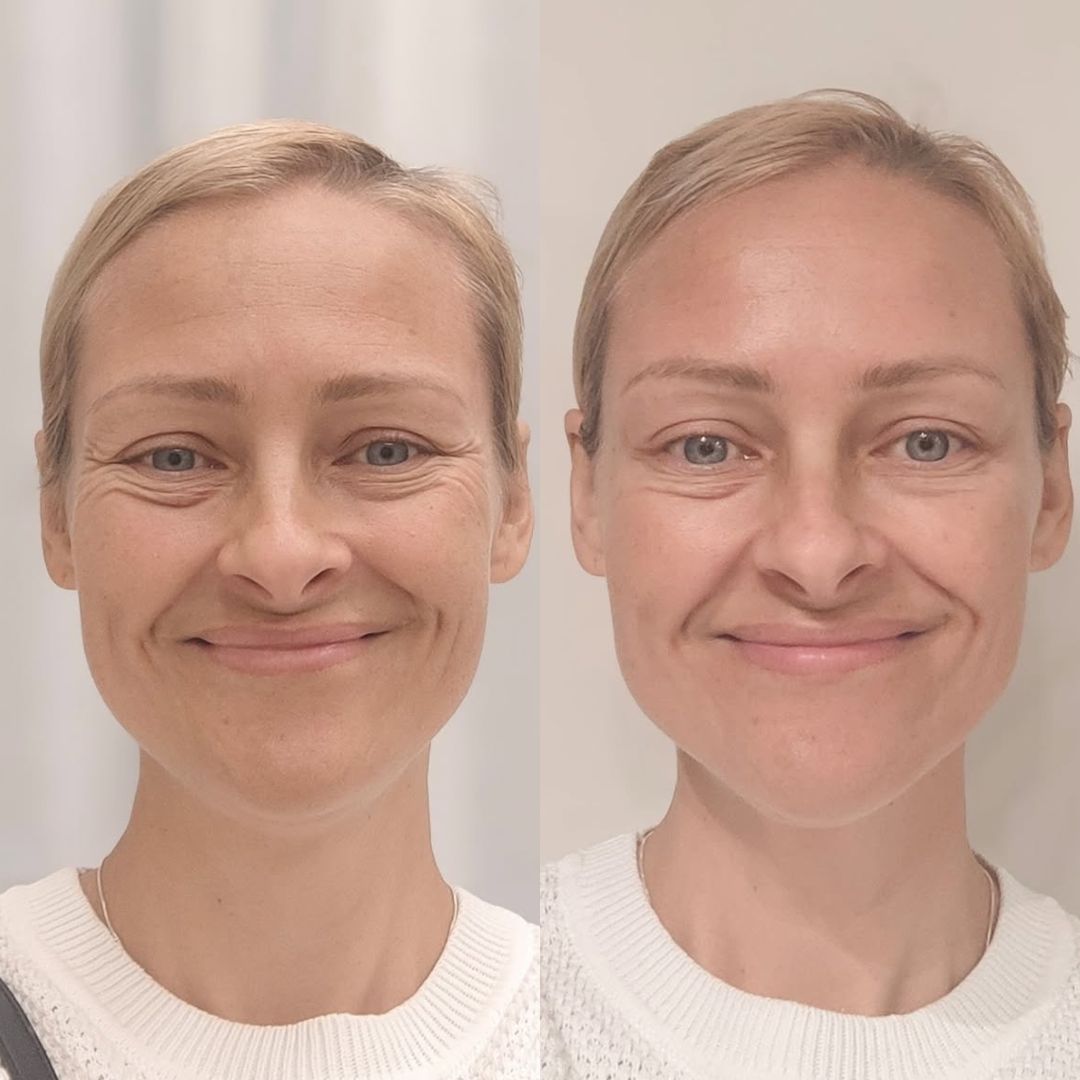
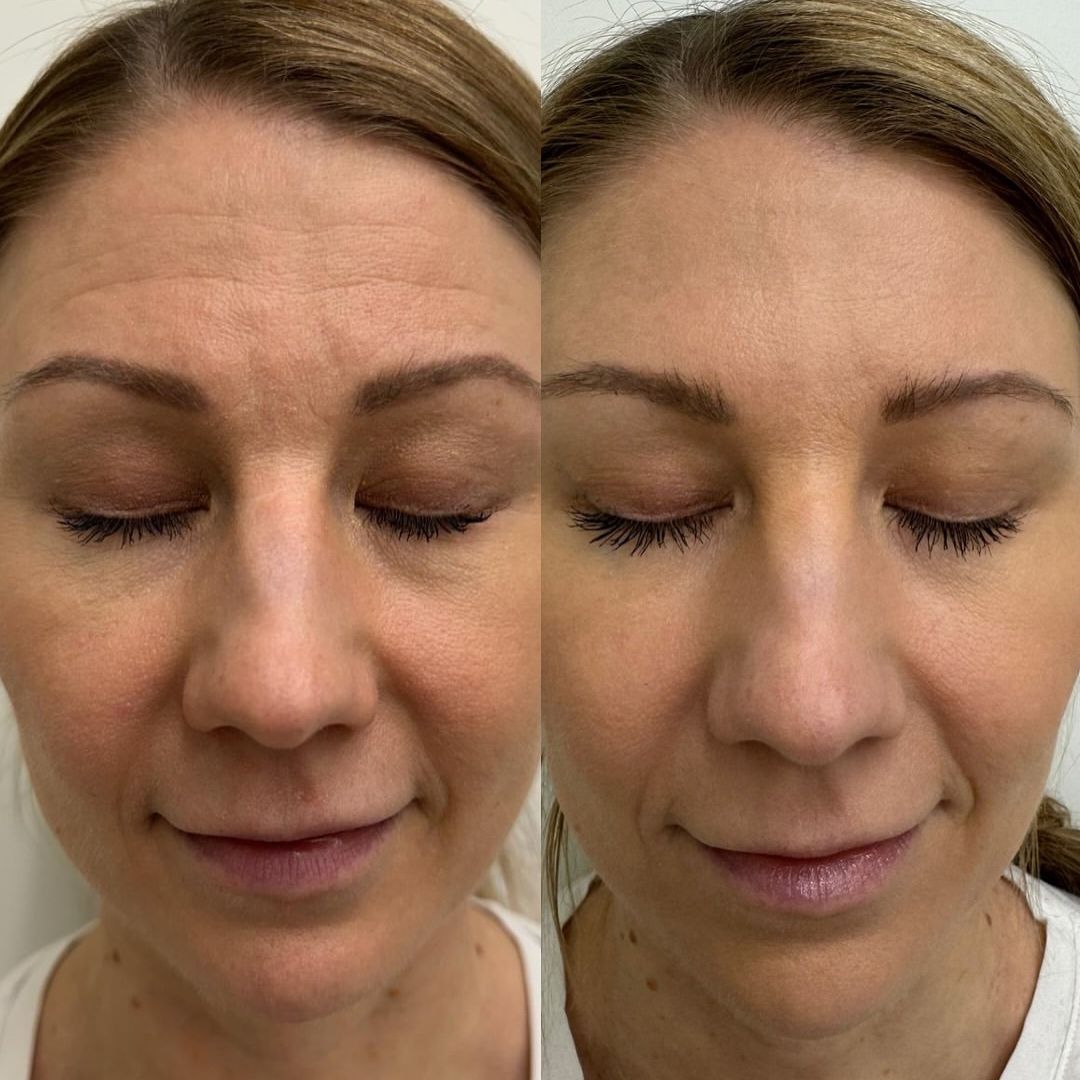
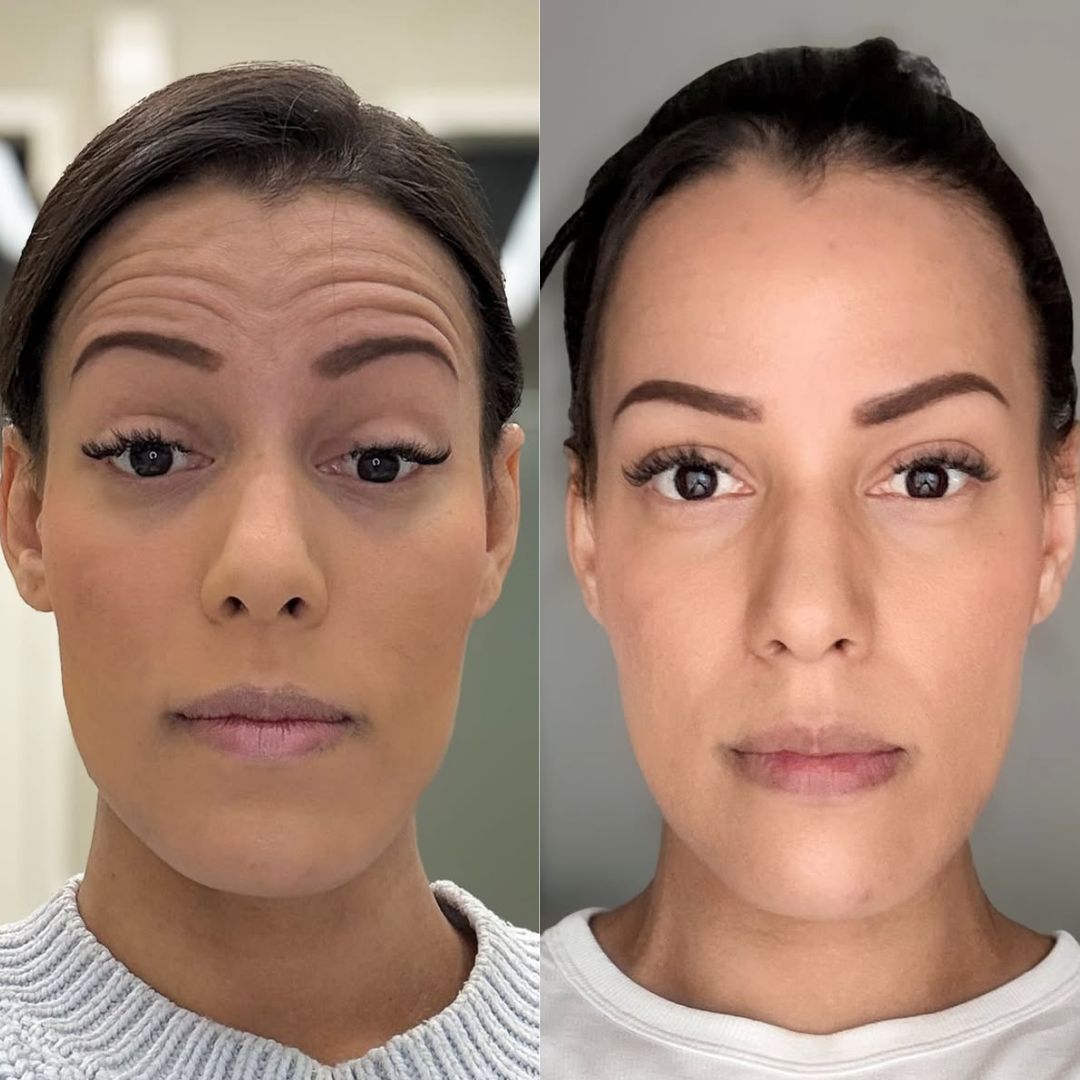
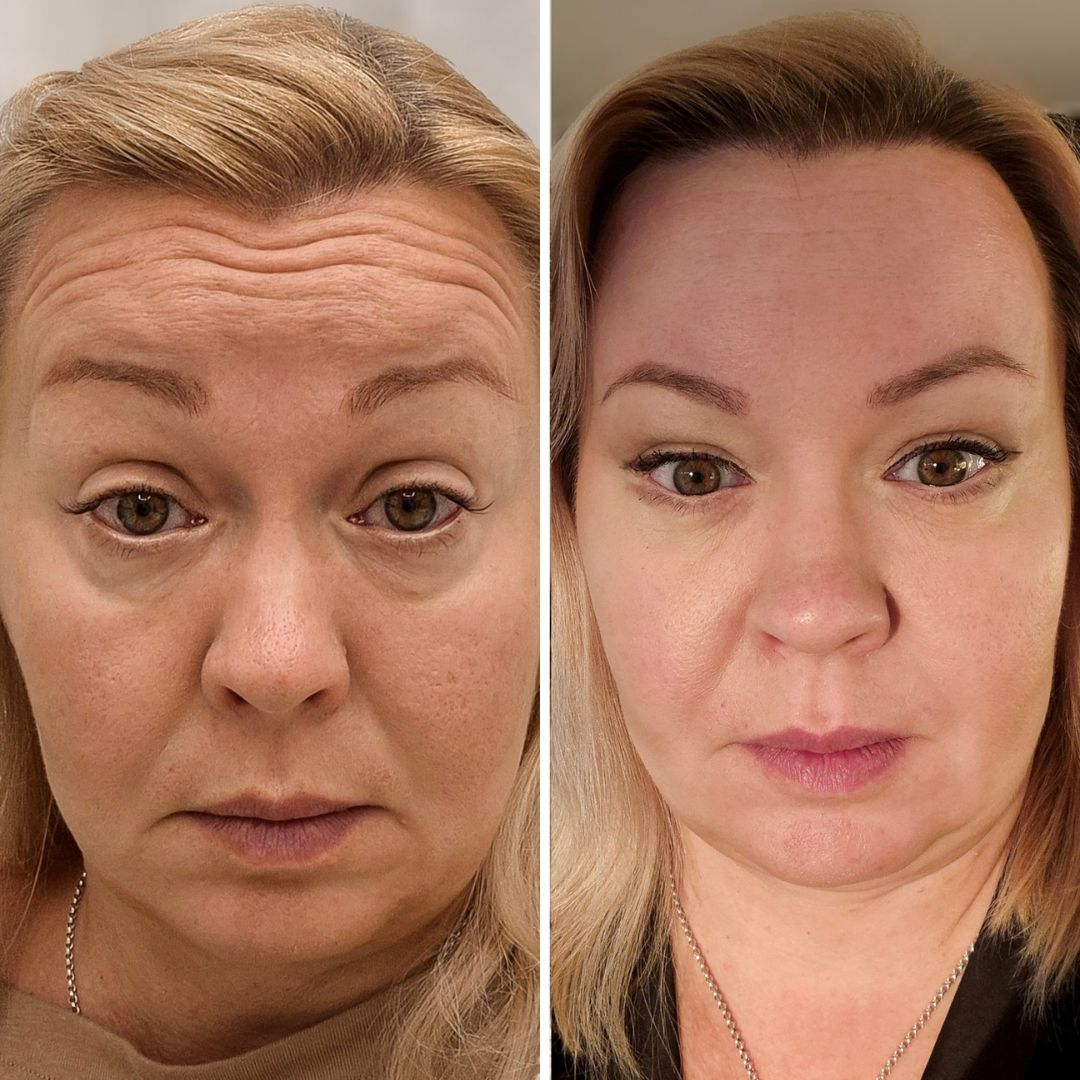
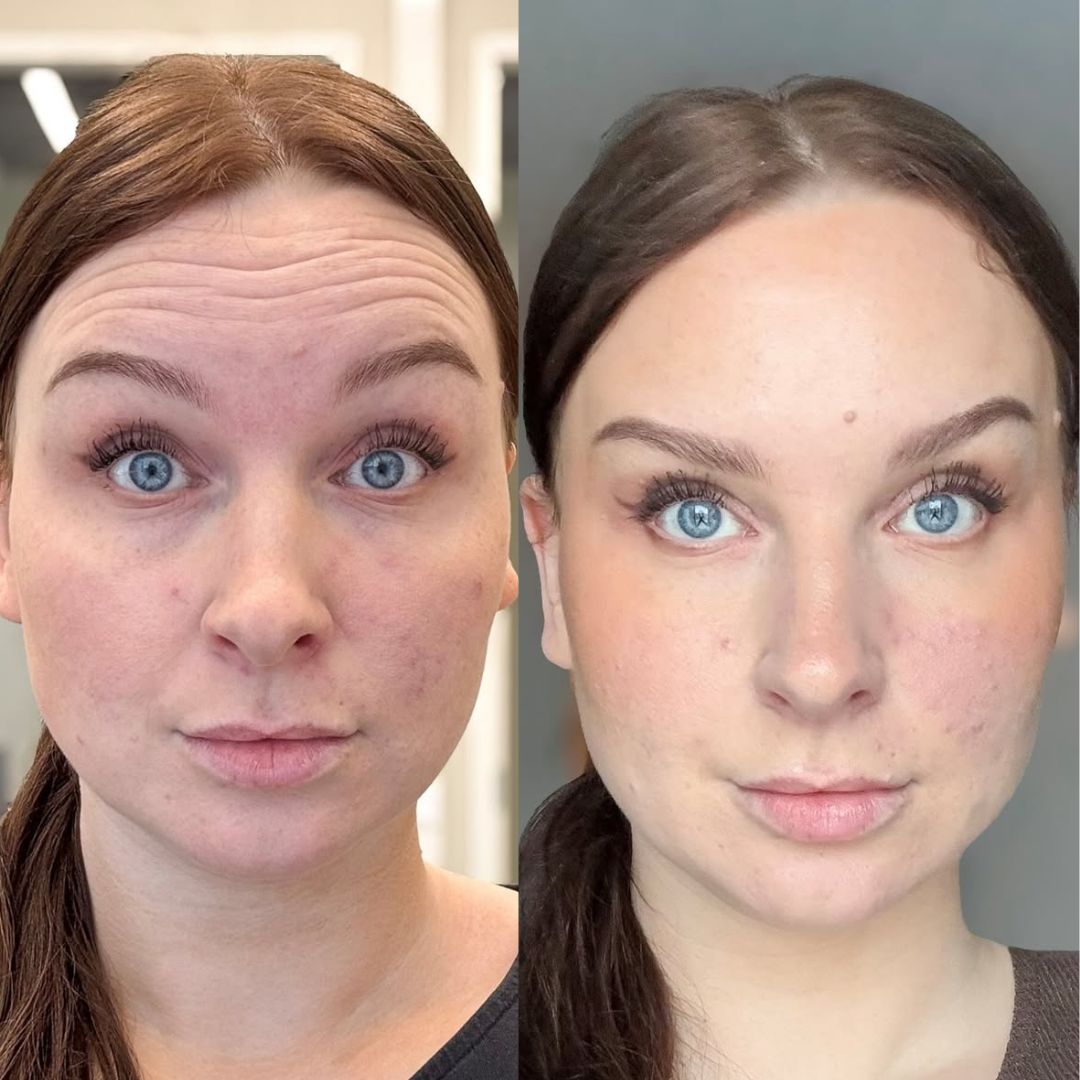
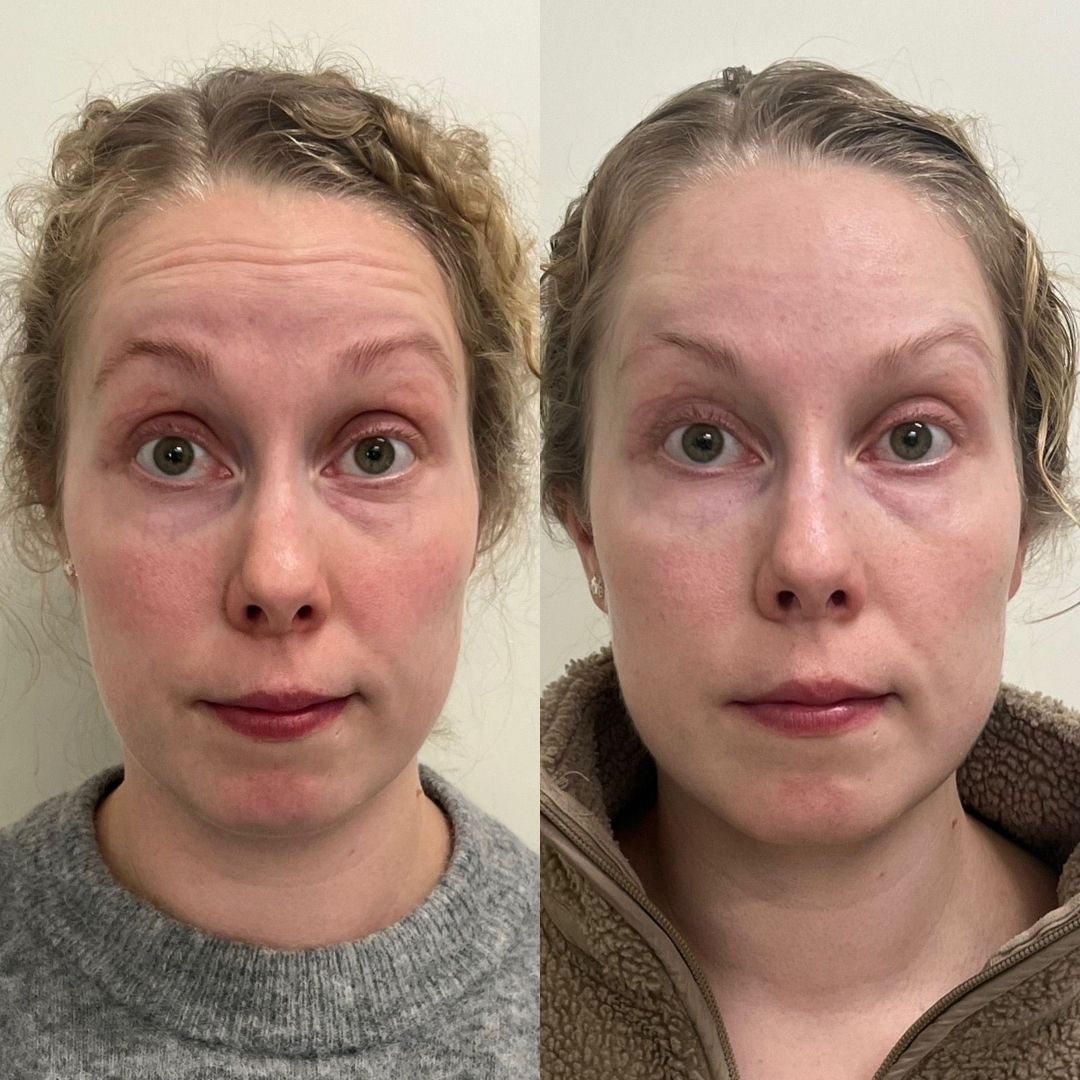
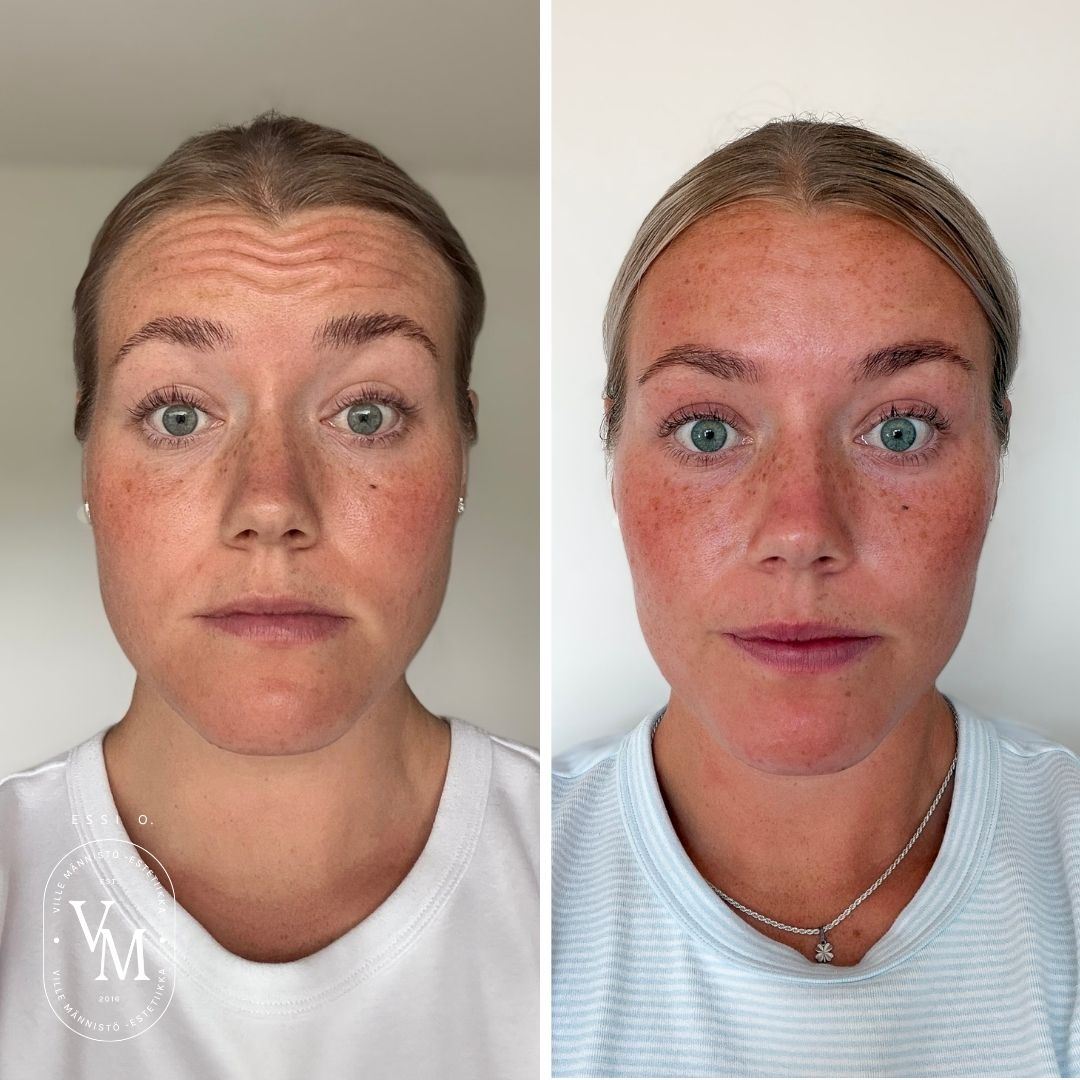
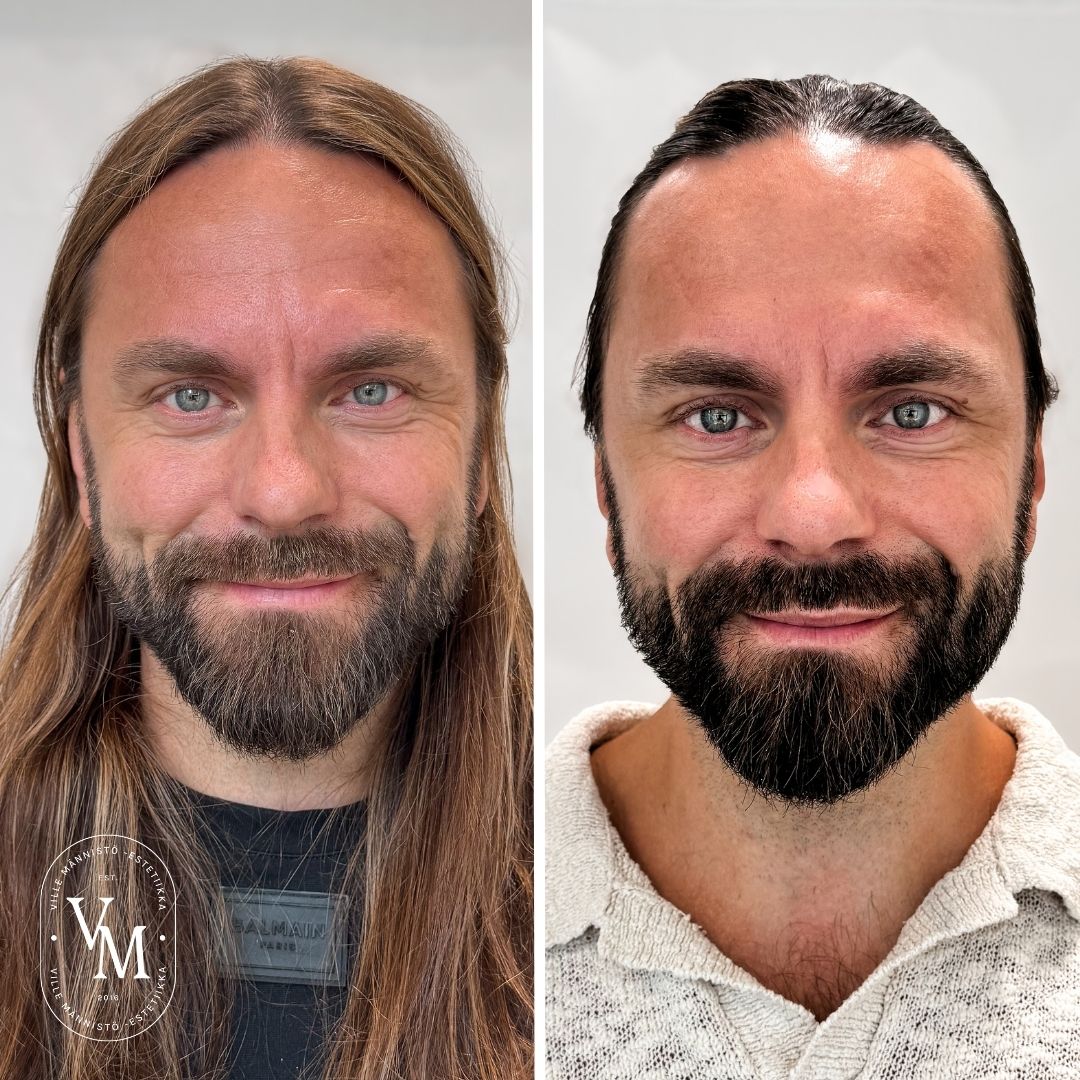
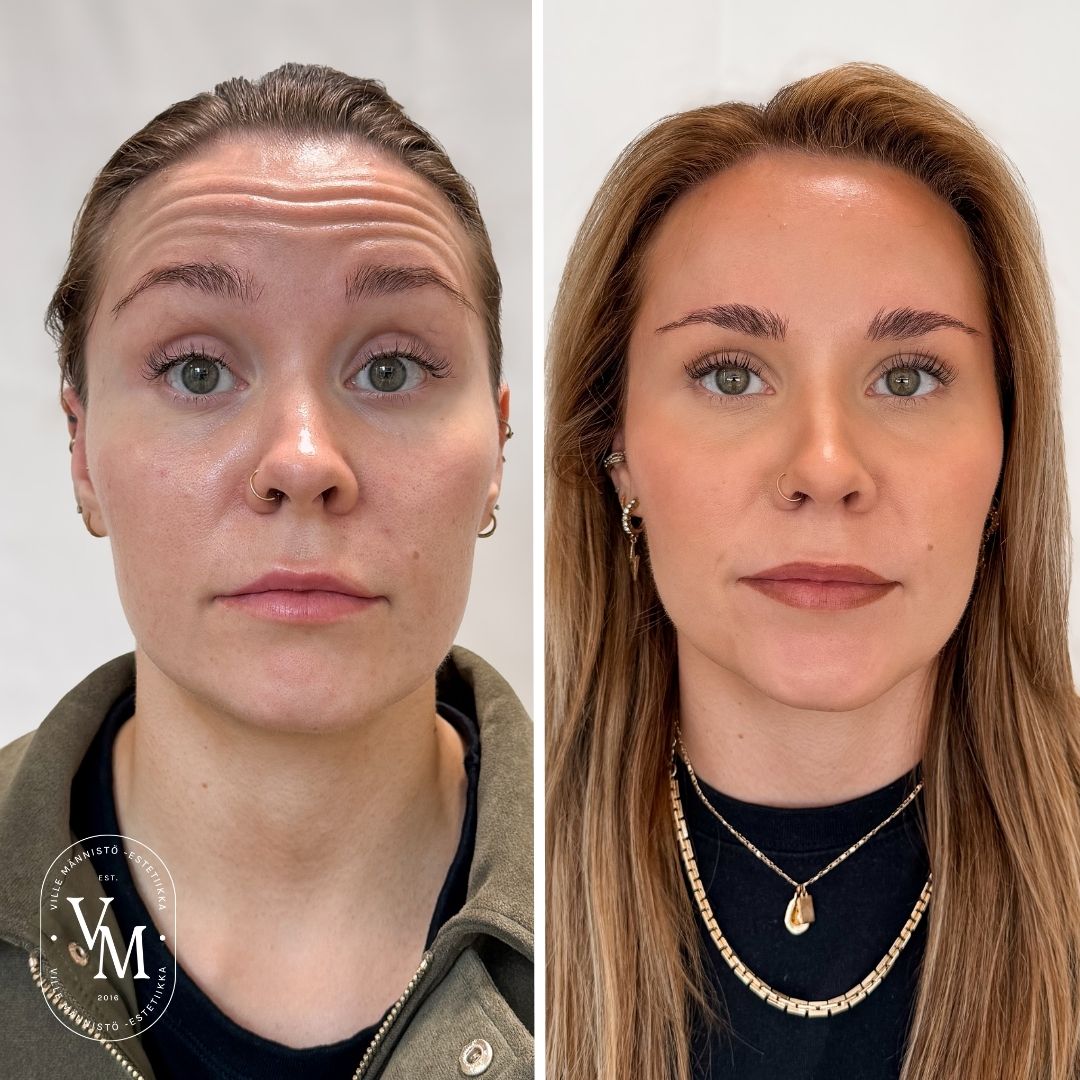
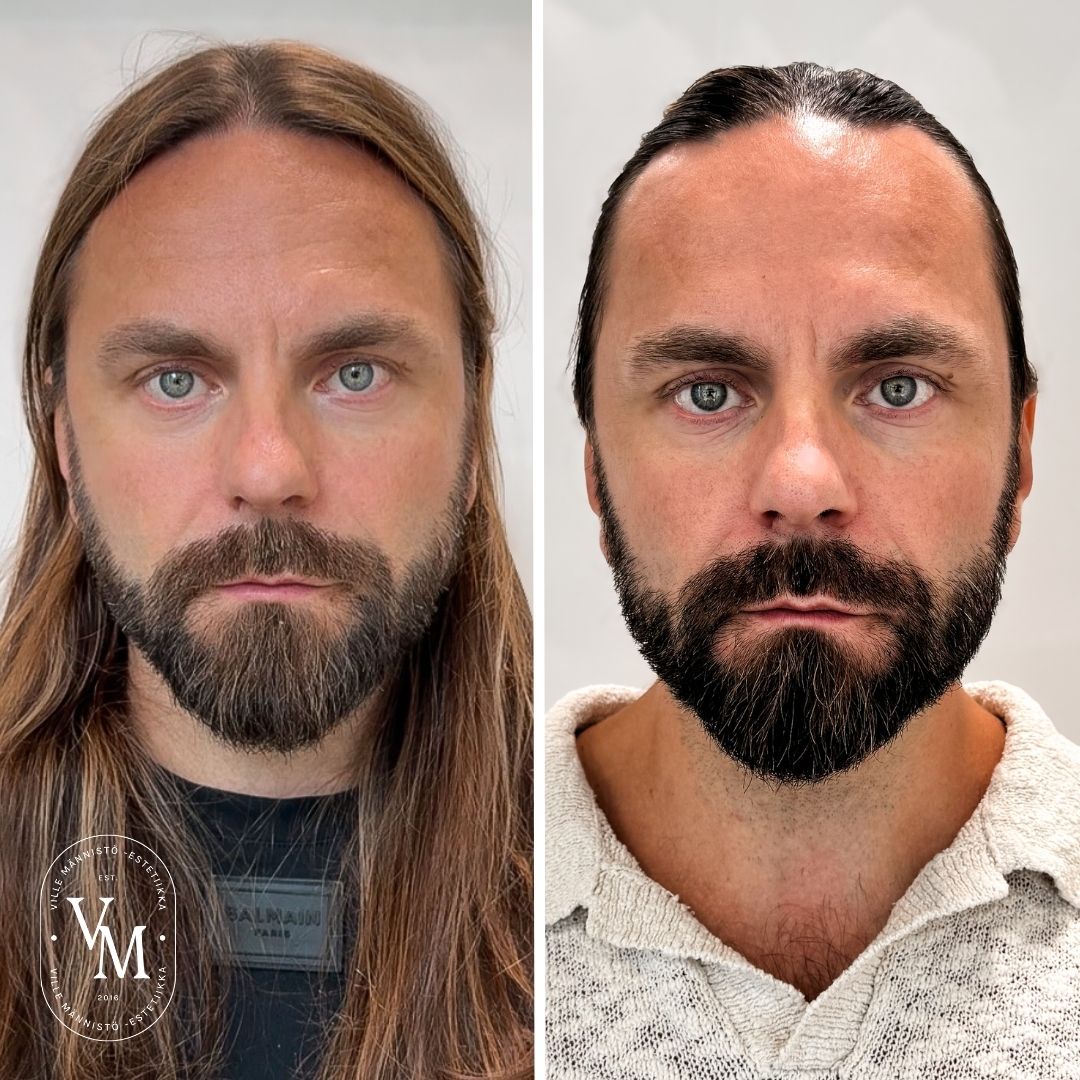
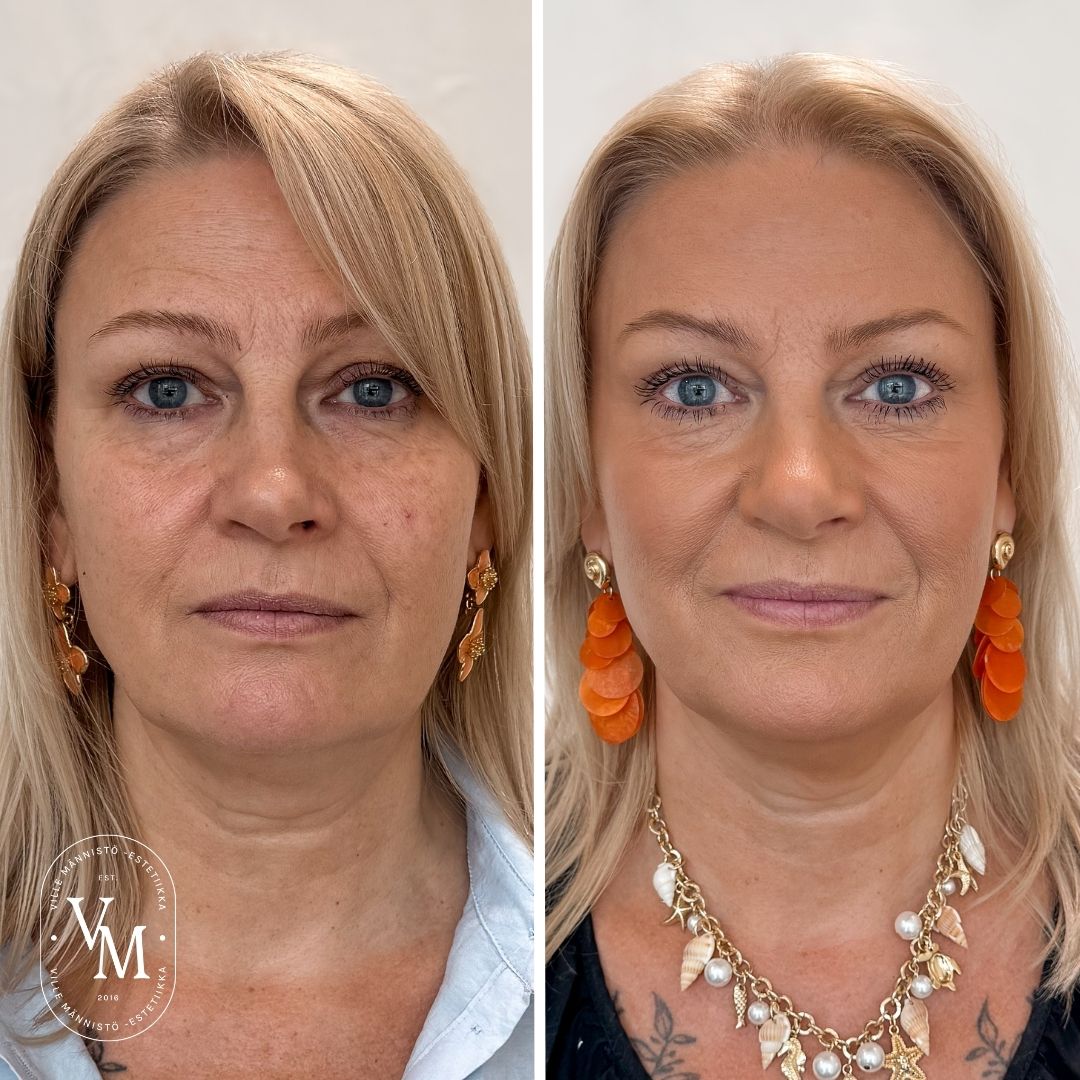
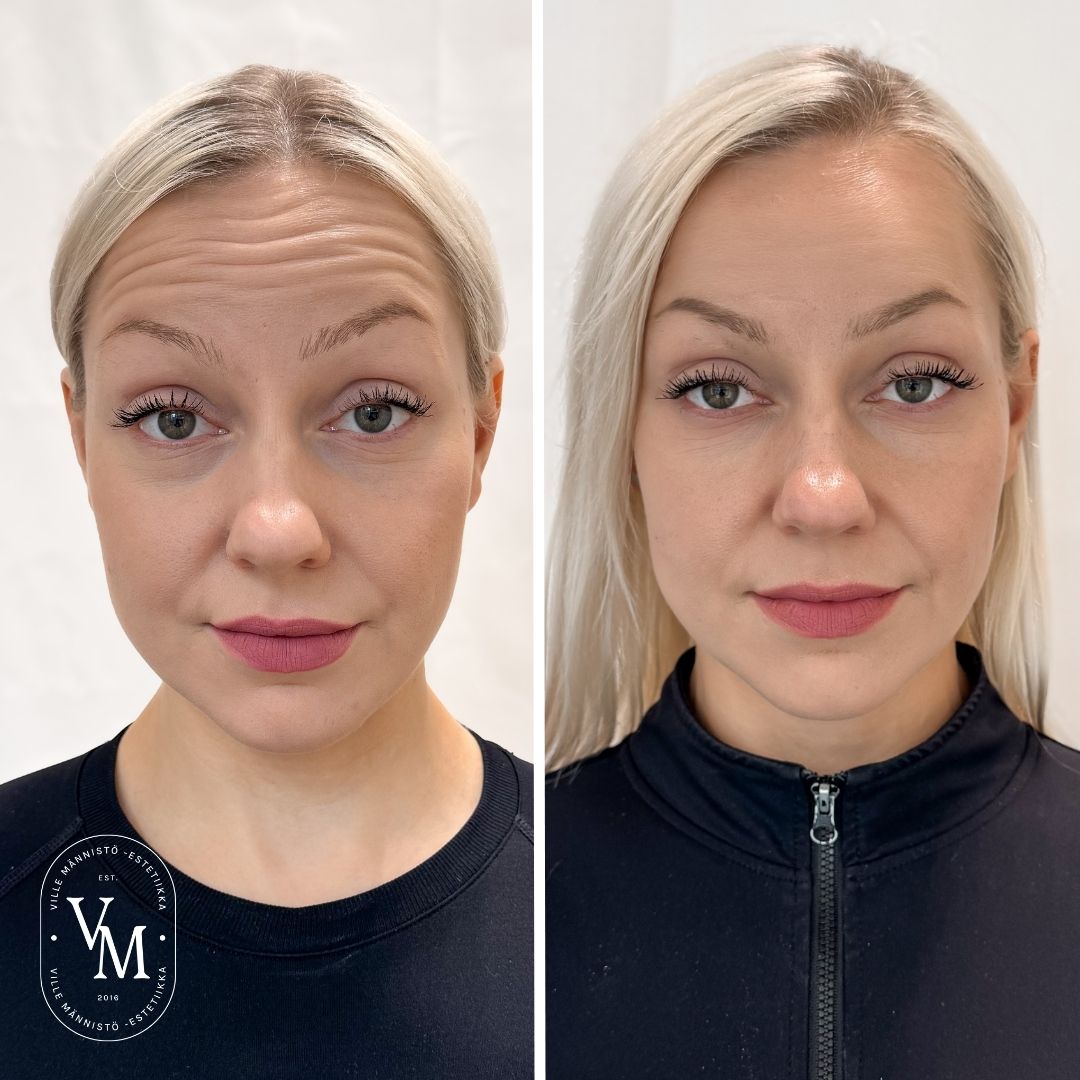
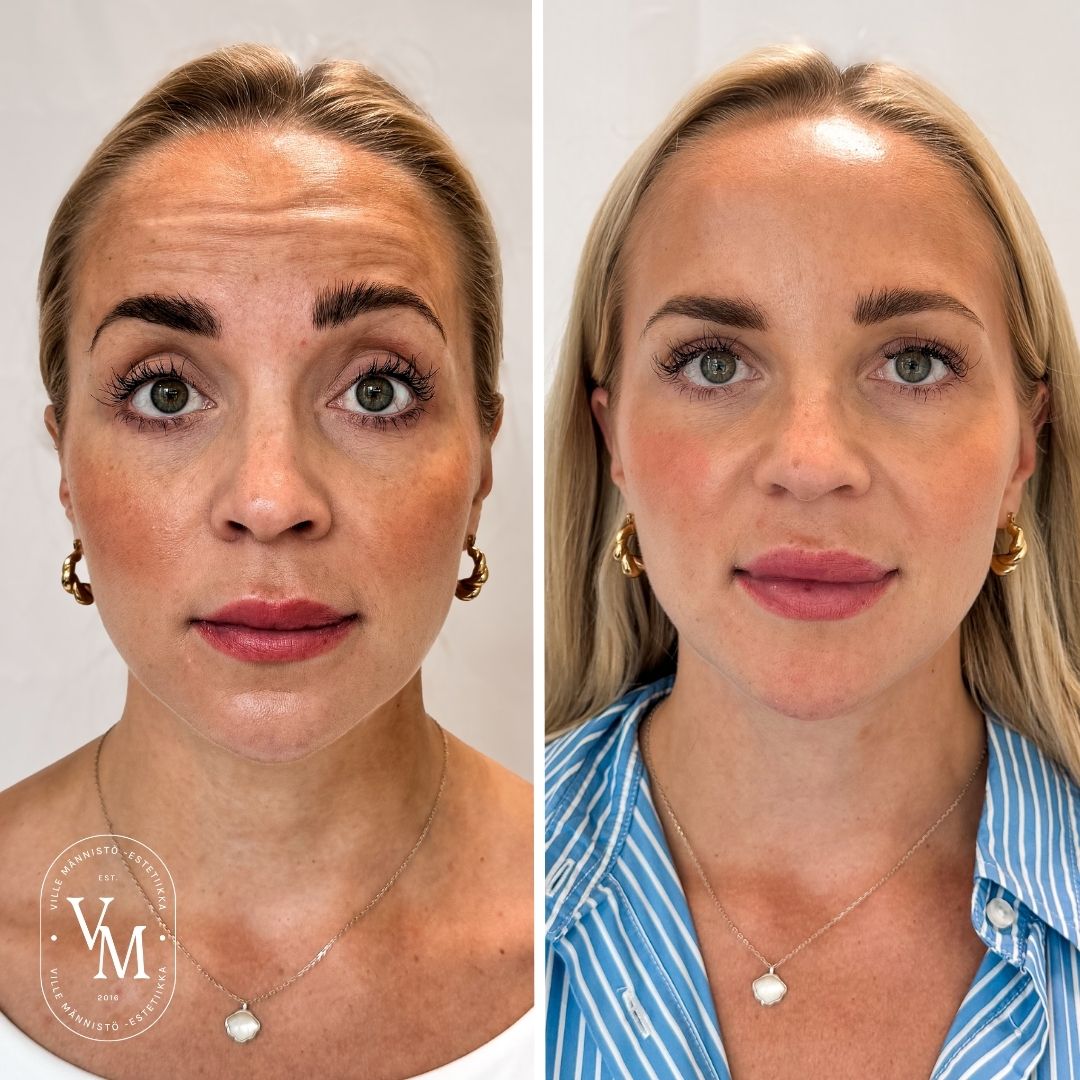
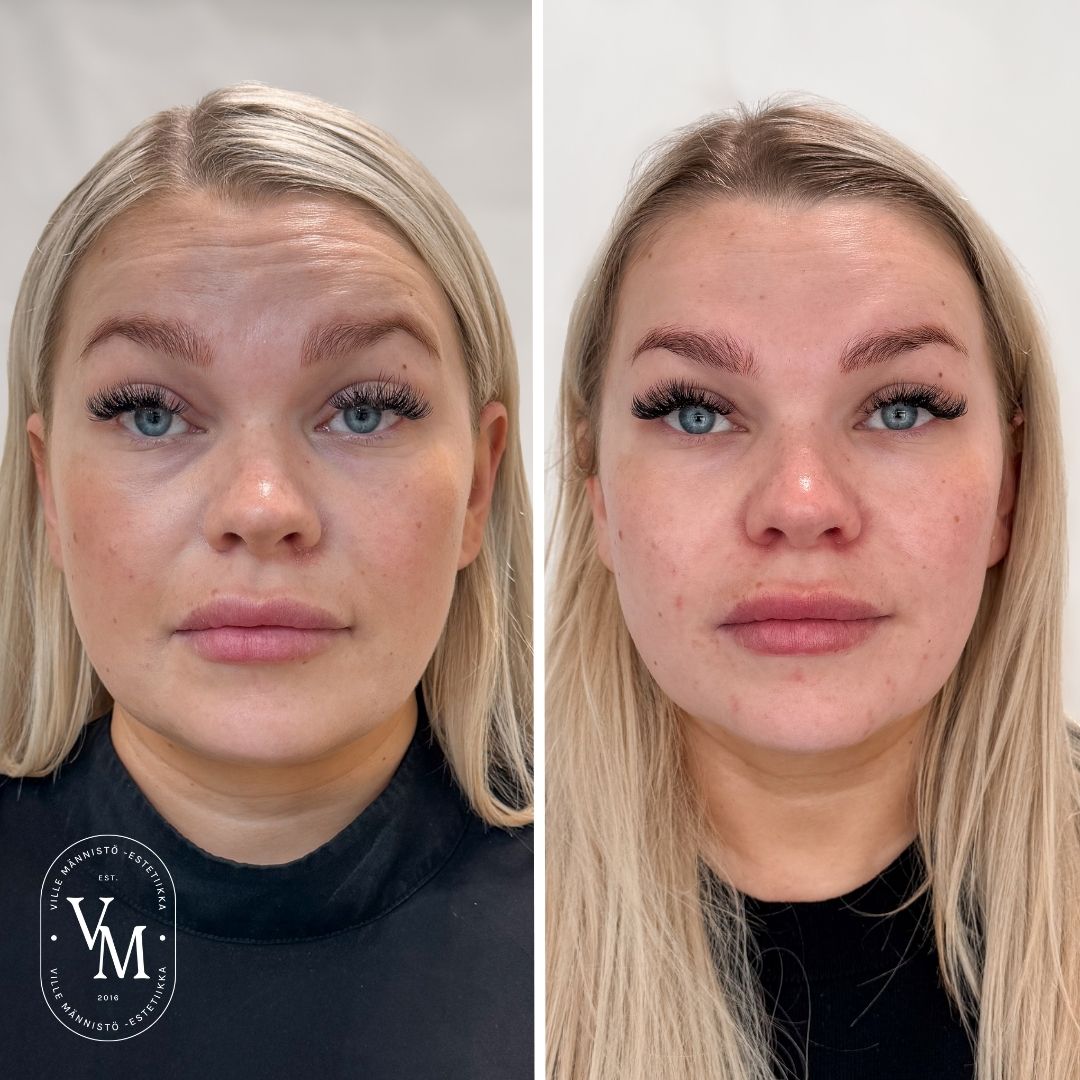
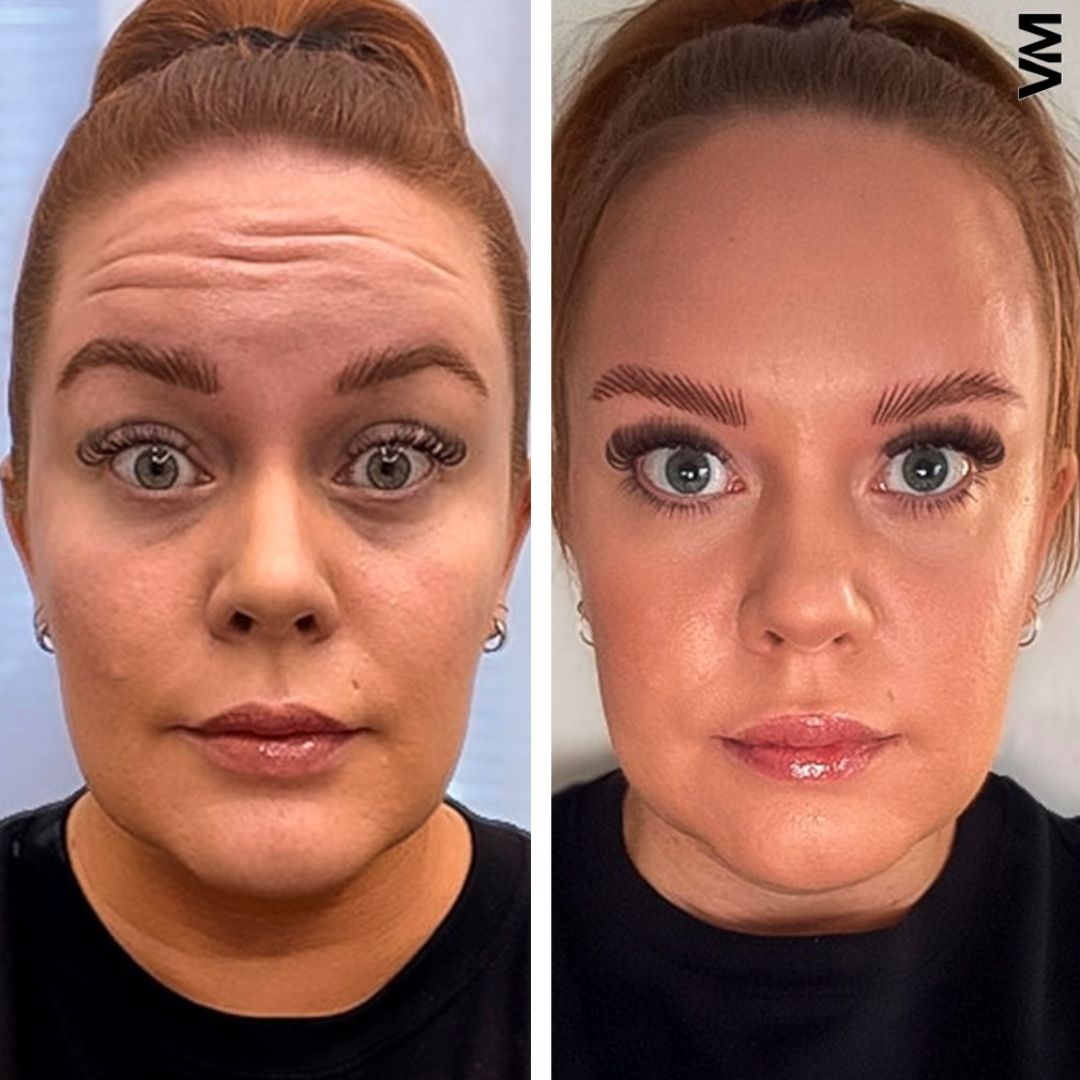
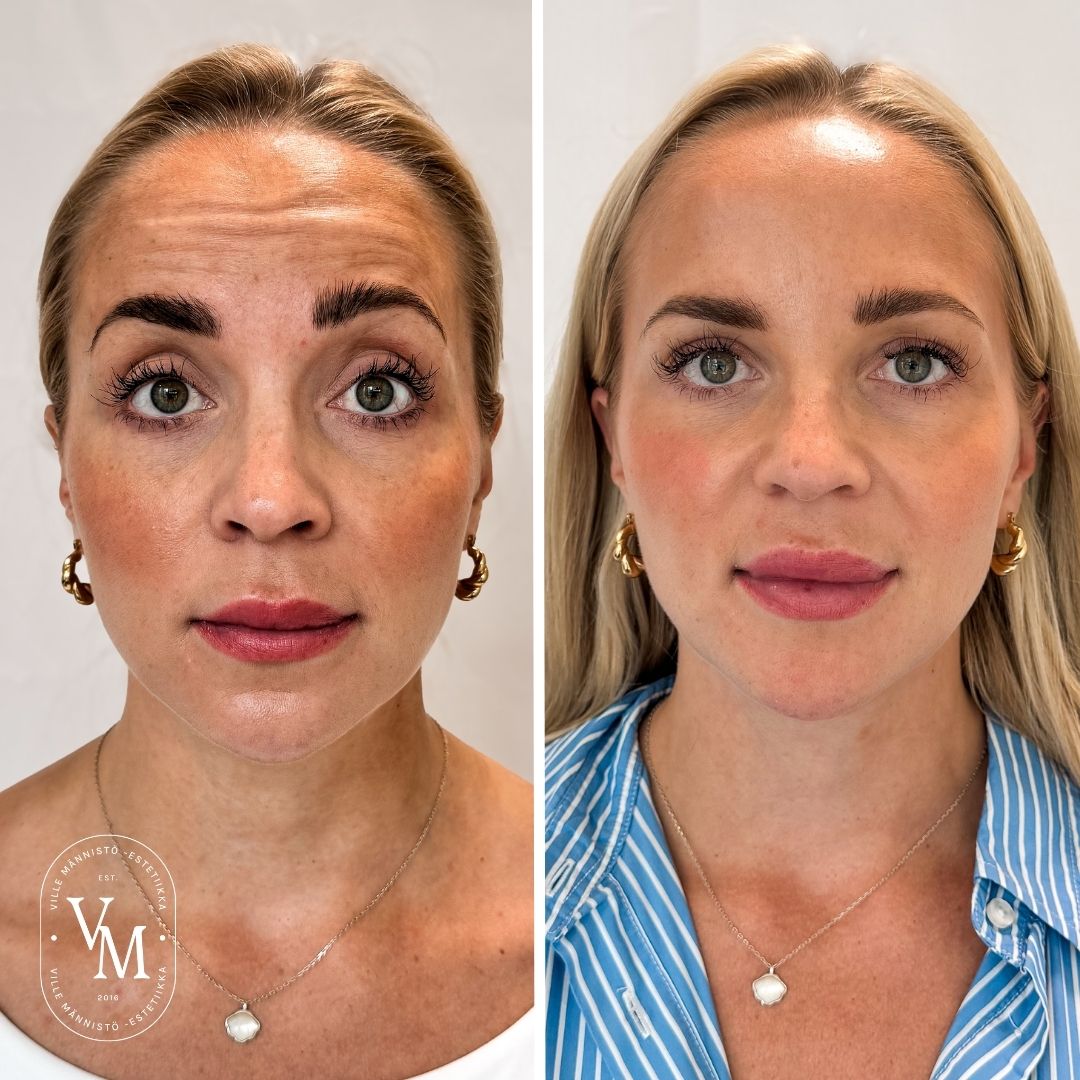
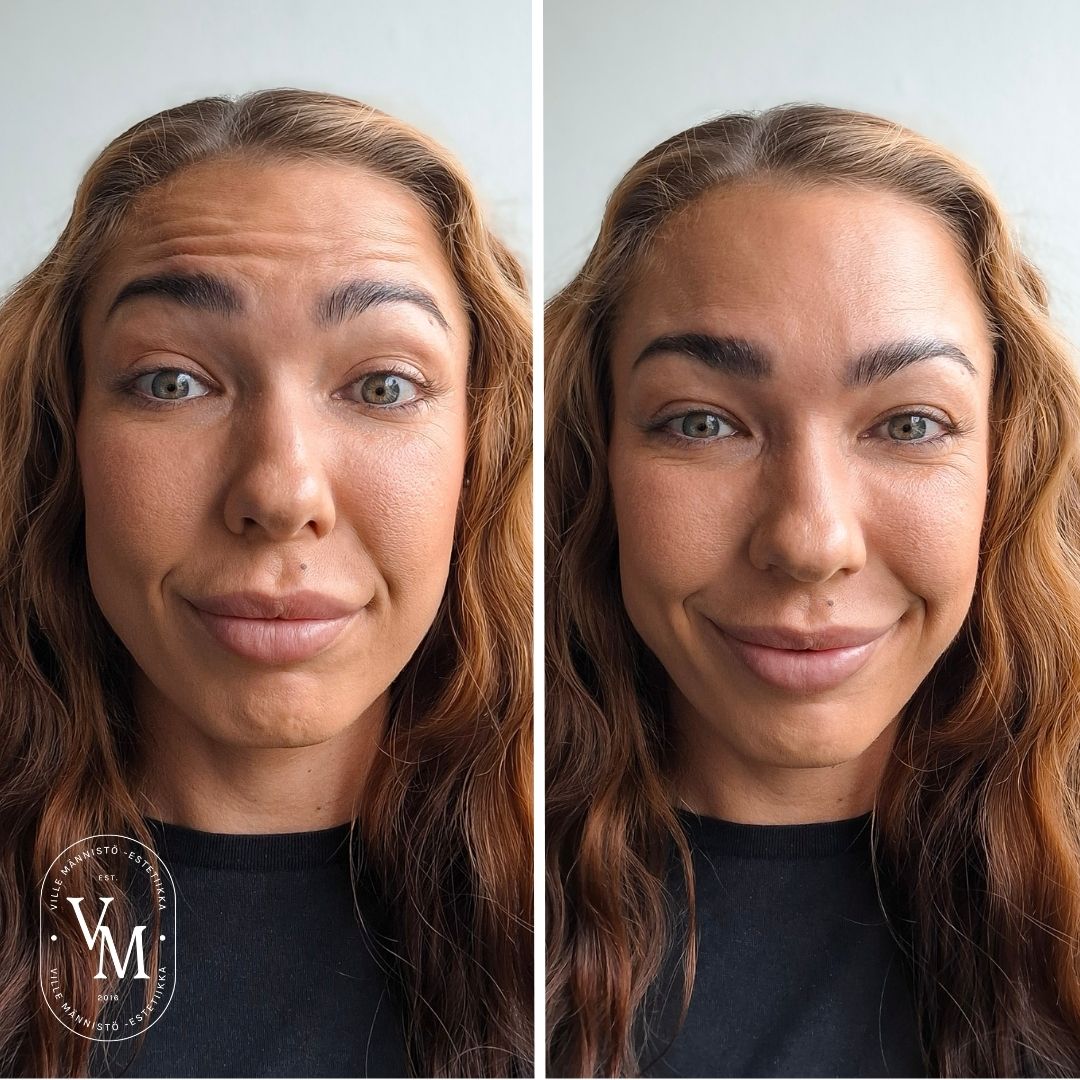
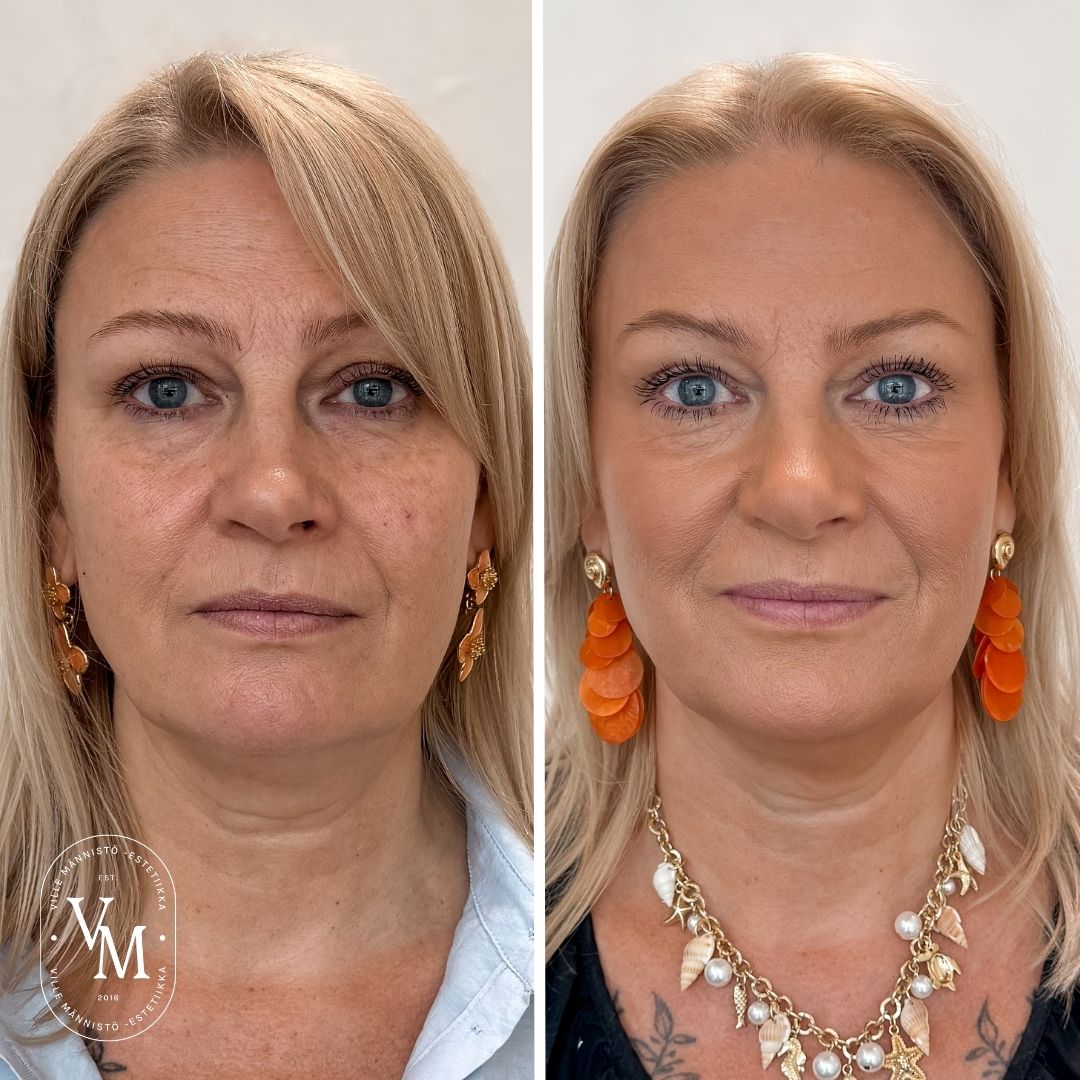
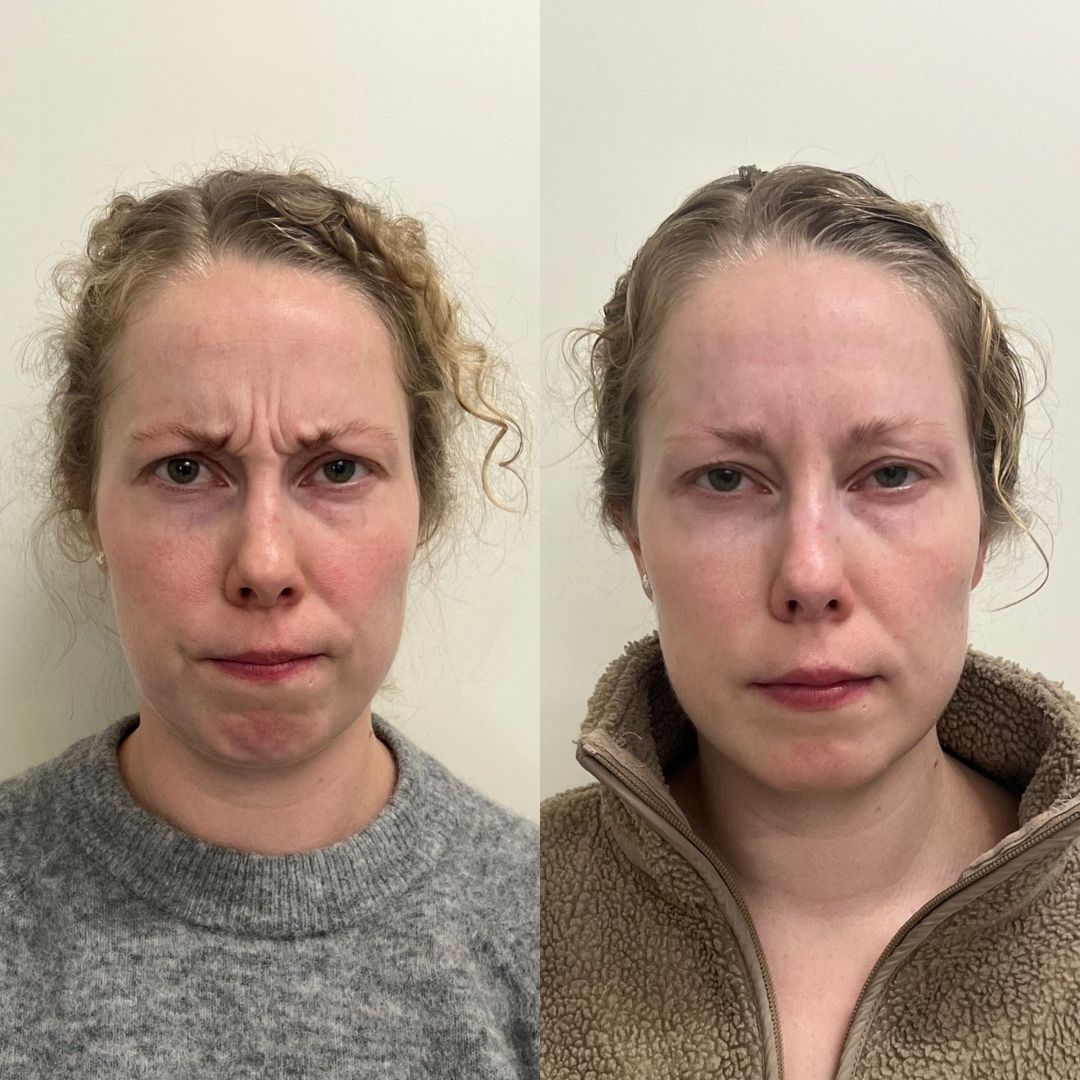
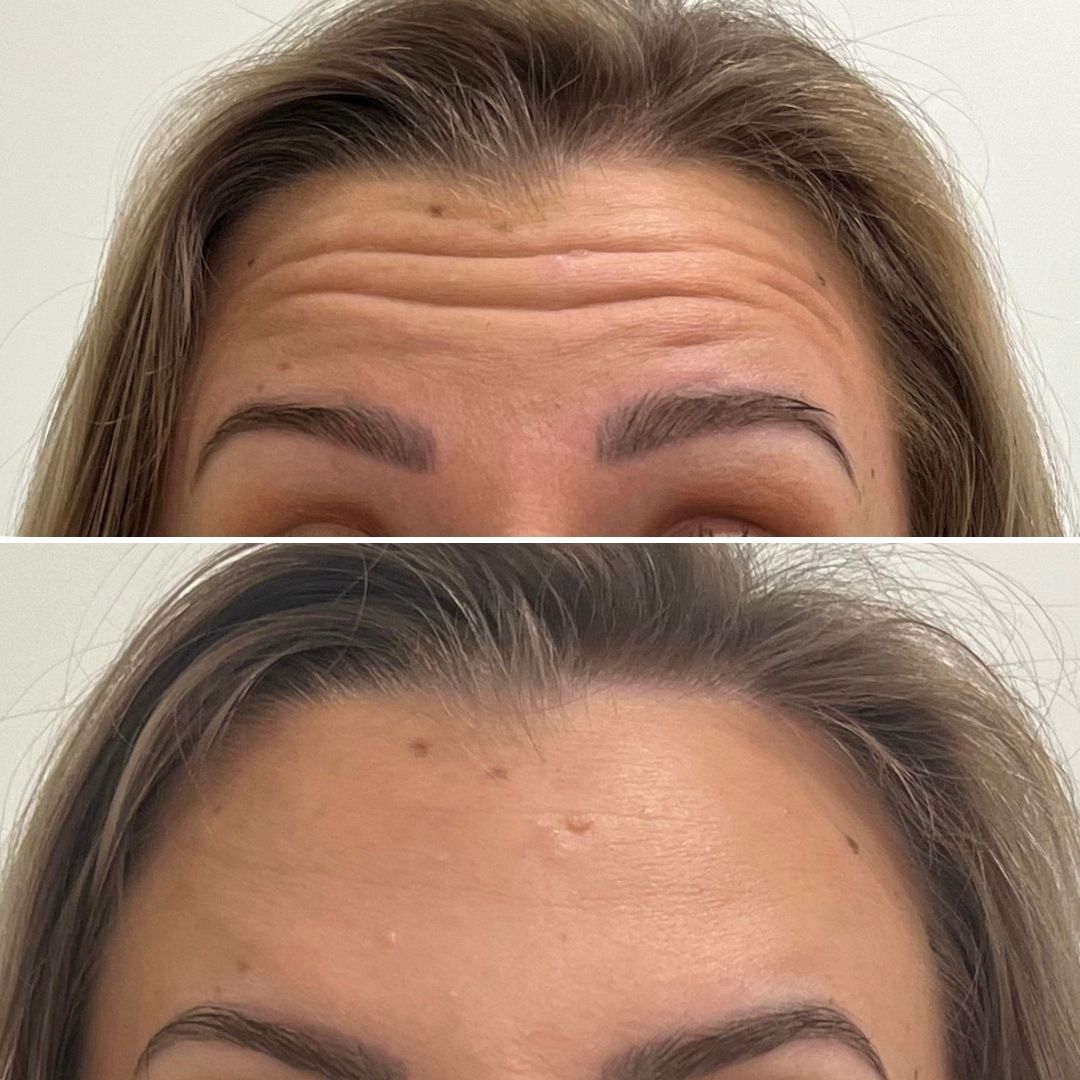
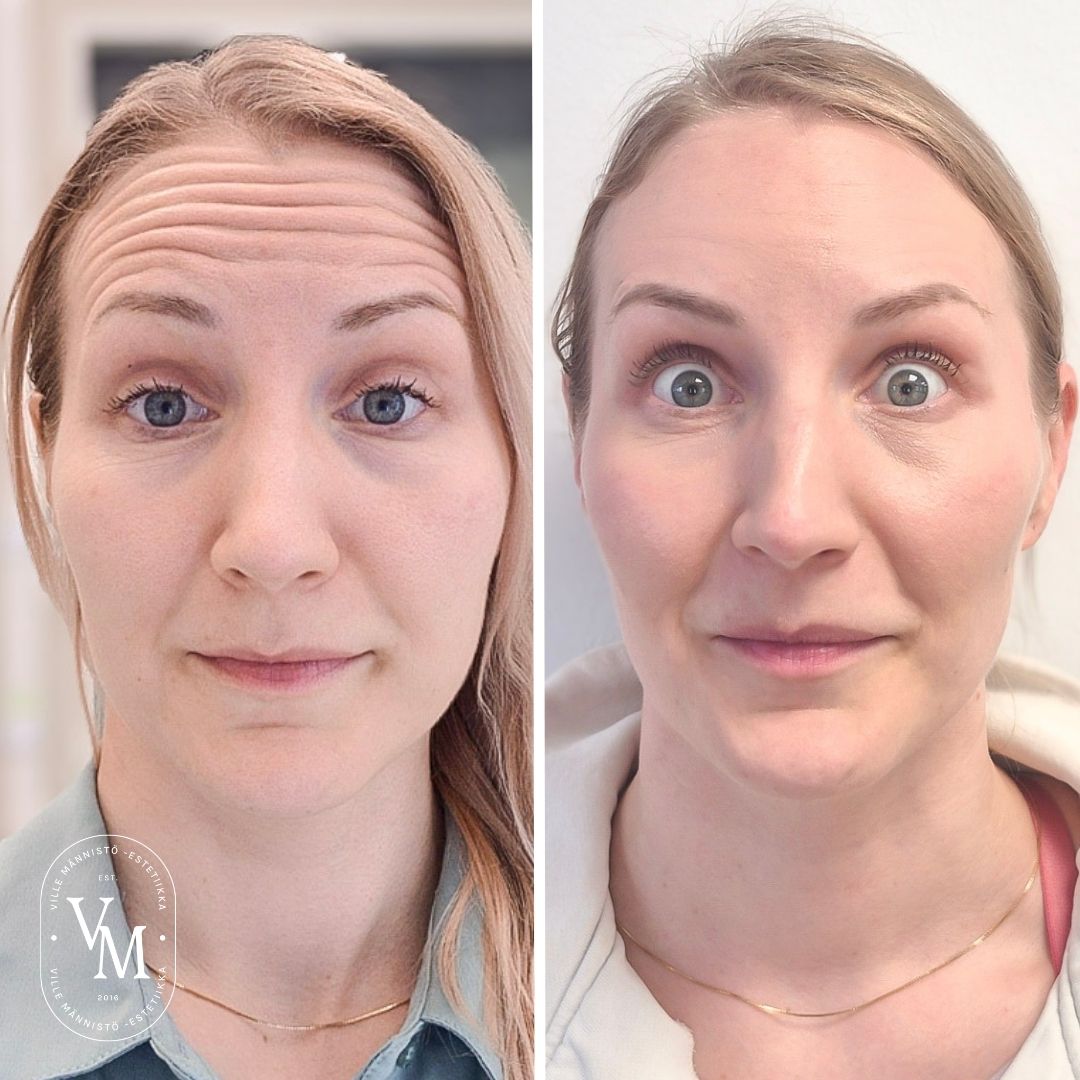
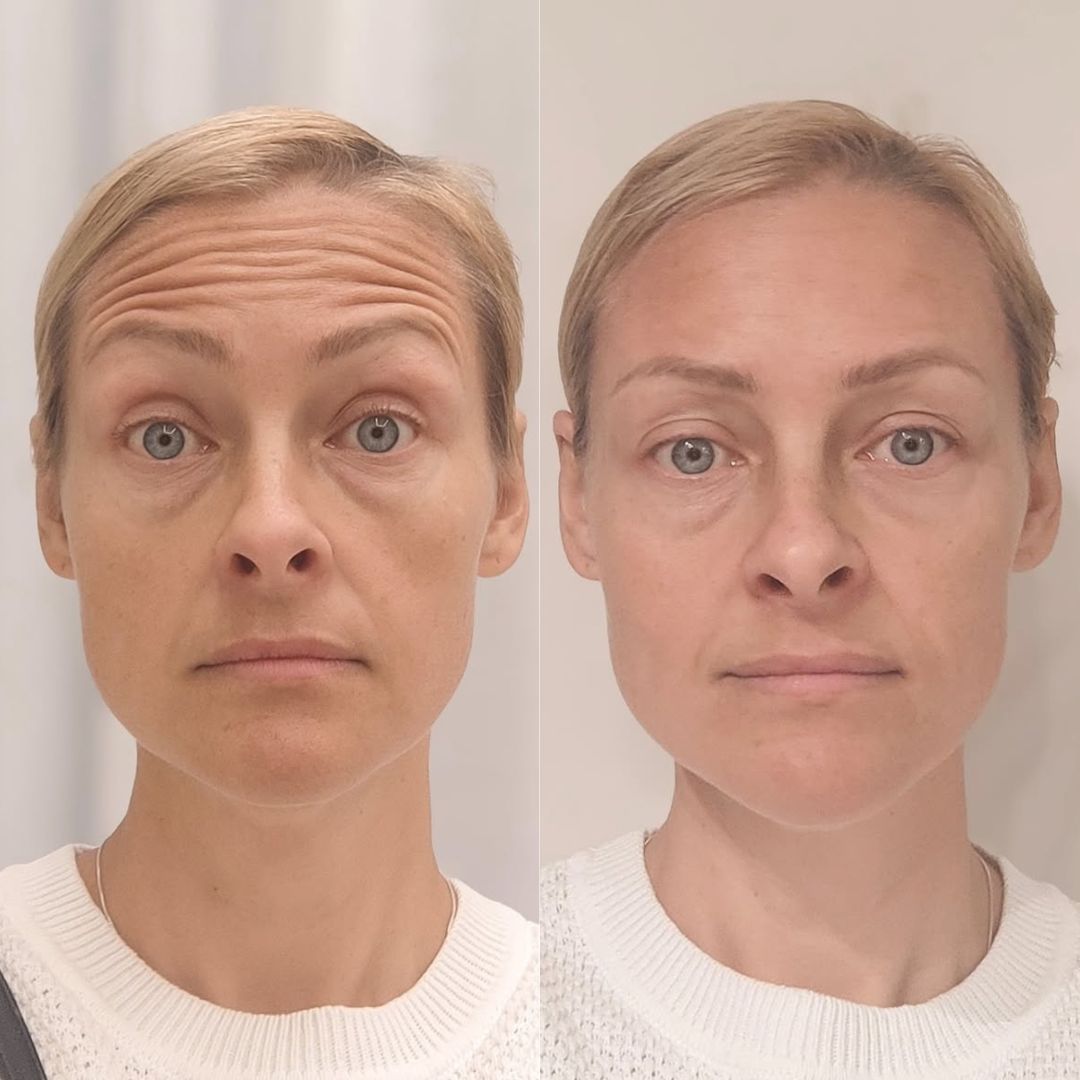
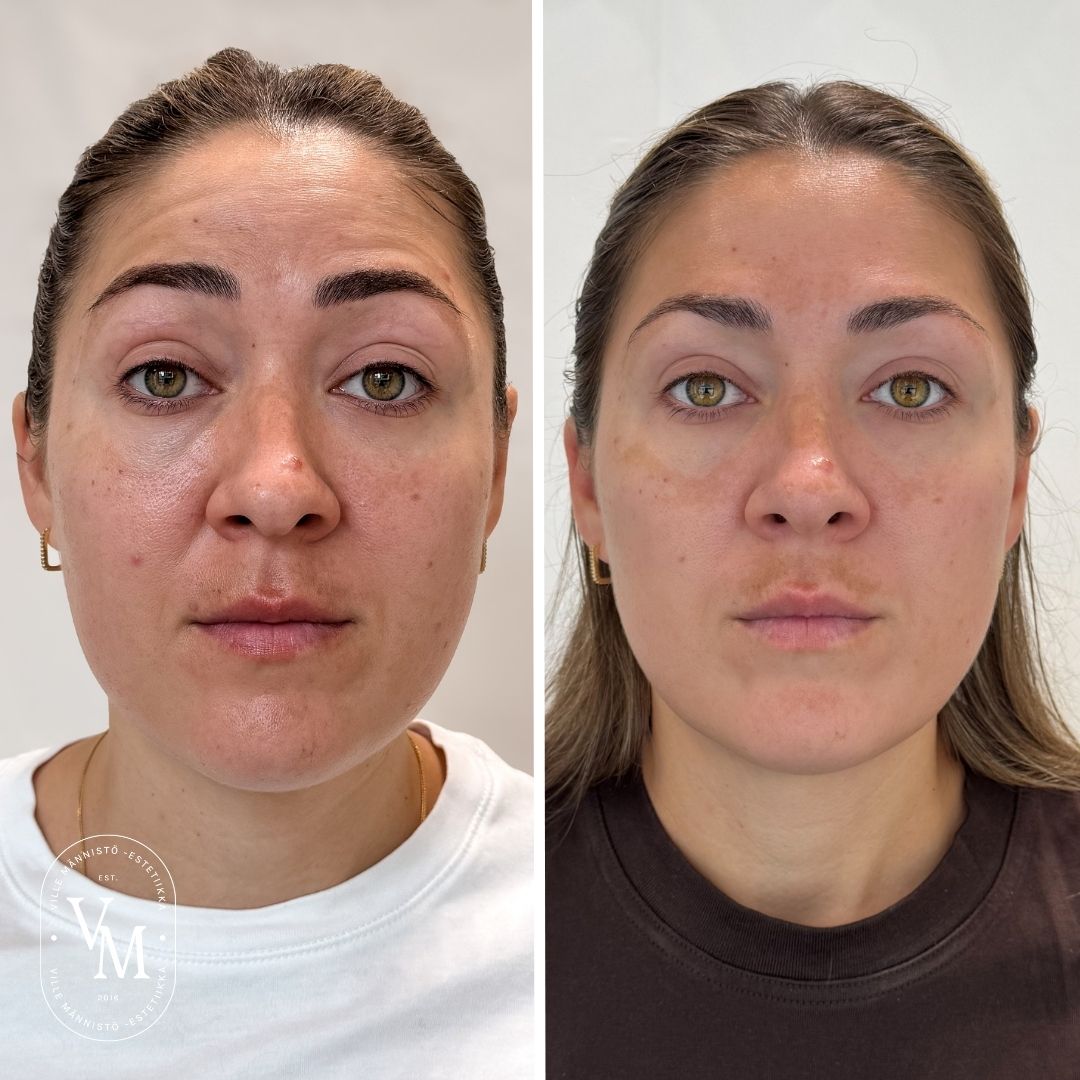
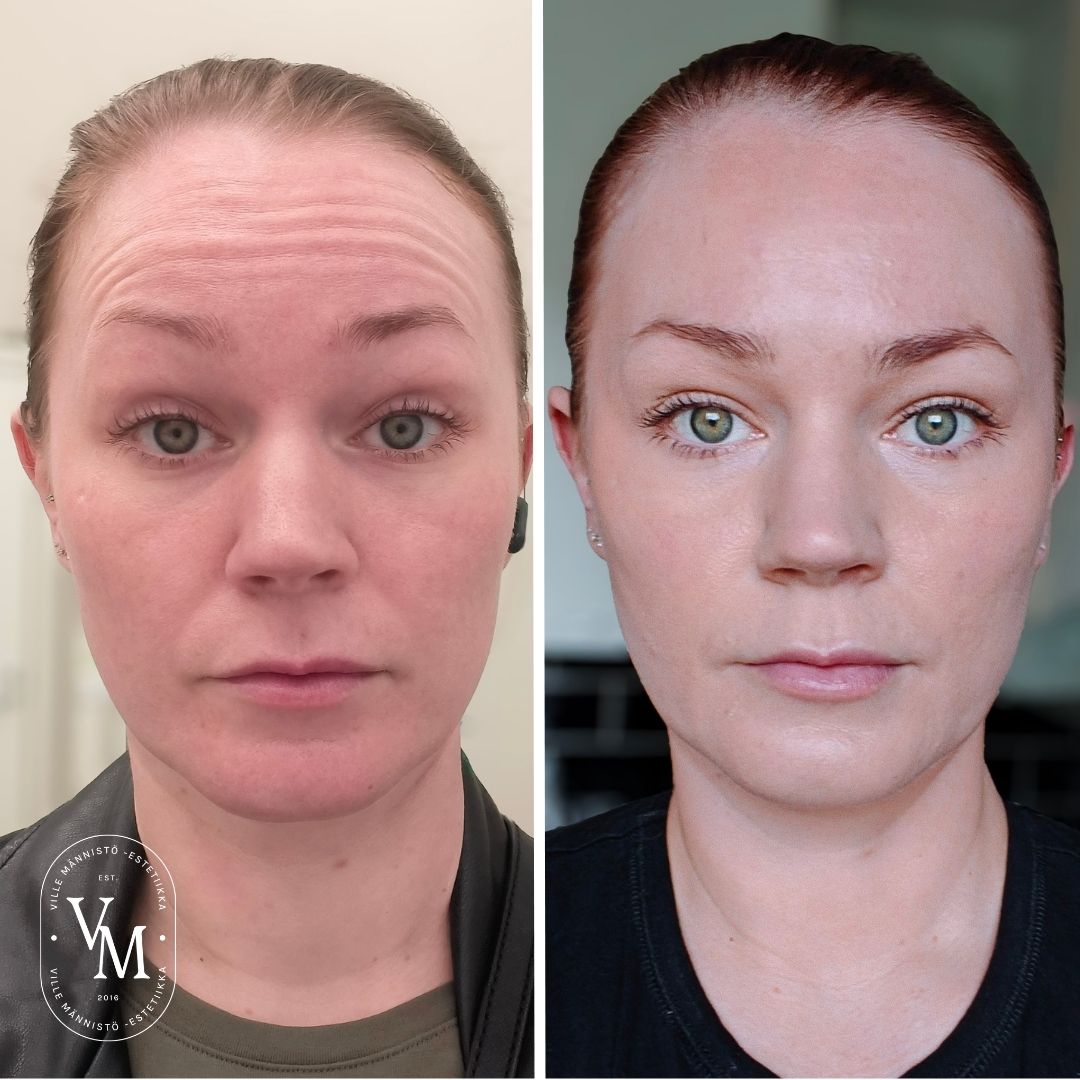
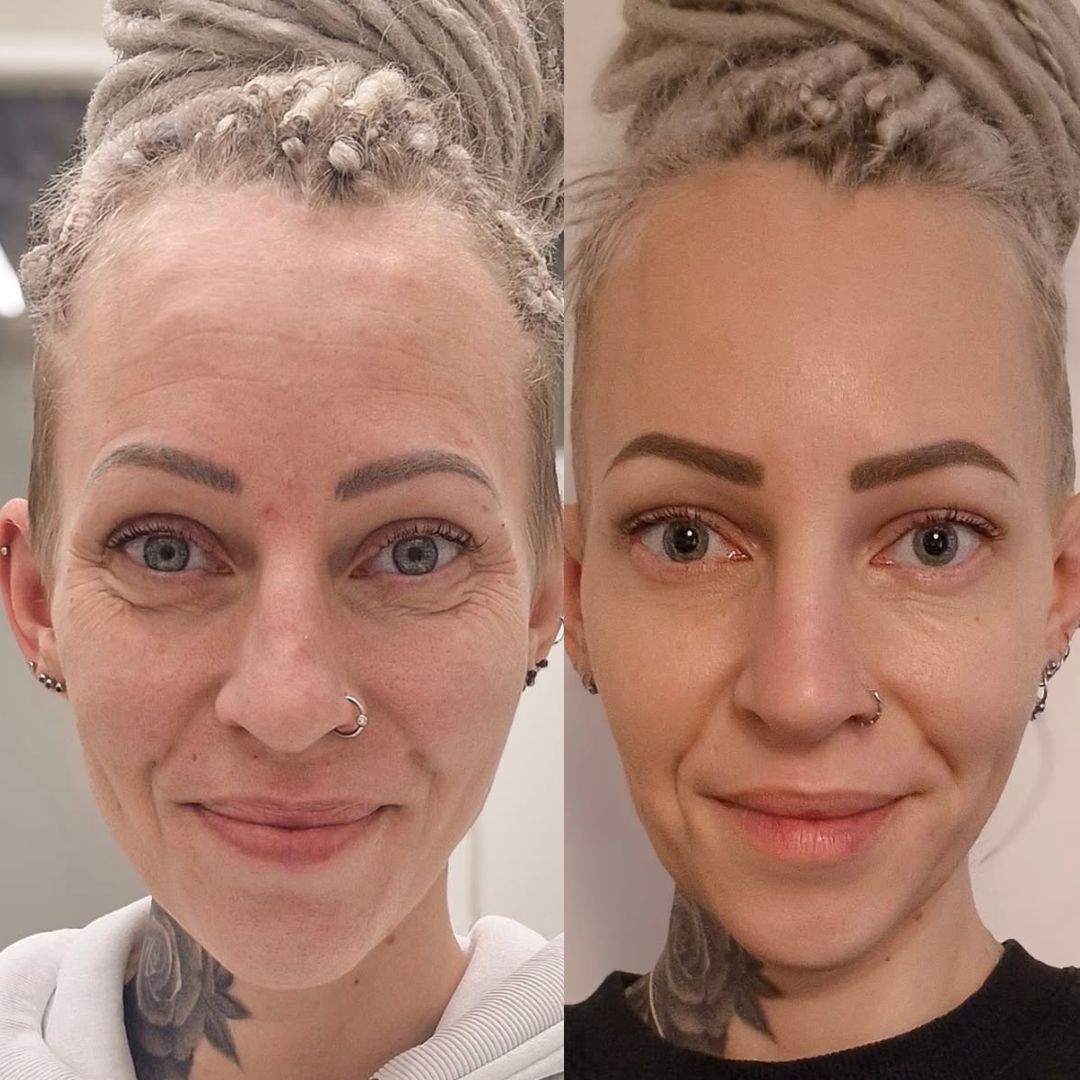
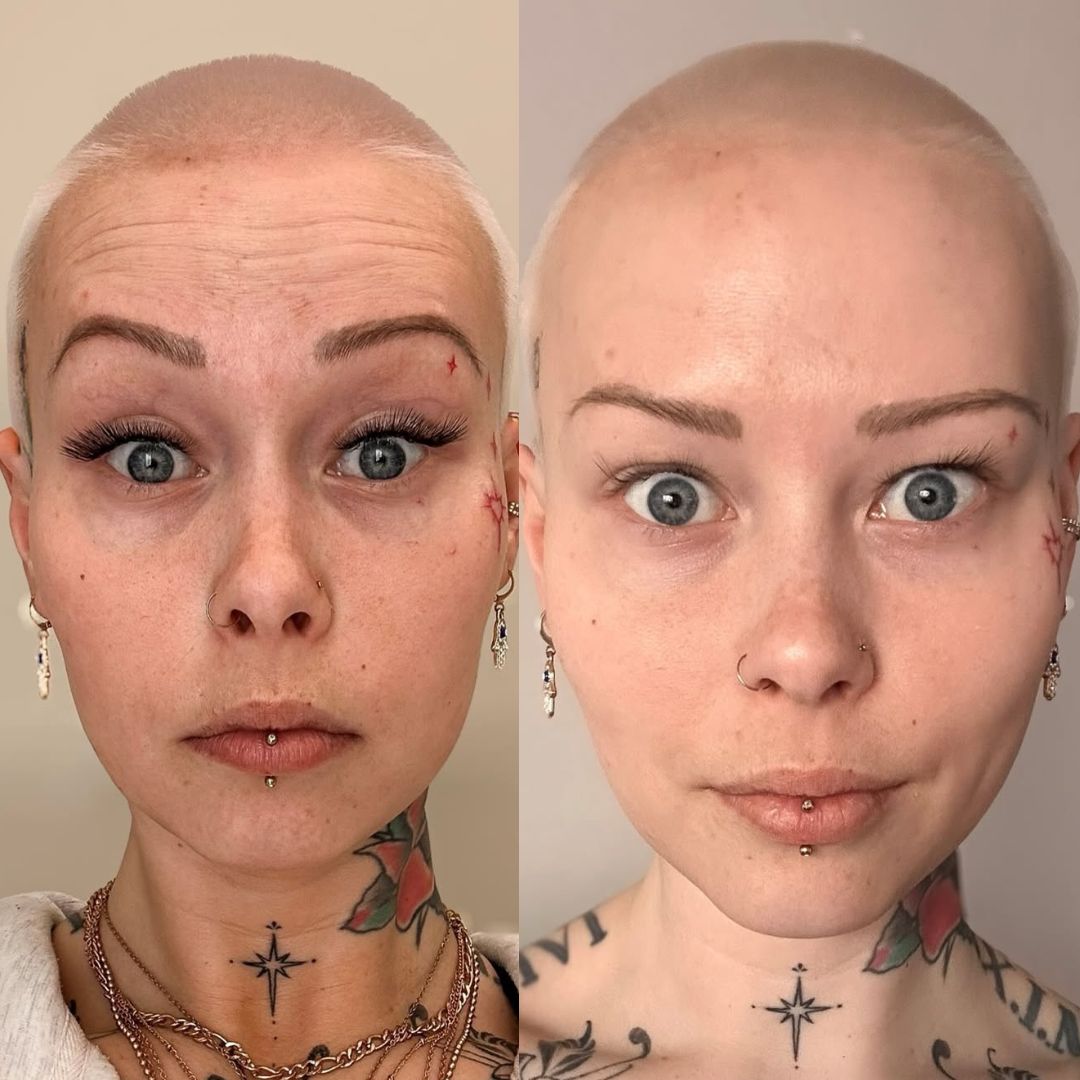
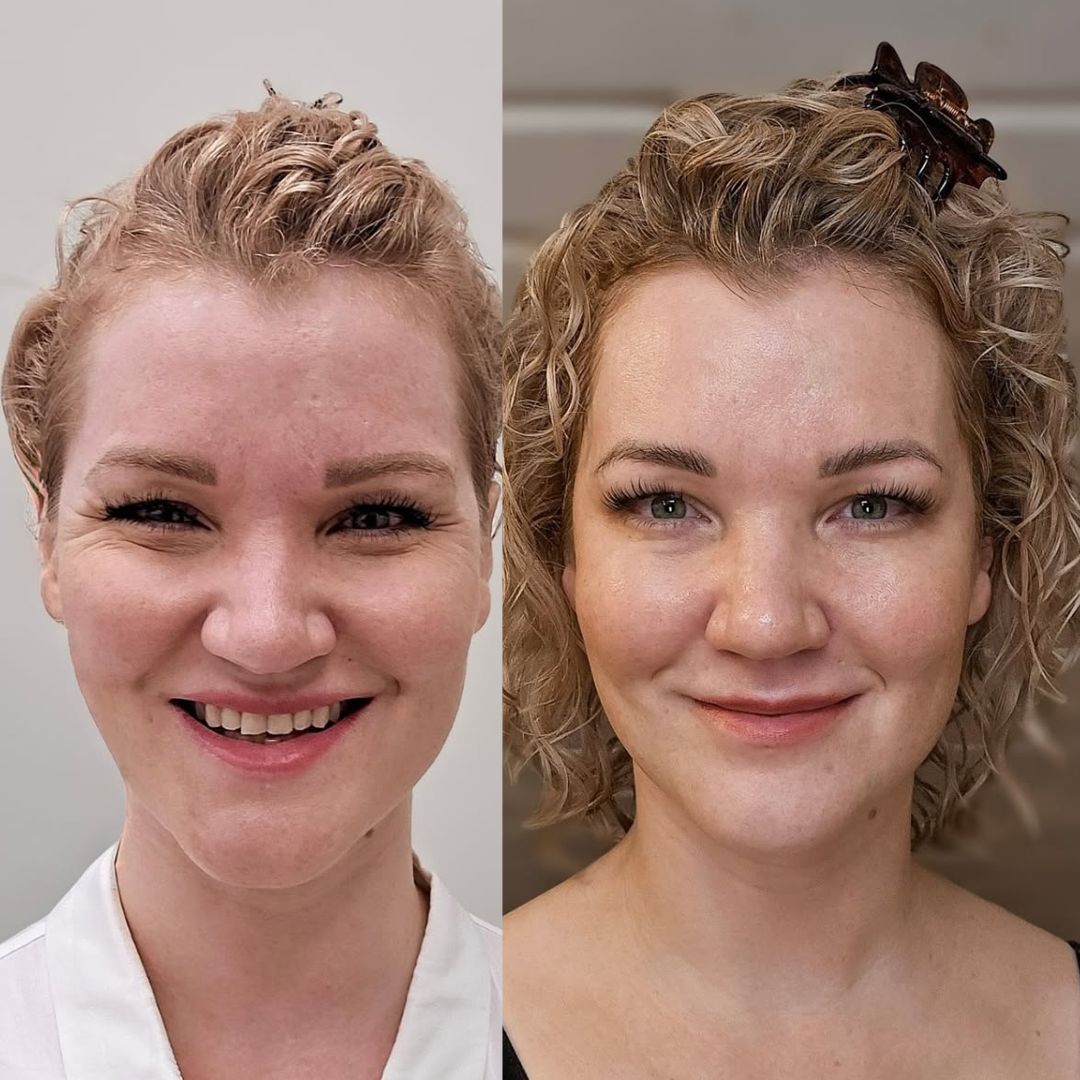
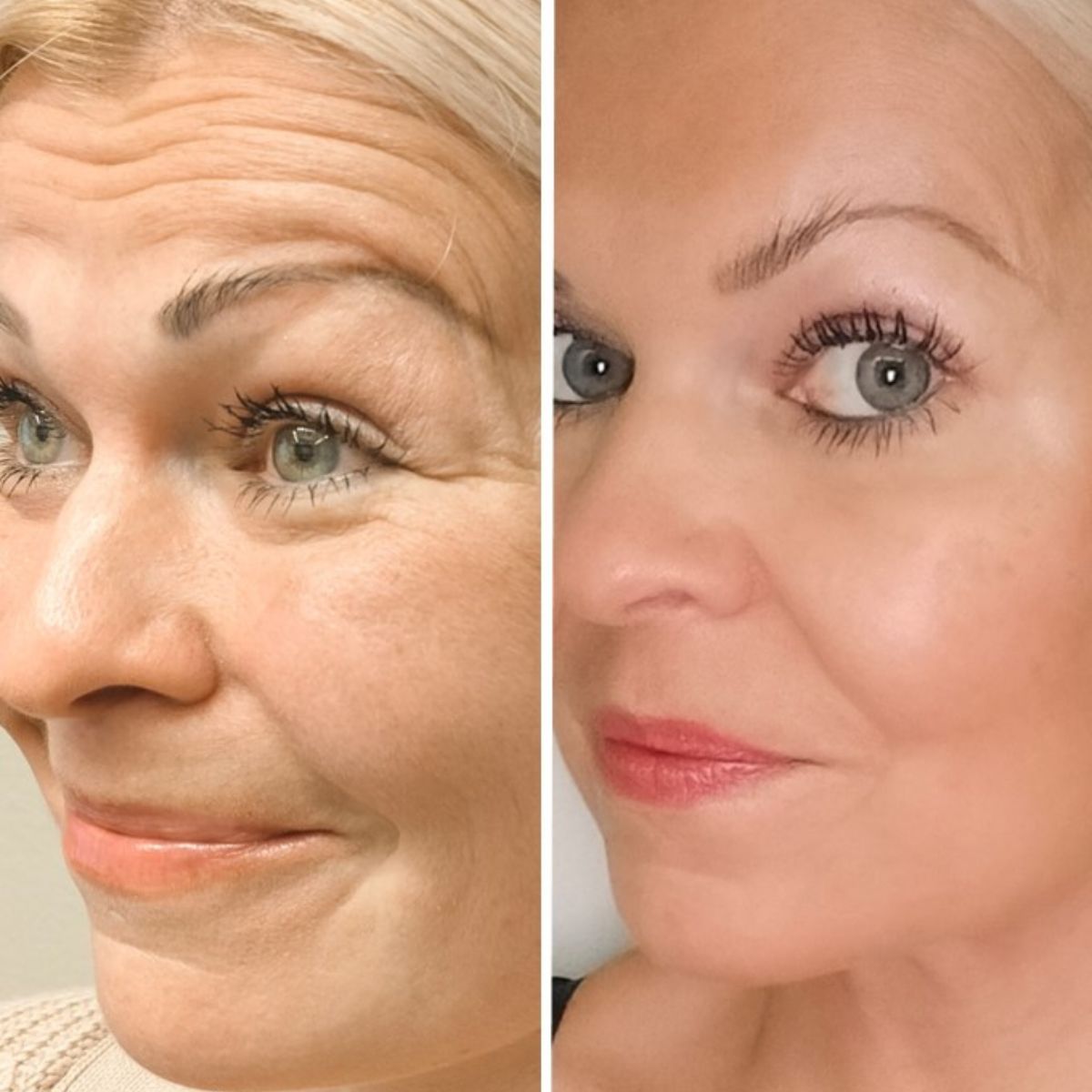
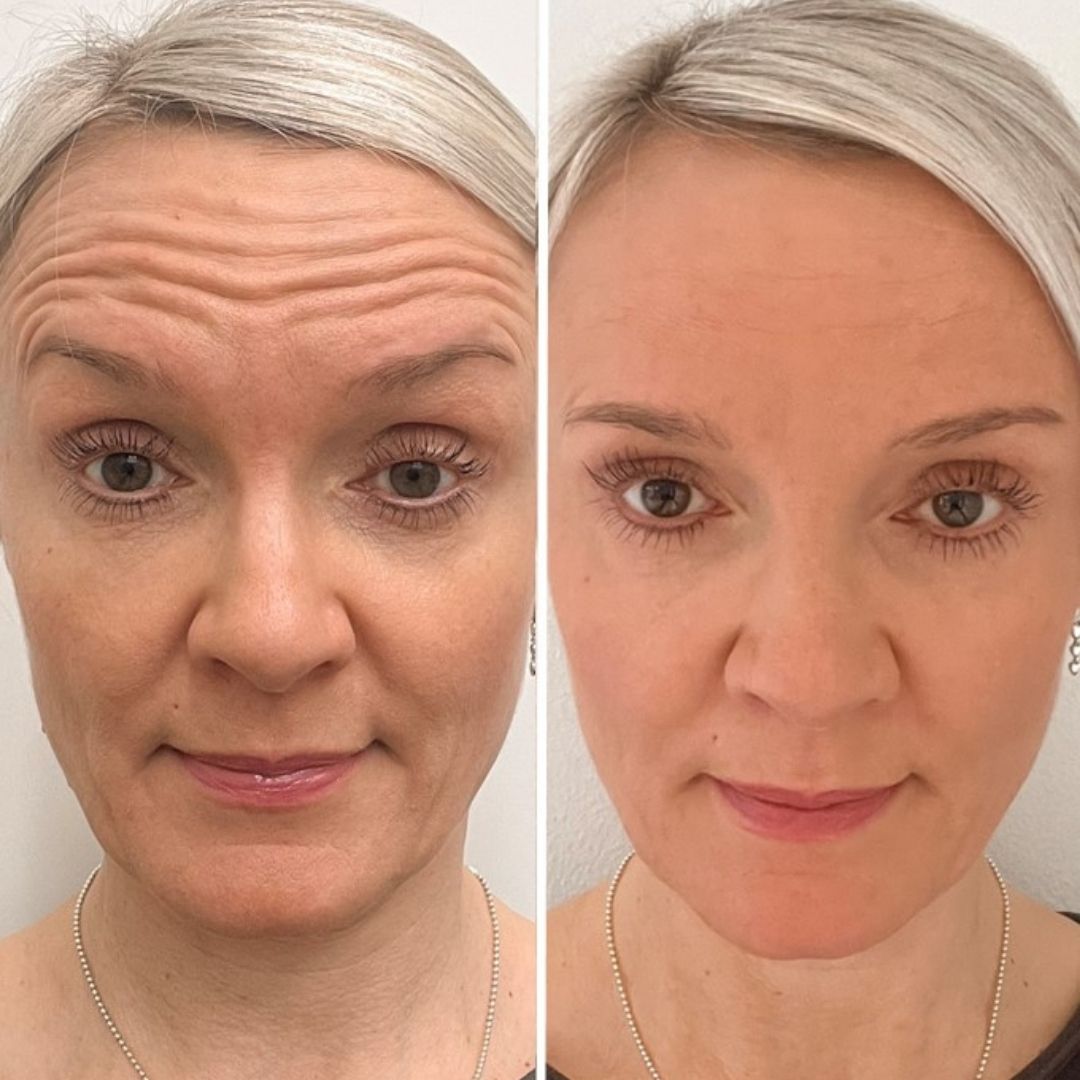
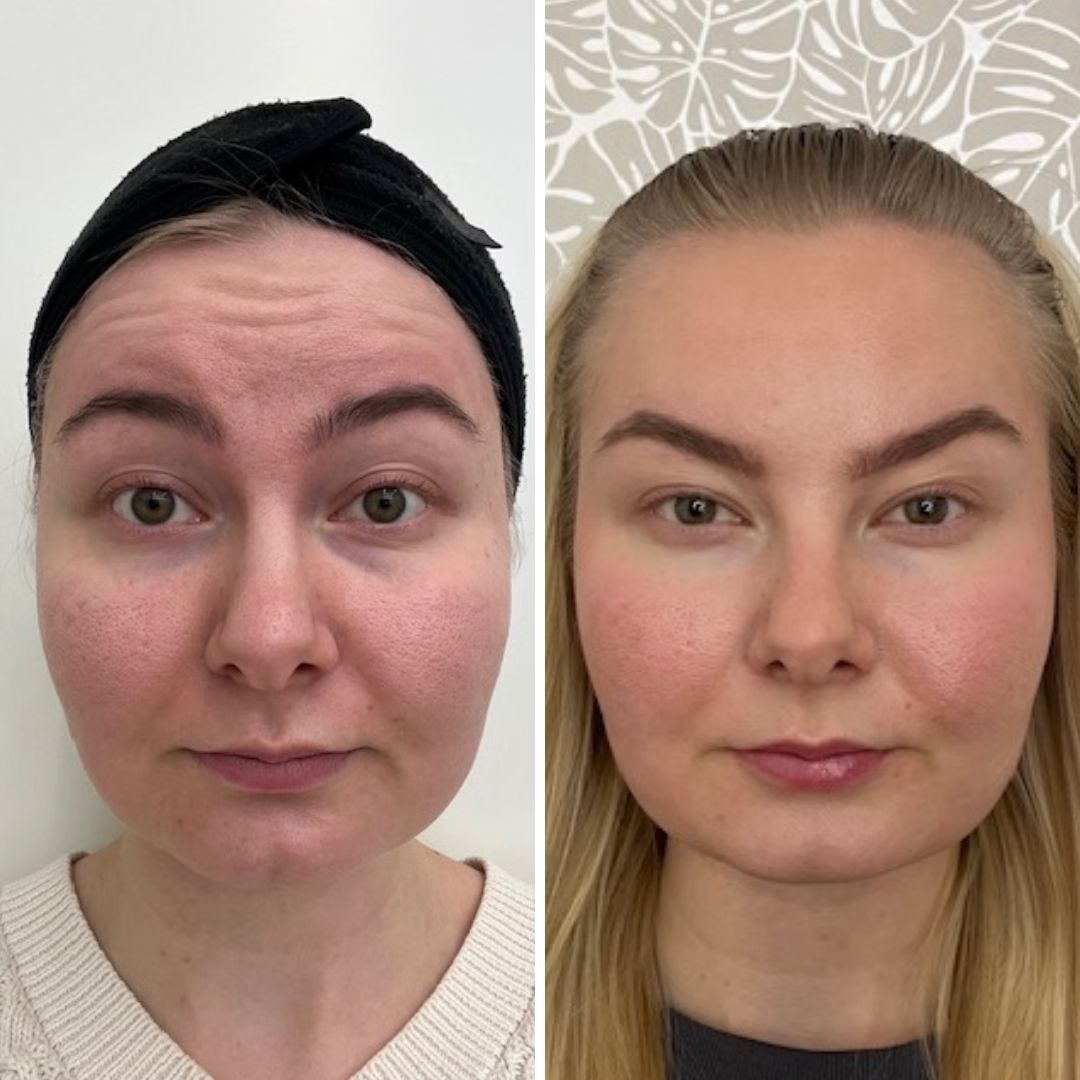
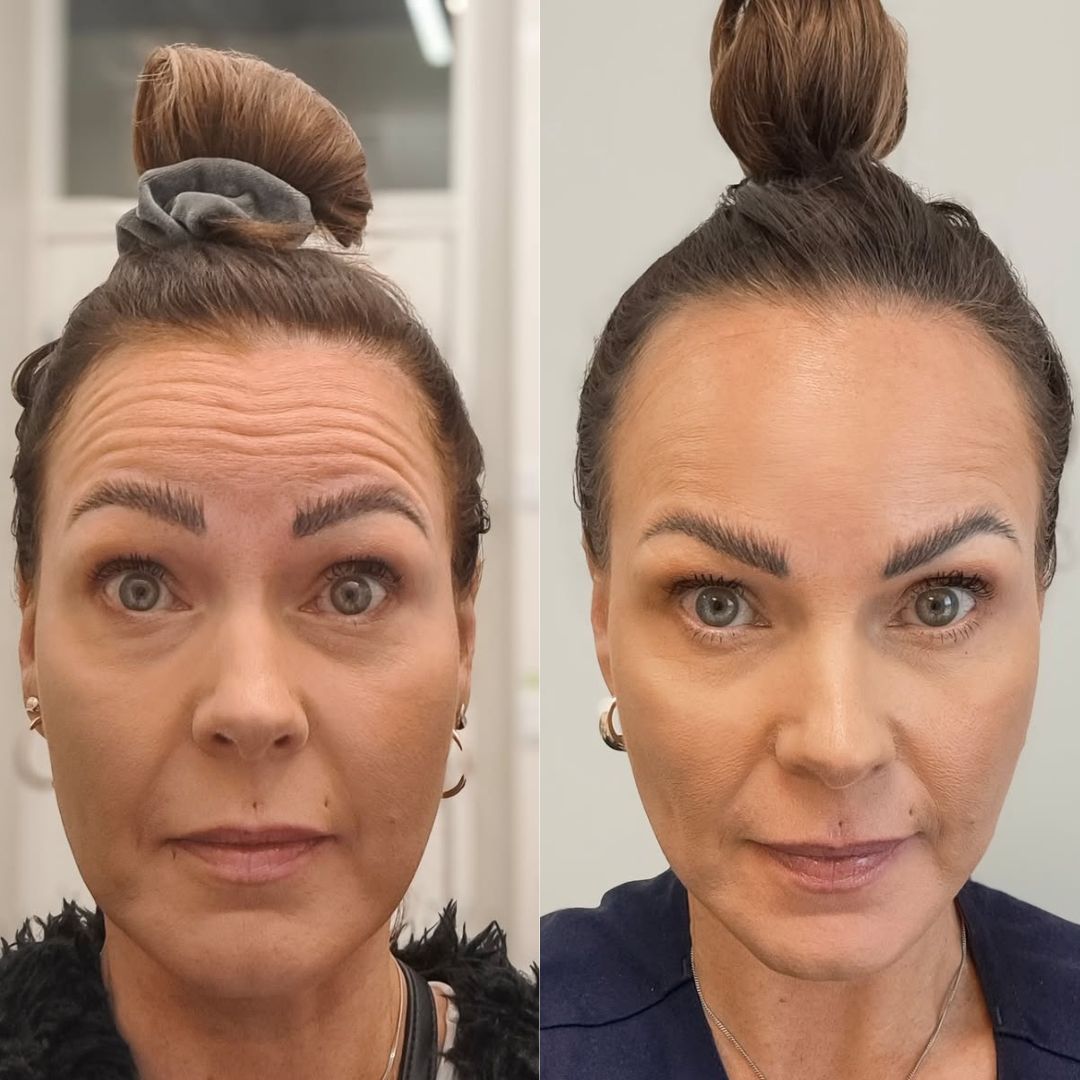
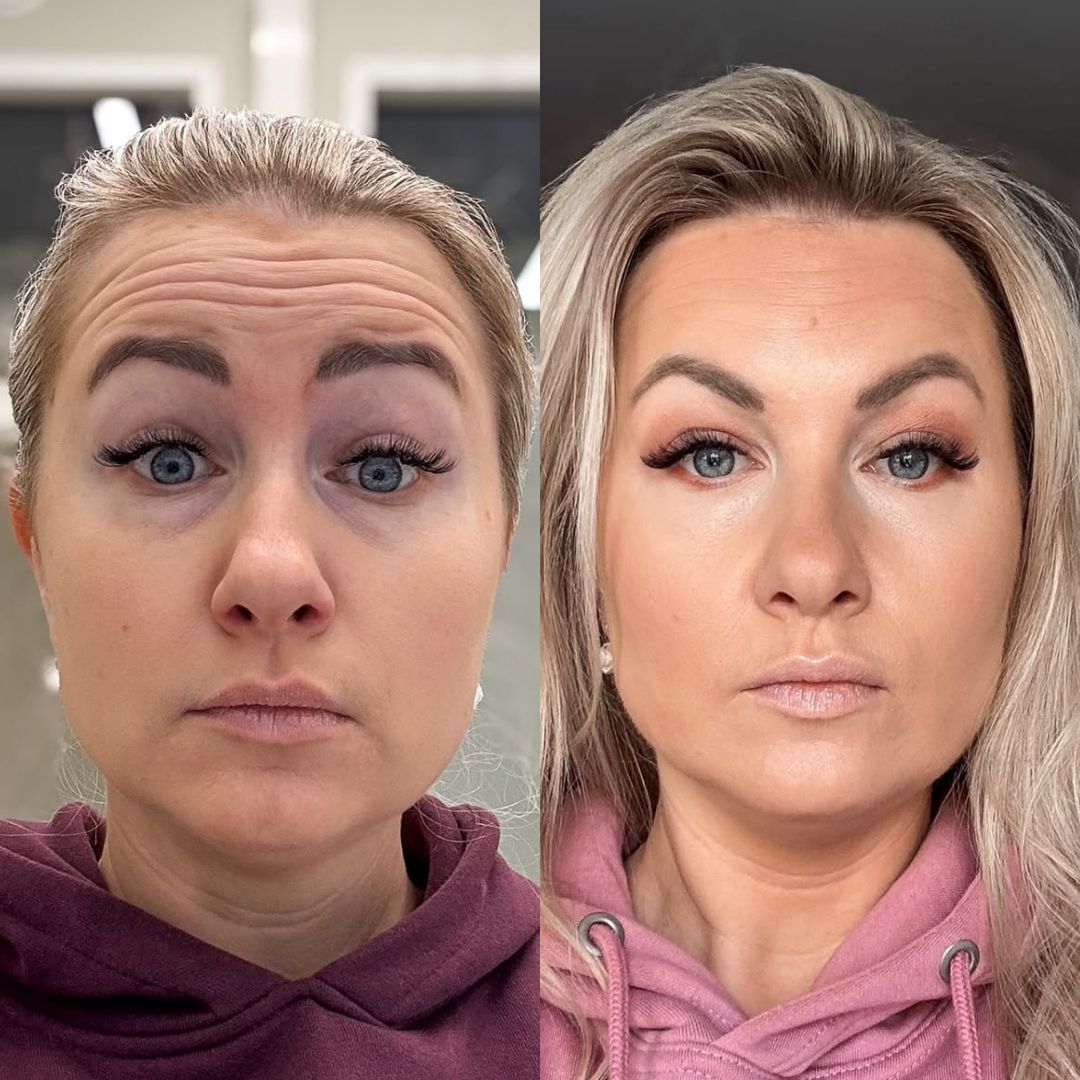
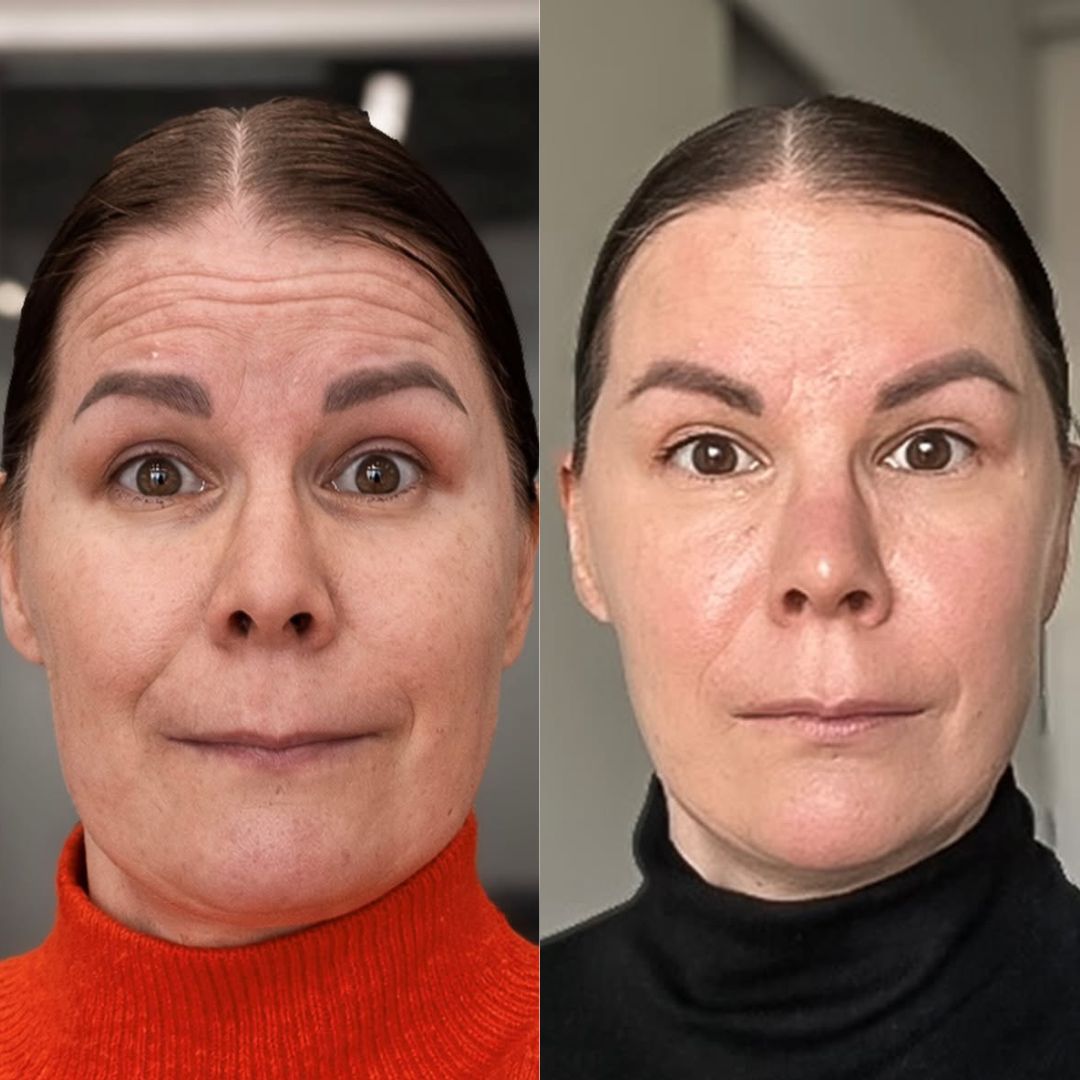
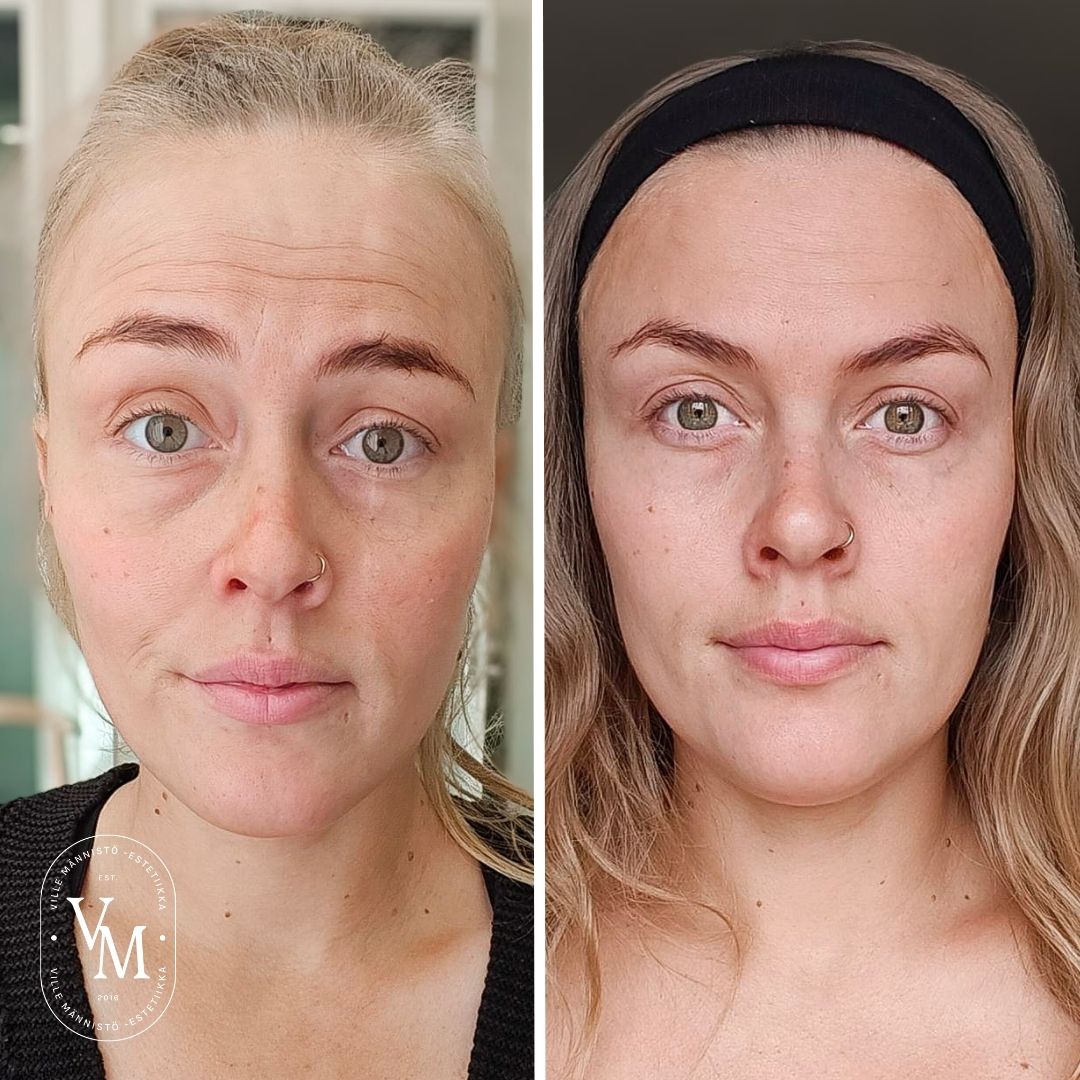
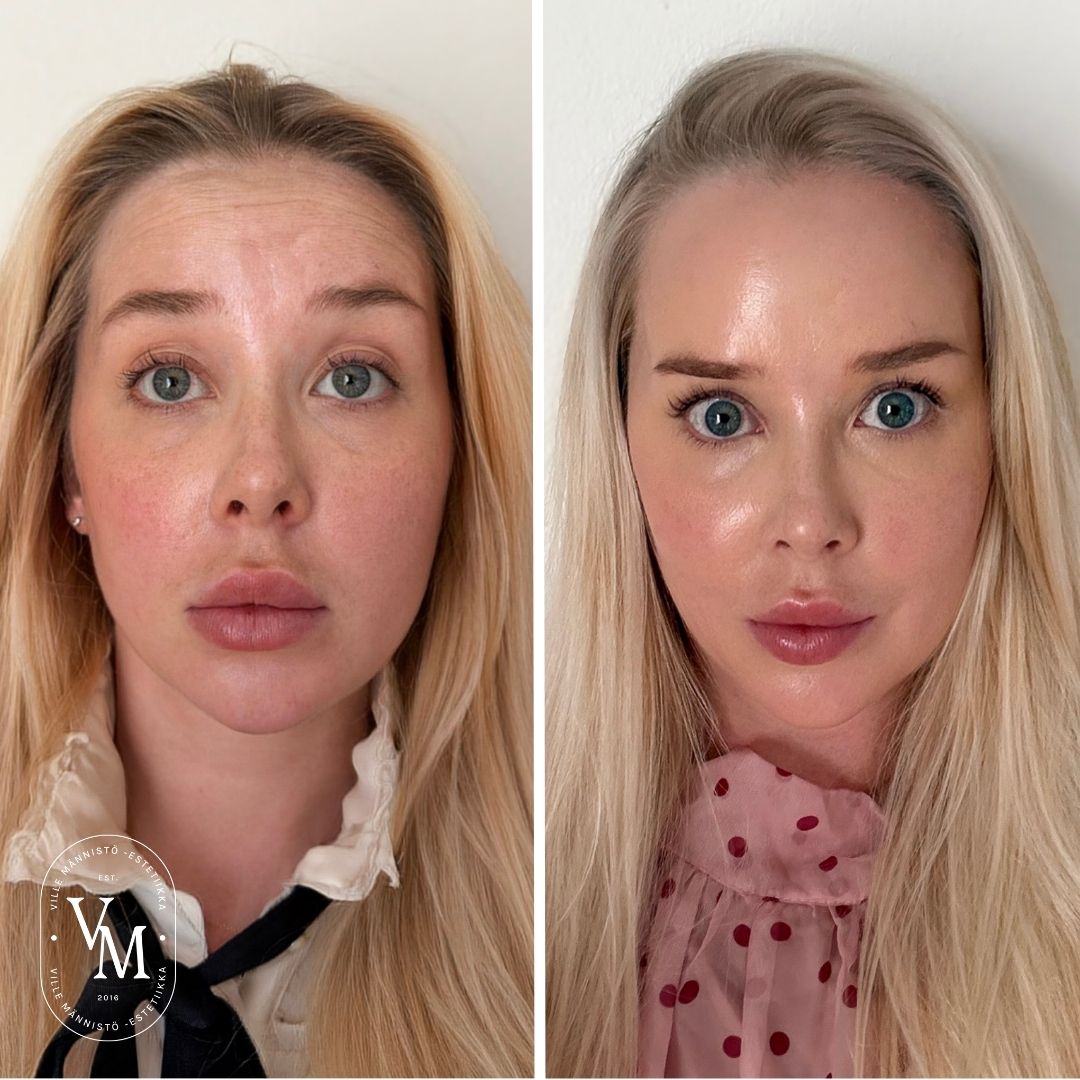
Botox treatment is most commonly performed on the forehead. The procedure can prevent, reduce, and correct forehead wrinkles. The treatment relaxes the forehead muscle (m. frontalis). As the muscle relaxes, the skin overlying it smooths out, and forehead wrinkles become less pronounced or disappear completely.
After a botulinum toxin treatment on the forehead, the first changes become visible within a few days. The results are visible and can be assessed 2–3 weeks after the treatment.
If the forehead lines are deep and the upper eyelids are heavy, the treatment is quite complex. In such cases, the best results are achieved by injecting Botox not only into the forehead but also between the eyebrows and, if necessary, into the outer corners of the eyes.
Nurse Essi Ojala administered the Botox treatment to Ville Männistö's forehead. Essi serves as an assistant instructor in Ville's Botox training courses.
Botox for the forehead – botulinum toxin treatment for just one area is rarely enough
The Best Way to Get Rid of Forehead Wrinkles with Botox – Treatment of 3 Areas
When treating horizontal forehead lines, Botox is almost always injected between the eyebrows as well, and often into the outer corners of the eyes. Doing so helps smooth out forehead wrinkles without causing the eyebrows to droop.
This Is How Forehead Wrinkles Form
Forehead wrinkles are directly related to the activity of the facial muscles. The frontalis muscle shown in the anatomical diagram (below) is responsible for raising the eyebrows. At the same time, it creates horizontal wrinkles on the forehead.
In botulinum toxin treatment, the activity of the frontalis muscle is reduced through small injections. As the muscle relaxes, the skin also smooths out. However, facial expressions remain natural.
Horizontal forehead wrinkles are mainly caused by the contraction of the frontalis muscle. When this muscle is repeatedly activated—for example, when raising the eyebrows—the skin wrinkles horizontally. Botox treatment reduces muscle activity and smooths out forehead wrinkles.
Get rid of forehead wrinkles with Botox
Botox— or botulinum toxin—treatment is one of the most effective ways to reduce forehead wrinkles. The earlier forehead wrinkles are treated, the more effectively their deepening can be prevented.
The best results are seen 2–3 weeks after treatment.
Any additional injections into the forehead are administered 2–4 weeks after the initial procedure (a so-called free follow-up visit).
The results peak between weeks 2 and 6.
The effects of Botox begin to wear off gradually starting in the sixth week. The effects fade slowly, and a good result lasts an average of four months.
Treatment is usually repeated every 3 to 6 months.
Unless the treatment is repeated, the muscle will fully return to its original condition within 12 months. Of course, the visible effects will disappear much earlier than that.
Injection sites
In forehead Botox treatment, injections are administered into the forehead muscle (m. frontalis), among other areas. The injection sites are always planned on an individual basis, taking into account the patient’s facial muscle activity. Careful planning helps smooth out forehead lines without compromising the face’s natural appearance.
The treatment takes into account, for example
strength of the forehead muscle
the position of the eyebrows
shape of the eyelids
skin elasticity
the patient's facial expressions
Injections placed too low can weaken the frontalis muscle too much and cause the eyebrows to droop. For this reason, injection sites are carefully planned based on each individual’s anatomy.
Typical Botox injection sites in the forehead area.
This is how the skin on my forehead changed after Botox treatment.
A Surgeon's Perspective
Botox treatments in the facial area require a thorough understanding of anatomy. In the forehead area, injections are administered into the frontalis muscle in such a way that the natural movement of the eyebrows is preserved.
Training as an oral and maxillofacial surgeon provides a solid foundation for understanding the anatomy of the facial muscles, nerves, and blood vessels, as well as for performing botulinum toxin treatments.
Botox for the Forehead—Who Is a Good Candidate for This Treatment?
Botox treatment for the forehead is suitable for people who have horizontal forehead wrinkles that are visible when moving or at rest. The treatment can help prevent the formation of forehead wrinkles and also correct existing lines.
Botox for the forehead is right for you if
The wrinkles on the forehead are clearly visible when making facial expressions
Permanent lines have formed on the forehead, which are visible even at rest
The skin on my forehead feels constantly tight
“Ville is a true professional with an eye for aesthetics. A satisfied customer.” (Google review, March 2026)
Botox for the Forehead—How Long Do the Results Last?
The effects of Botox in the forehead area usually last about 3–4 months.
The duration of the effect depends, among other things, on
muscle strength
of the dose used
metabolism
the regularity of treatments
You can also find more information about how long the effects last in the article"How Long Does Botox Last?"
When does Botox start to take effect on the forehead?
The first changes are usually visible within a few days.
A clear effect is usually seen after about a week, and the final results are assessed approximately two weeks after treatment.
Botox for the forehead – price
The price of a Botox treatment for the forehead at VM Aesthetics €270–360.
Treatment for one area costs €270, and treatment for two areas costs €360. For many patients, treatment of the forehead area is combined with treatment of the glabellar lines or other areas of the upper face.
You can find all pricing information for Botox treatments on a separate pricing page.
Get rid of forehead wrinkles with Botox—safely
Botox is one of the most extensively studied aesthetic treatment methods. When performed correctly, the treatment is safe and well-tolerated.
“Before I started getting Botox, the lines on my forehead and my frown lines had already become really deep, and my forehead, facial expressions, and gestures have always been very pronounced, which of course makes the lines on my forehead much deeper.”
(Google review 1/2026)
According to many clients, the main benefit of Botox treatment for the forehead is not just the smoothing of wrinkles, but the preservation of a natural appearance. The final result develops gradually over the first few weeks. Careful planning of the treatment has a significant impact on the final result.
“I’ve been to Ville several times for Botox treatments on my forehead. Ville is professional, skilled, and friendly. The results have always been excellent, and he does high-quality work.”
Specializes in facial anatomy and disorders of the masticatory muscles; certified in botulinum toxin treatments. Clinical work focuses on the safe use of botulinum toxin for both aesthetic and medical indications.
I am a member of a research group whose study on botulinum toxin treatments for masticatory muscles has been published in an international peer-reviewed scientific journal. Check out the study in the PubMed database.
Forehead wrinkles are just one type of facial wrinkle. If you want to understand why different wrinkles form and which treatments are suitable for them, be sure to read this as well: Wrinkles—what causes them and how can they be treated?