Getting rid of frown lines: Botox or hyaluronic acid?
Sibelius lines form between the eyebrows as a result of repeated muscle contractions. Botox is the primary treatment for this line, as it reduces the muscle activity that causes the wrinkle.
Hyaluronic acid is suitable for the Sibelius area in select cases. Filler treatments for the forehead area carry a higher risk of complications than botulinum toxin treatments.
For people over 50, botulinum toxin treatment is often supplemented with microneedling. Botulinum toxin reduces muscle movement, while microneedling strengthens skin that has thinned with age by stimulating collagen production.
Price
- €270 – Botulinum toxin treatment for the Sibelius lines
- 450 € – Smoothing of Sibelius lines with a hyaluronic acid treatment
Get rid of your Sibelius lines with Botox treatment
Botox treatment is often the best solution for correcting a Sibelius wrinkle, because botulinum toxin acts directly on the root cause of the wrinkle—namely, the muscle activity that causes it.
A Sibelius line is a vertical crease that forms between the eyebrows. Botox treatment can effectively reduce muscle activity in the Sibelius area, causing the crease to become less pronounced or disappear completely.
Botox treatment for the Sibelius line relaxes the muscles between the eyebrows. As the muscles relax, the skin overlying them also smooths out. This causes the Sibelius line to become less pronounced or disappear completely from view.
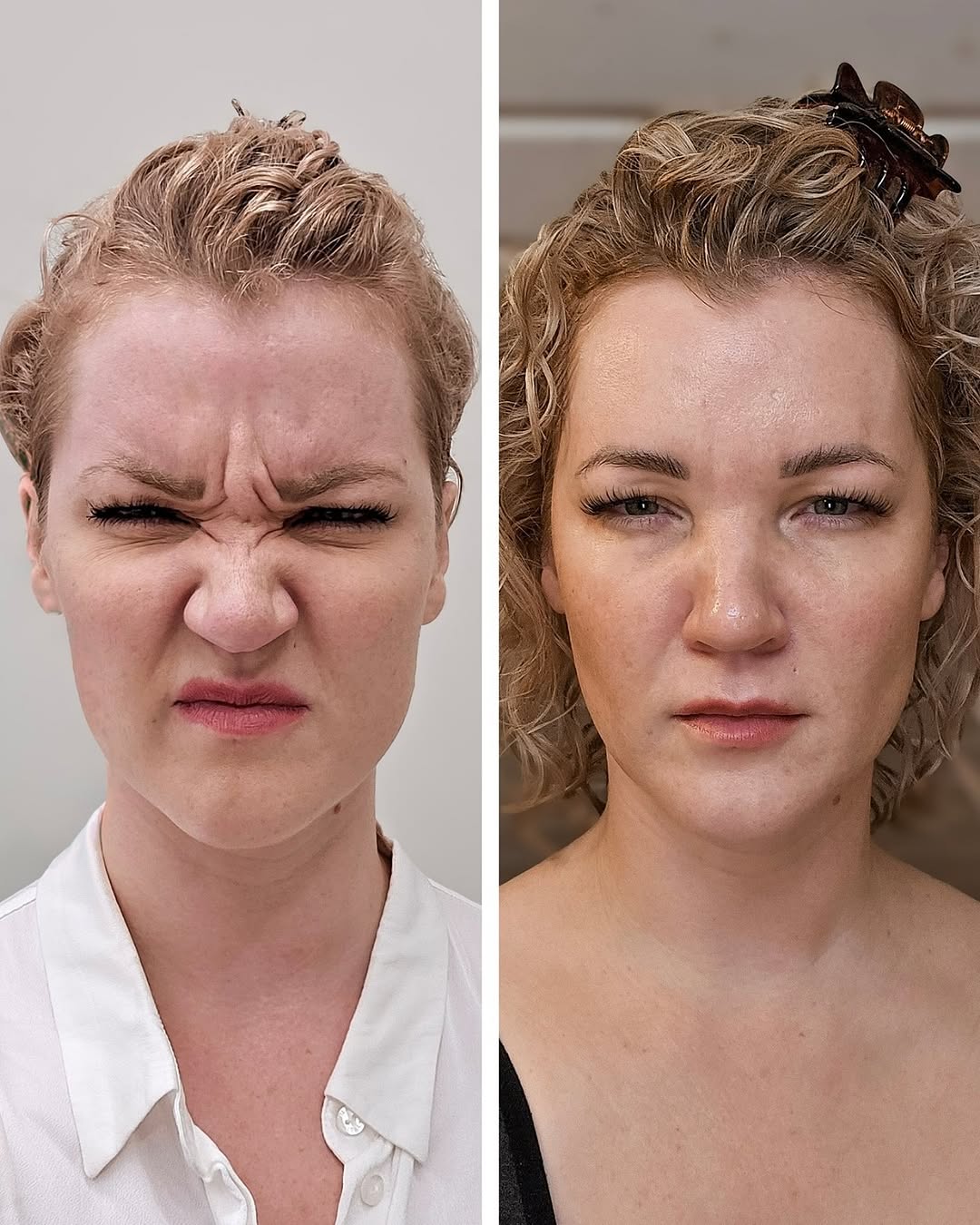
You can find more treatment results here:
Botox: Before and After
Here's How Botox Helps with the Sibelius Wrinkle
A Sibelius wrinkle forms when the muscles between the eyebrows contract repeatedly during facial expressions. In particular , the corrugator supercilii and procerus muscles pull the eyebrows together and crease the skin between them.
Botulinum toxin relaxes these muscles. The skin is able to smooth out, causing the vertical Sibelius lines to disappear.
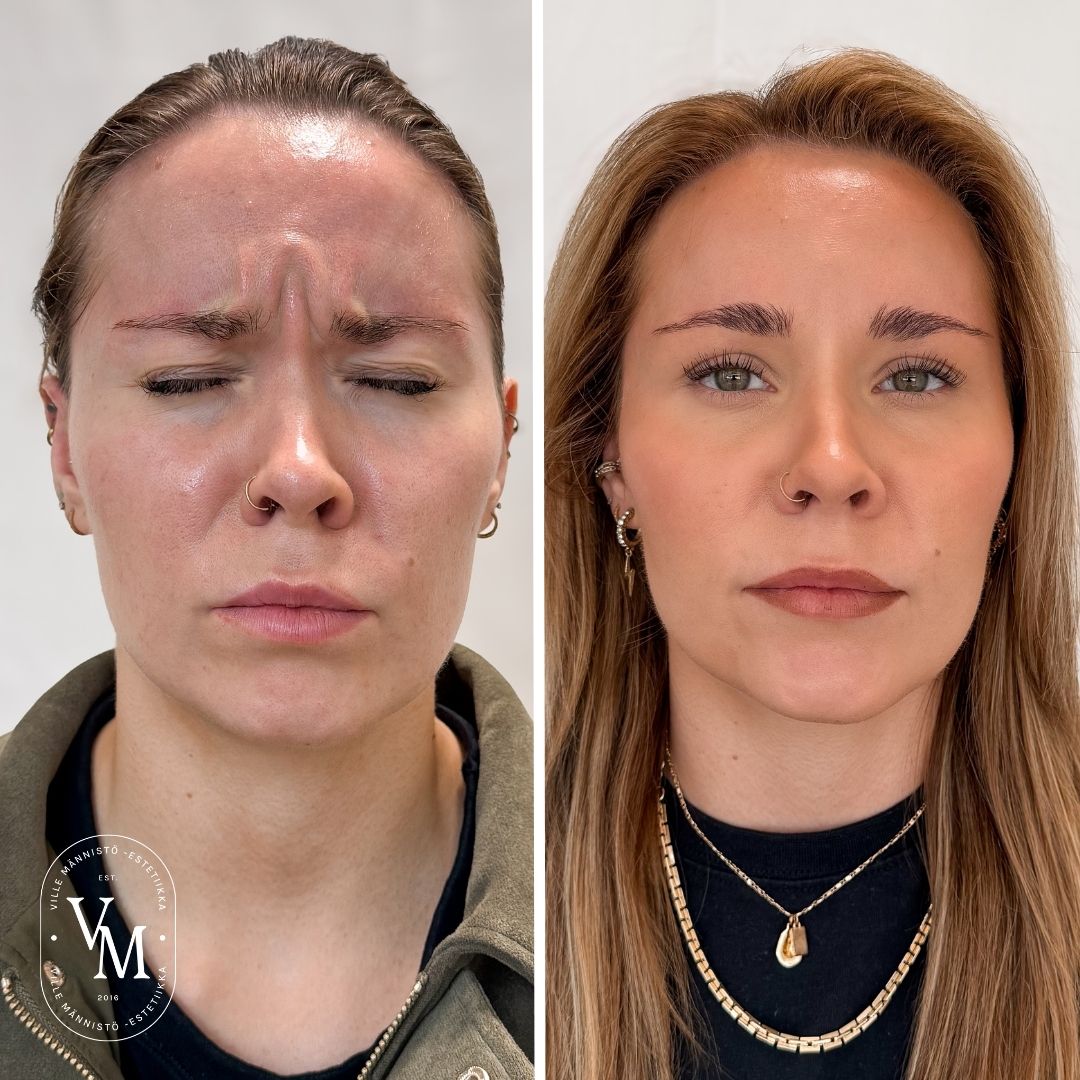
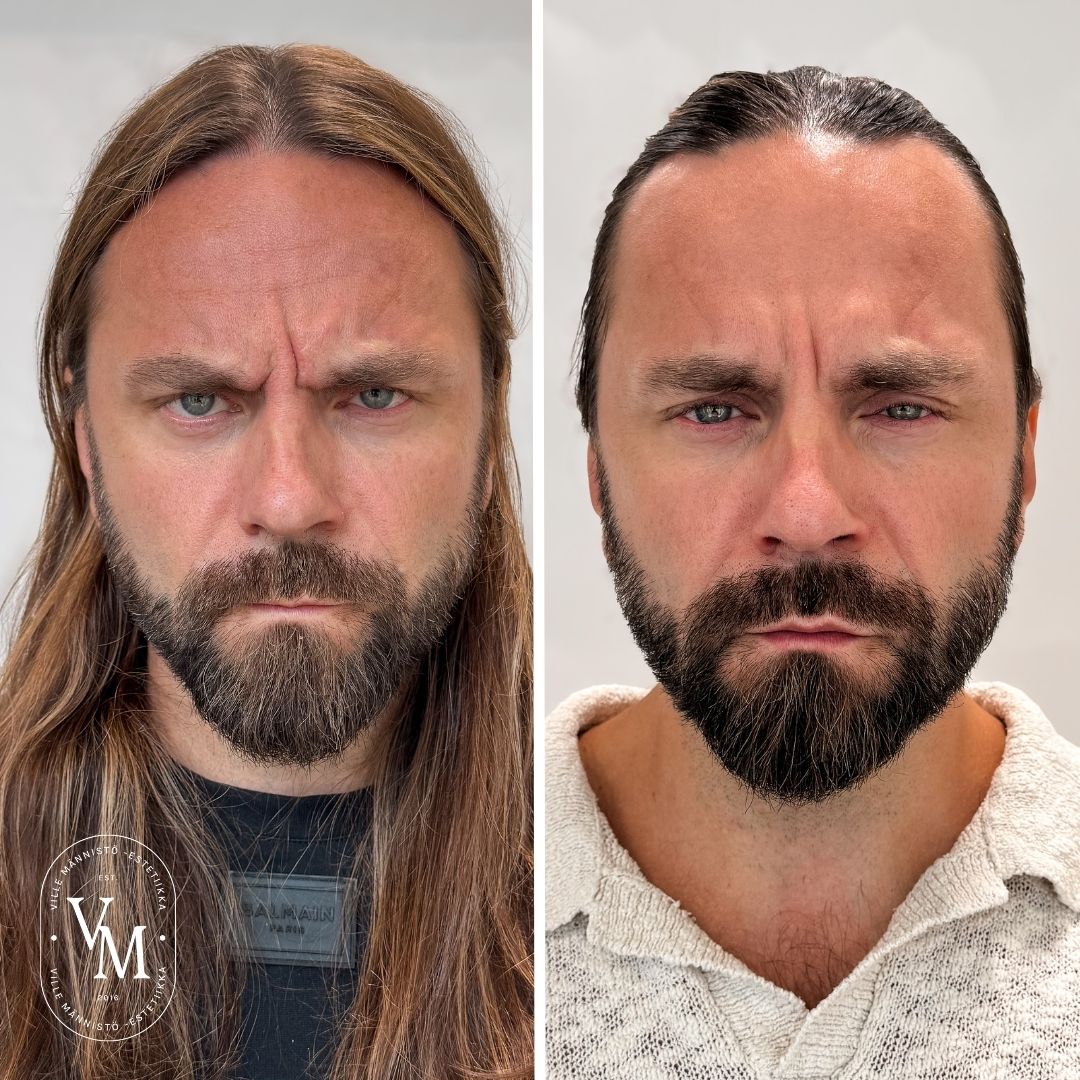
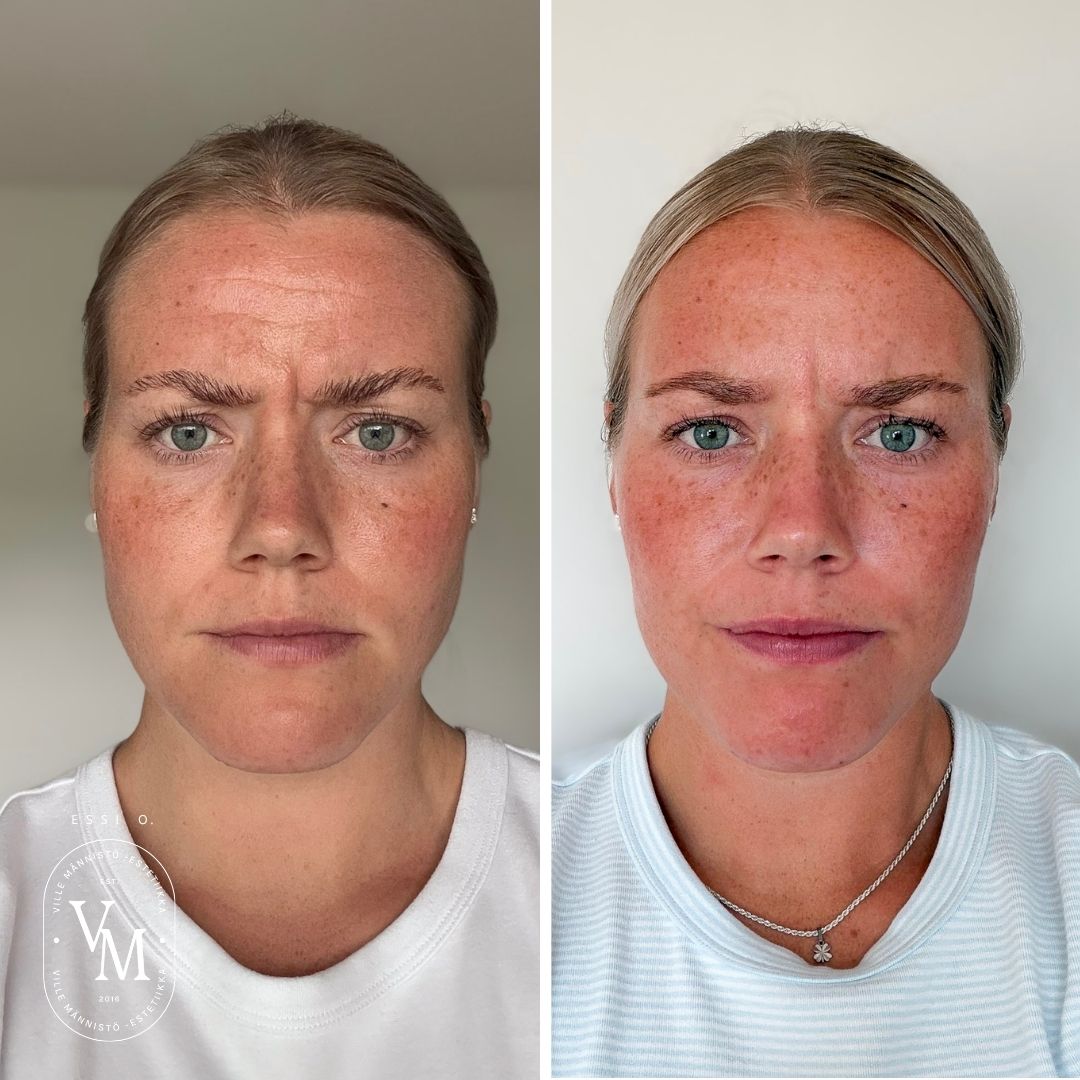
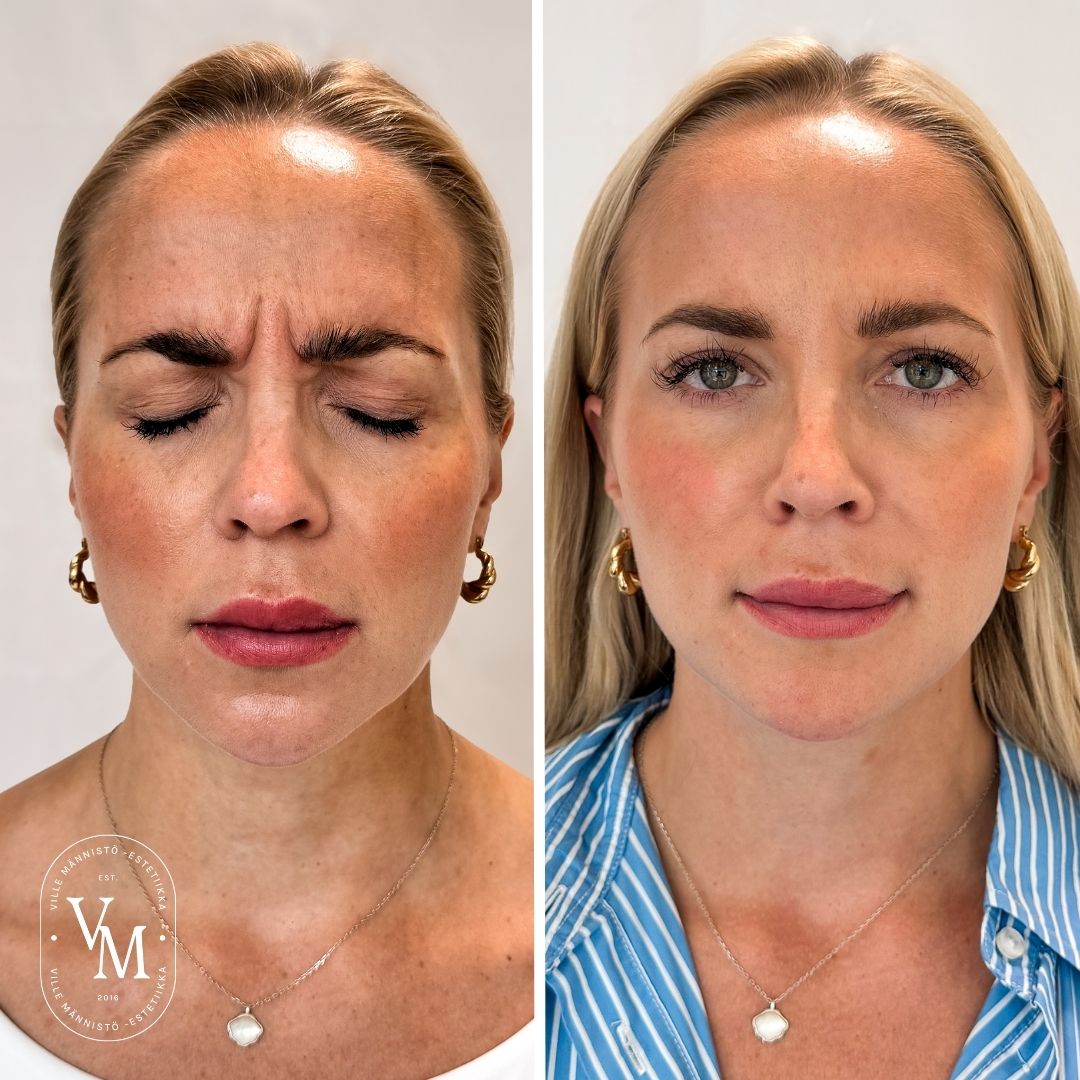
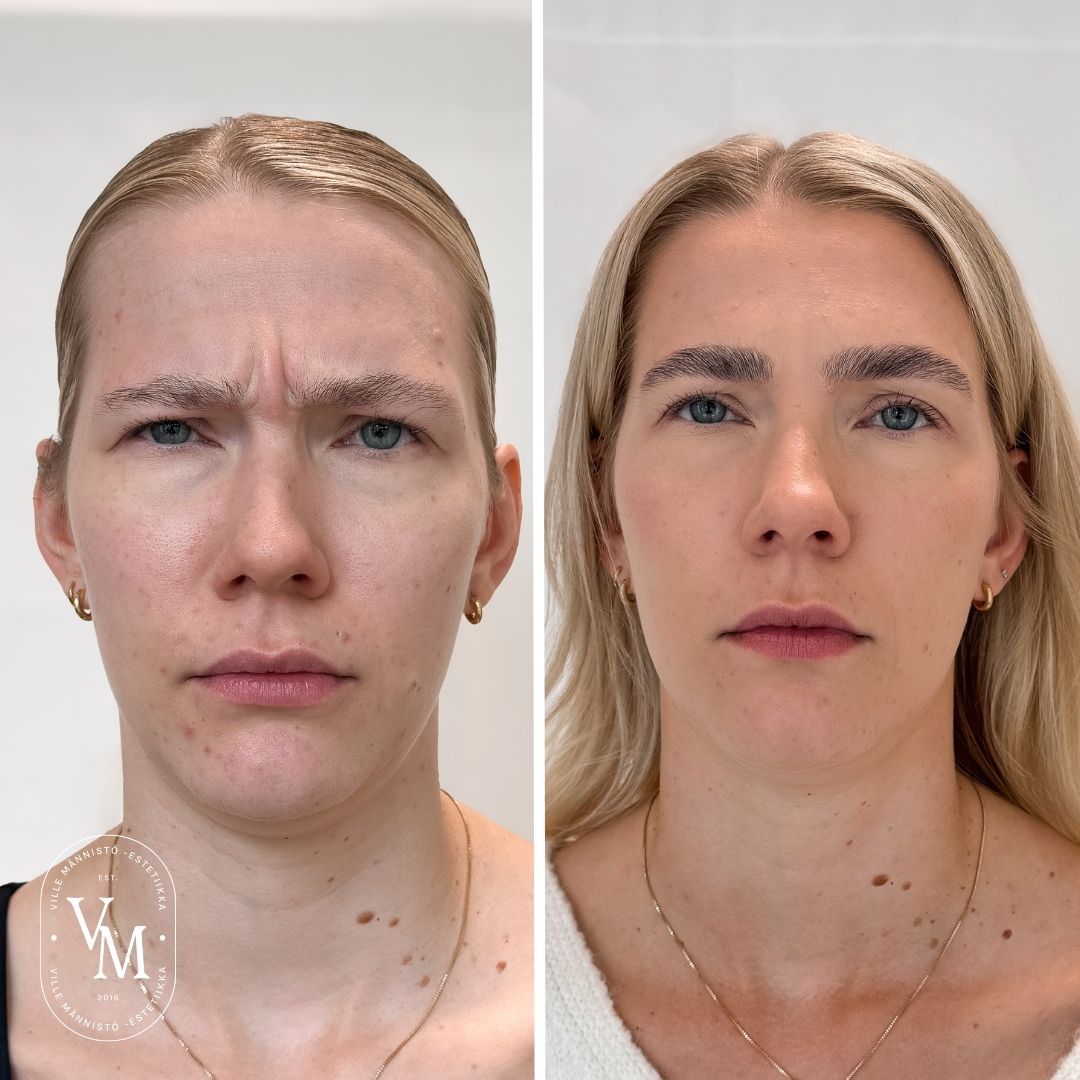
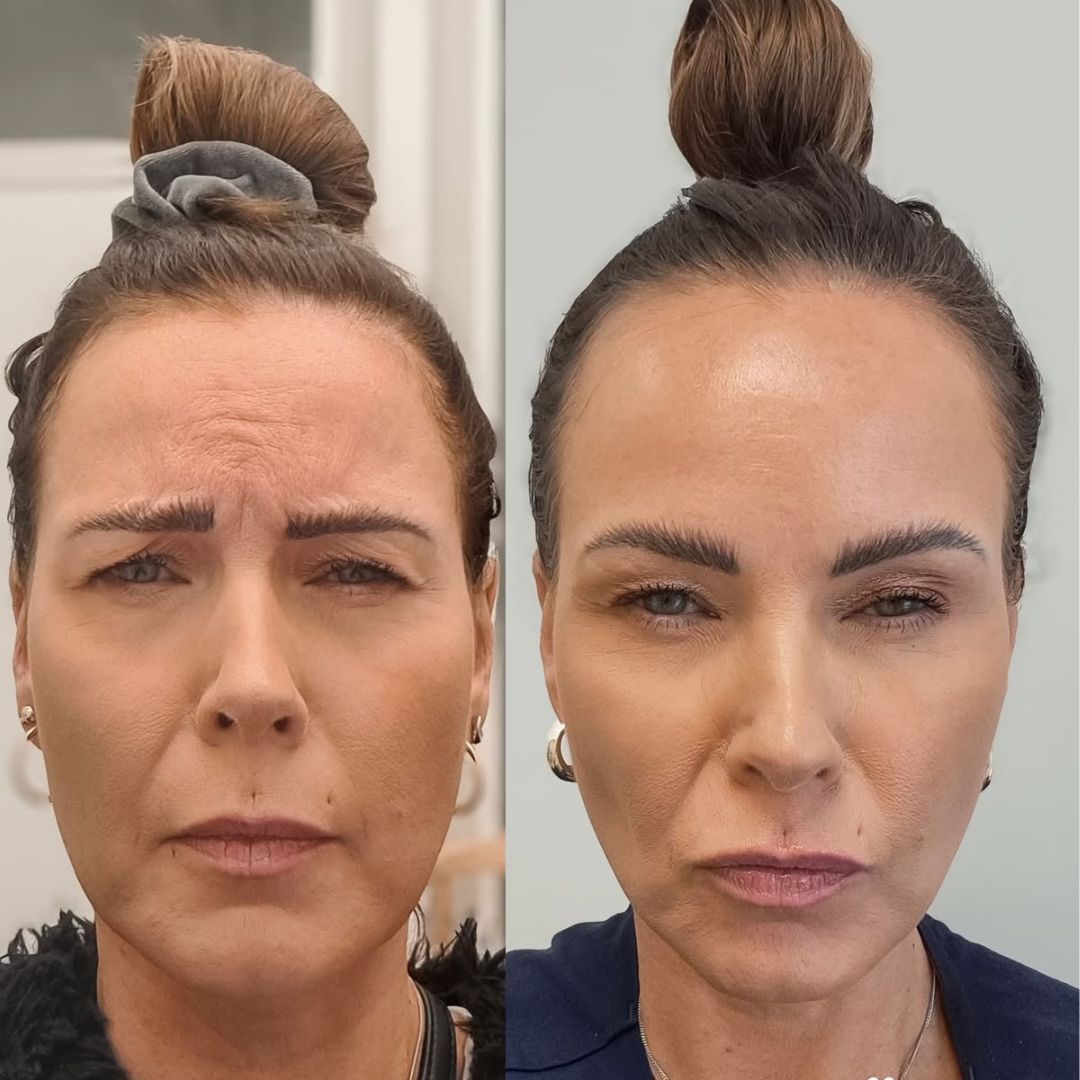
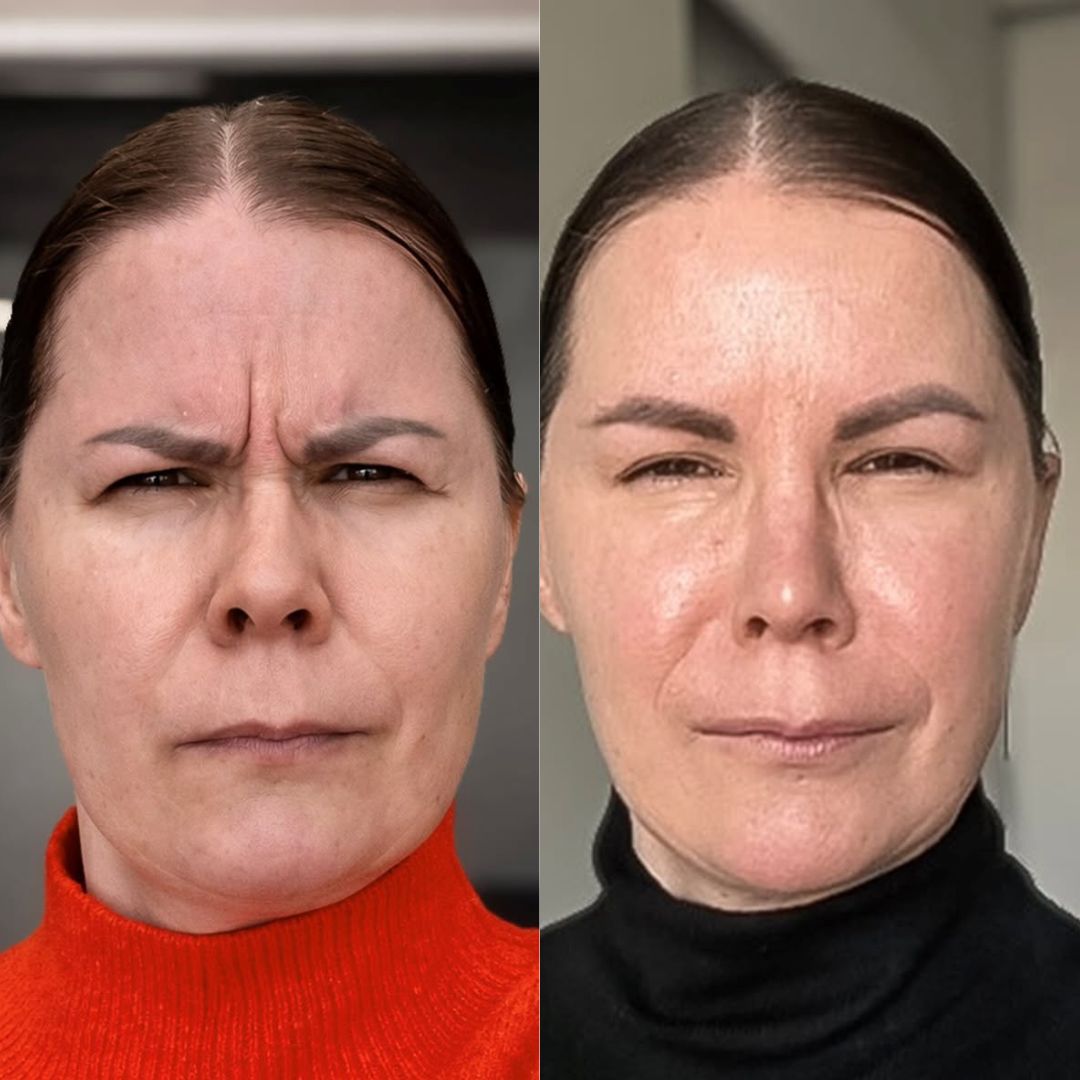
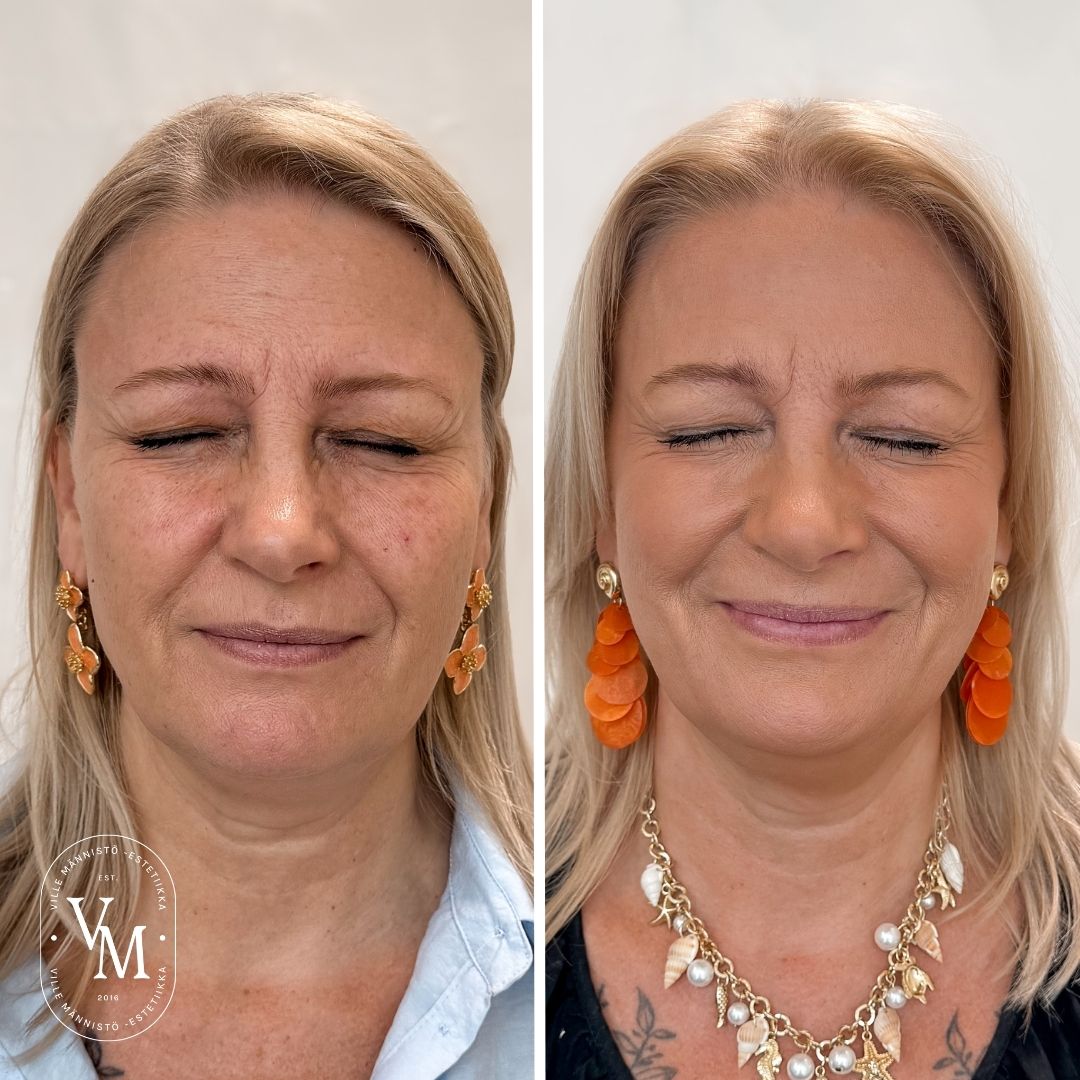
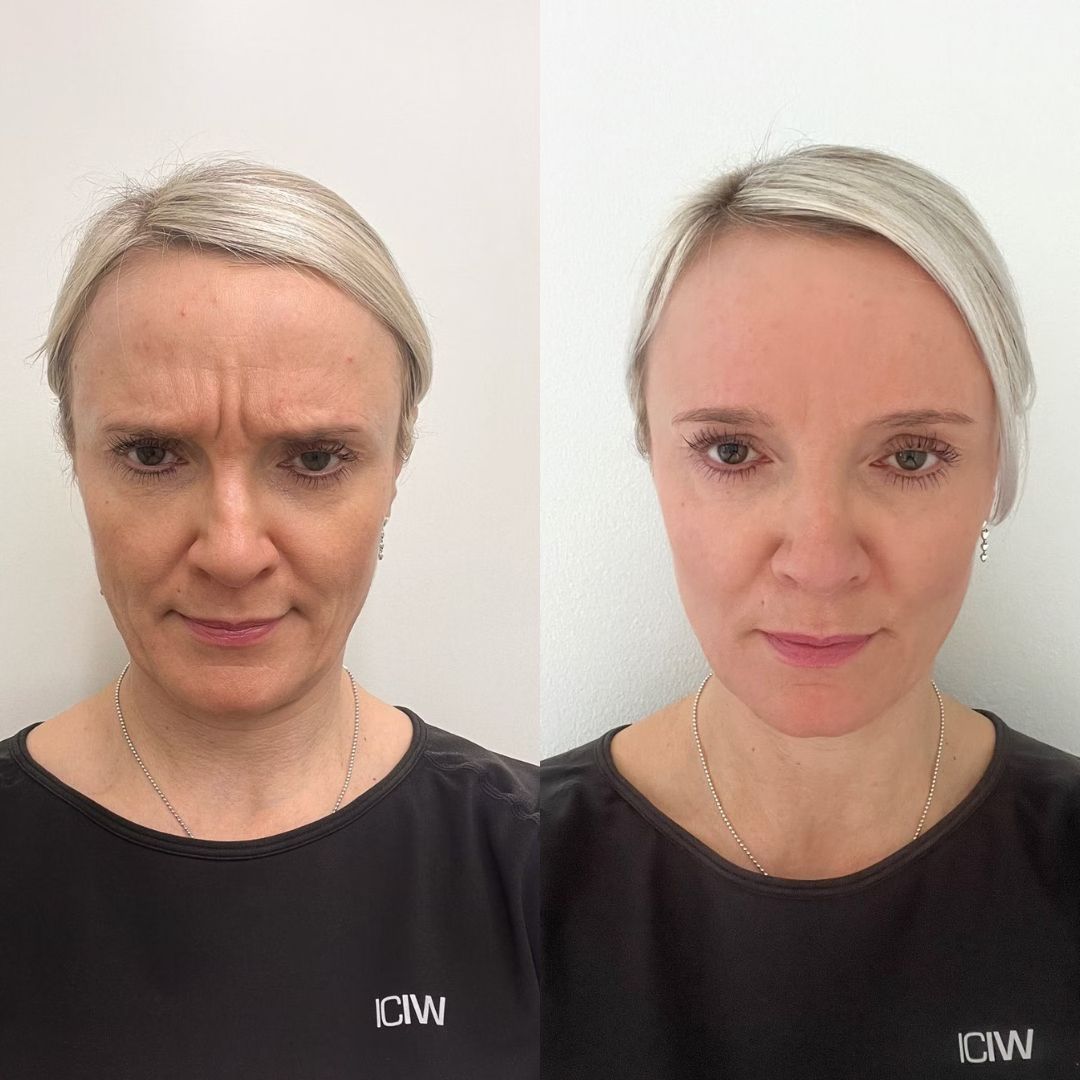
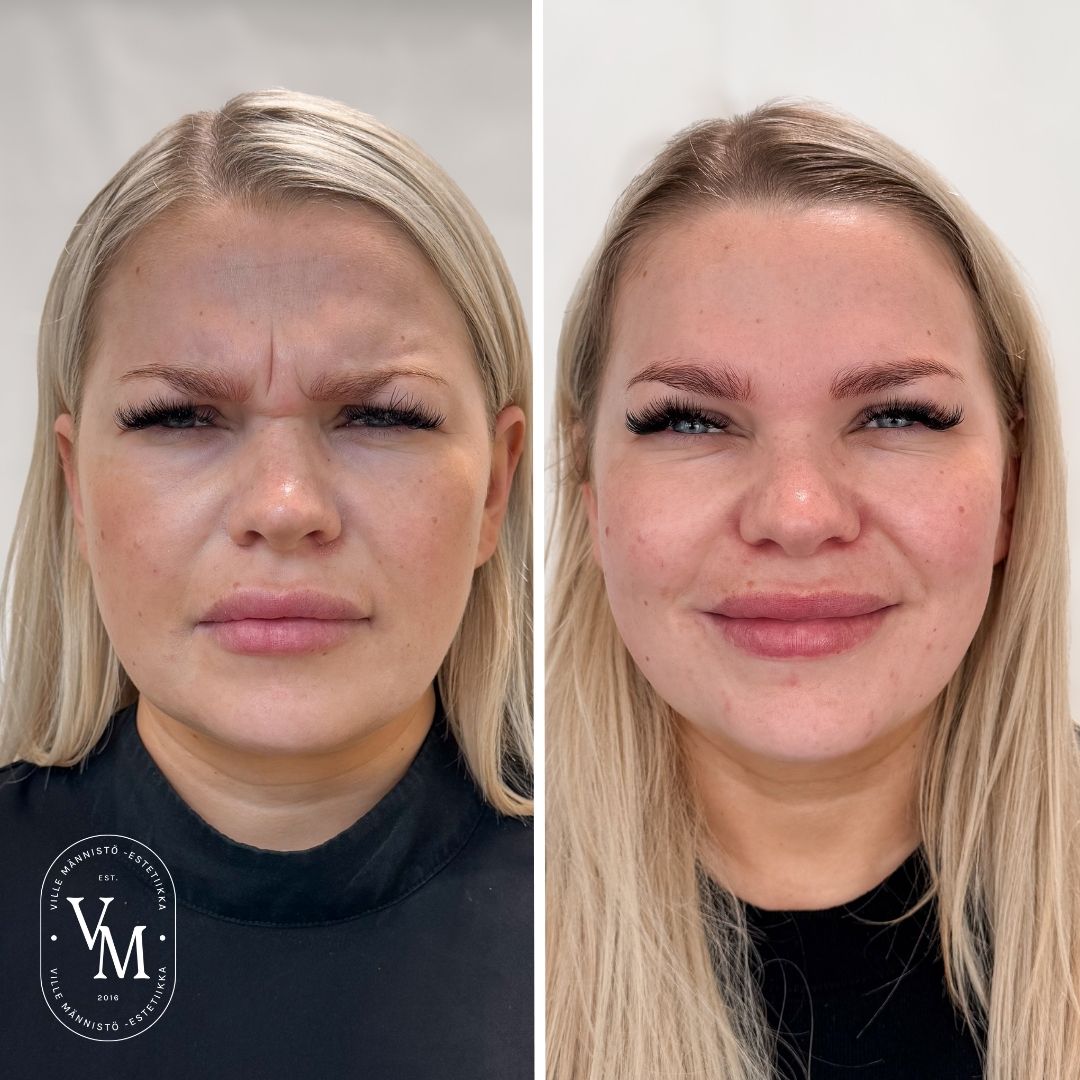
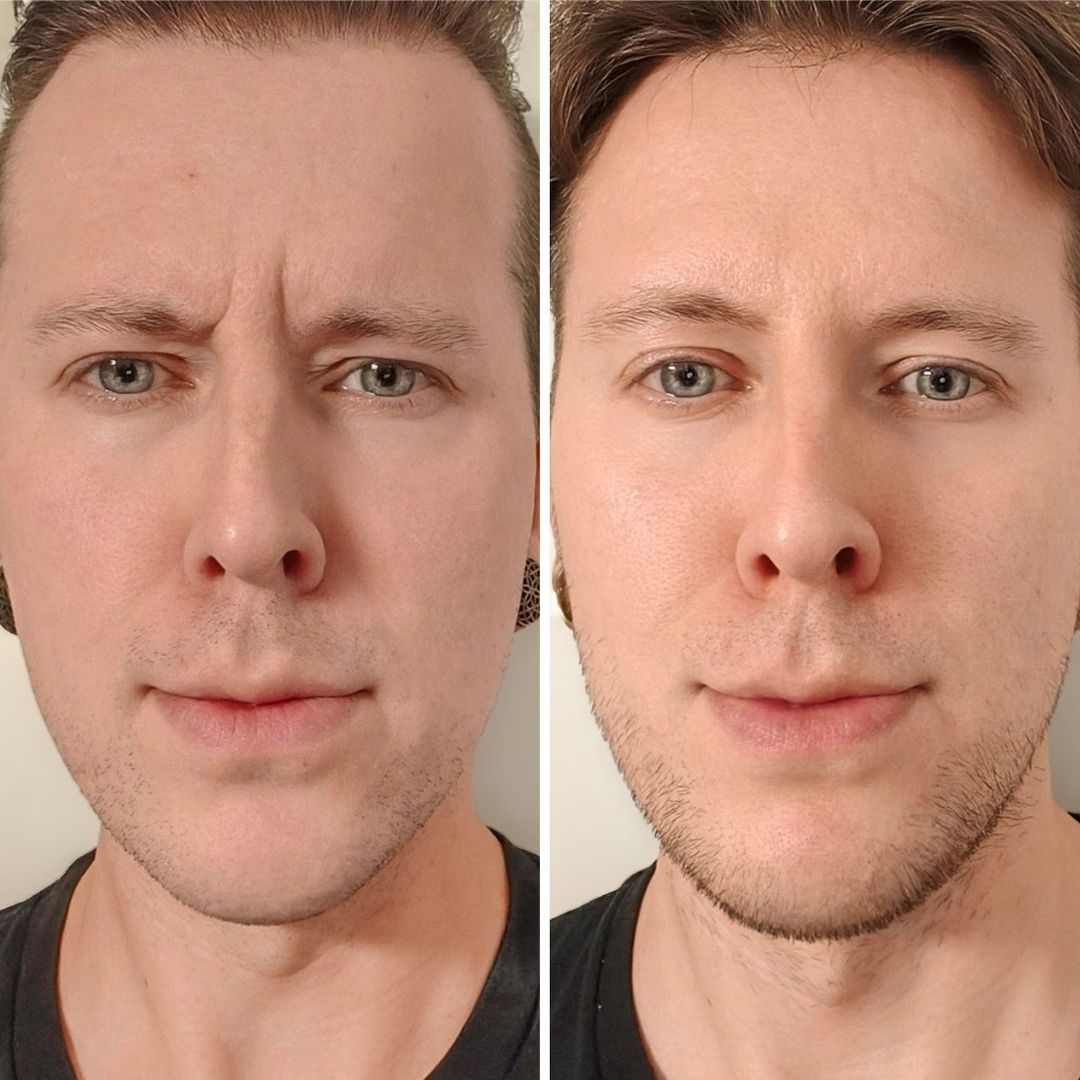
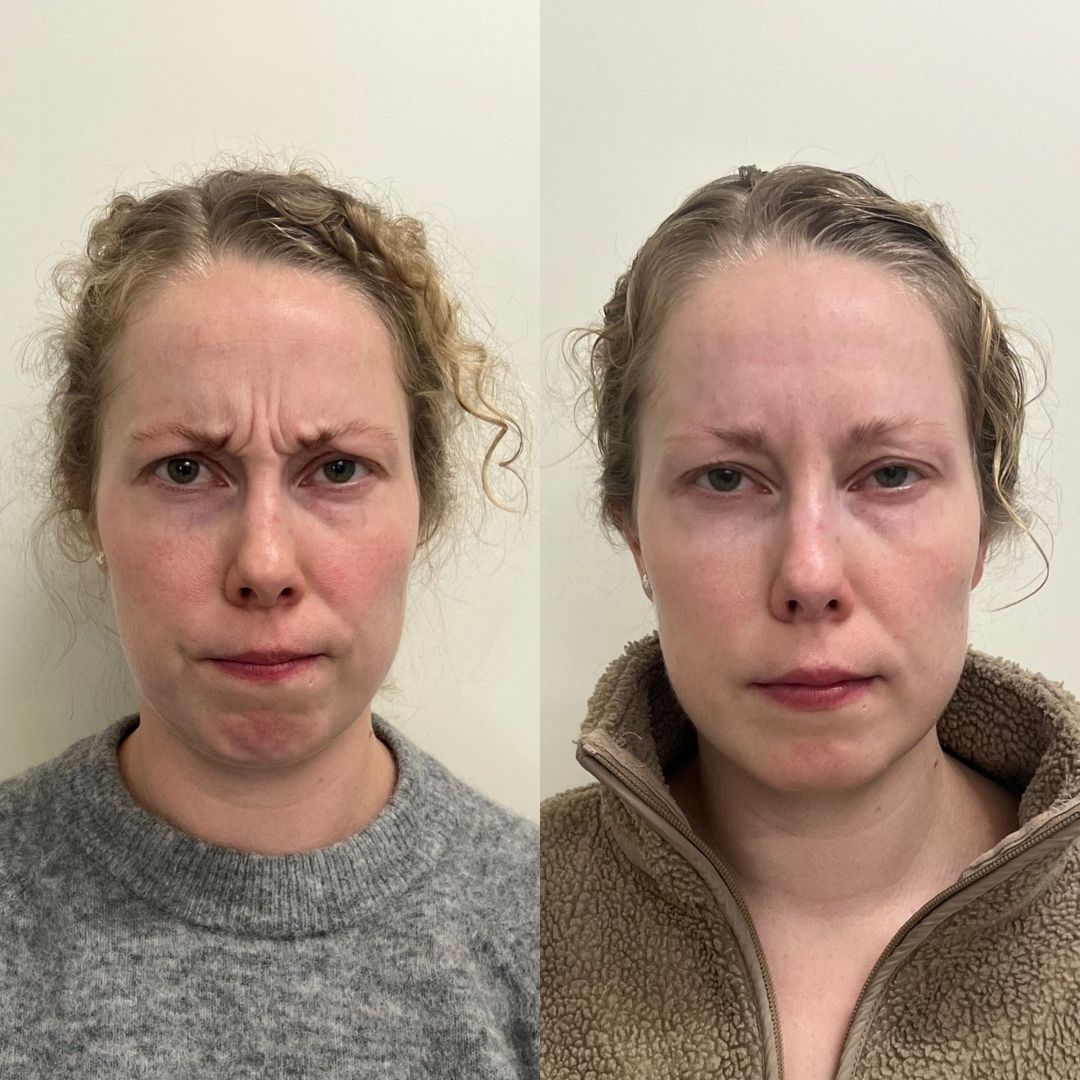
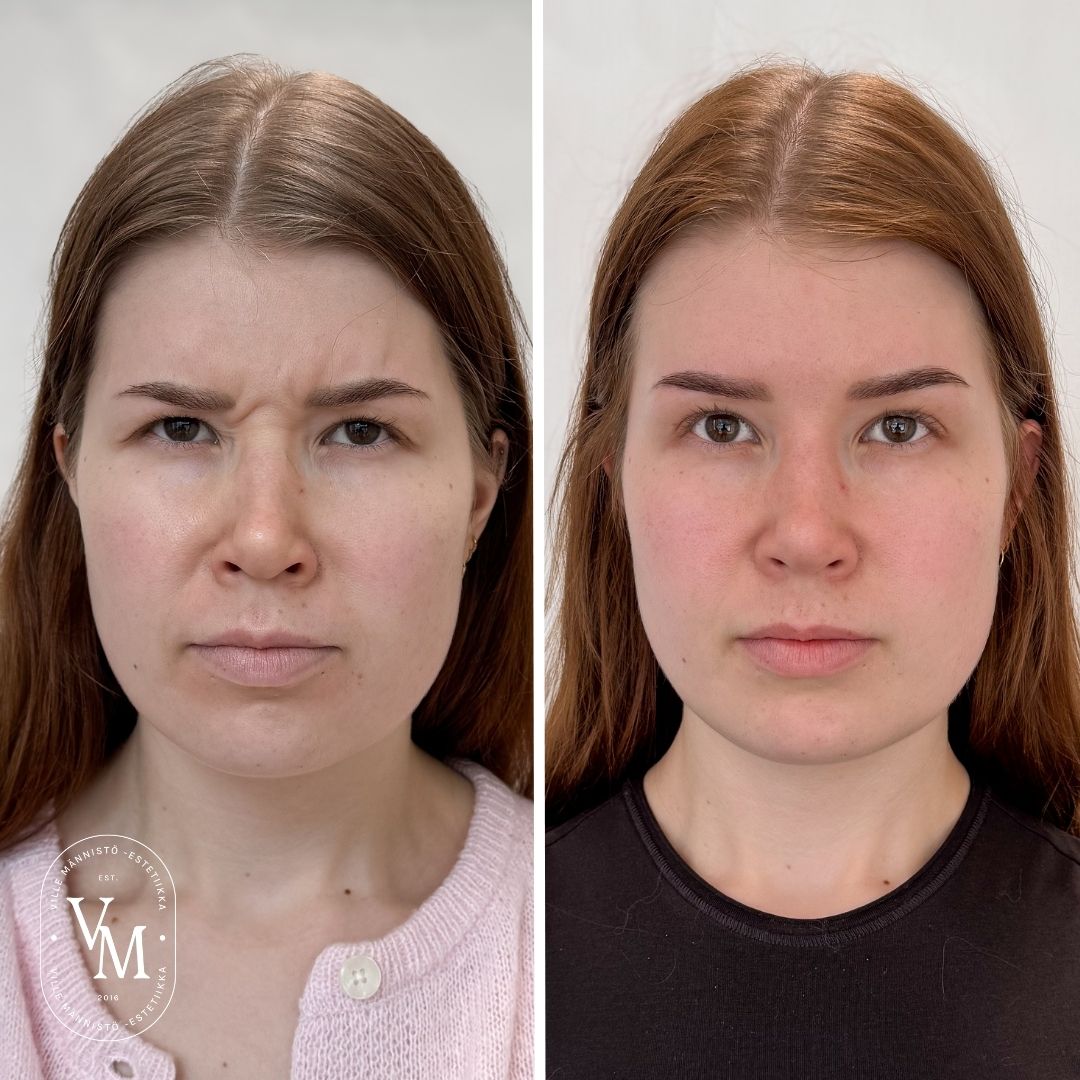
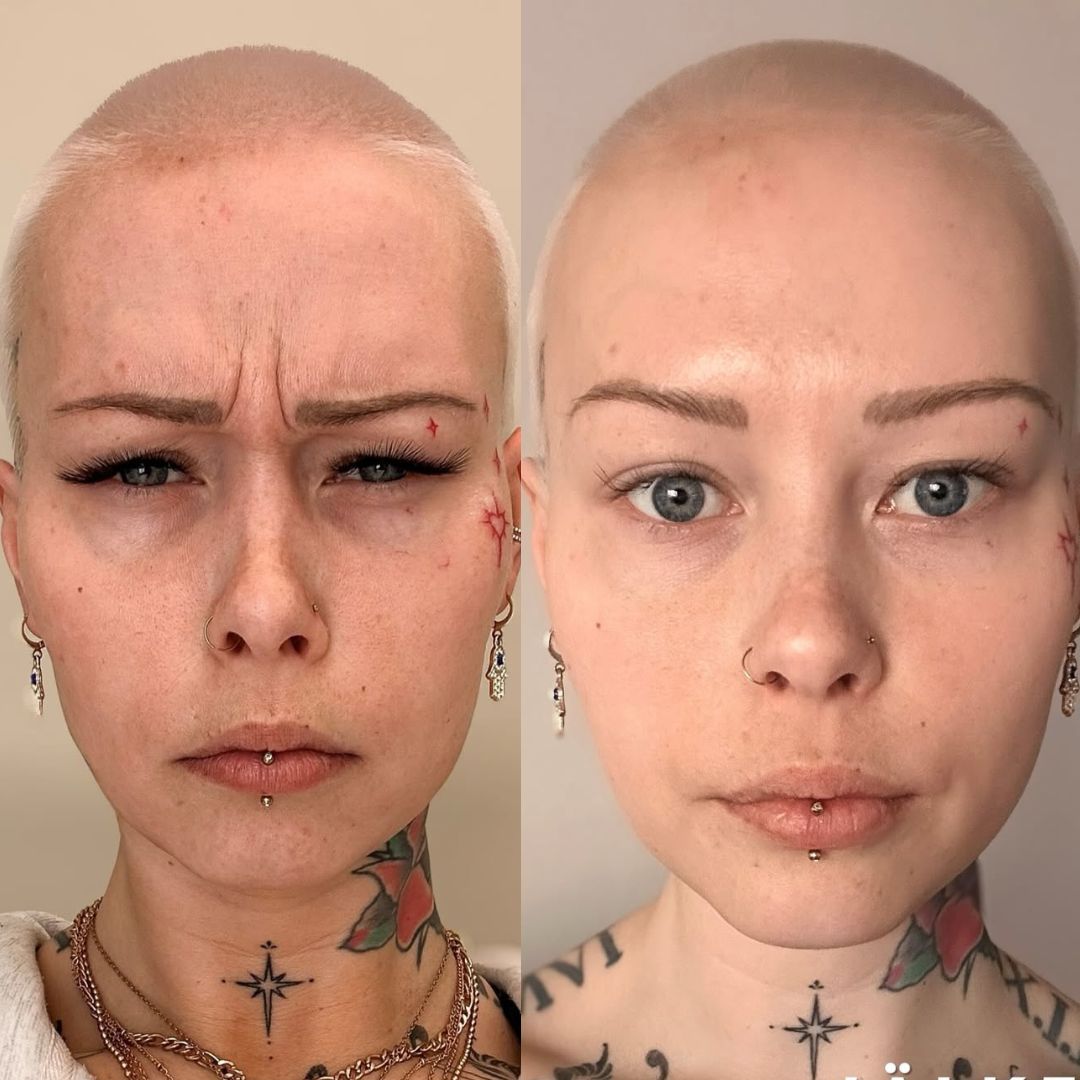
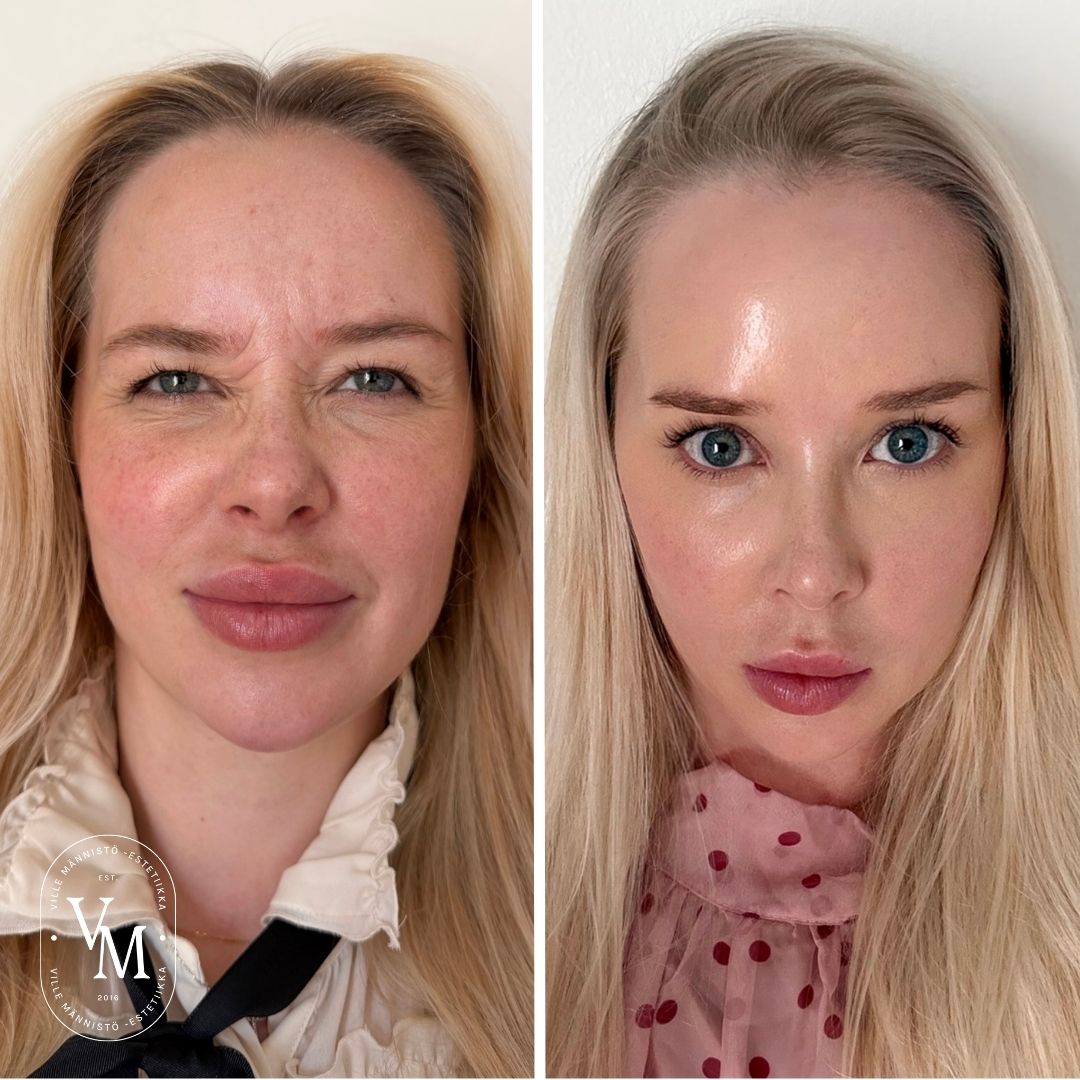
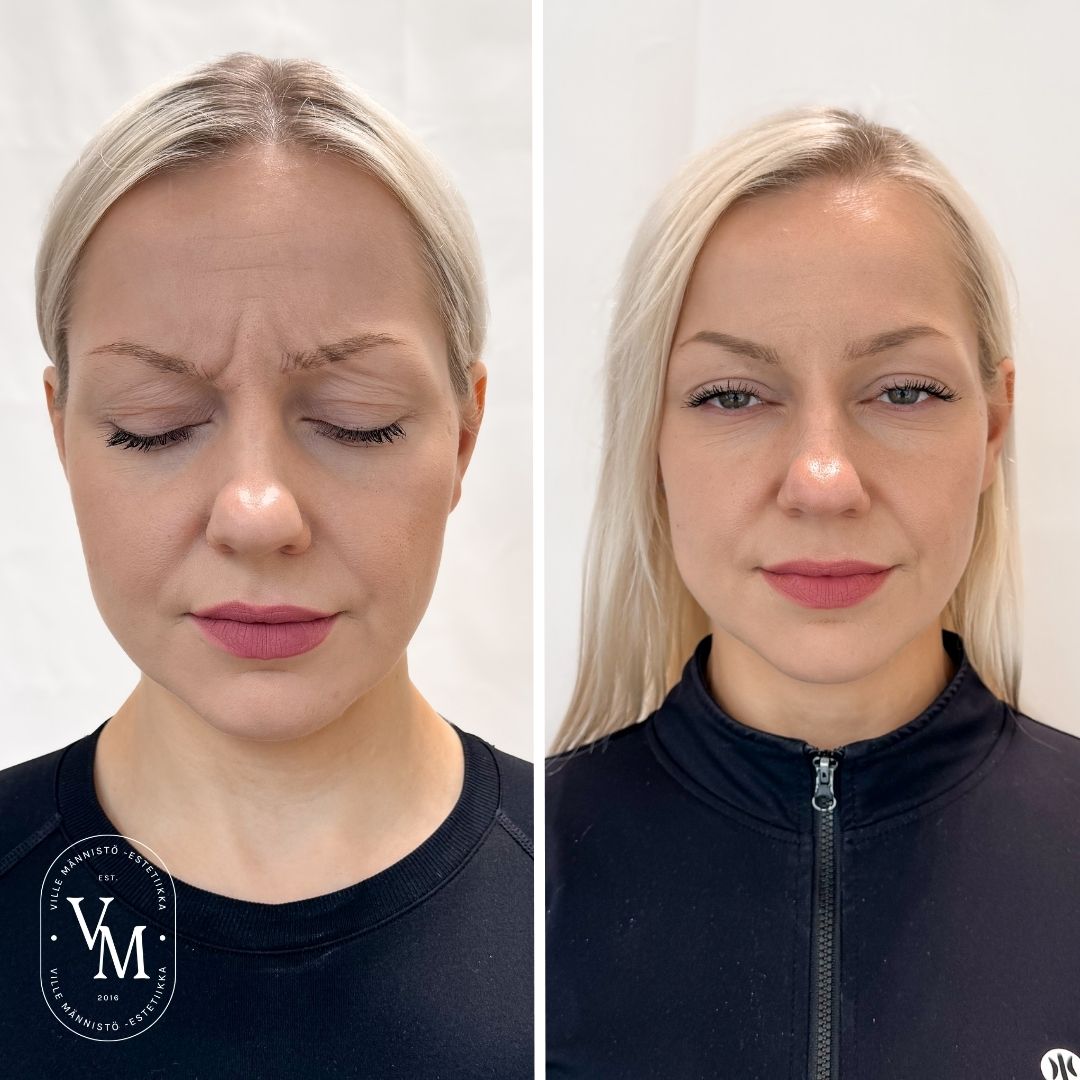
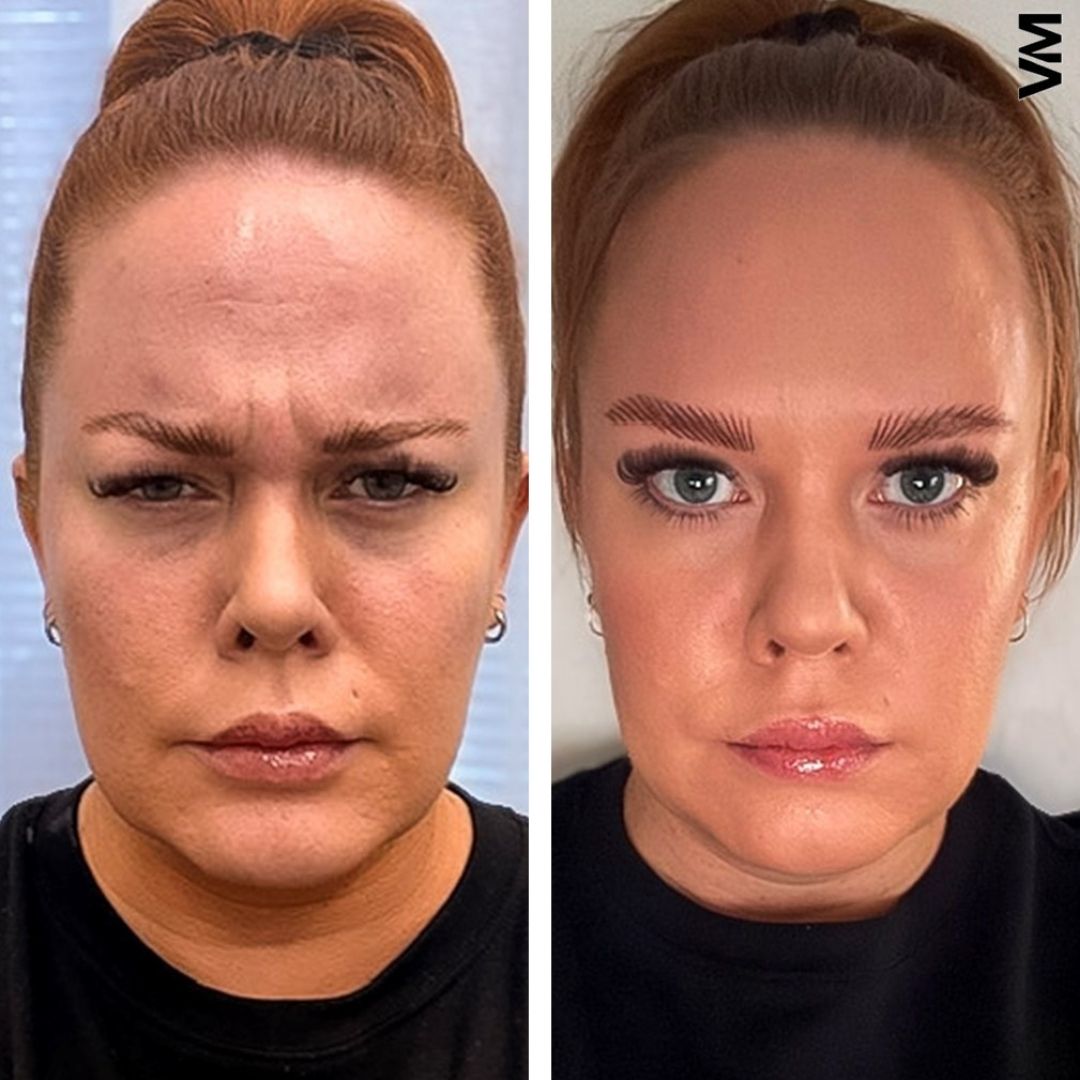
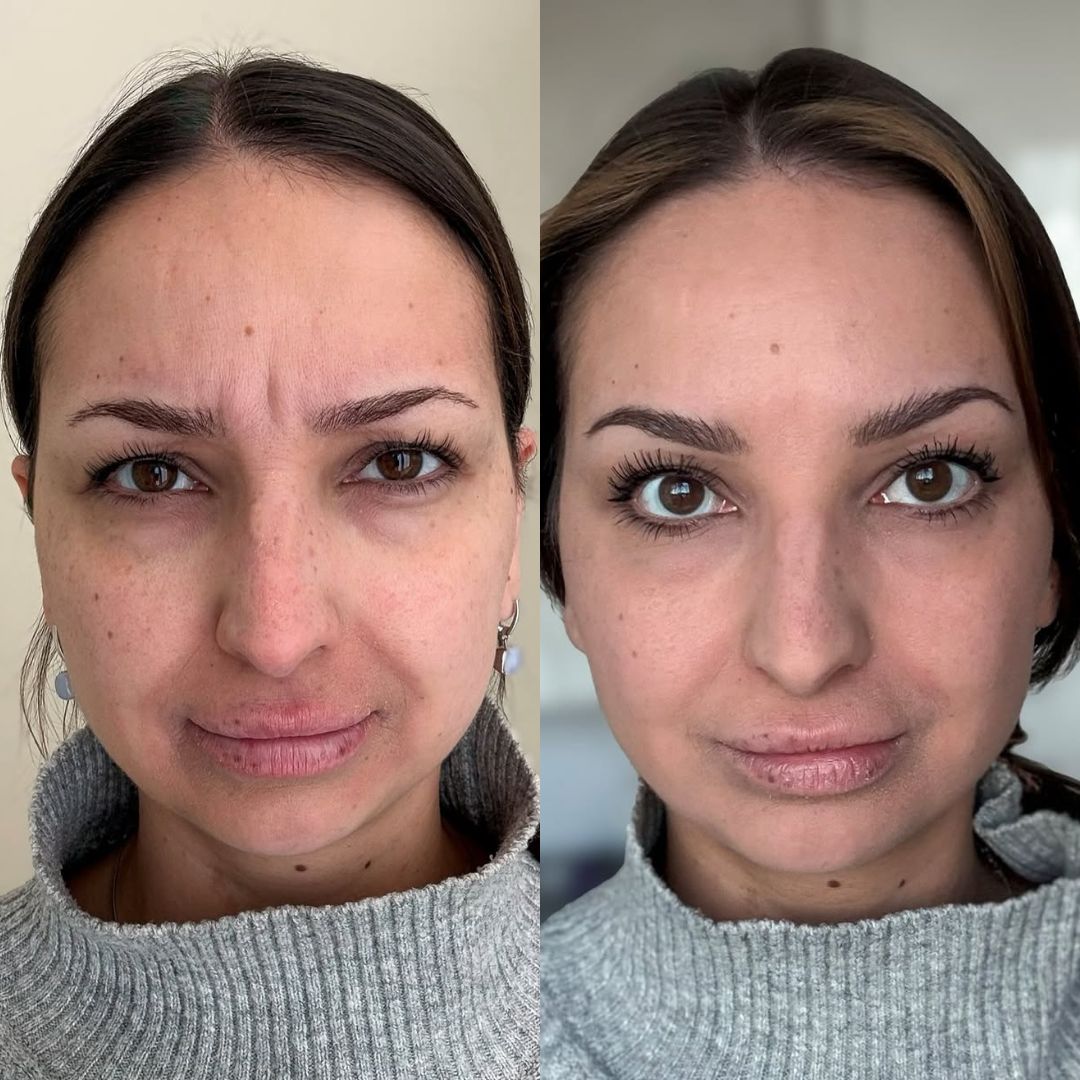
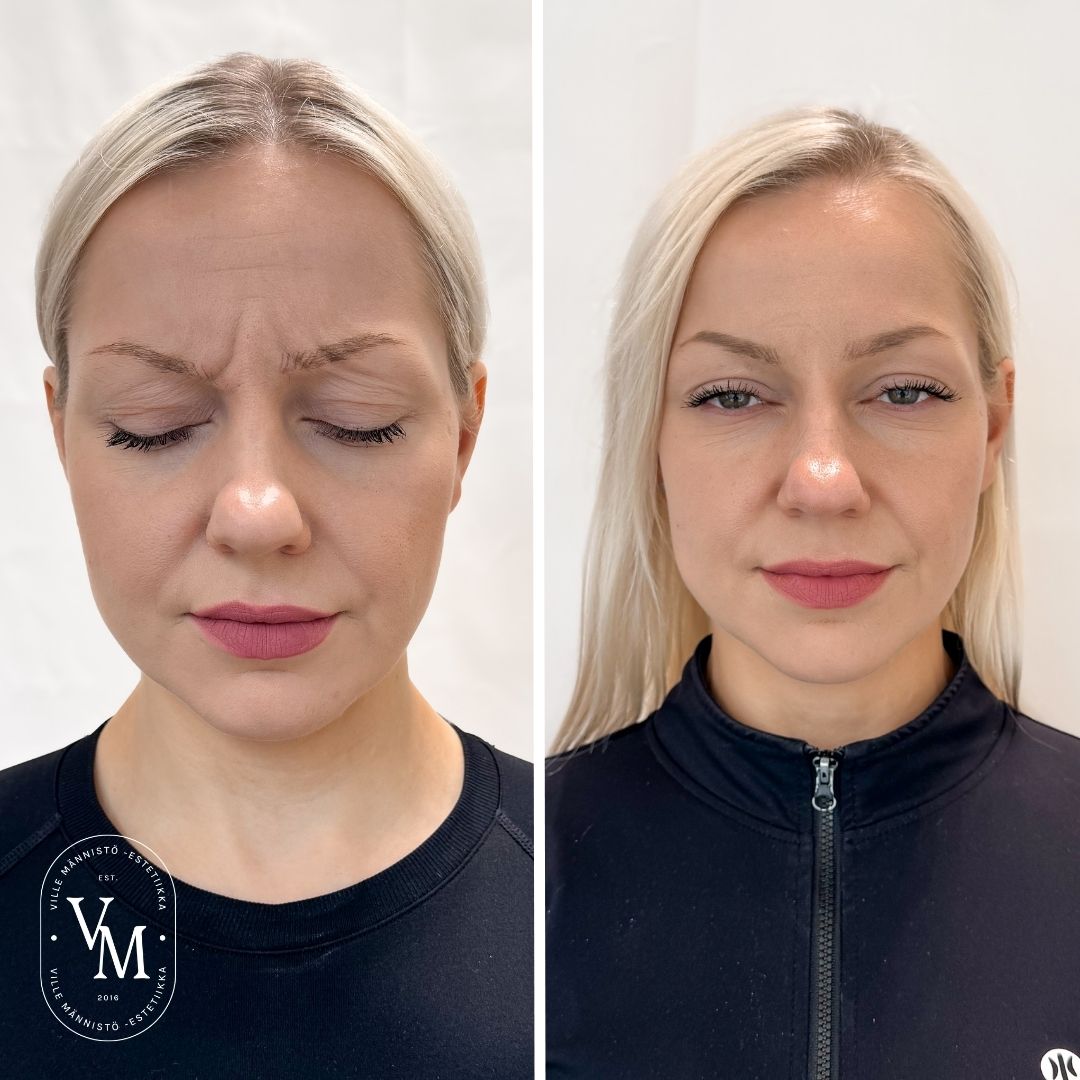
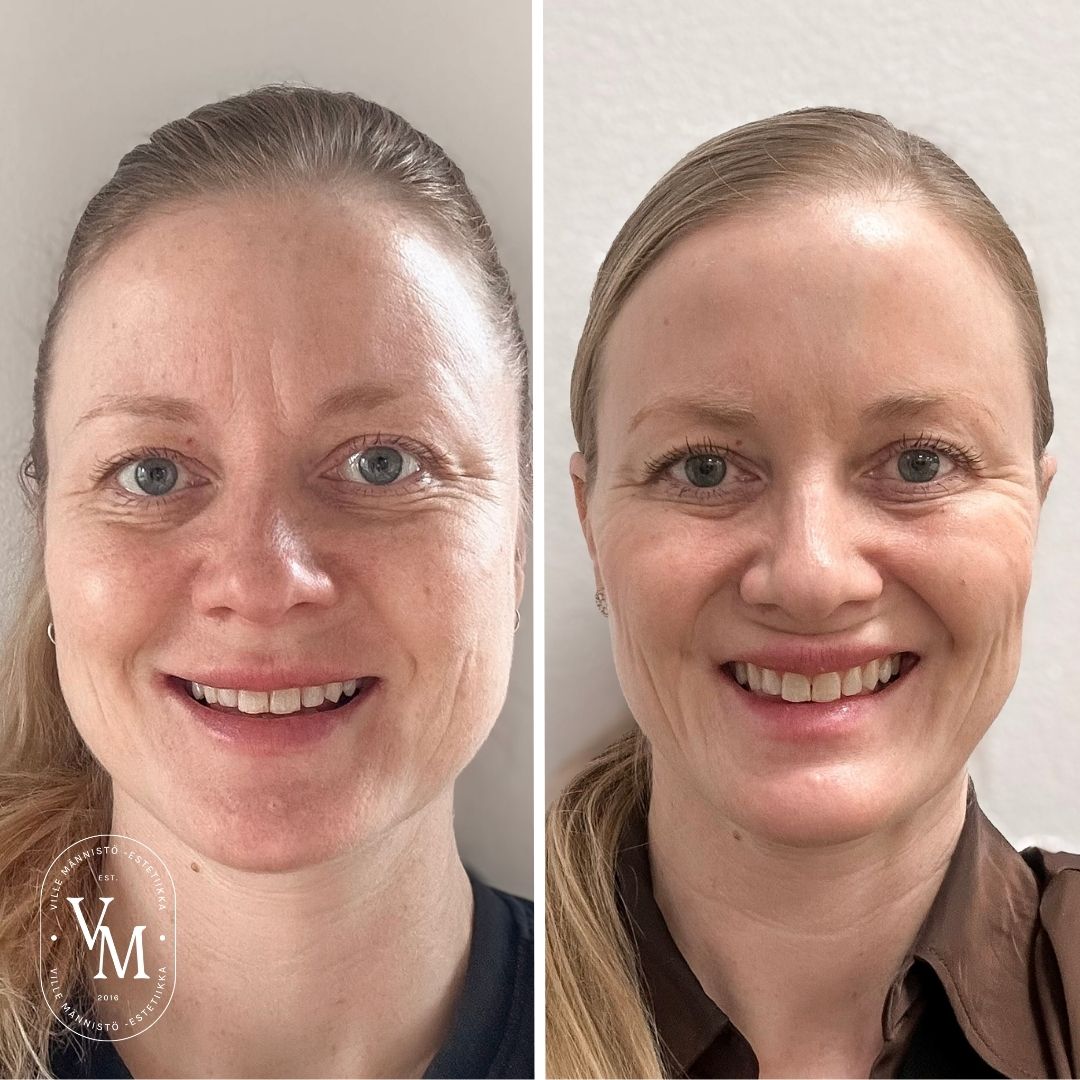
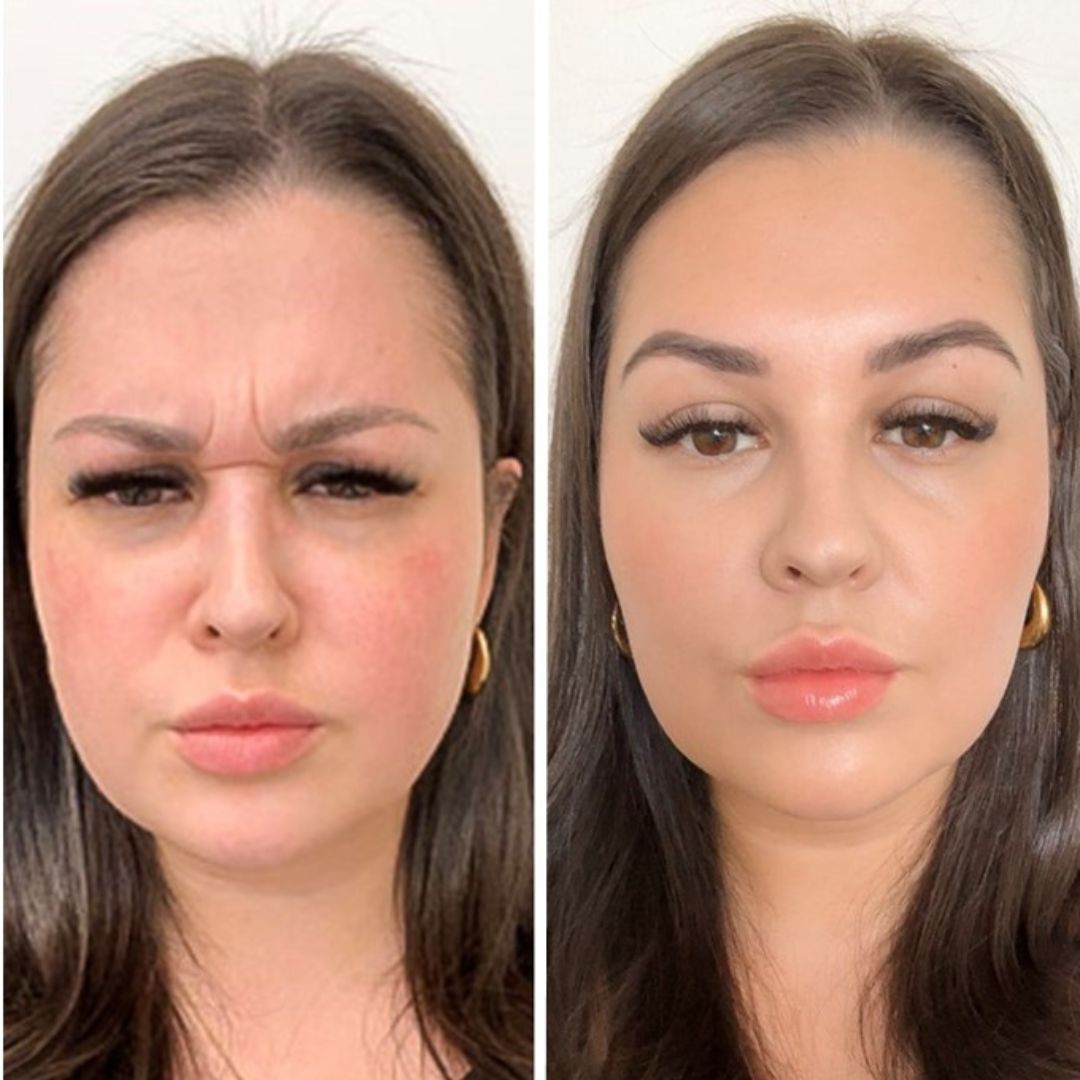
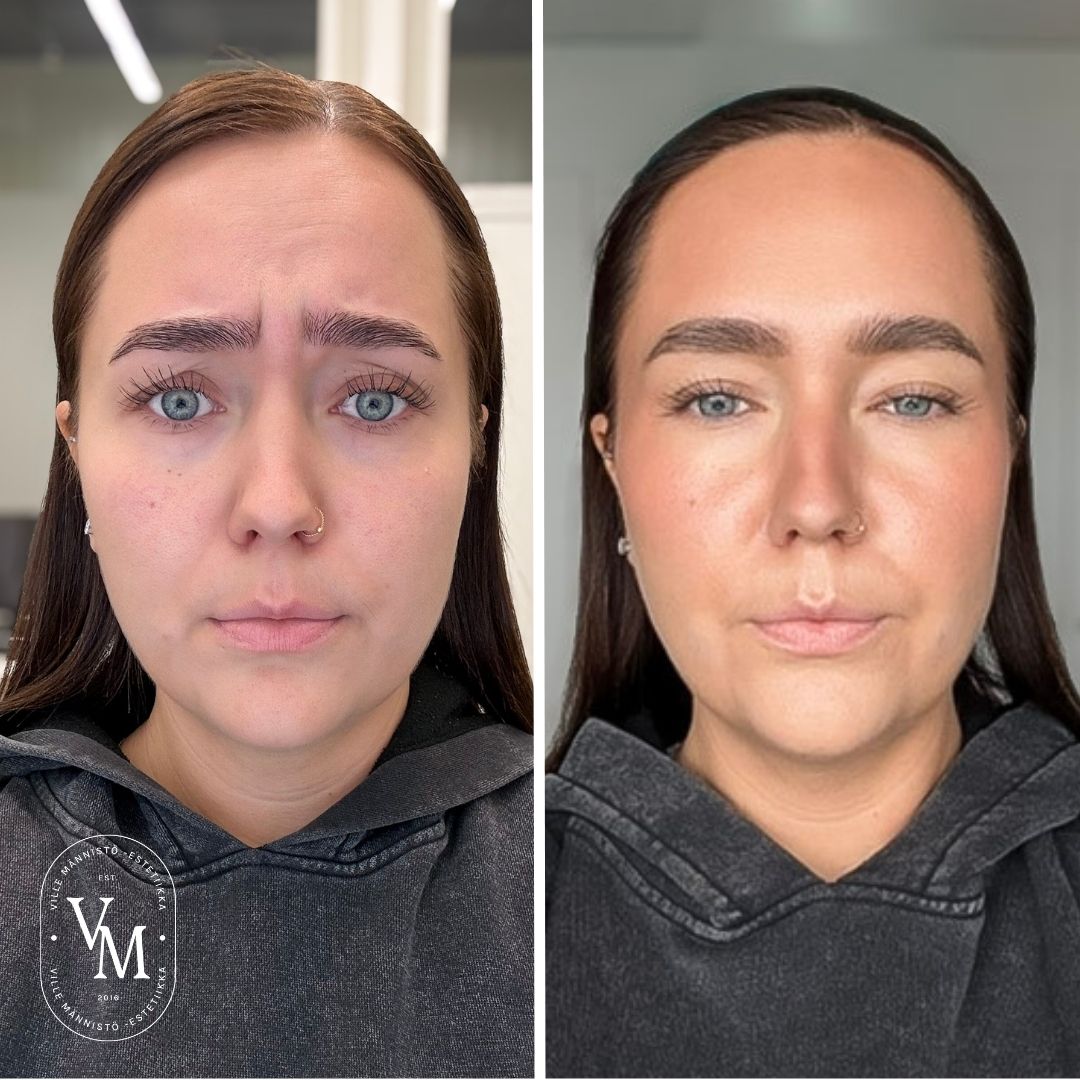
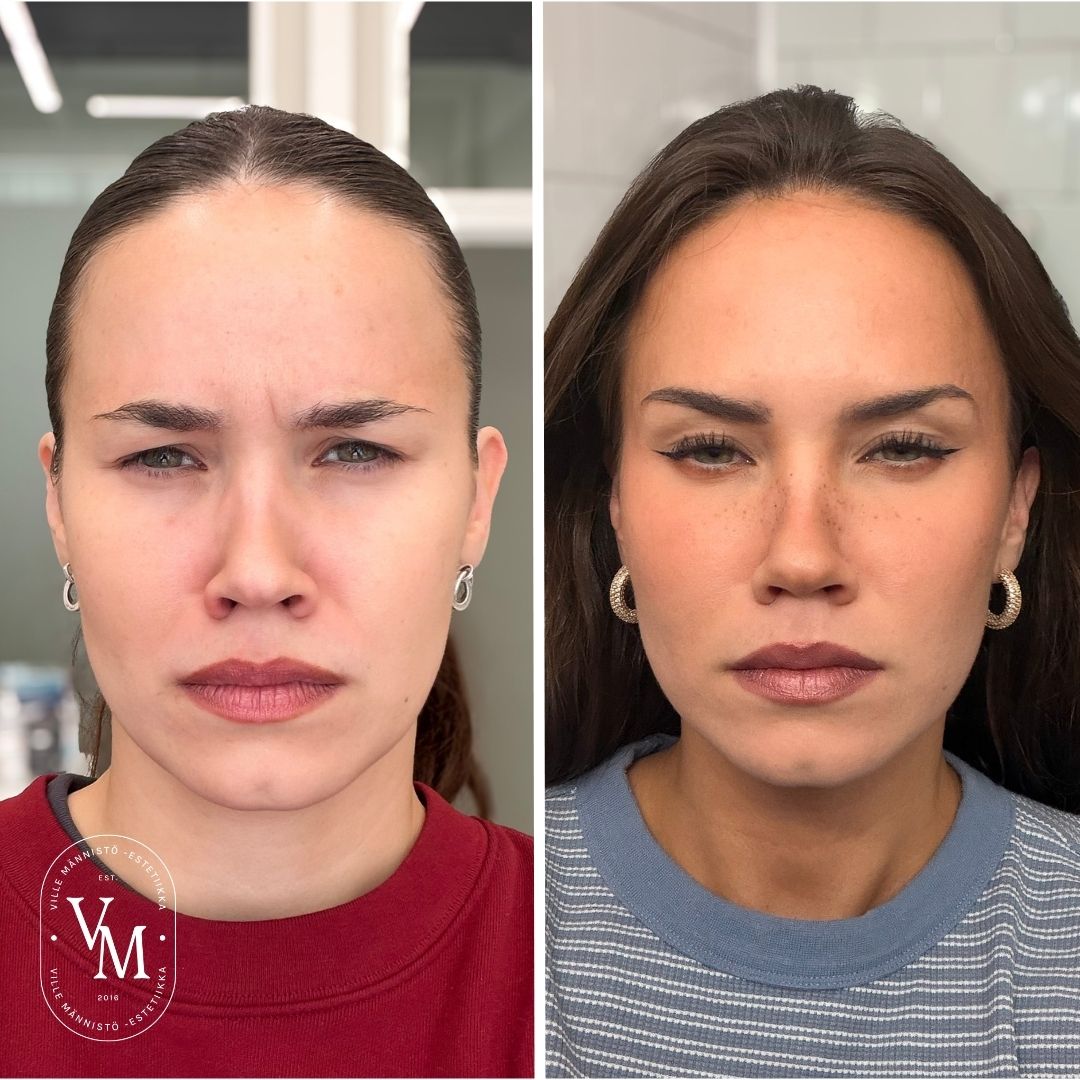
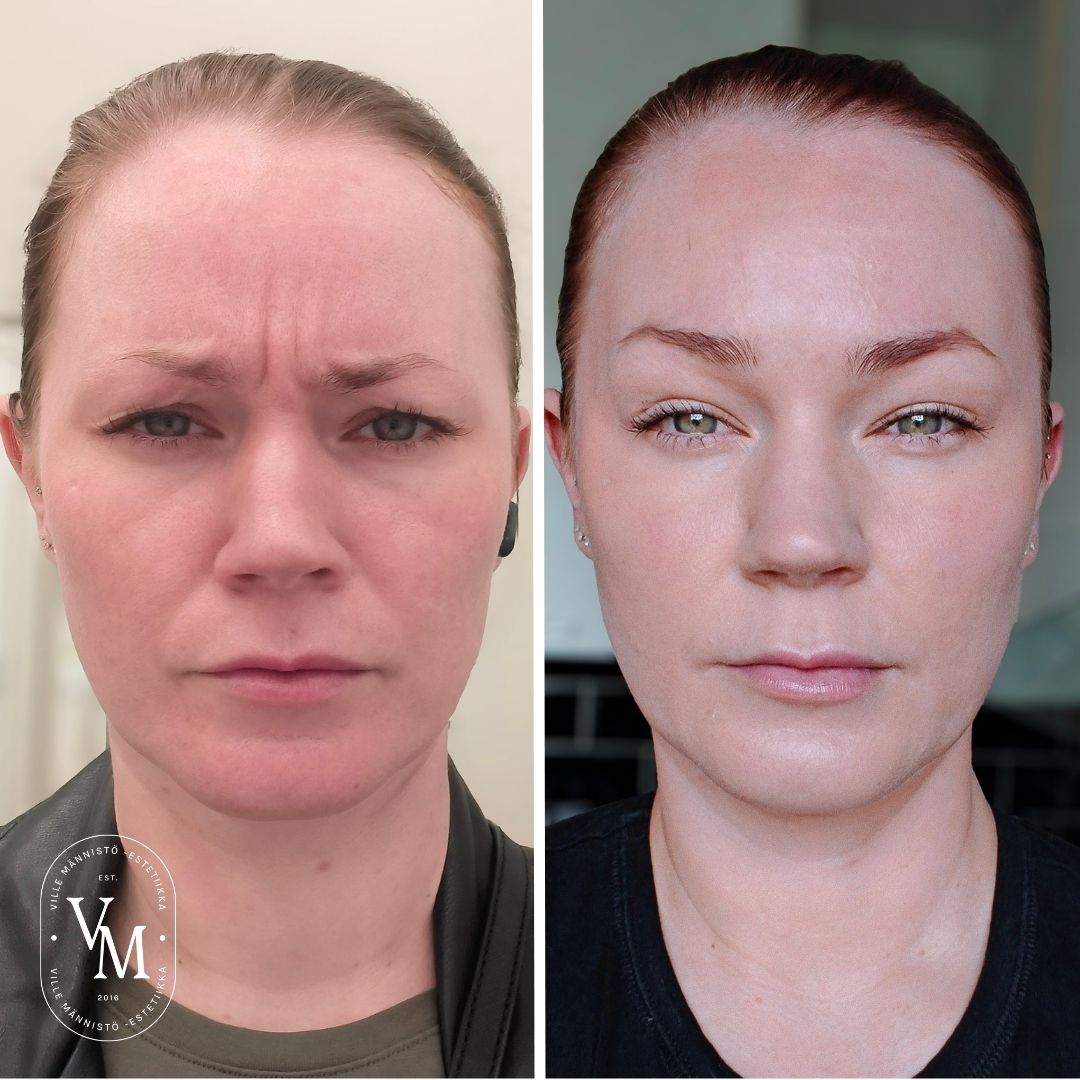
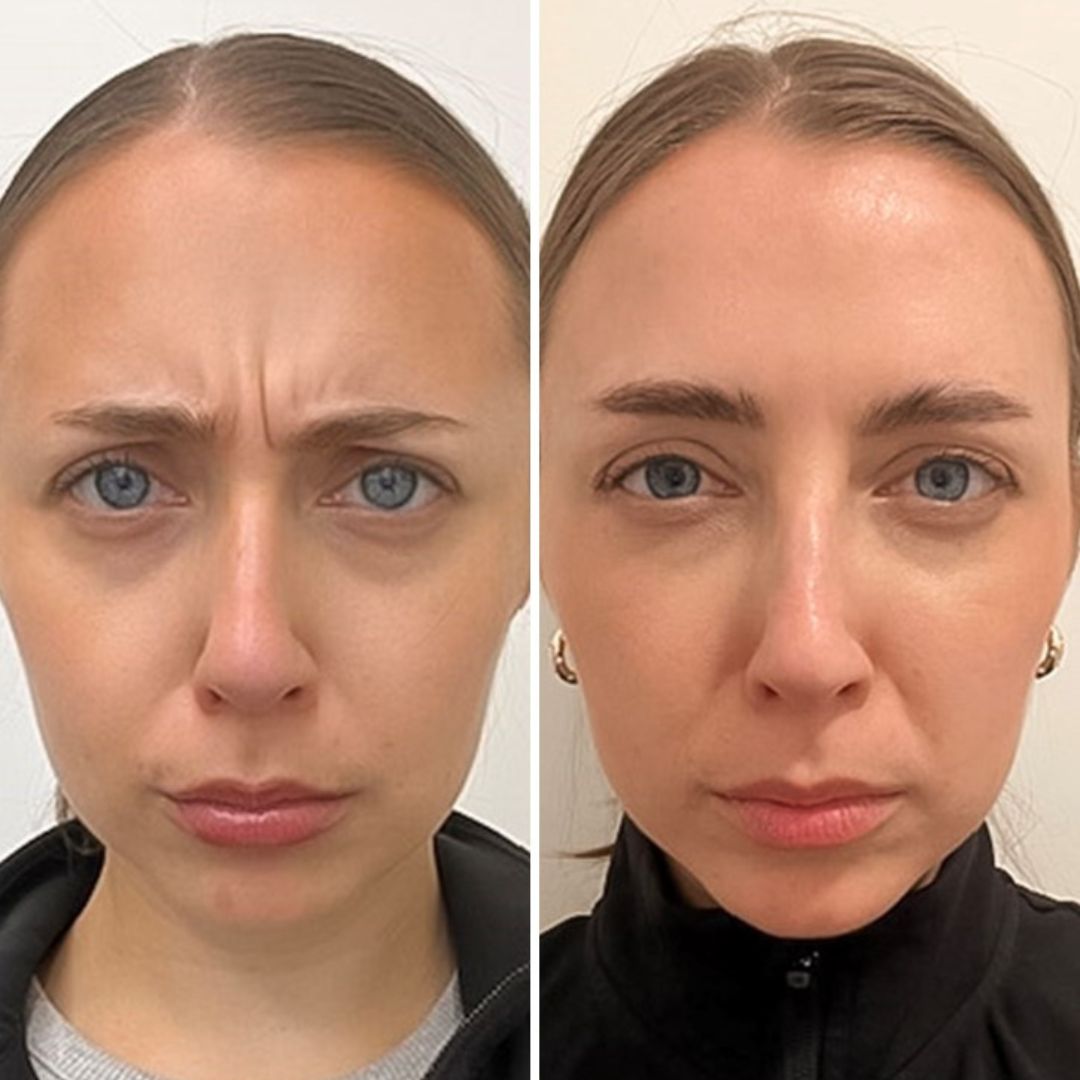
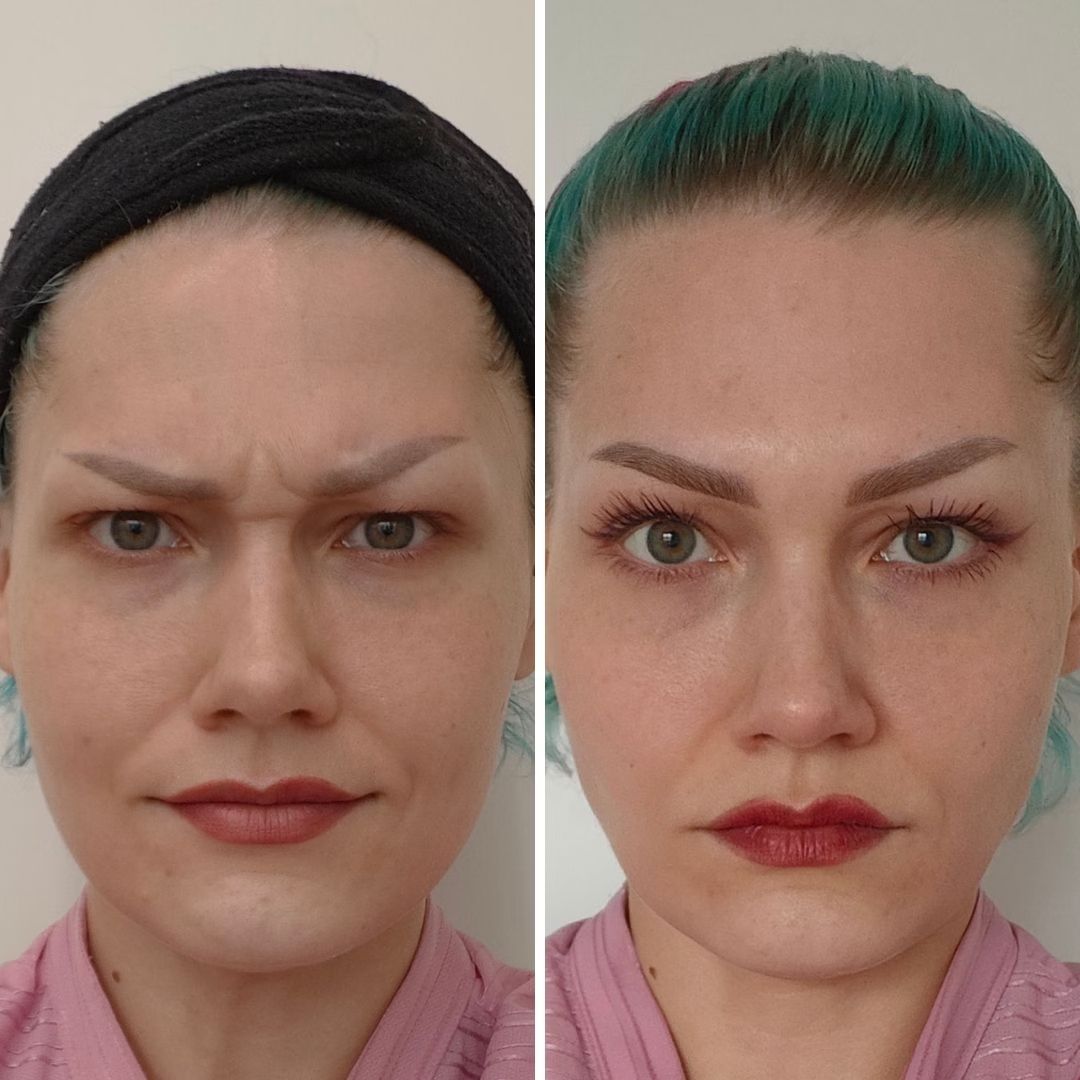
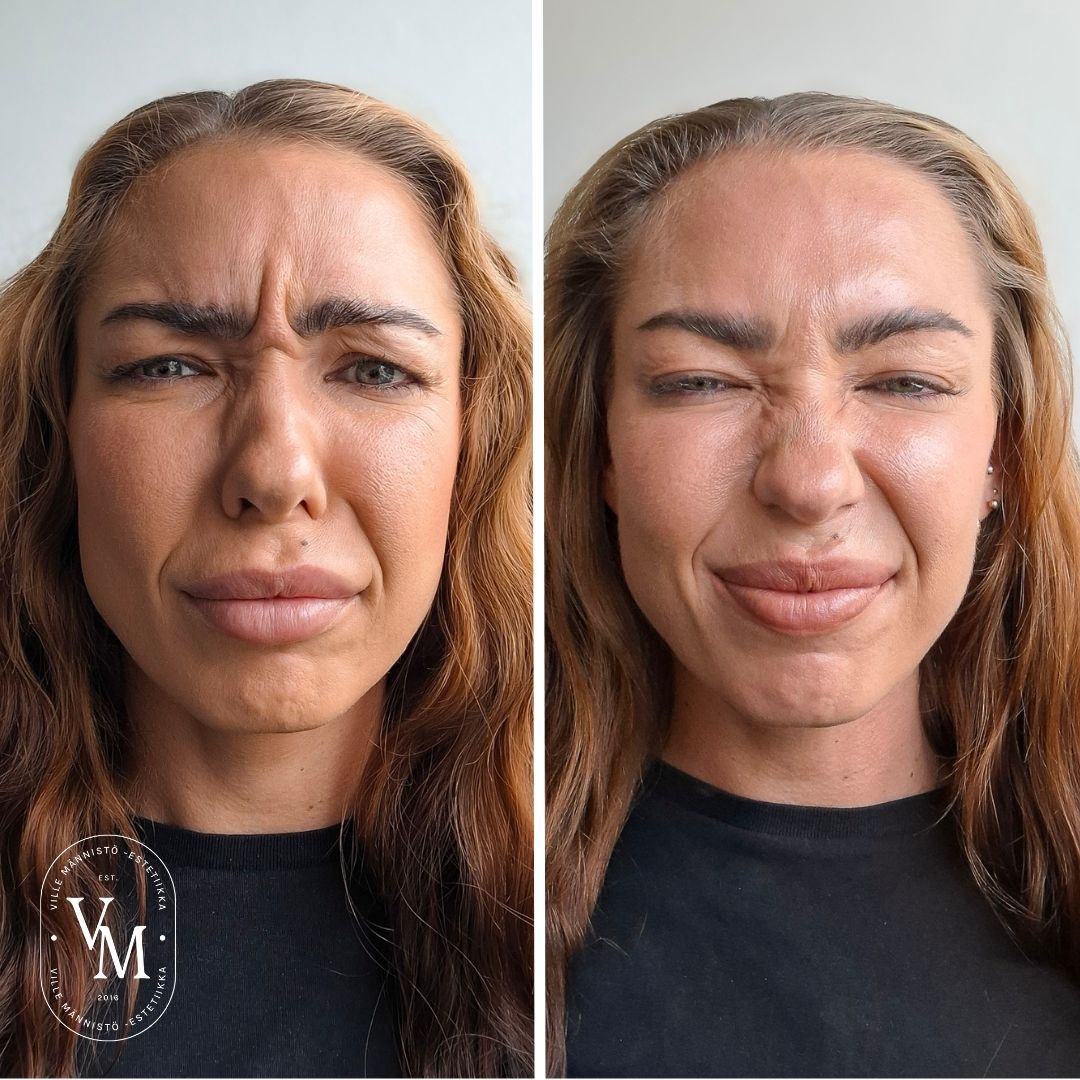
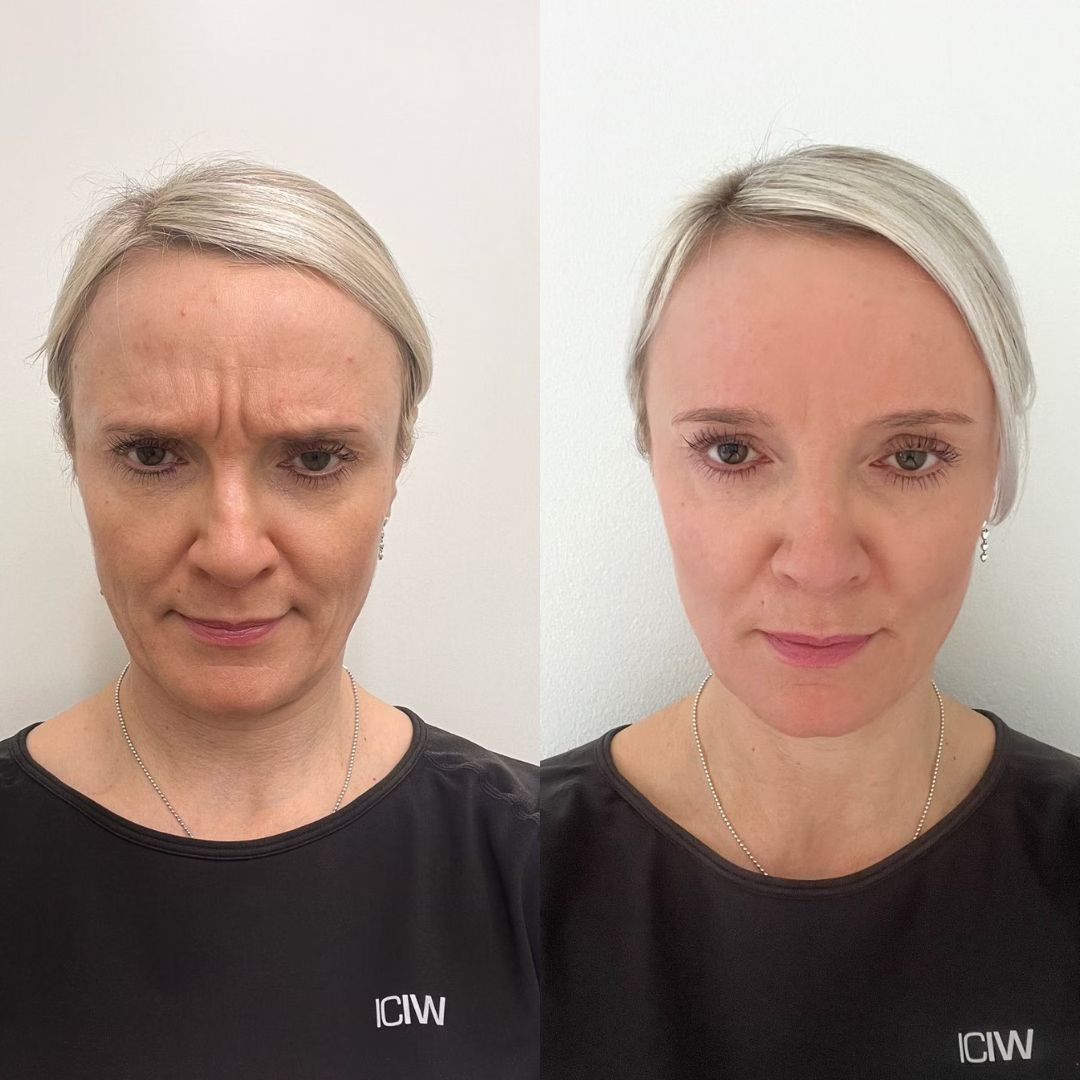
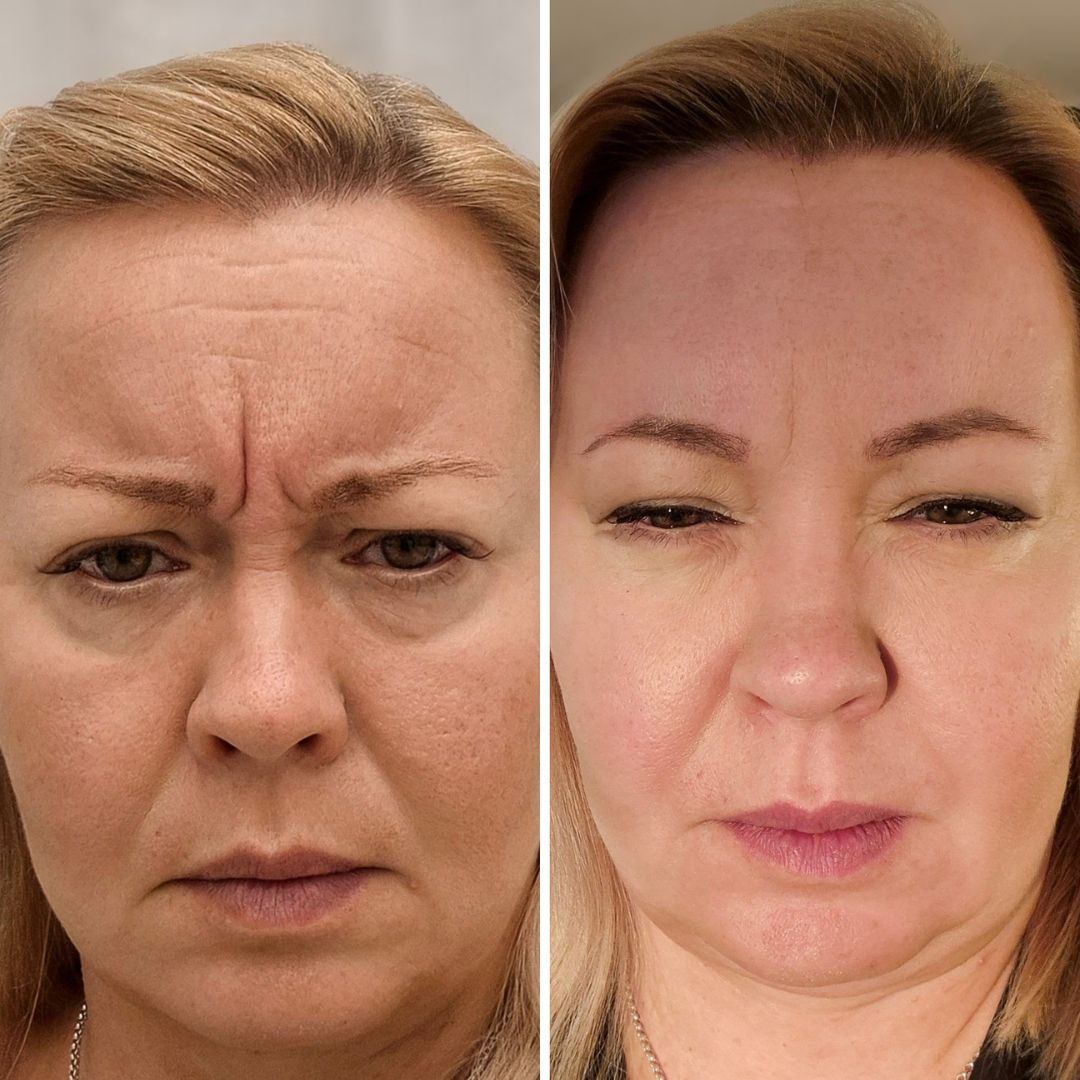
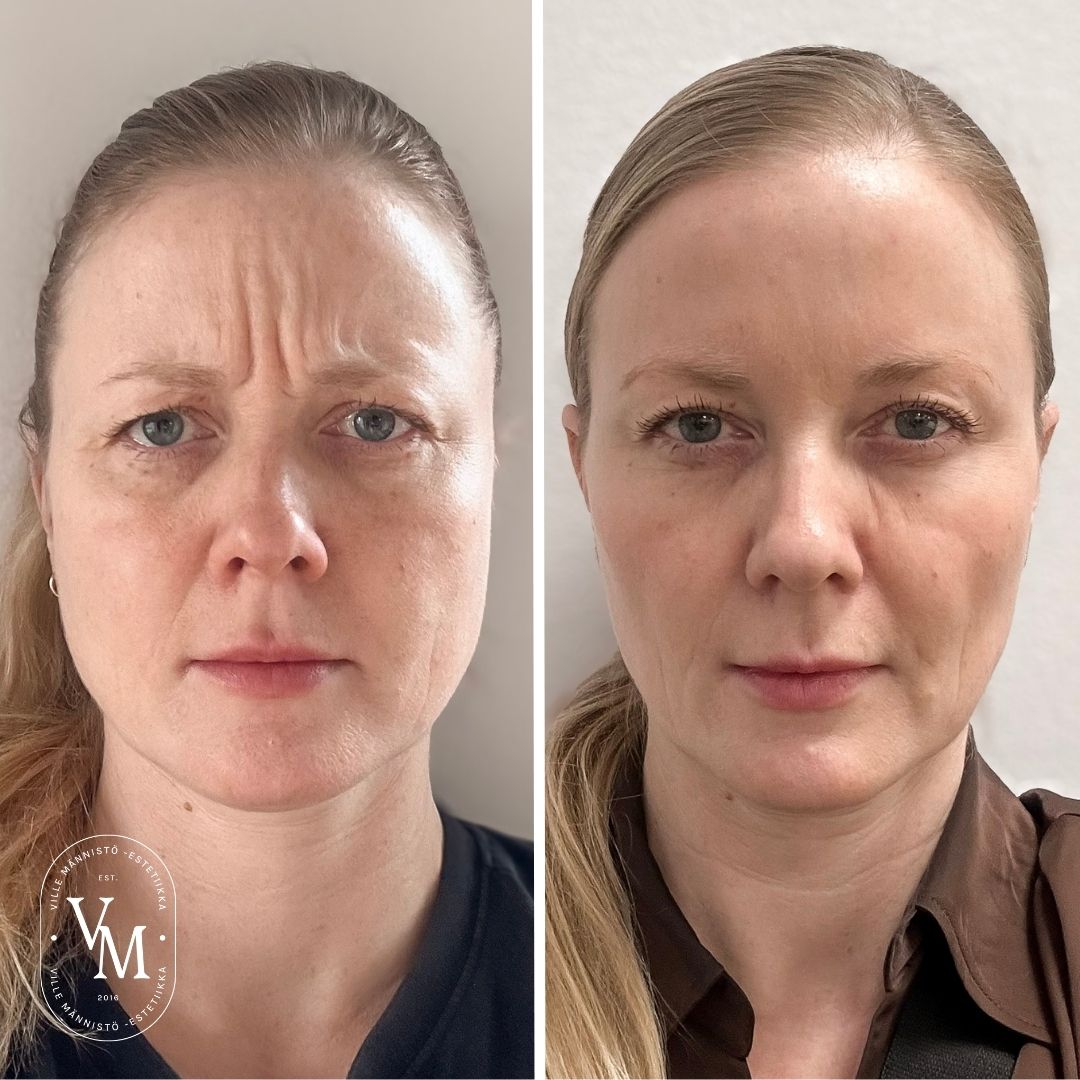
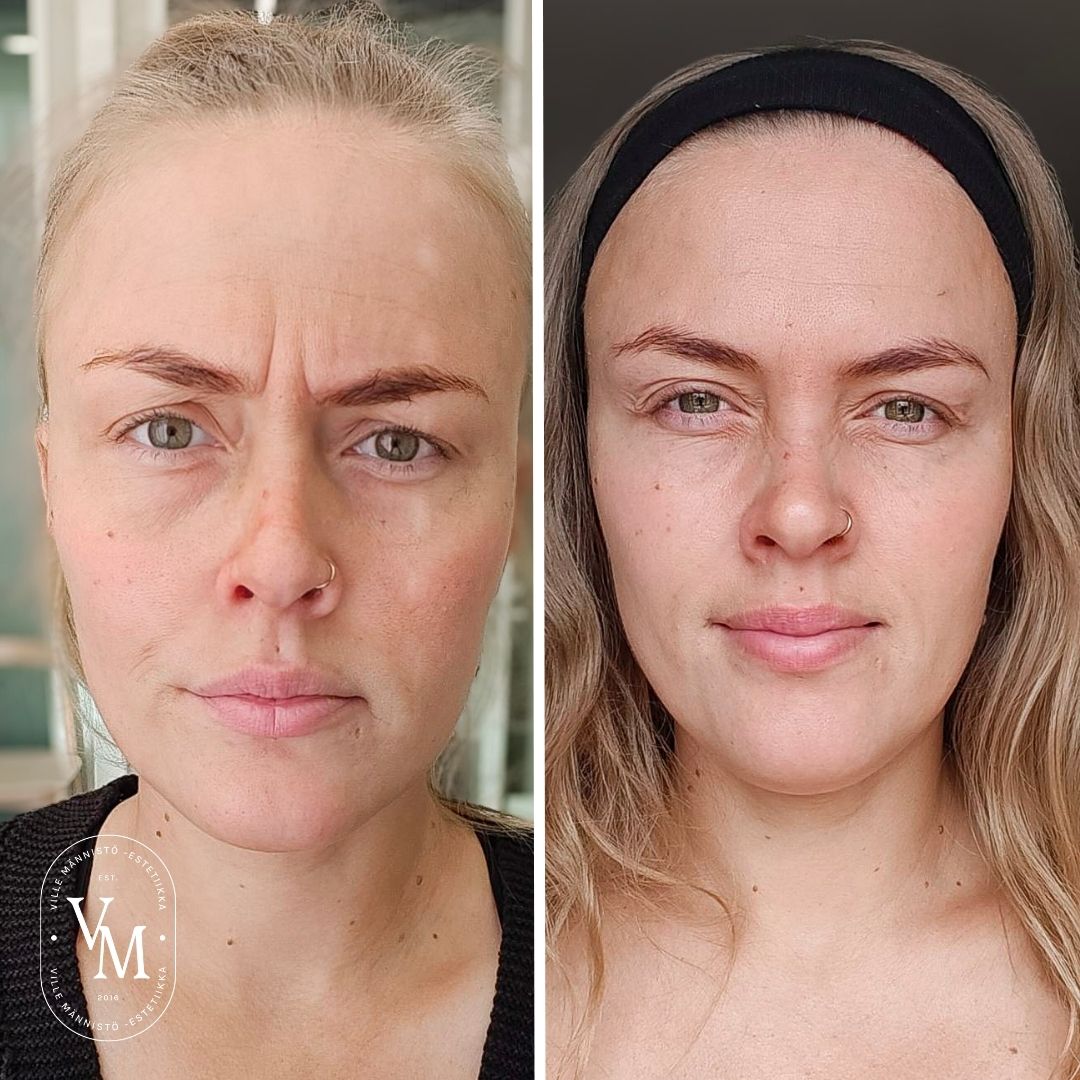
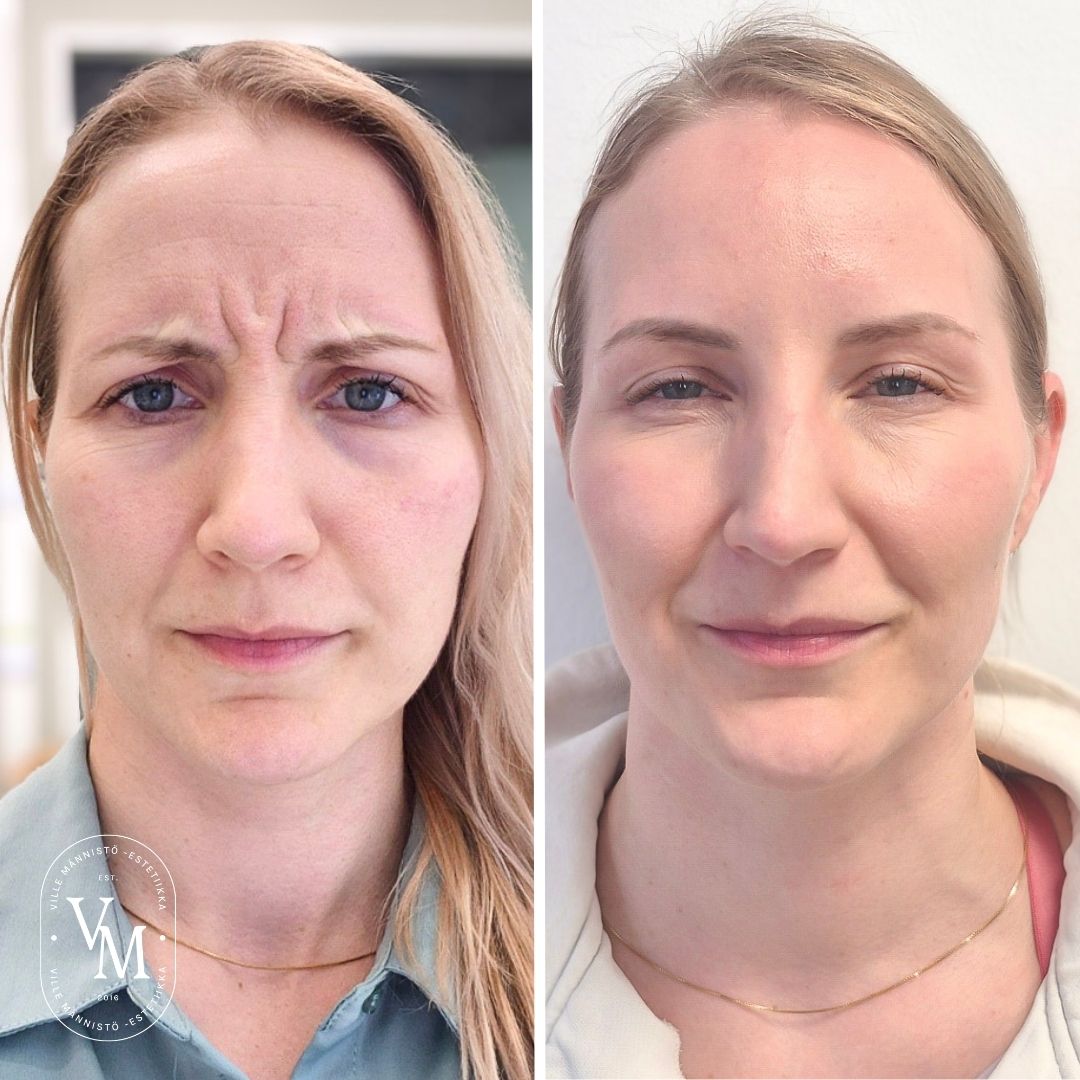
Botox & the Sibelius Wrinkle: Before and After
After Botox treatment, the vertical lines between the eyebrows smooth out as the activity of the muscles that cause wrinkles decreases.
The extent of the change depends on whether it is a dynamic line that is visible only when the face is in motion, or a deepened static wrinkle that is visible even at rest.
- Dynamic lines (those that appear when making facial expressions) disappear completely after botulinum toxin treatment
- Static lines (those visible even at rest) become less pronounced, but do not always disappear completely after the first Botox treatment
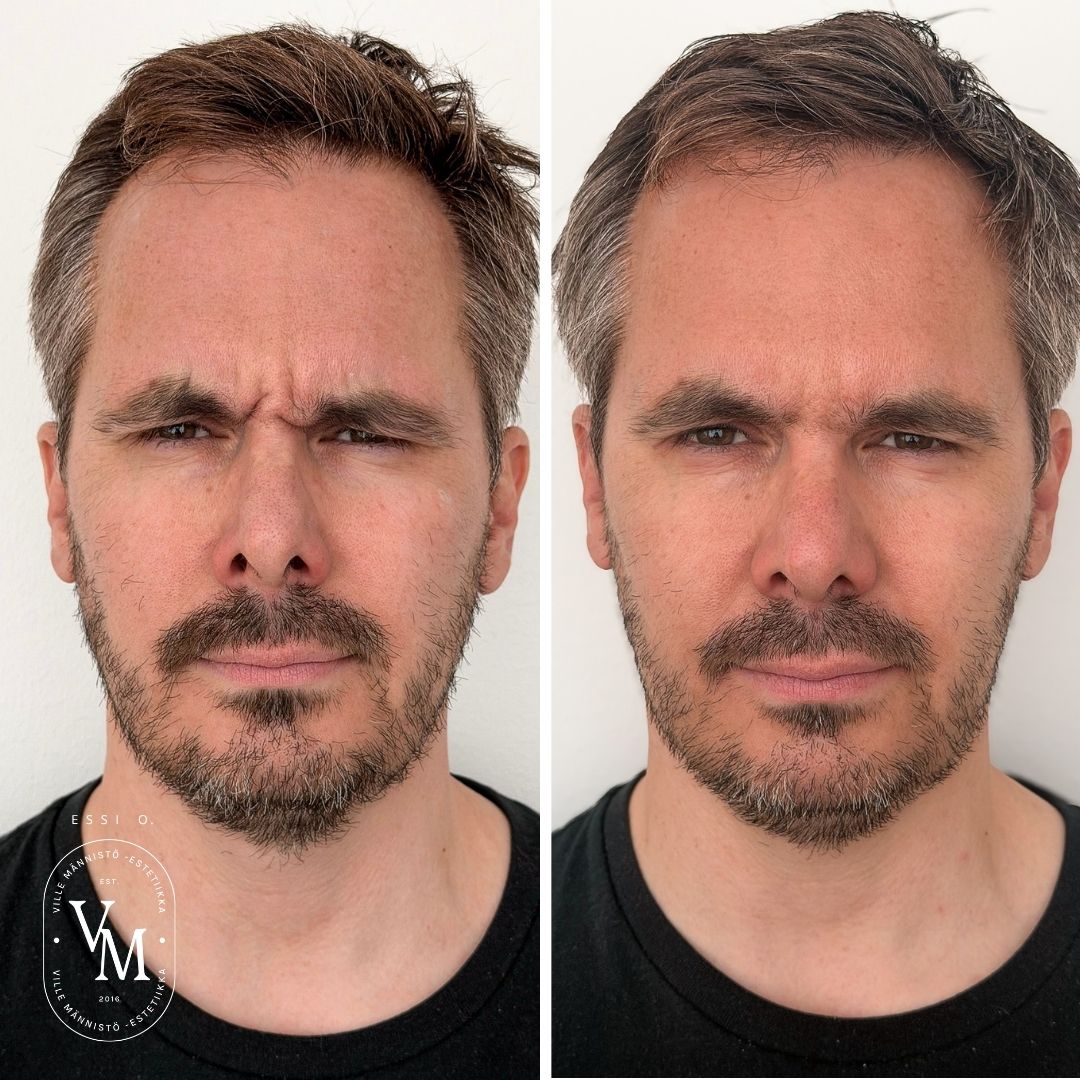
Ville’s Sibelius lines were treated by nurse Essi Ojala.

Here's how Botox is injected into the Sibelius wrinkle
Botox is injected between the eyebrows, right into the muscles that cause wrinkles.
The exact location of the injection sites is determined on a case-by-case basis.
The treatment takes into account, for example
- the position of the eyebrows
- muscle strength
- the patient's facial expressions
- facial symmetry
The correct injection technique is important for preserving the natural movement of the eyebrows.
In Botox treatment for the glabellar lines, it is important to accurately identify the muscles that are the root cause of the lines.
Training as an oral and maxillofacial surgeon provides a solid foundation for understanding the anatomy of the facial muscles and nerves. This comprehensive understanding helps in safely planning injection sites.
– Ville Männistö
Here's How Botox Works on the Sibelius Wrinkle

Glabellar lines are caused by the repeated contraction of facial expression muscles. Botulinum toxin treatment temporarily reduces the activity of these muscles. As the muscles relax, the lines on their surface also smooth out.
The Sibelius wrinkle is primarily caused by the action of two muscles, as follows:
- The corrugator pulls the eyebrows toward the midline
- Procerus pulls the eyebrows downward and creases the skin between the eyebrows

Hyaluronic Acid & Sibelius Wrinkle
Sibelius lines can also be treated with hyaluronic acid-based fillers. However, the forehead is considered a high-risk area for filler treatments. Filler treatments in high-risk areas, in particular, should always be performed by an experienced professional.

Why is the nasolabial fold considered a high-risk area for hyaluronic acid?
The forehead contains more major blood vessels than usual. If filler enters a blood vessel, it can lead to serious complications, such as tissue damage or, in very rare cases, vision problems.
- There are blood vessels in the area near the injection site
- Complications can be serious, although they are rare
- Filler treatment for a Sibelius fold requires a thorough understanding of anatomy
Key Point
Filler treatment is not the primary treatment for Sibelius’s wrinkle. It is used with caution in situations where botulinum toxin treatment alone is insufficient or where, for one reason or another, botulinum toxin cannot be used.
Mechanisms of Action
The filler strengthens the tissue and smooths out fine lines from below. Botulinum toxin treatment, on the other hand, relaxes the muscles that cause the Sibelius lines.
In practice
Treatment almost always begins with Botox, as it addresses the underlying cause of the line. Fillers are used as a complementary treatment, if necessary, if the Sibelius line is deep even when the face is at rest.
Microneedling & Sibelius Wrinkles
Microneedling triggers the skin's natural repair process. Thin, sterile needles create microscopic channels in the skin, which stimulate the skin to produce new collagen and elastin.
- Increases collagen and elastin production.
- Strengthens and plumps thinning skin.
- Gradually softens fine lines.
- Improves skin texture and elasticity.
When is microneedling appropriate for Sibelius wrinkles?
| Fits well | It's not the best option |
|---|---|
| Thinned and aged skin between the eyebrows | A Sibelius wrinkle caused by intense muscle activity |
| A Superficial Plot in the Sibelius Region | Deep static groove |
| A Complement to Botox Treatment | Situations in which tissue support is also needed |
| A patient who wants to improve the condition and appearance of their skin | When the goal is an immediate result |
In people over 50, the Sibelius wrinkle is often not caused by muscle activity alone: the skin has also thinned over the years. In such cases, Botox treatment and microneedling complement each other perfectly. Botox reduces the muscle movement that causes wrinkles, while microneedling strengthens the skin by increasing collagen production. The combination of Botox and microneedling is also a somewhat safer option than combining Botox and dermal fillers in the glabellar area.
Frequently Asked Questions About the Sibelius Group
Can you put filler in a Sibelius wrinkle?
Yes, but only in certain cases. In most cases, treatment begins with Botox, which targets the root cause of the wrinkle—namely, muscle activity.
Which is better: Botox or hyaluronic acid?
Botox treatment is the first-line treatment because it targets the muscle activity that causes wrinkles. Fillers are generally used only when necessary, as a complementary treatment.
Is filler treatment for the nasolabial fold safe?
An experienced professional trained in hyaluronidase can perform the procedure safely, but filler treatments in this area undoubtedly carry more risks than botulinum toxin treatments.
Sibeliusrypyn's dermal filler treatments are performed using hyaluronic acid-based products, not calcium-based products (Radiesse, Harmonyca) or Sculptra, which contains lactic acid.
How long does the effect of Botox last on the glabella?
The effects of Botox treatment for a Sibelius wrinkle usually last 3–5 months.
Factors affecting the duration of the effect include, for example
- muscle strength
- dose of botulinum toxin used
- individual metabolism
- frequency of treatments
For more information on how long the effects last, see the article: How long does Botox last?
Is Botox for the glabellar lines safe?
Botox is one of the most extensively studied aesthetic treatment methods. When performed correctly, the treatment is safe and well-tolerated.
Any side effects are usually mild and temporary.
For more information on potential risks, see the article " Side Effects of Botox."
Who is a good candidate for Botox treatment for a Sibelius wrinkle?
Botox is particularly effective for the glabellar line, which appears when you make facial expressions or has begun to show even when your face is at rest. Botulinum toxin treatment can either prevent the formation of the glabellar line or correct and soften a clearly visible line.
How much does Botox treatment for a Sibelius wrinkle cost?
Botox treatment for a Sibelius wrinkle costs 270 €.
Get rid of your frown lines—interested?
Welcome to a free, no-obligation consultation! If you prefer, you can also start with a photo consultation. Based on the consultation, a professional will be able to tell you whether Botox treatment might be helpful.
Botox Treatments – More Information and Related Pages
If you’d like to learn more about Botox treatments, you can find additional information in the following articles:
- 👉 Botox price – how much does the treatment cost?
- 👉 Botox for the forehead – how does the treatment work?
- 👉 Botox treatment for bruxism – treatment for the jaw muscles
- 👉 Before and After Botox – Treatment Results
This article is based on an interviewwith surgeon Ville Männistö.
Ville specializes in facial anatomy and disorders of the masticatory muscles, and is certified in botulinum toxin treatments. His clinical work focuses on the safe use of botulinum toxin for both aesthetic and medical indications.
Ville is a member of a research group whose article on botulinum toxin treatments for masticatory muscles has been published in an international peer-reviewed scientific journal. Check out the study in the PubMed database.