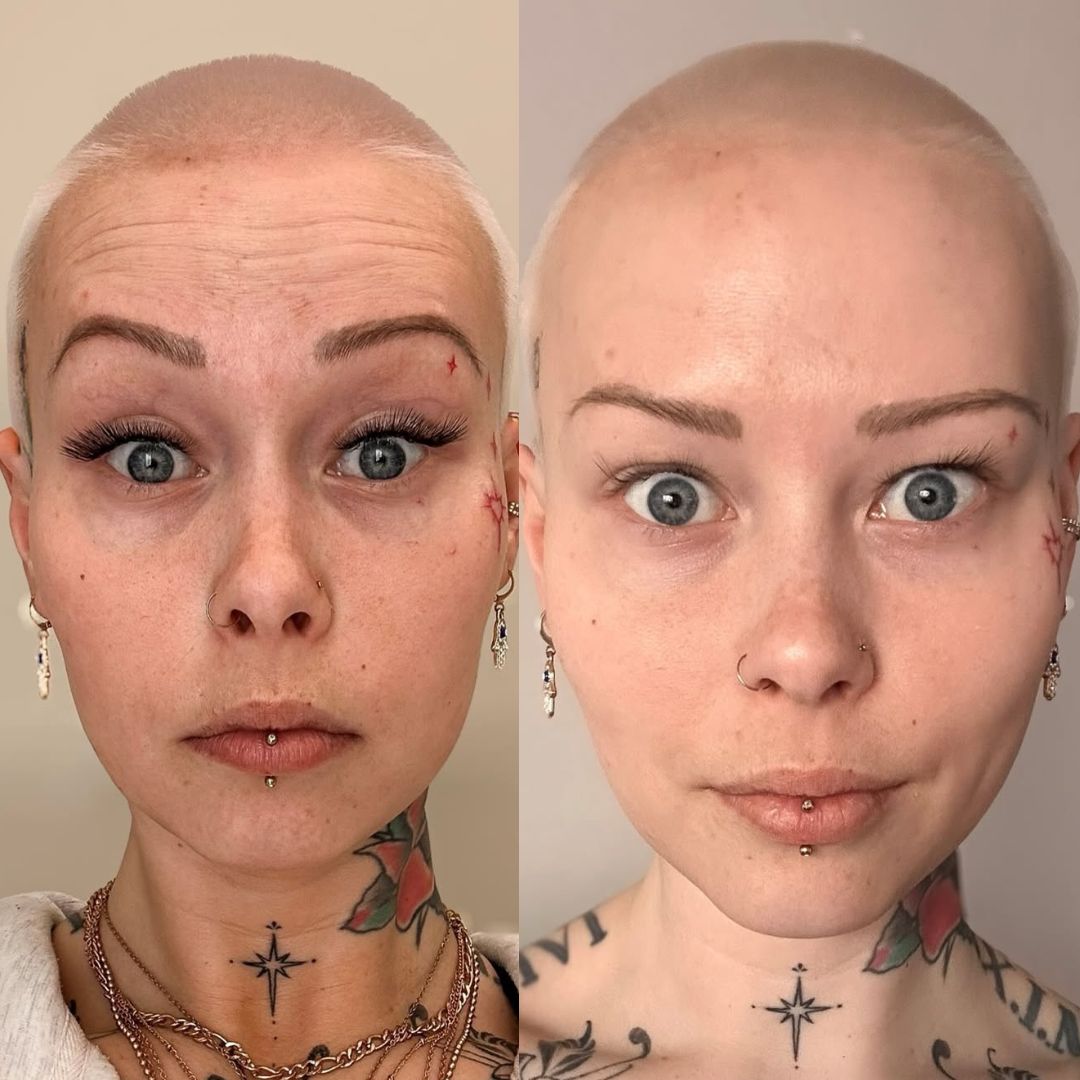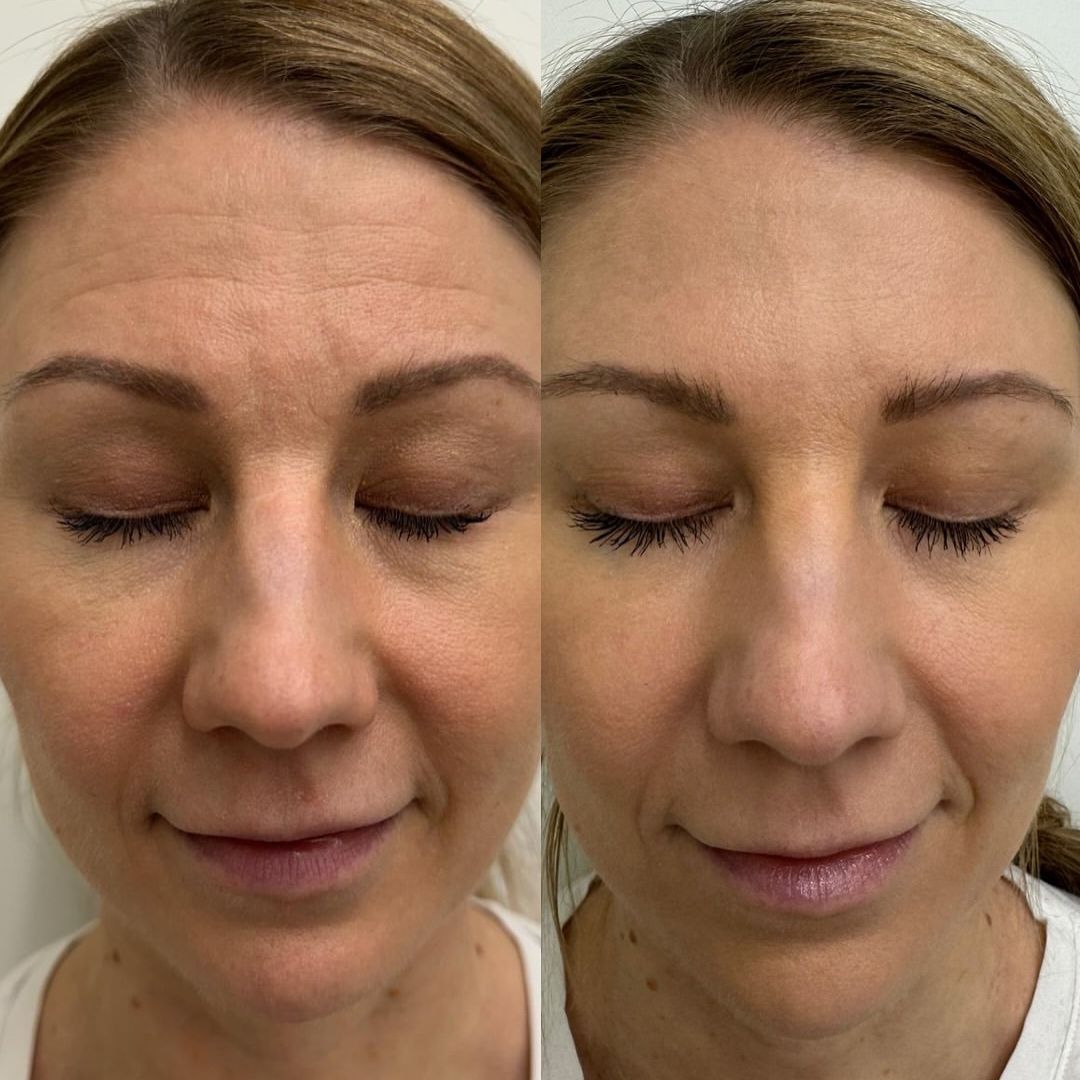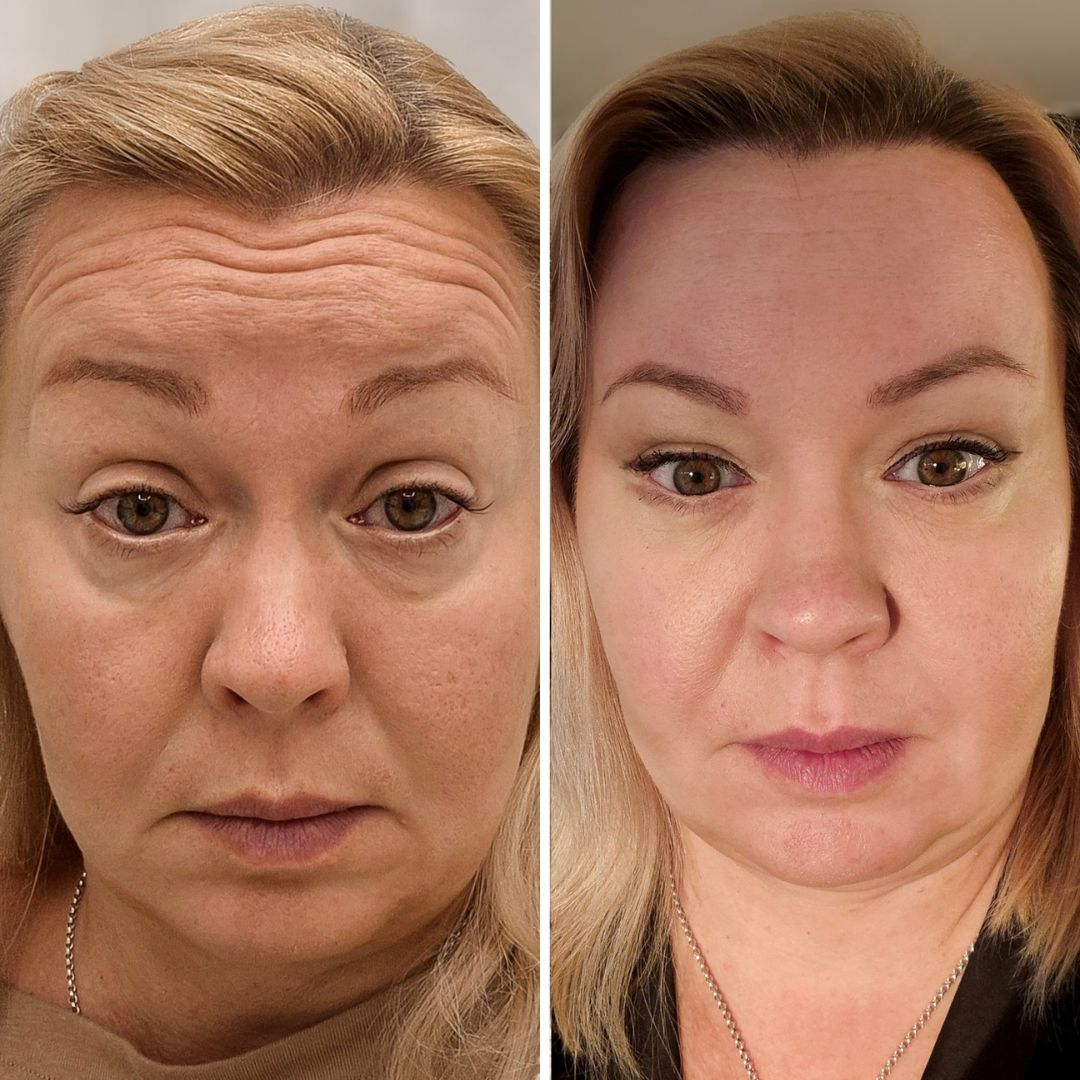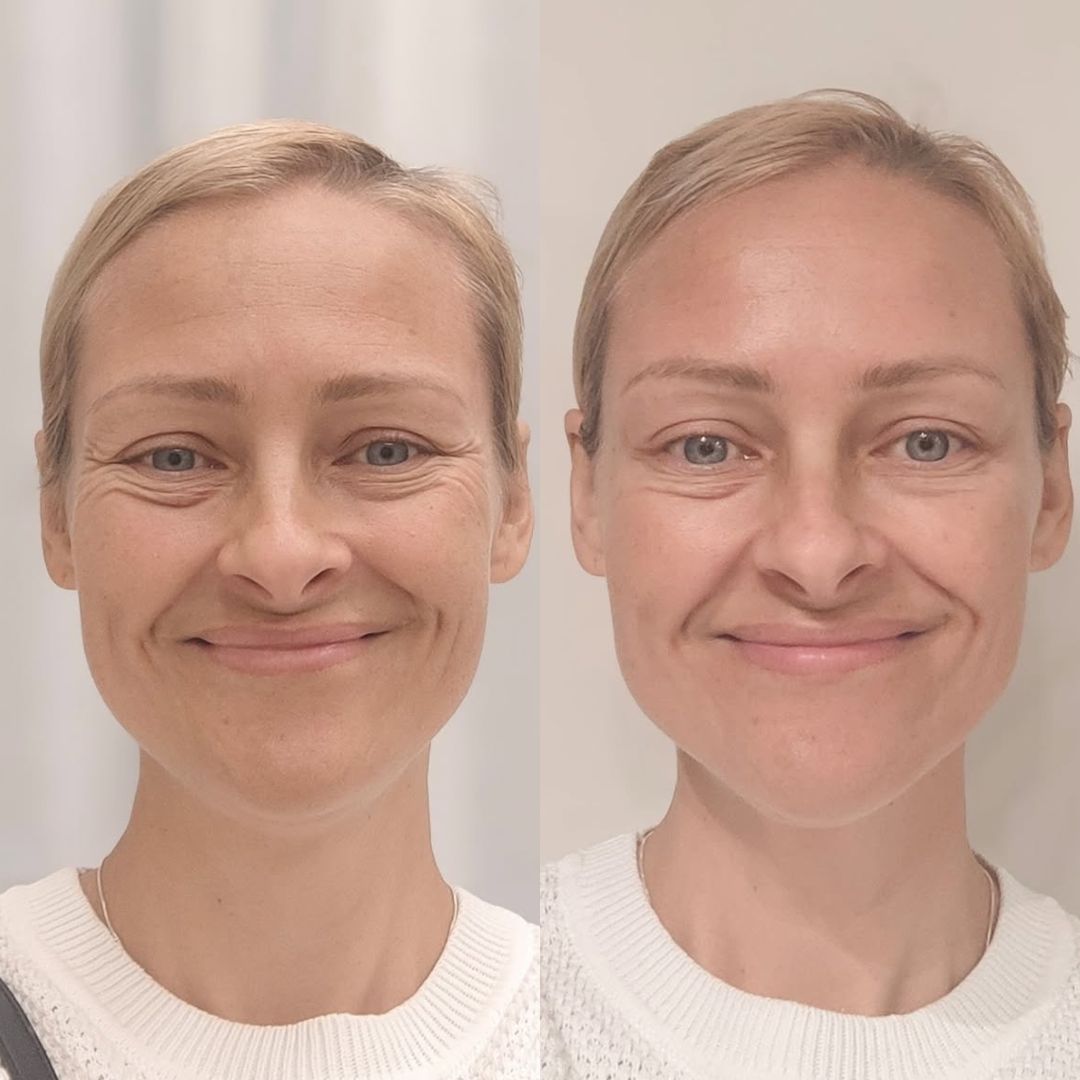
Botox for the forehead – get rid of wrinkles with botulinum toxin
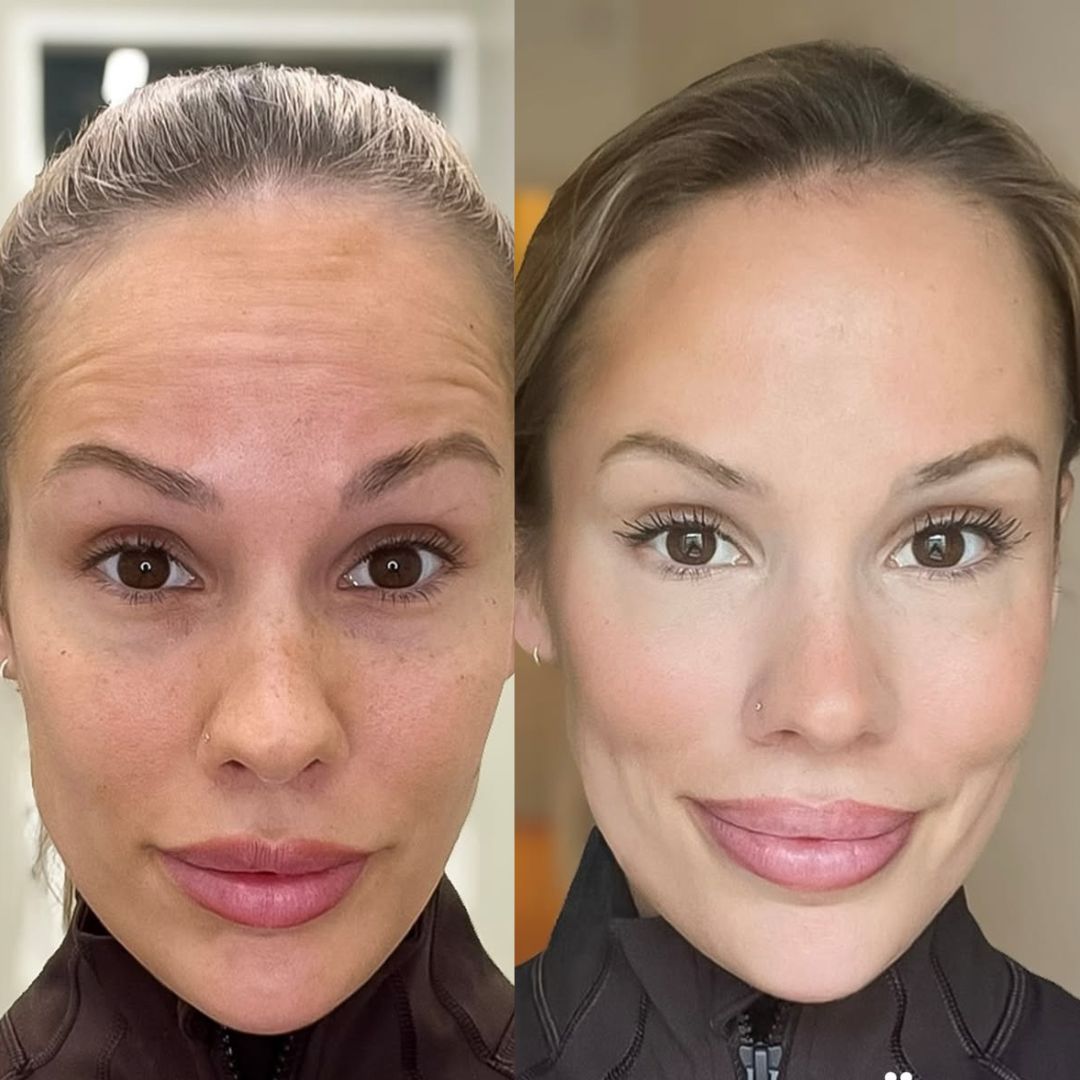
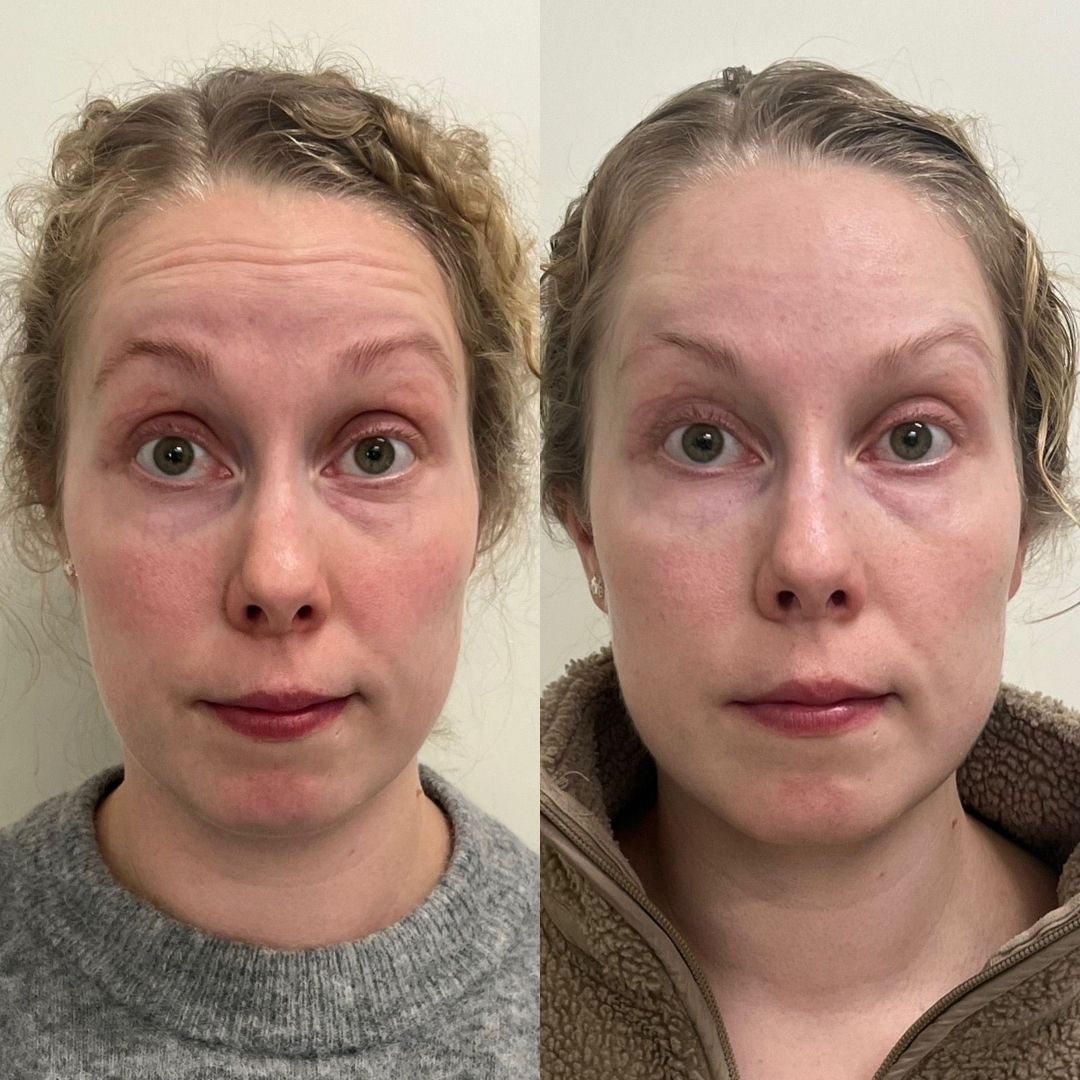
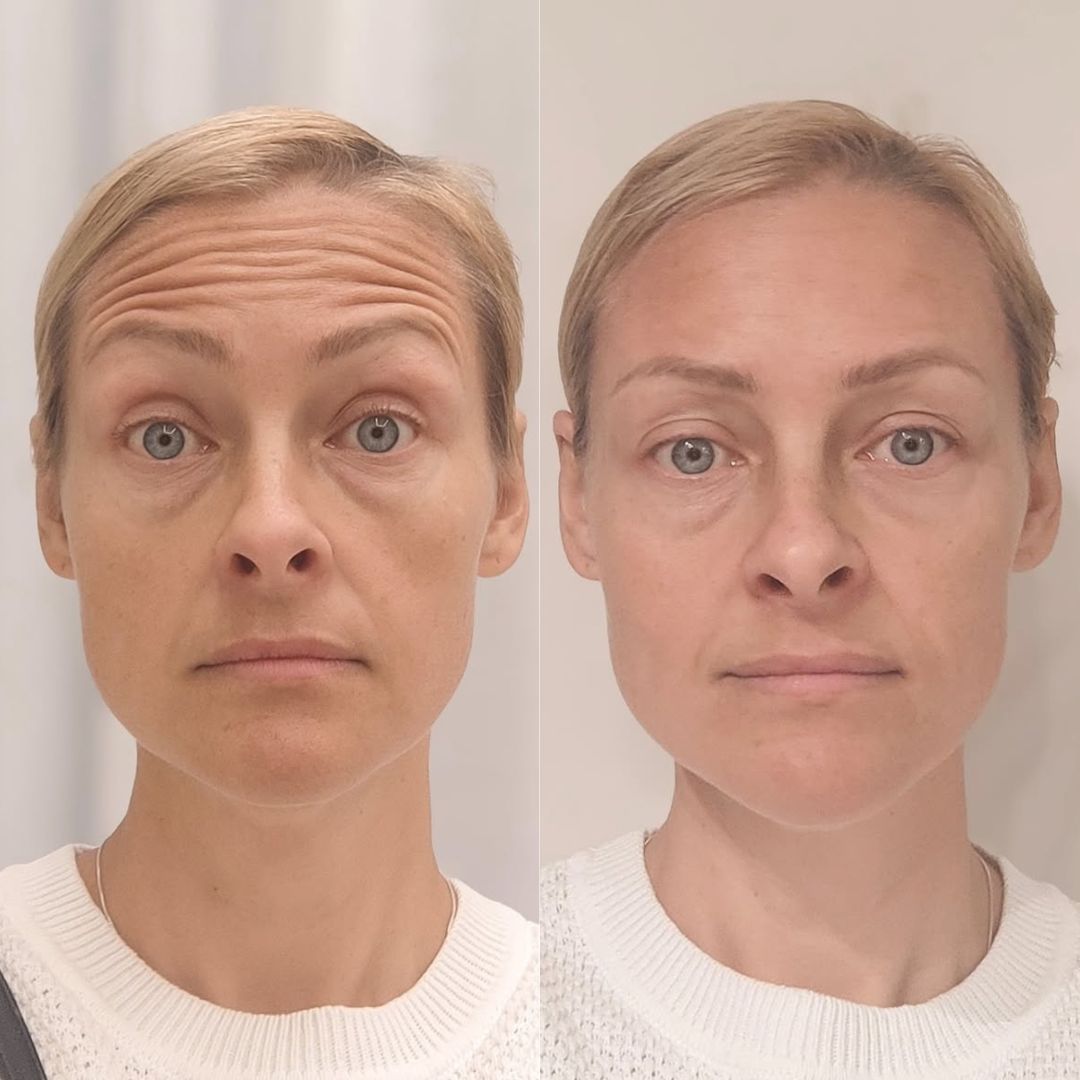
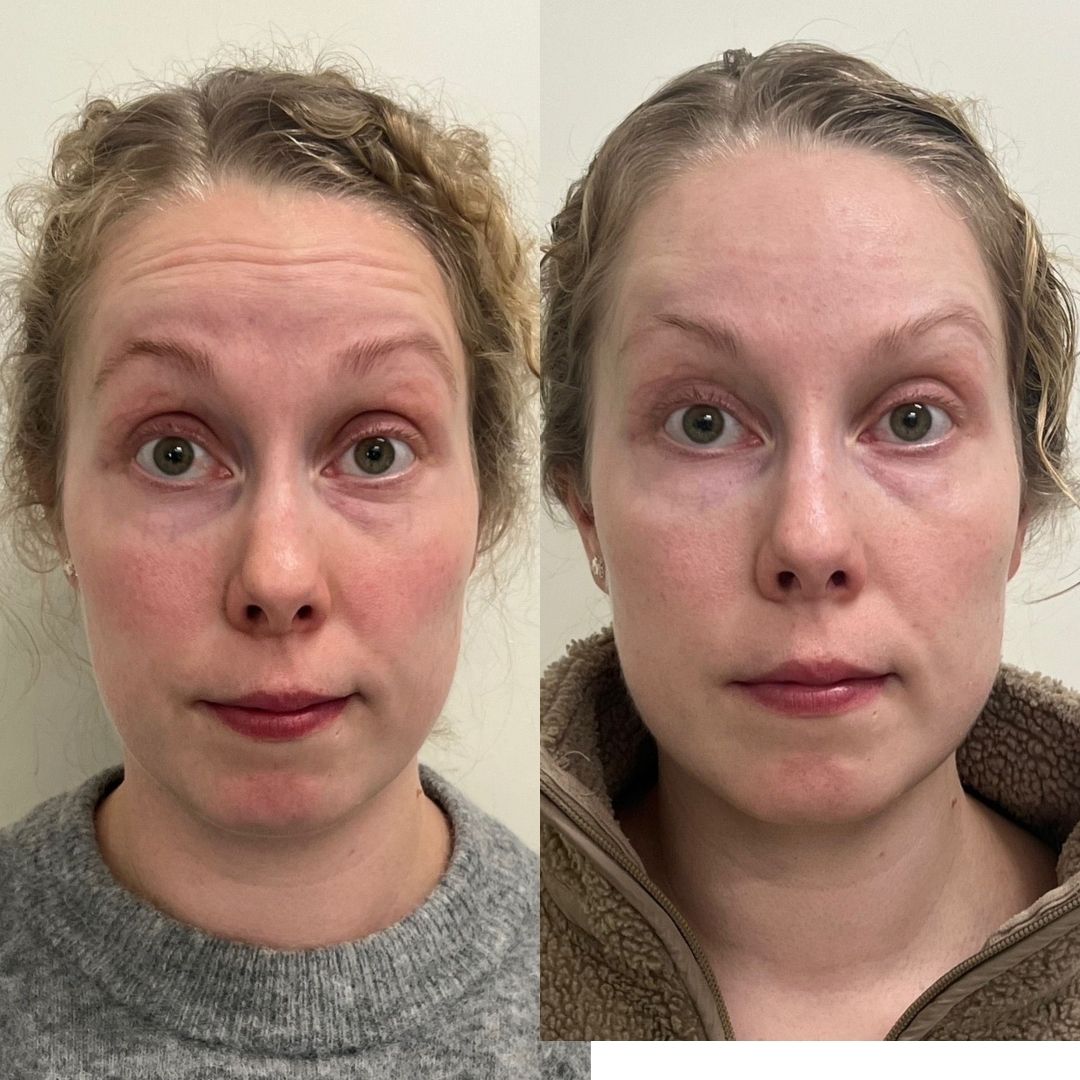
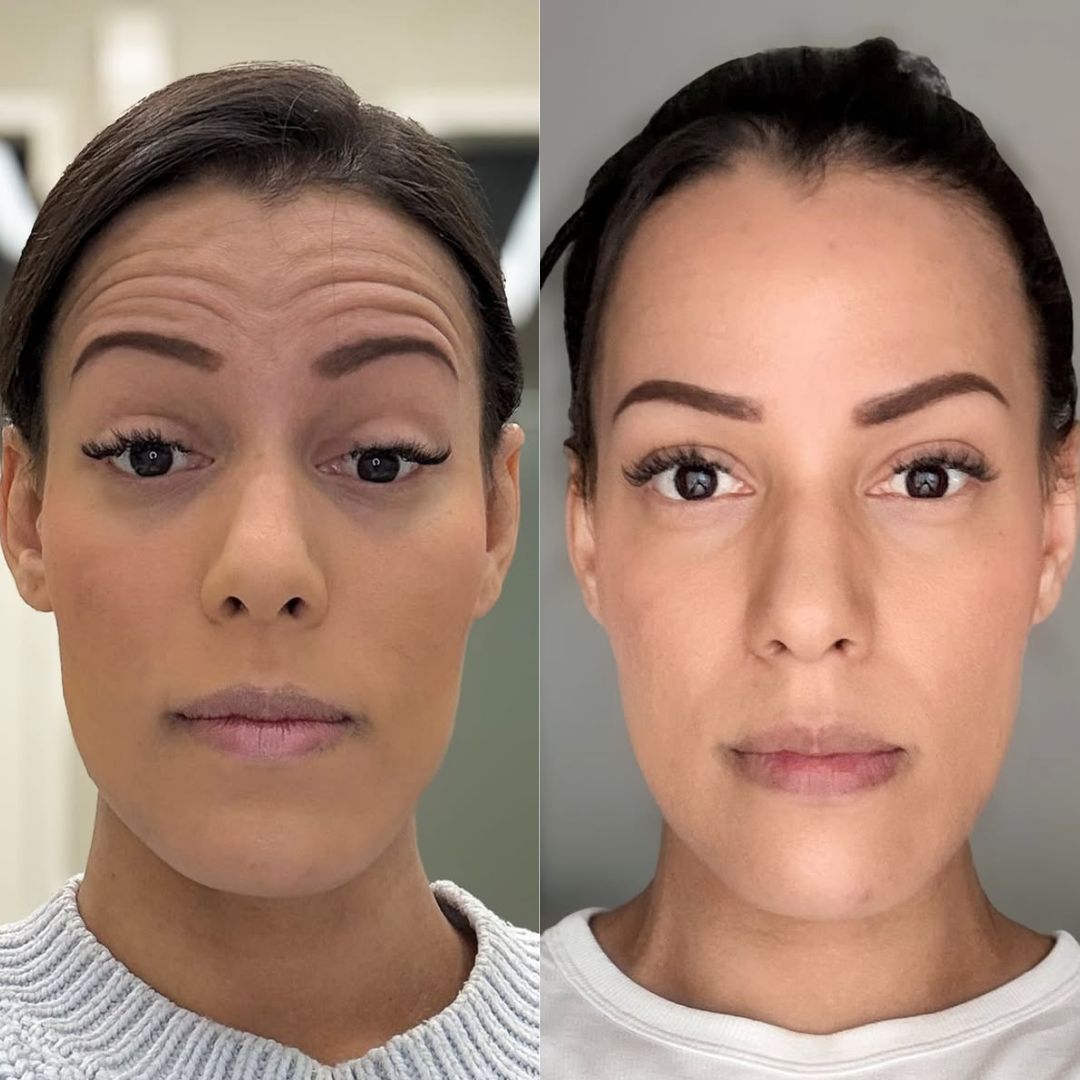
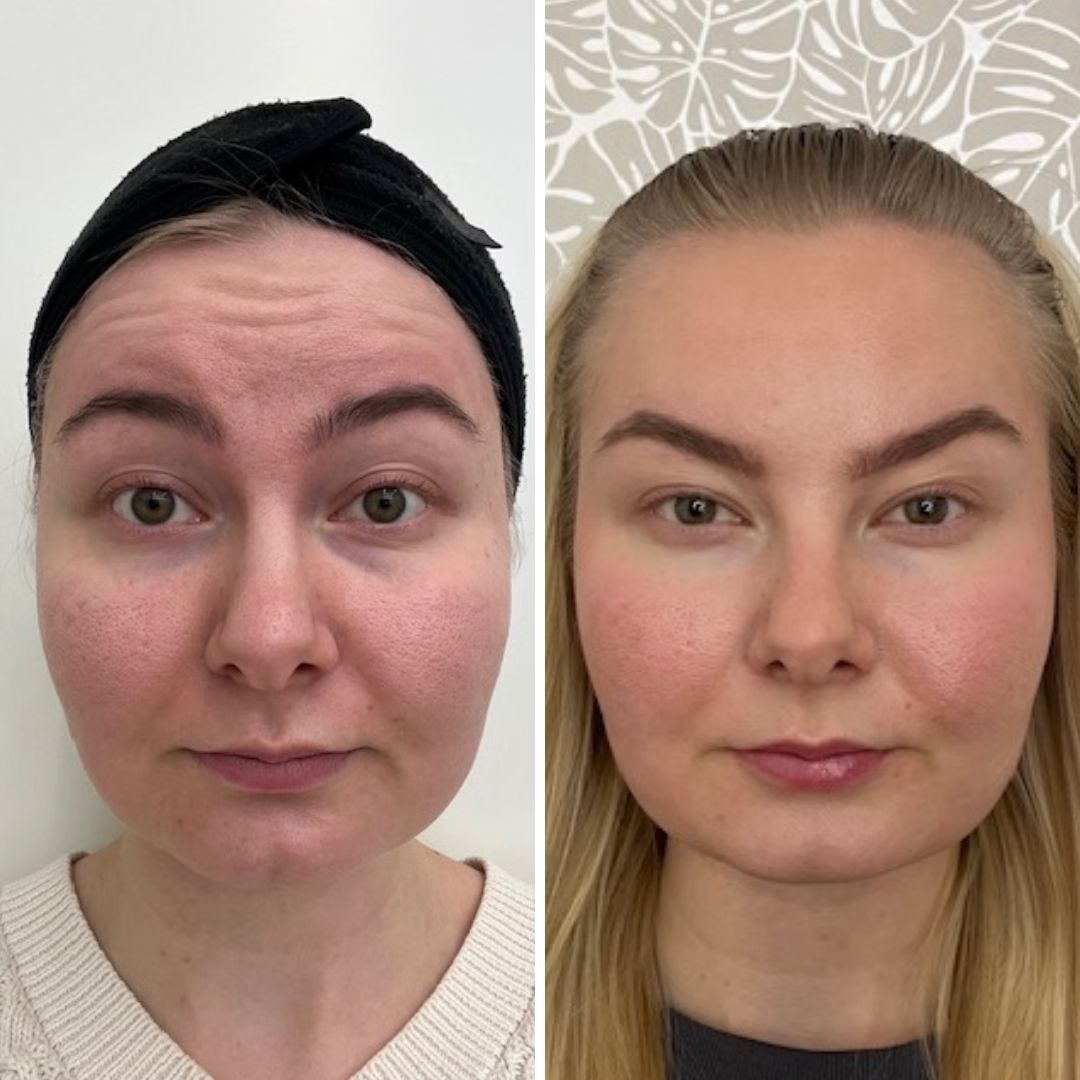
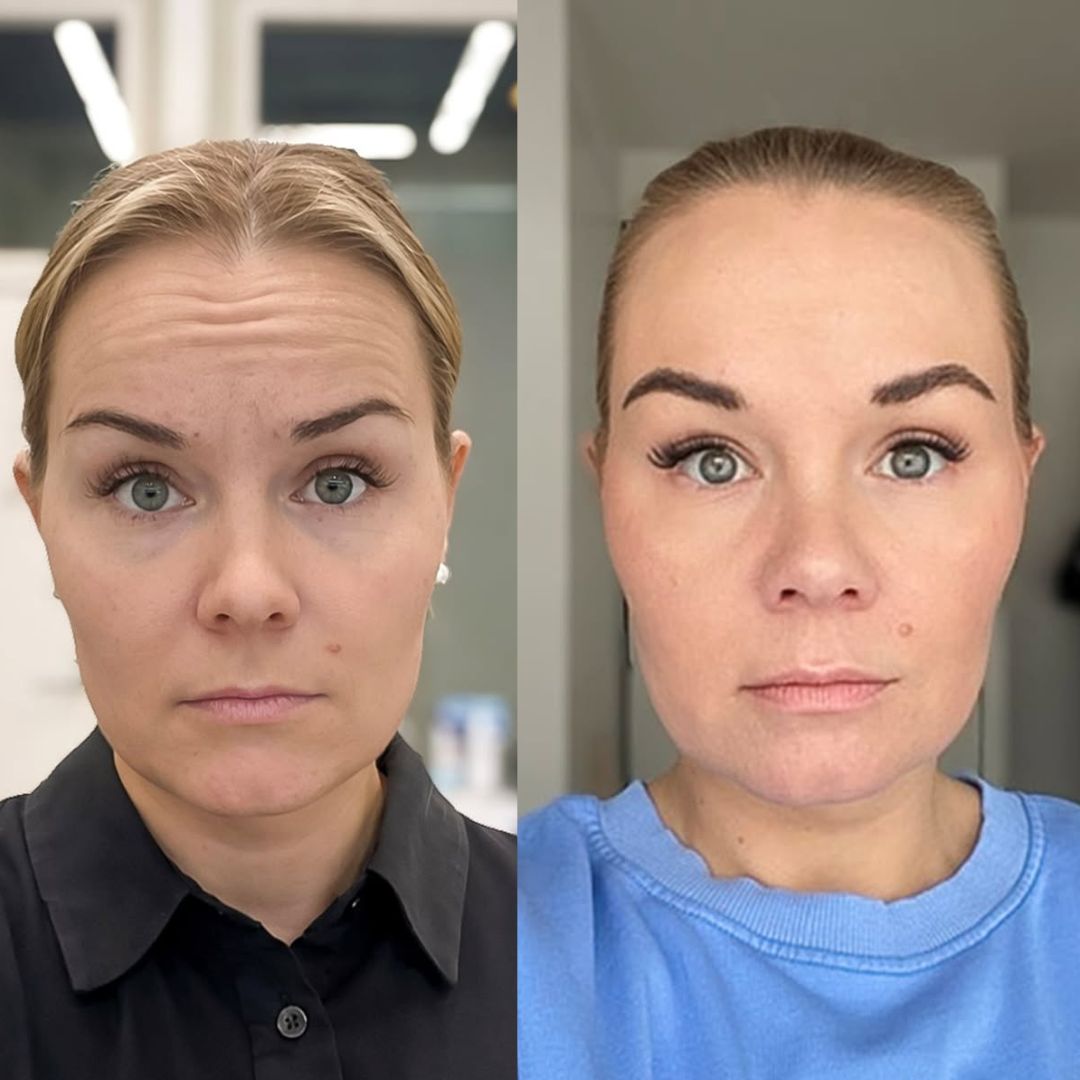
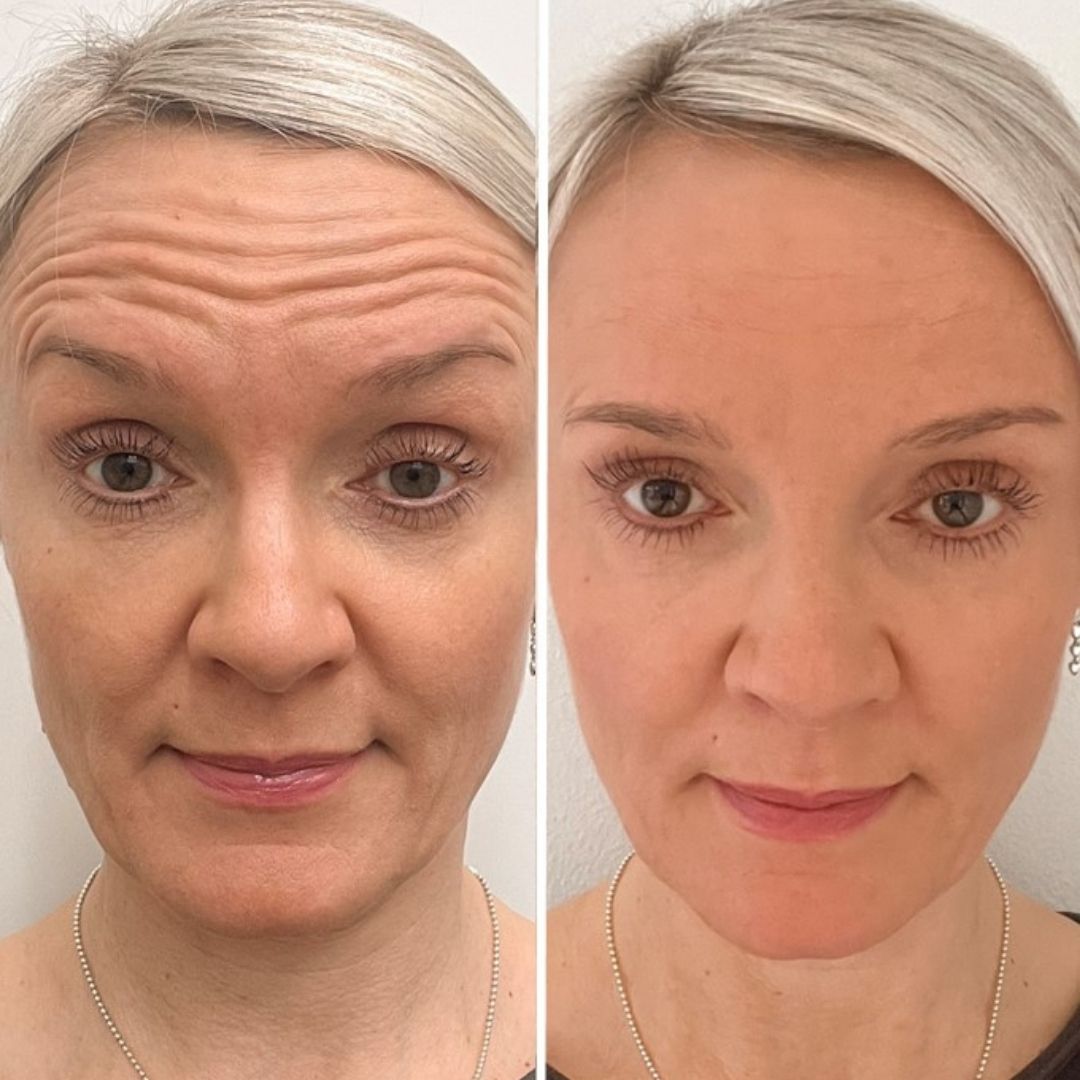
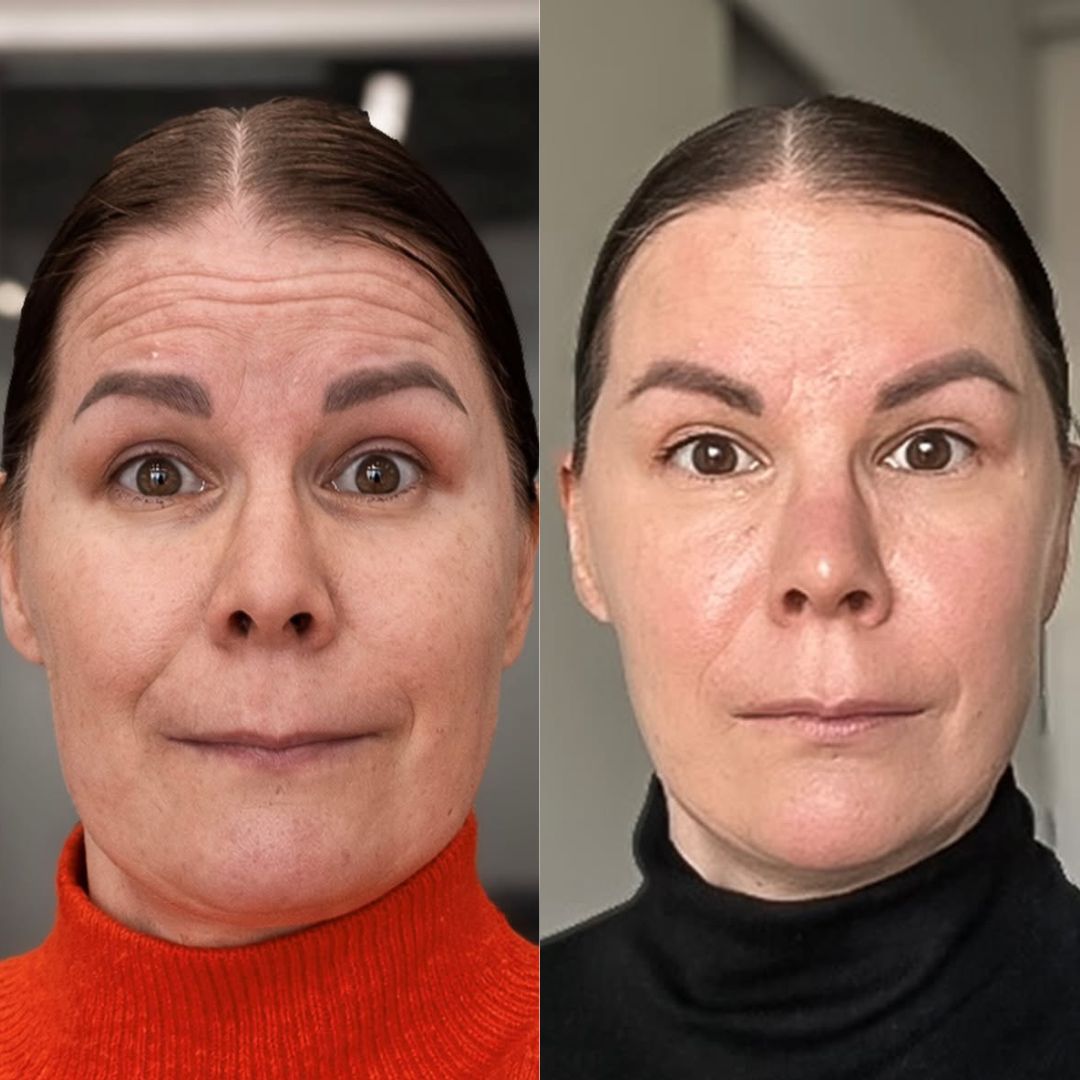
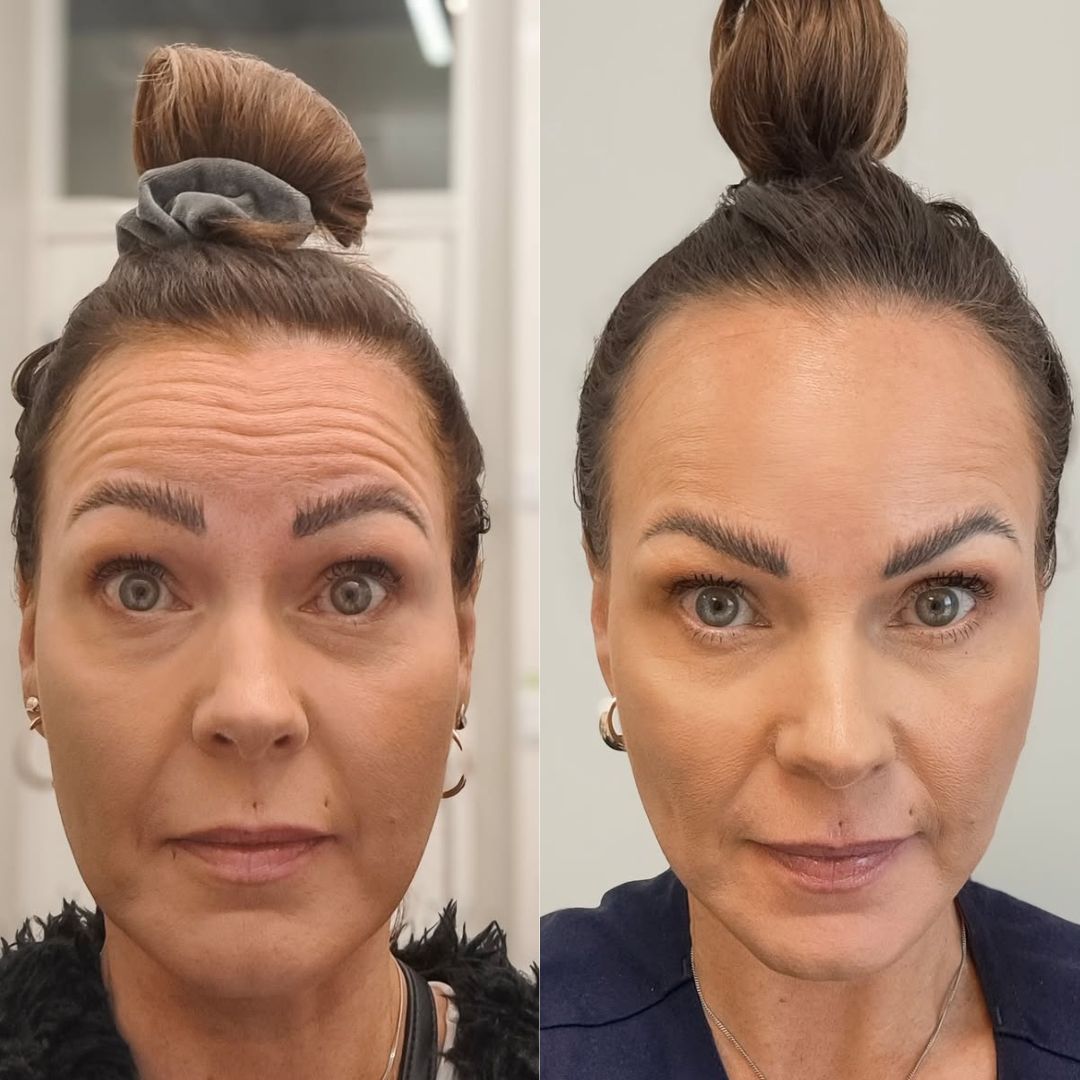
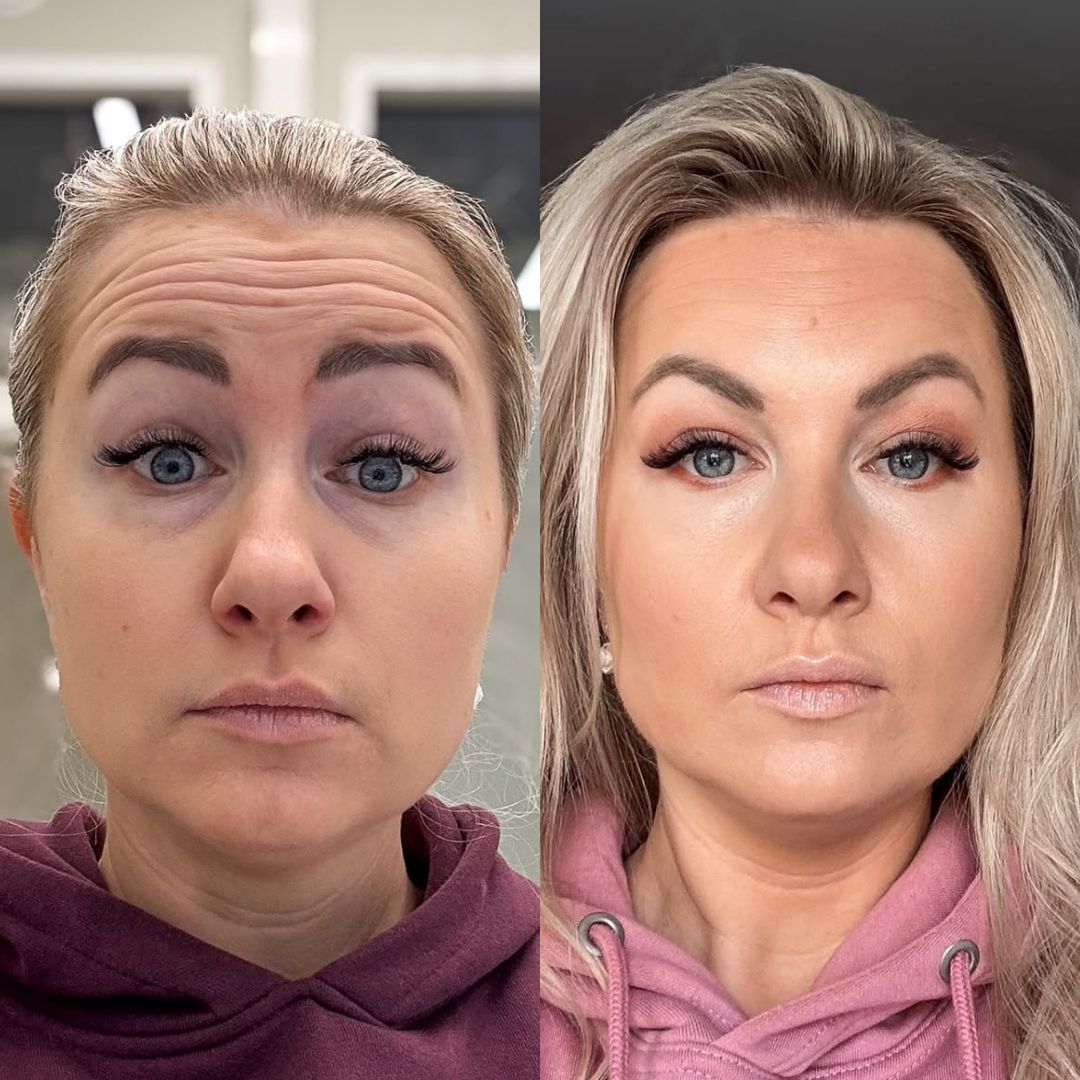
Botox for the forehead is one of the most common aesthetic botulinum toxin treatments. Botox treatment can reduce and correct horizontal forehead wrinkles. This is achieved by reducing the contractile force of the forehead muscles.
Forehead wrinkles form when the frontalis muscle repeatedly raises the eyebrows and contracts the skin on the forehead.
Botulinum toxin reduces the nerve-mediated activation of the muscle, causing the forehead to smooth out and the wrinkles to diminish.
The purpose of Botox treatment is not to make the face expressionless, but to preserve a natural look while reducing deep wrinkles.
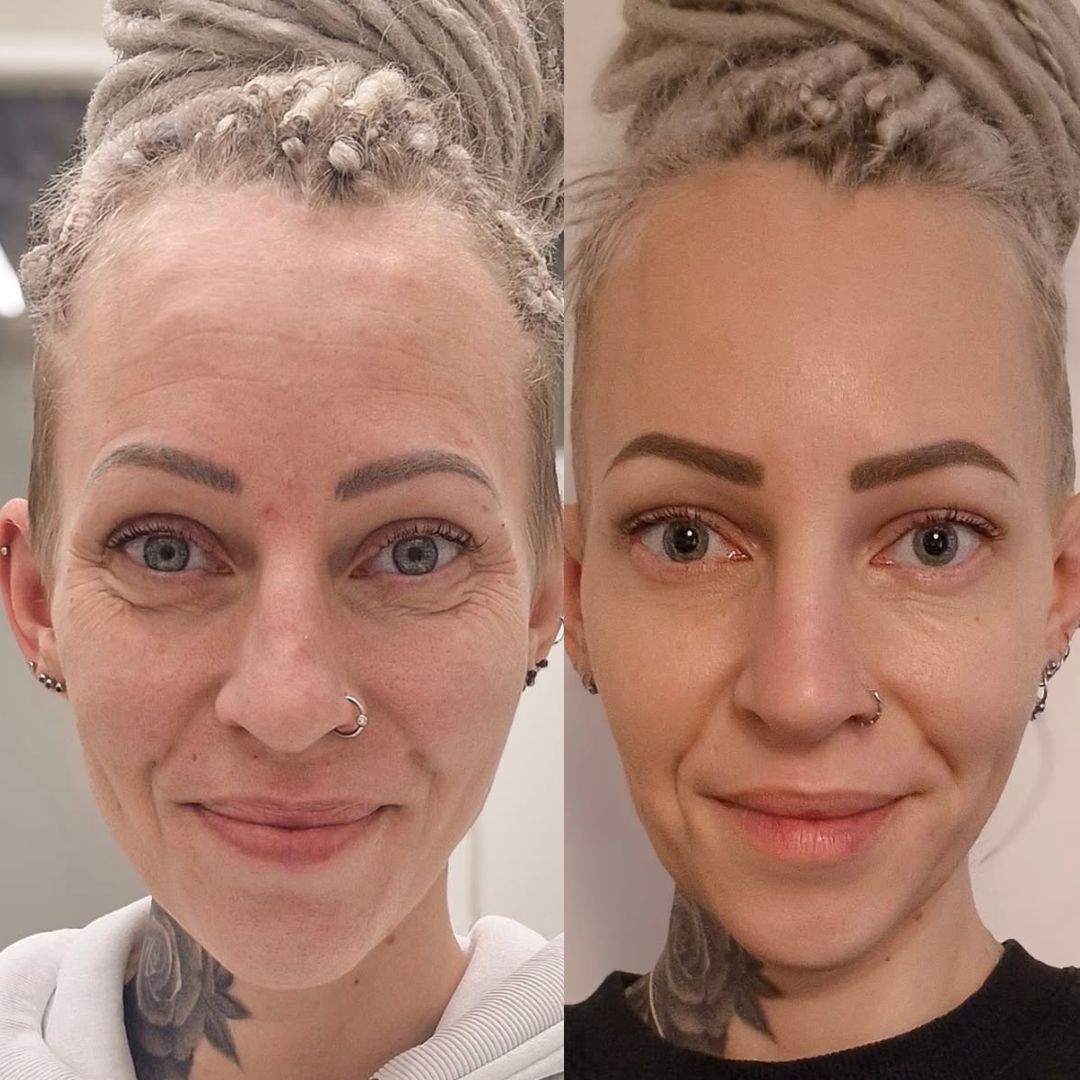
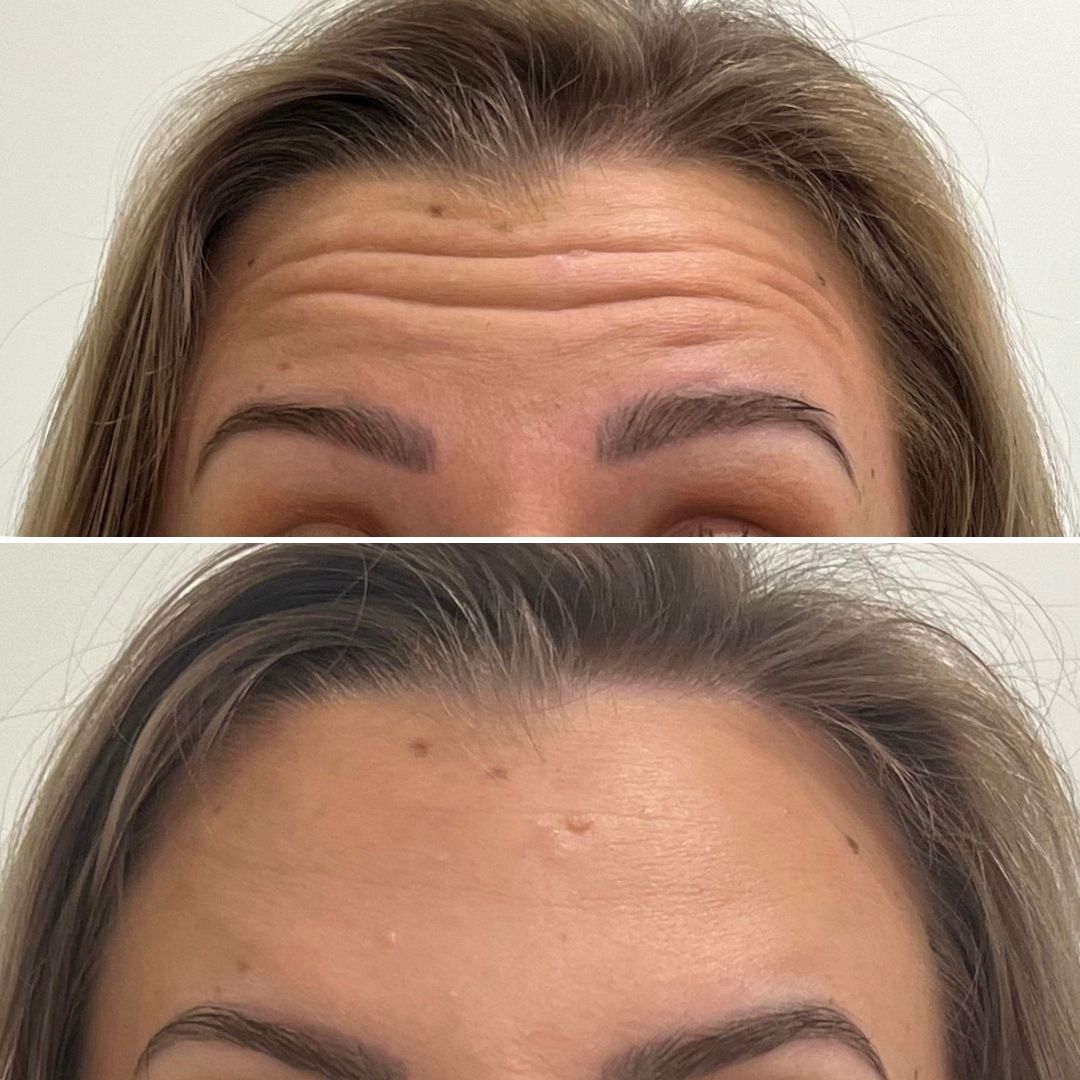
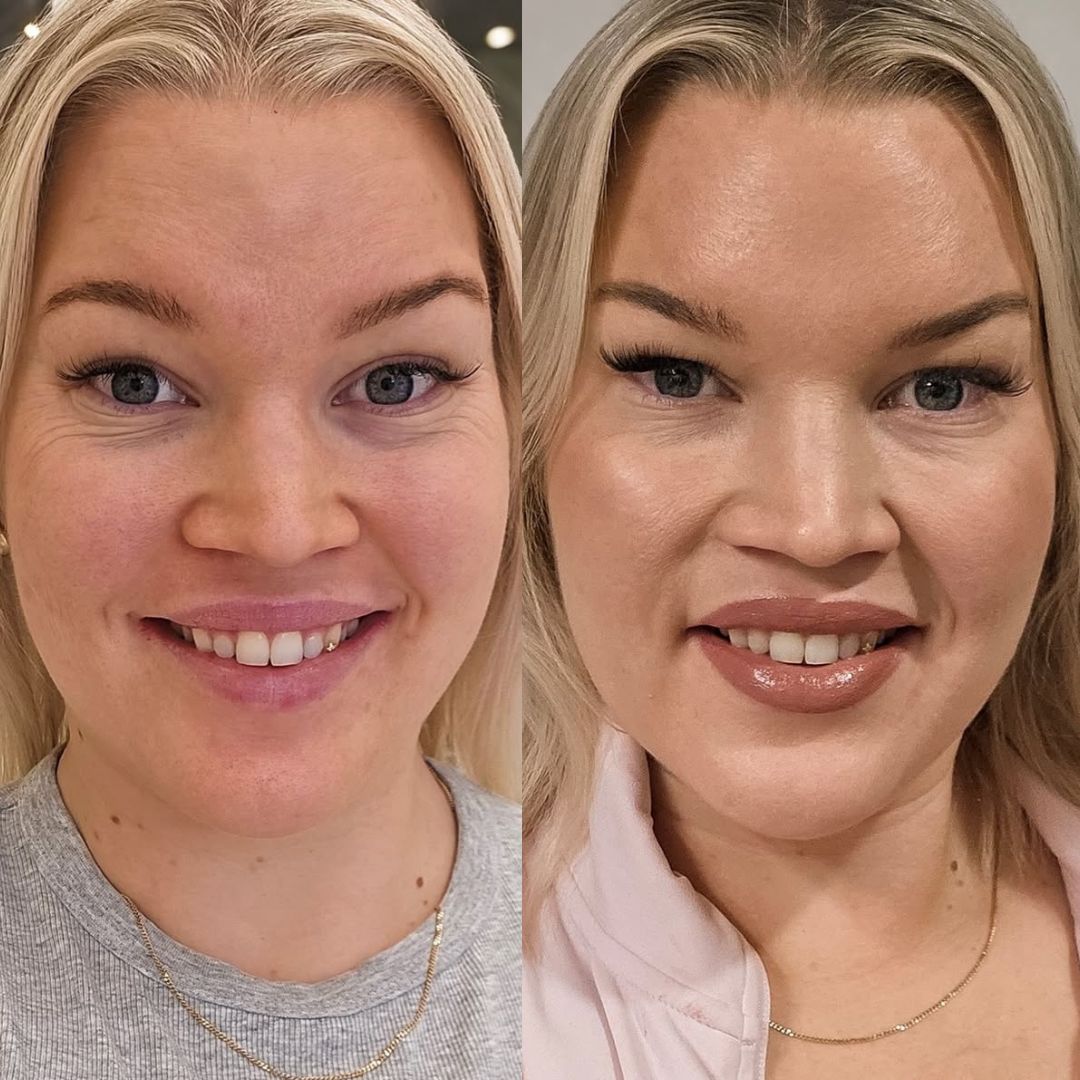
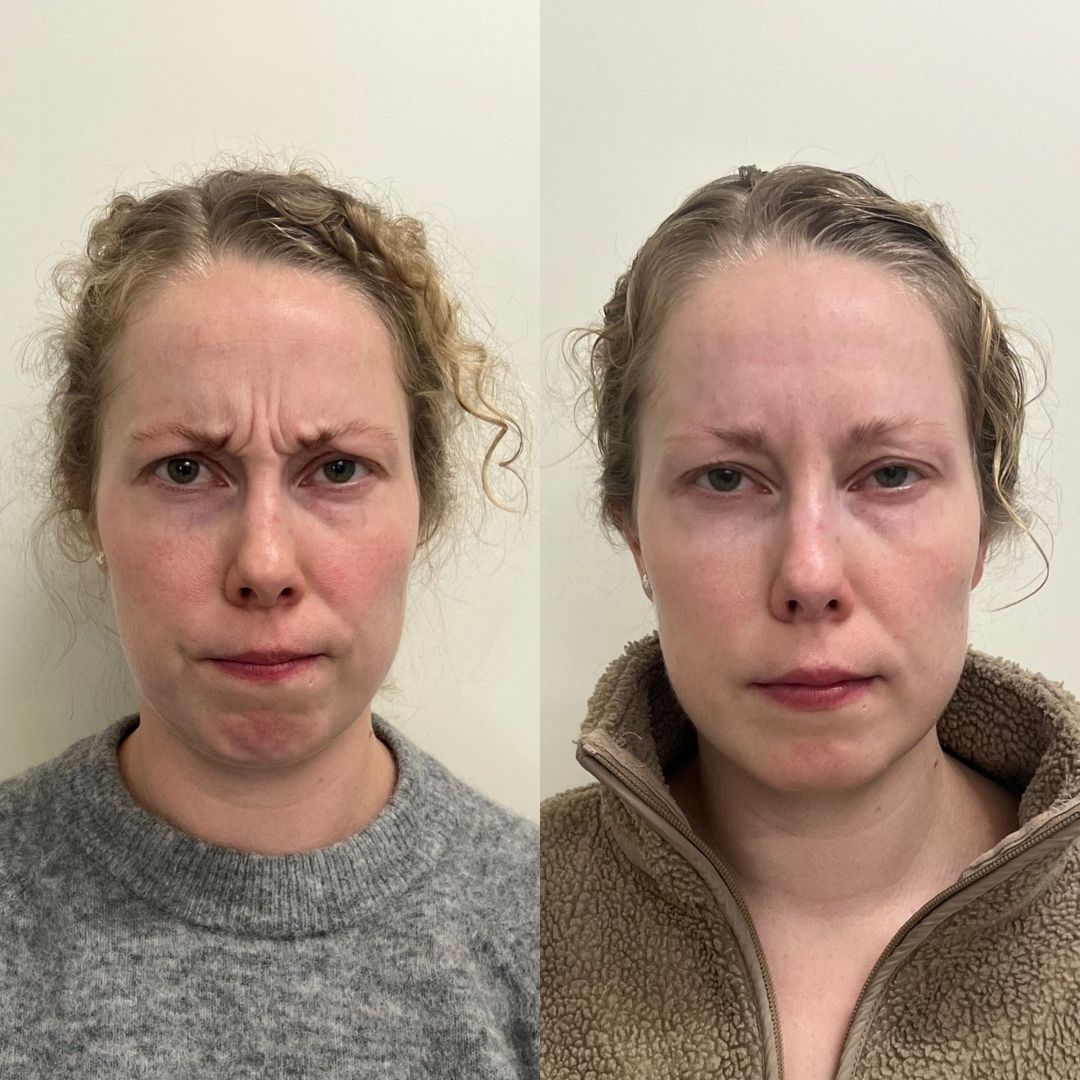
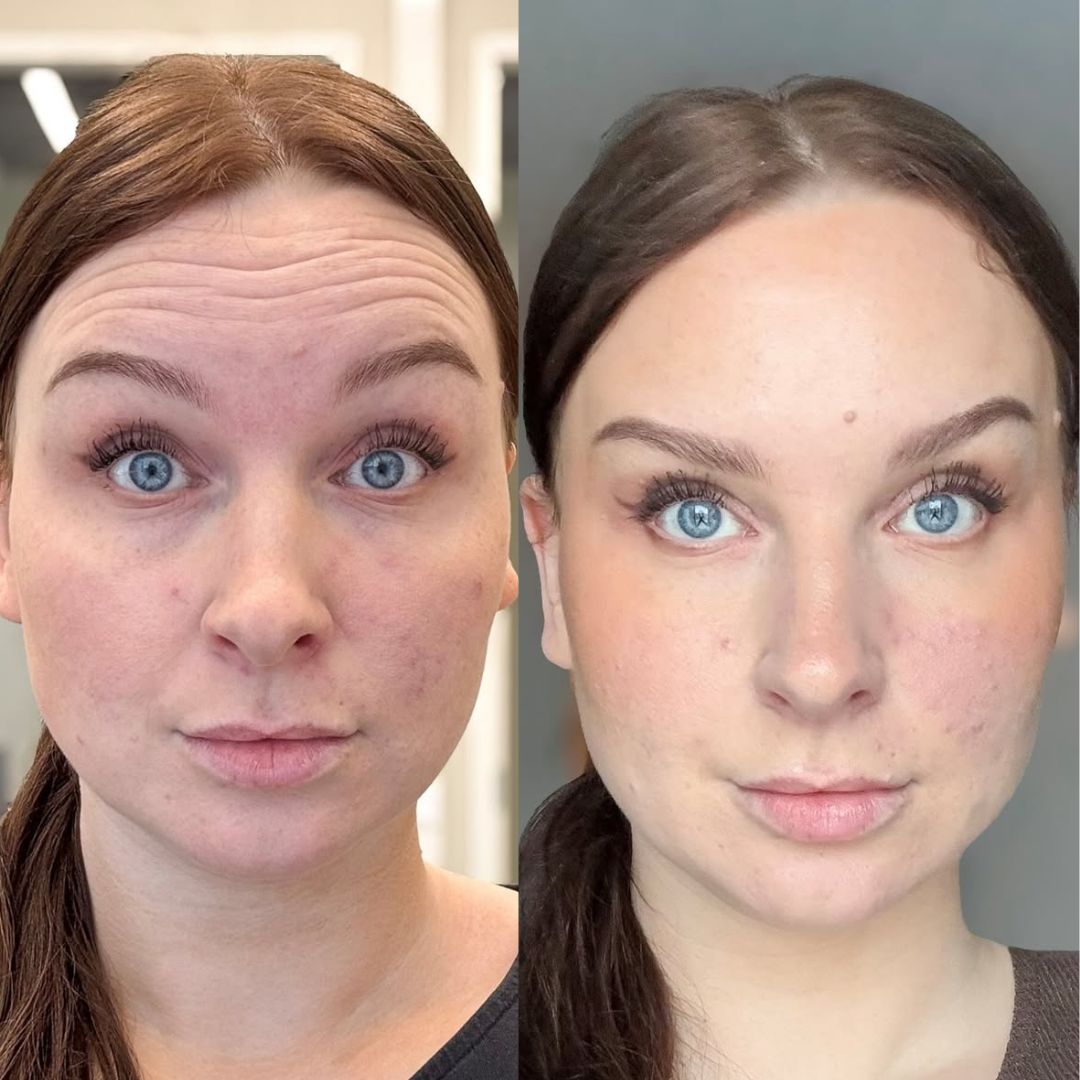
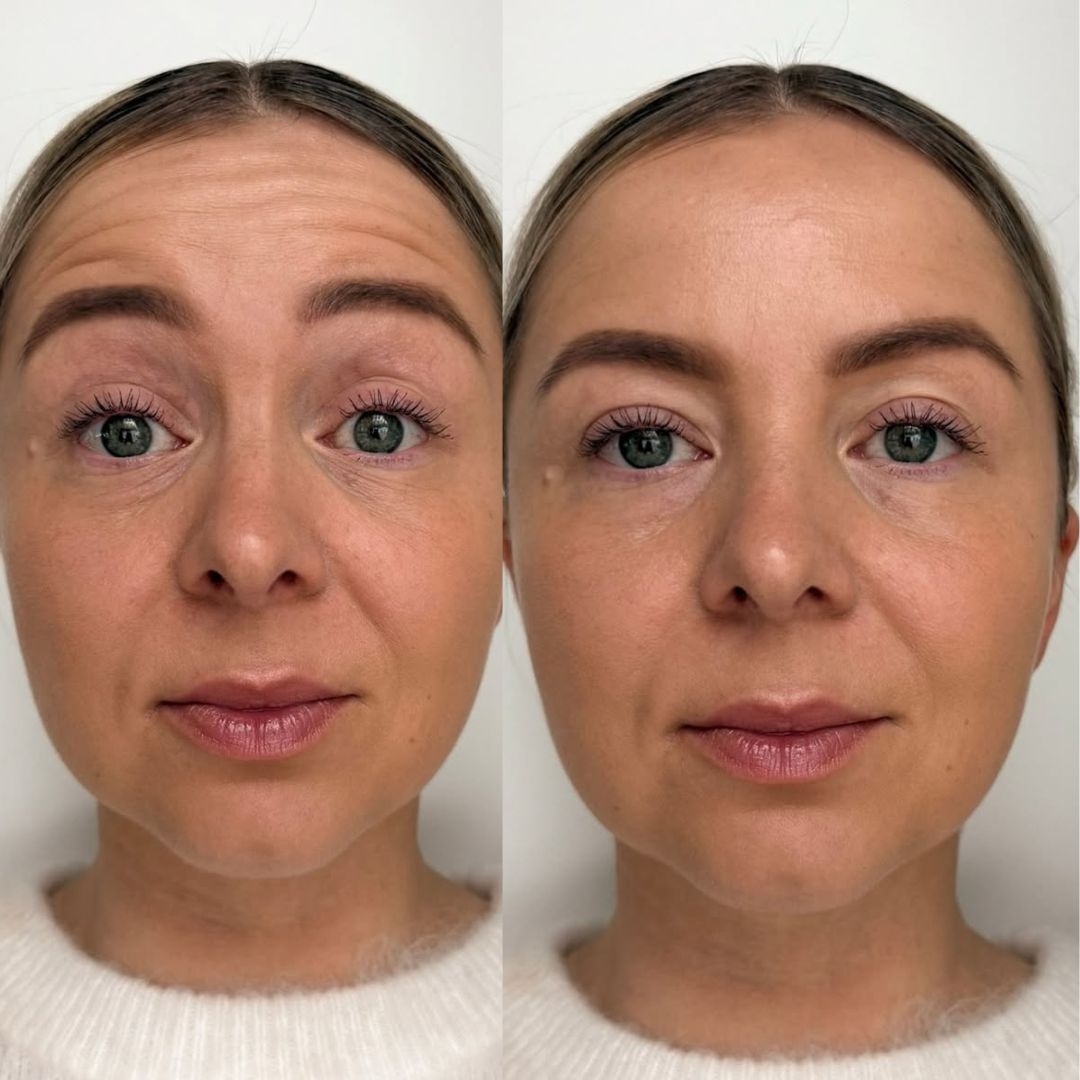
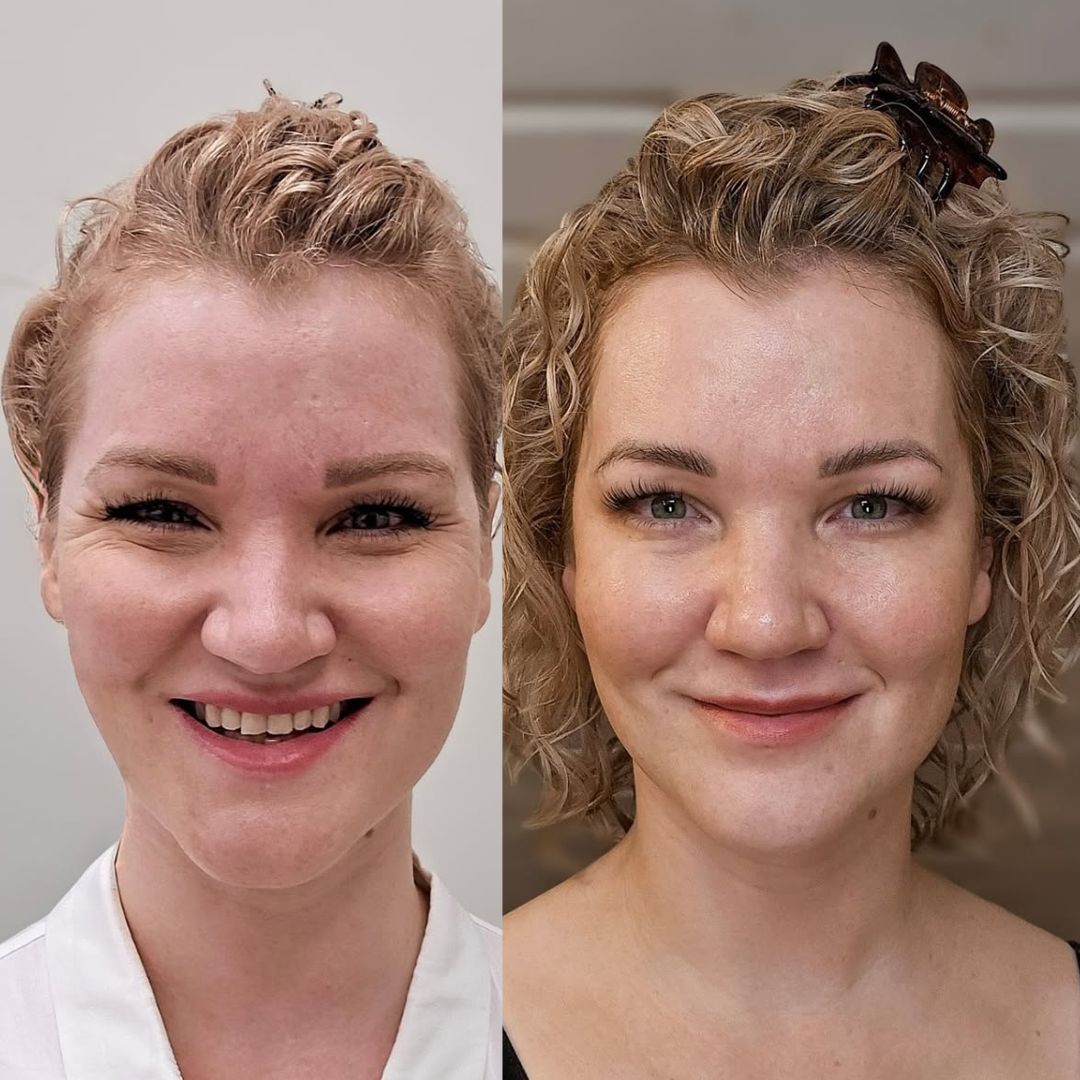
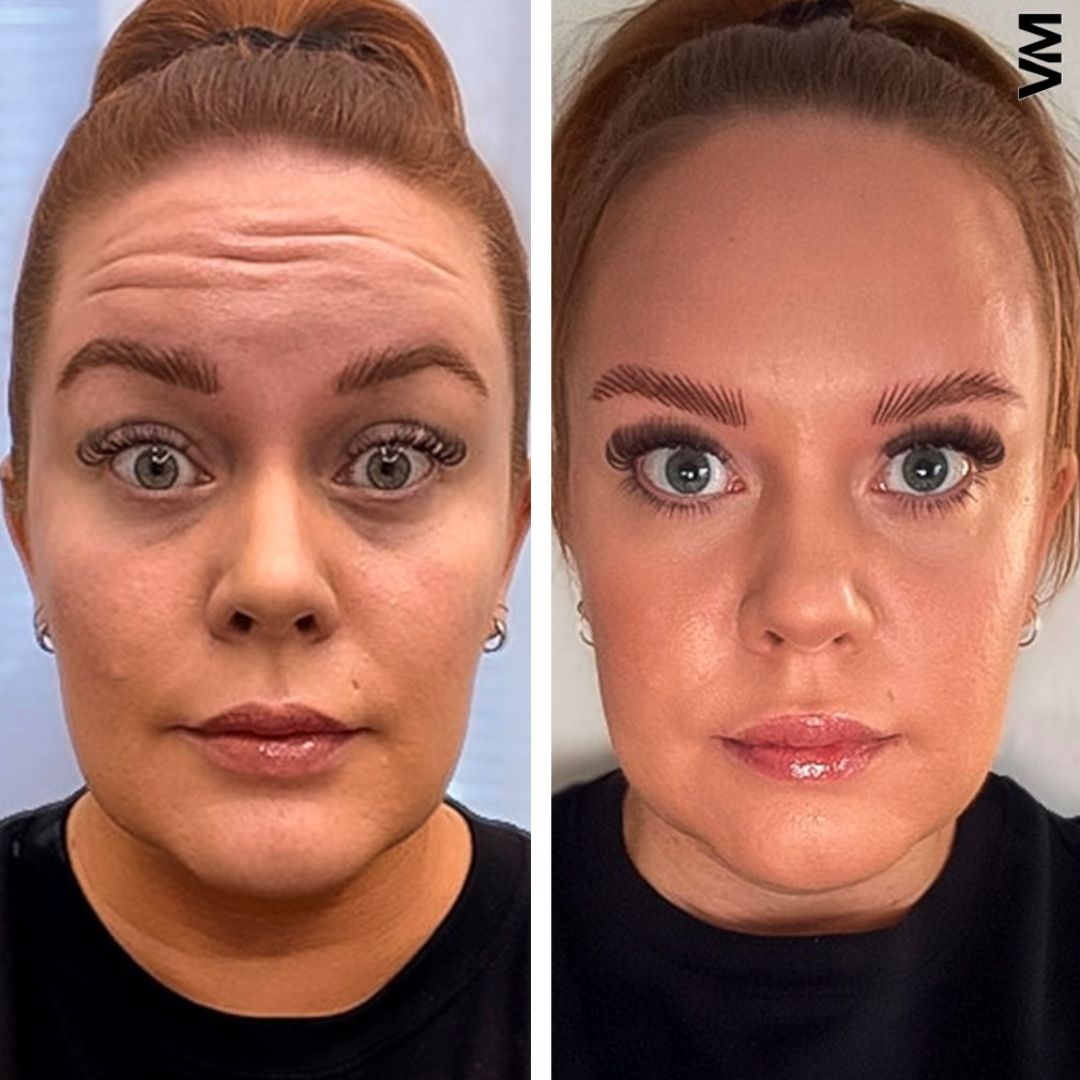
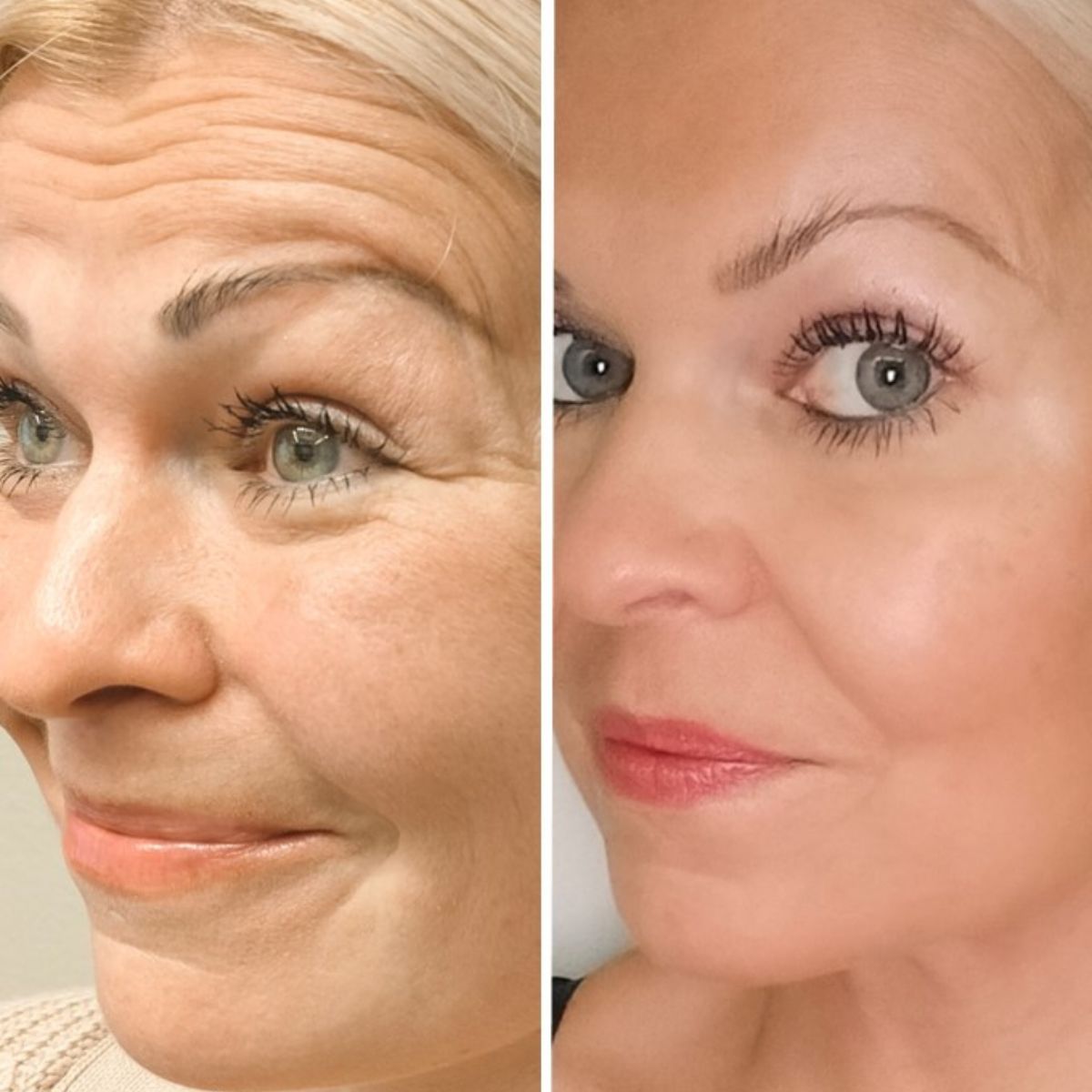
What do the results of a Botox treatment for the forehead look like?
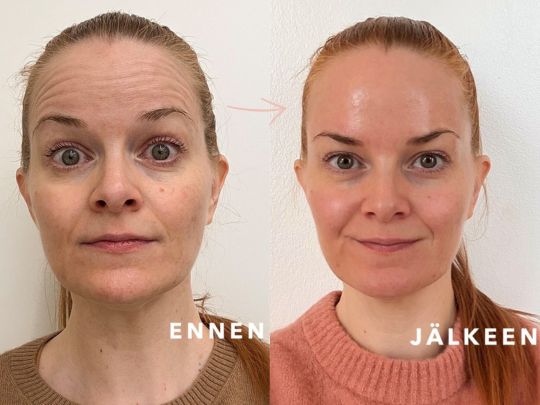
Botox for the forehead: one of the most common aesthetic botulinum toxin treatments. The treatment involves relaxing the forehead muscles with small, precisely targeted injections, which reduces constant furrowing of the skin. The goal is to smooth out forehead lines while preserving the face’s natural expression.
Why do forehead wrinkles form?

Forehead wrinkles are directly related to the activity of the facial muscles. The frontalis muscle shown in the anatomical diagram is responsible for raising the eyebrows and, at the same time, forms horizontal wrinkles on the forehead. In Botox treatment, the muscle’s activity is temporarily relaxed with small injections, allowing the skin to smooth out while maintaining a natural expression.
Where is Botox injected on the forehead?

In forehead Botox treatment, injections are administered into the forehead muscle (m. frontalis), among other areas. The injection sites are always planned on an individual basis, taking into account the patient’s facial muscle activity. Careful planning helps smooth out forehead lines without compromising the face’s natural appearance.
The treatment takes into account, for example:
- strength of the forehead muscle
- the position of the eyebrows
- skin elasticity
- the patient's facial expressions
Injections placed too low can weaken the frontalis muscle too much and cause the eyebrows to droop. For this reason, injection sites are carefully planned based on each individual’s anatomy.
A Surgeon's Perspective
Botox treatments in the facial area require a thorough understanding of anatomy. In the forehead area, injections are administered into the frontalis muscle in such a way that the natural movement of the eyebrows is preserved.
Training as an oral and maxillofacial surgeon provides a solid foundation for understanding the anatomy of the facial muscles, nerves, and blood vessels.
Who is a good candidate for forehead Botox?
Forehead Botox treatment is suitable for people who have horizontal forehead lines that are visible at rest or when making facial expressions. The treatment can be used both preventatively and to soften existing lines.
This treatment is common, particularly among people who:
- The wrinkles on the forehead are clearly visible when making facial expressions
- permanent lines have formed on her forehead
- The skin on my forehead feels constantly tight
“Ville is a true professional with an eye for aesthetics. A satisfied customer.” (Google review, March 2026)
How long does Botox for the forehead last?
The effects of Botox in the forehead area usually last about 3–4 months.
The duration of the effect depends, among other things, on:
- muscle strength
- of the dose used
- metabolism
- the regularity of treatments
You can also find more information about the duration of the effect in the article:
See also the guidelines for daily life after Botox treatment: After Botox injections.
Is Botox for the forehead safe?
Botox is one of the most extensively studied aesthetic treatment methods. When performed correctly, the treatment is safe and well-tolerated.
Any side effects are usually mild and temporary.
For more information on potential risks, see the article " Side Effects of Botox Treatment"
Ville Männistö, oral and maxillofacial surgeon
Specializes in facial anatomy and disorders of the masticatory muscles, and is certified in botulinum toxin treatments. Clinical work focuses on the safe use of botulinum toxin for both aesthetic and medical indications.
I am a member of a research group whose study on botulinum toxin treatments for masticatory muscles has been published in an international peer-reviewed scientific journal. Check out the study in the PubMed database.