Microbotox – Mesotherapy with Diluted Botulinum Toxin
Microbotox, also known as a Botox facial, is a form of mesotherapy that uses botulinum toxin as its active ingredient. In this treatment, a botulinum toxin solution that is more diluted than usual is administered into the skin via tens or even hundreds of microinjections.
Unlike traditional Botox, micro-Botox primarily affects the skin as well as the sebaceous and sweat glands.
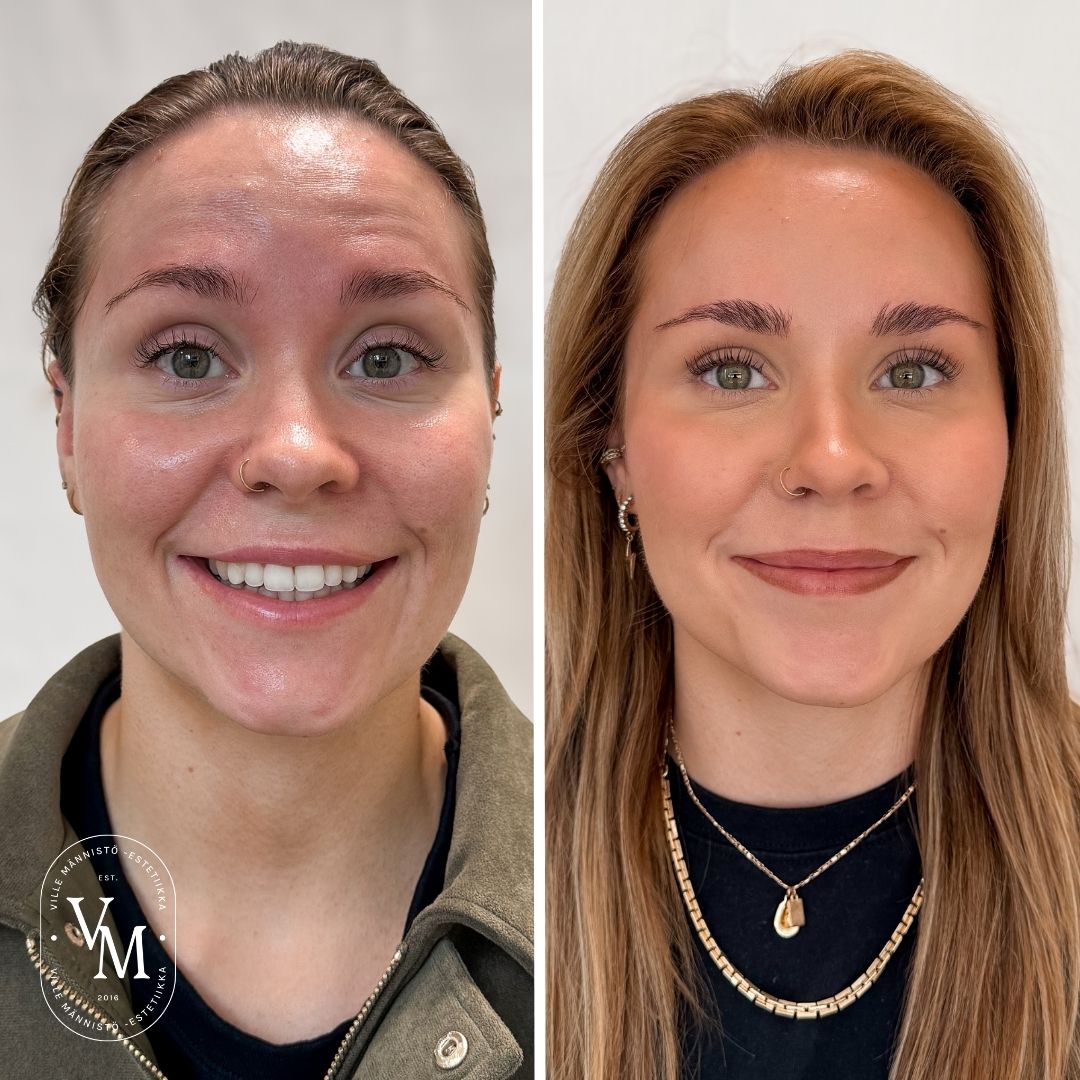
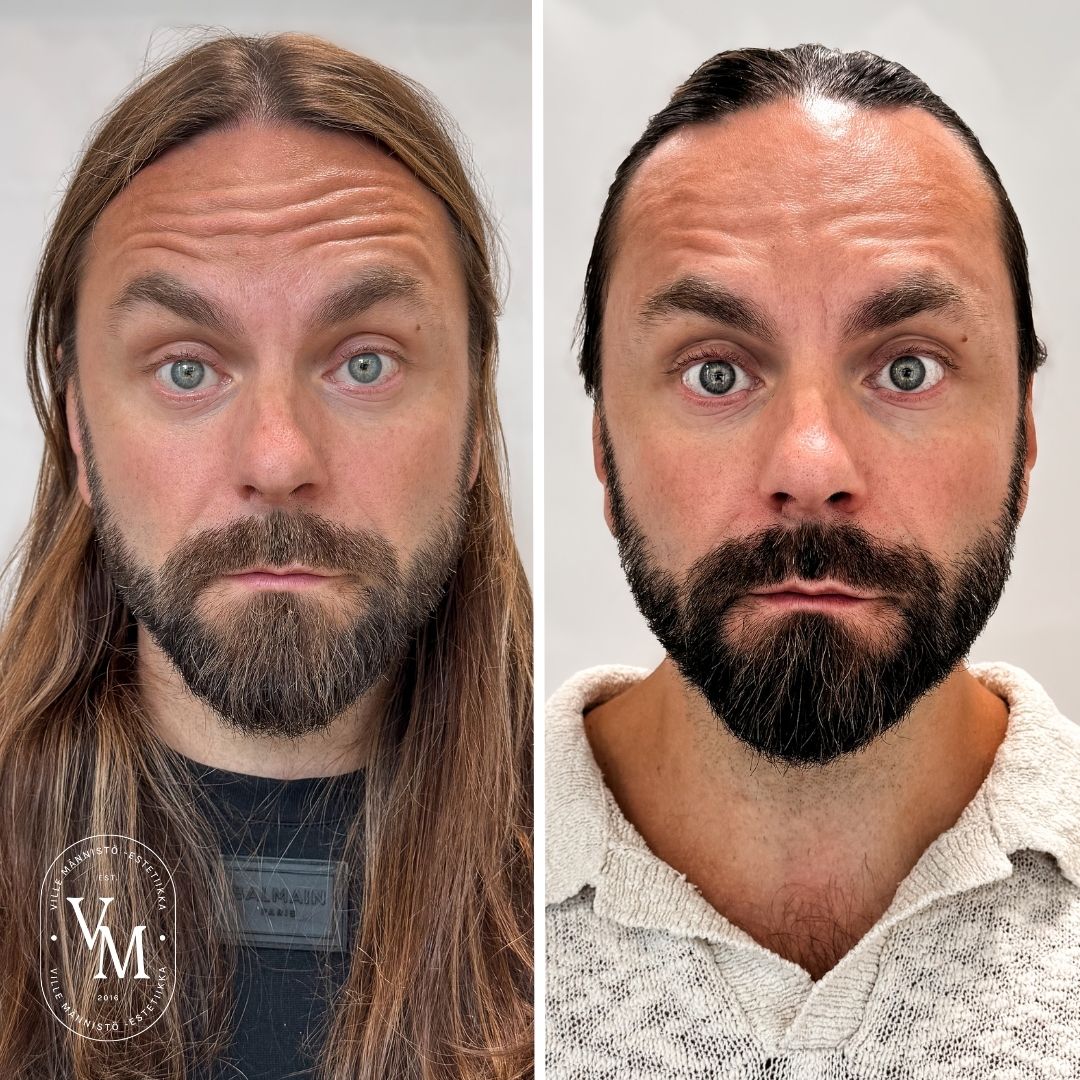
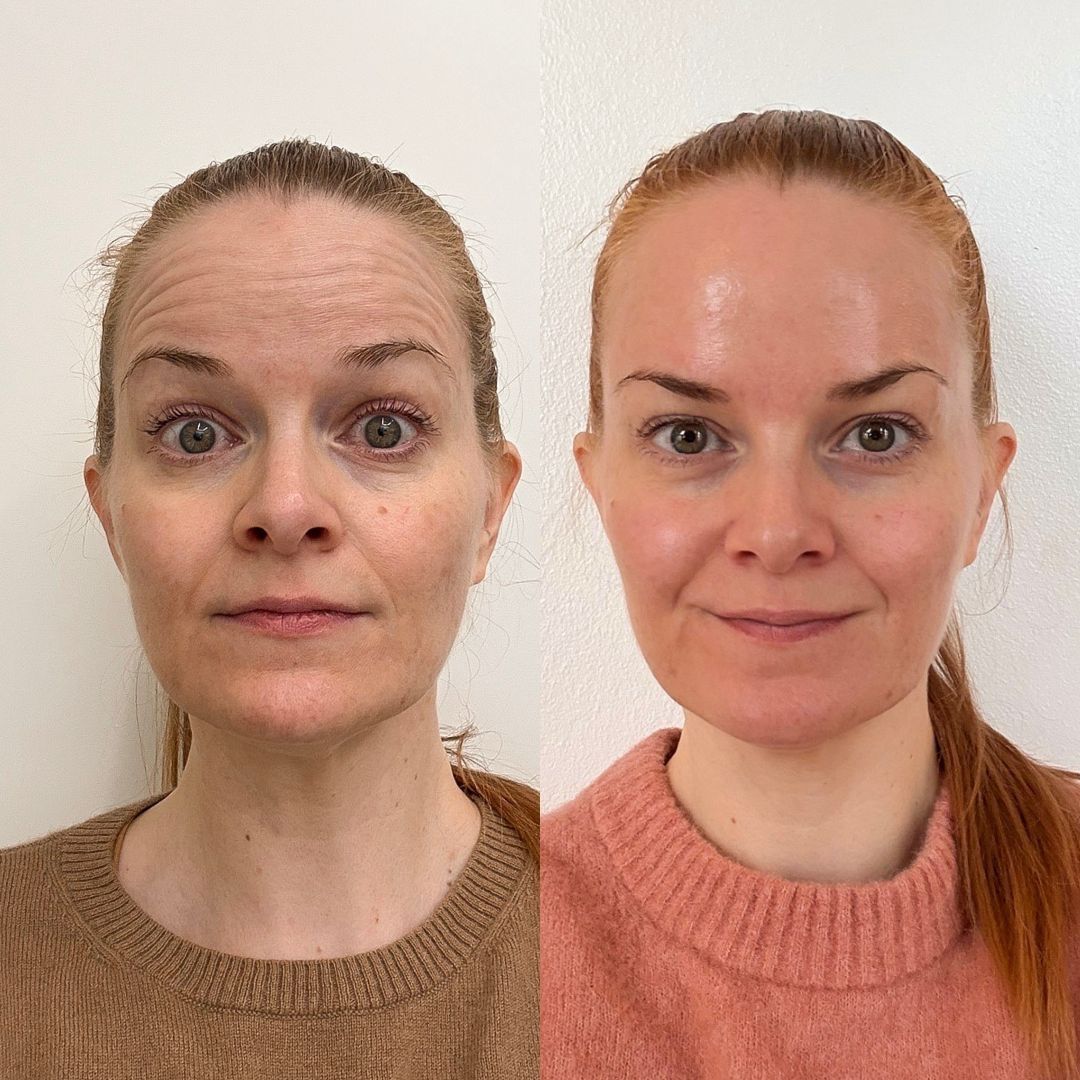
Microbotox reduces sebum production, curbs sweating, and shrinks pores. The treatment can also reduce the appearance of superficial fine lines and smooth the skin’s surface. In addition, the procedure has been found to alleviate the symptoms of rosacea and couperose.
Price: €270–590, depending on the number of treatment areas.
Abstract
- Microbotox is a mesotherapy treatment using botulinum toxin, in which a highly diluted solution of botulinum toxin is injected into the superficial layer of the skin.
- The treatment is primarily directed at the skin and the sebaceous and sweat glands, not the facial muscles themselves.
- Microbotox reduces sebum production, controls sweating, and shrinks enlarged pores.
- The treatment reduces superficial lines and smooths the skin's surface while preserving the face's natural expressions.
- People who suffer from couperose and rosacea also often find relief from microbotox treatment.
- For example, treatment for excessive sweating of the face and hairline is performed using Microbotox injections.
- Microbotox can be administered using an injection technique, the SkinPen device, or the Aquagold technique.
- Injection therapy provides the best and most long-lasting treatment results.
- Since a modest amount of scientific research and our extensive clinical experience have demonstrated the benefits of the injection technique, VM-Aesthetics’ Microbotox treatments are performed specifically using this injection technique.
- The treatment can also be performed using the Aquagold or microneedling techniques, if the client so desires.
- The effects usually last about 2–4 months, after which the treatment can be repeated.
Microbotox solves a wide range of skin problems
The goal of Microbotox treatment is not to relax facial muscles but to affect the surface layers of the skin, sebaceous glands, sweat glands, and very superficial muscle fibers. Systematic reviews and clinical studies published in recent years show that Microbotox may be beneficial for a variety of skin conditions. The research evidence is strongest for the treatment of rosacea-related redness, facial flushing, increased sebum production, and enlarged pores. In addition, several studies have observed a smoothing of the skin’s surface and a reduction in superficial fine lines.
However, based on research, microbotox is not a universal treatment for all signs of aging. It does not eliminate visible superficial blood vessels, correct deep wrinkles, or tighten sagging skin. In these cases, more effective options include, for example, traditional Botox, laser treatments, dermal fillers, or surgical procedures.
Researchers also emphasize that there are not yet fully established treatment protocols for microbotox. The dilutions, injection techniques, and doses used vary from one study to another, making it difficult to compare results. For this reason, the success of the treatment depends significantly on the practitioner’s experience, the correct injection technique, and careful patient selection.
(Surgeon Ville Männistö)
Treatment Topics
- Facial redness (erythema) associated with rosacea.
- Facial flushing.
- Enlarged pores.
- Oily skin and increased sebum production.
- Superficial streaks.
- Uneven skin texture.
- Dullness of the skin.
- Mild sagging of the skin, particularly on the lower part of the face and the neck.
Although the study results are promising overall and patient satisfaction has been high, the researchers consider the evidence to be only moderate at this point. Before microbotox can be established as part of international treatment guidelines, more high-quality randomized studies are needed that use standardized treatment methods and longer follow-up periods than in previous studies.
Prices for Microbotox Treatment
The cost of Microbotox treatment is determined by the number of areas being treated. The treatment uses a highly diluted botulinum toxin solution, which is administered to the skin in tens or even hundreds of microdoses. The final treatment plan is always tailored to each individual during the consultation.
Microbotox is priced based on the number of treatment areas, just like other botulinum toxin treatments.
| Areas of Treatment | Price |
|---|---|
| 1 Area | 270 € |
| 2 Areas | 360 € |
| 3 Areas | 450 € |
| 4 Areas | 530 € |
| 5 Areas | 590 € |
Microbotox is a botulinum toxin treatment administered to the skin
Microbotox is a specialized botulinum toxin treatment technique in which a highly diluted solution of botulinum toxin is administered to the surface layer of the skin in tens or even hundreds of microdoses. Unlike in classic botulinum toxin treatment or “baby Botox,” the medication is not injected into the facial muscles themselves but rather into the skin. The treatment primarily affects the skin’s surface as well as the sebaceous and sweat glands.
The goal of Microbotoxin is not to reduce facial movement but to alter the skin’s function. The treatment reduces sebum production, curbs sweating, and shrinks enlarged pores. At the same time, the skin’s surface may become smoother and very superficial lines may be reduced without altering the face’s natural expression.
Microbotox differs from traditional botulinum toxin treatment primarily in terms of injection depth. In traditional botulinum toxin treatment, botulinum toxin is injected into the muscle, temporarily reducing muscle activity. With Microbotox, injections are administered much more superficially into the skin. As a result, the effects of the treatment are primarily directed at the skin rather than facial expressions.
Microbotox can be administered using several different techniques. The most common methods include intradermal microinjections, microbotox combined with SkinPen treatment, and the Aquagold treatment, also known as the “Botox Facial.” Based on current research evidence, intradermal microinjections are likely to produce the best and most long-lasting treatment results.
"Microbotox is not a new drug, but a new way of administering botulinum toxin. The effects of the treatment are based on the fact that botulinum toxin acts on the skin rather than on the facial muscles themselves," Ville notes.
Microbotox is suitable for people who suffer from oily skin, enlarged pores, or excessive facial sweating. The treatment can also be performed on the neck and décolleté, where the applications of traditional botulinum toxin treatment are more limited.
Microbotox is not a substitute for traditional botulinum toxin treatment. The two treatment methods complement each other, but their mechanisms of action and treatment goals are different.
Mesotherapy, using a diluted botulinum toxin as the active ingredient
Microbotox treatment always begins with a personalized consultation and treatment plan. During the consultation, the condition of the skin, sebum production, the visibility of pores, sweating, and any other treatment concerns are assessed. At the same time, the most suitable treatment technique is selected. Microbotox can be administered via intradermal microinjections, the SkinPen device, or the Aquagold technique. Based on preliminary research, the intradermal injection technique is the preferred option among these.
Pre-Treatment Consultation
The treatment begins with a consultation to assess your health, previous cosmetic treatments, and your goals. During the consultation, we’ll also evaluate whether Microbotox is right for your specific skin type or if the desired results might be better achieved with, for example, classic Botox, Baby Botox, or another aesthetic treatment.
At the same time, we ensure that there are no contraindications to the treatment. For example, botulinum toxin treatment is not performed during pregnancy or while exclusively breastfeeding, nor is it performed on individuals with neuromuscular disorders.
A diluted botulinum toxin solution is applied to the skin
During the procedure, a very dilute solution of botulinum toxin is administered to the surface layer of the skin in tens or even hundreds of microdoses. The injections are administered in a dense grid pattern to ensure that the botulinum toxin is distributed evenly throughout the entire treatment area.
The treatment usually lasts 20–30 minutes. The injections feel like small pinpricks, and most clients find the procedure tolerable.
If necessary, an anesthetic ointment is applied to the skin about half an hour before the injections.
Instructions After Microbotox Treatment
After treatment, the skin may become red, and small bumps may appear at the injection sites. These reactions are common and usually disappear within a few hours. Since there are many injection sites, bruising is a common side effect of the treatment.
You can resume your normal daily activities immediately after treatment. However, during the first 24 hours, you should avoid going to the sauna, strenuous physical activity, and vigorous rubbing of the injection sites.
When will the results be available?
The effects of microbotoxin develop gradually. The first changes are usually noticeable within a few days, and the final treatment results are assessed after about two weeks. A reduction in sebum production, shrinking of the pores, and a decrease in sweating occur gradually.
How long will the results last?
The effects of microbotoxin typically last 2–4 months. Factors affecting the duration of the effects include the treatment technique used, the dosage, the treatment area, and individual differences in metabolism.
Microbotox is an off-label treatment
Microbotox is what is known as an off-label treatment. This means that botulinum toxin is used as a medically approved drug, but the dosage and method of use differ from the official indications described in the summary of product characteristics. Off-label use is at the discretion of the physician. Off-label treatments are permitted procedures. They are an established part of many medical specialties.
It is important to understand that the response to microbotoxin treatment varies from person to person. Some clients achieve excellent results from the treatment, while for others the effects are more modest than expected. Factors influencing the response to treatment include skin characteristics, the function of the sebaceous and sweat glands, and individual biological differences.
It's best to think of your first microbotox treatment as a trial.
(Ville Männistö)
The first treatment session will reveal how your specific skin reacts to the treatment and what dosage or treatment technique produces the best results. If necessary, the next treatment can be planned based on the experience gained from the first session.
The treatment can be repeated
Microbotox can be repeated as the effects wear off. As with other botulinum toxin treatments, it is not recommended to have it done more frequently than every three months in order to minimize the risk of developing resistance to botulinum toxin.
Each treatment session is planned individually. If necessary, Microbotox can be combined with other aesthetic treatments if they are deemed to support your treatment goals.
Frequently Asked Questions About Microbotox
What is Microbotox?
Microbotox is a specialized botulinum toxin treatment technique in which a highly diluted solution of botulinum toxin is administered to the surface layer of the skin. The treatment primarily targets the superficial muscle fibers of the skin, as well as the sebaceous and sweat glands, rather than the facial muscles themselves.
How does this treatment differ from a standard Botox treatment?
In traditional Botox treatment, botulinum toxin is injected into a muscle to reduce muscle activity. In Microbotox, the toxin is applied to the skin, so the effects of the treatment are primarily directed at the skin, sebaceous and sweat glands, and the superficial muscles of the skin.
How is Microbotox different from Baby Botox?
Baby Botox and micro-Botox are two different treatment techniques. With Baby Botox, smaller doses of botulinum toxin are used, but the injections are still administered into the muscle. With micro-Botox, a highly diluted solution of botulinum toxin is applied to the skin.
What conditions can be treated with microbotulinum toxin?
Microbotox is used to reduce sebum production, control sweating, and minimize the appearance of pores. The treatment can also reduce very superficial fine lines and smooth the skin’s surface.
Who is this treatment suitable for?
Microbotox is suitable for people who suffer from oily skin, enlarged pores, or excessive sweating, or who are looking to refresh their skin without significantly affecting their facial expressions.
Can Microbotox reduce facial redness?
Yes, based on studies, microbotox can reduce redness and facial flushing associated with rosacea in particular. The effects are usually visible within a few weeks of treatment. Although the results are promising, microbotox does not permanently cure rosacea; symptoms may gradually return as the treatment’s effects wear off.
How long does the redness-relieving effect of microbotoxin last?
In studies, the effects have typically lasted about 3–6 months. After this, redness and warmth may gradually return, at which point the treatment can be repeated. The duration of the effects varies from person to person.
Can Microbotox help with rosacea?
Microbotox can reduce facial redness, which is why people with couperose may also benefit from the treatment. However, the research evidence mainly pertains to rosacea and facial redness, not couperose itself.
How long will the results last?
The effects of microbotoxin typically last about 2–4 months. Factors affecting the duration of the effects include the treatment technique used, the area being treated, and individual biological differences.
When will the treatment results be visible?
The first effects are usually noticeable within a few days. The final treatment outcome is assessed about two weeks after treatment.
Is the treatment safe?
Yes, as long as the treatment is performed by a healthcare professional trained in botulinum toxin treatments. However, Microbotox is an off-label treatment, so the response to treatment varies from person to person.
Does the injection hurt?
The treatment is performed using very fine needles. The injections feel like pinpricks, and most clients find the procedure tolerable, just like other multi-injection treatments (e.g., mesotherapy).
If necessary, the skin can be numbed with lidocaine ointment.
Can microbotox be combined with other cosmetic treatments?
Yes. Microbotox can be combined, for example, with traditional Botox treatments, “baby Botox,” dermal filler treatments, and various skincare treatments. The treatment plan is always tailored to each individual.
Which microbotox technique is the best?
Microbotox can be administered using intradermal microinjections, the SkinPen device, or the Aquagold technique. Based on current research evidence, intradermal microinjections are likely to produce the best and most long-lasting treatment results.
How often can the treatment be repeated?
Microbotox can be repeated as the effects wear off. As with other botulinum toxin treatments, it is not recommended to have it done more frequently than every three months.
How much does Microbotox cost?
at VM Aesthetics is priced based on the treatment areas, just like other botulinum toxin treatments. Prices start at 270 euros.
Author
The information in this article is based on research evidence in aesthetic medicine as well as on training materials on botulinum toxin treatments developed bysurgeon Männistö. Ville Männistö has been training doctors, dentists, and nurses in botulinum toxin treatments since 2018.
Botulinum toxin treatments are an integral part of Ville's doctoral dissertation research.
Research Sources
Rahman E, Rao P, Philipp-Dormston W, et al.
Intradermal Botulinum Toxin A on Skin Quality and Facial Rejuvenation: A Systematic Review and Meta-analysis.
Plast Reconstr Surg Glob Open. 2024;12:e6084.
PMID: 39185380.
Sadeghzadeh-Bazargan A, et al.
Using the Microbotox Technique for Facial Rejuvenation and Facelifts.
J Cosmet Dermatol. 2022.
PMID: 35064633.
Kim MJ, Seo EJ, Suh DH, et al.
Assessment of Changes in Skin Physiology and Safety Following Intradermal Injections of Botulinum Toxin: A Randomized, Double-Blind, Placebo-Controlled, Split-Face Pilot Study in Rosacea Patients With Facial Erythema.
Dermatol Surg. 2019.
PMID: 30730346.
Botulinum Toxin for Rosacea: A Systematic Review.
PMID: 38288198.
Botulinum Toxin in the Treatment of Rosacea: Updated Systematic Review.
PMID: 39912154.
Sayed KS, et al.
The Efficacy of Intradermal Injections of Botulinum Toxin in the Management of Enlarged Facial Pores and Seborrhea: A Split-face Controlled Study.
Shin DM, et al.
A Double-blind, Split-face, Randomized Study on the Effects and Safety of Intradermal Injection of Incobotulinum Toxin A on Facial Skin Quality.
Sapra P, et al.
A Single-blind, Split-face, Randomized Pilot Study Comparing Intradermal and Intramuscular Botulinum Toxin A for Facial Rejuvenation.
J Clin Aesthet Dermatol. 2017.
PMID: 28367260.
Calvani F, et al.
Personal Technique of Microinfiltration With Botulinum Toxin: The SINB Technique.
Plast Surg (Oakv). 2019.
PMID: 31106174.
Shome D, et al.
Microbotulinum Toxin A and Microbotox: A Review of Current Evidence and Clinical Applications.
PMCID: PMC8096341.