Bruxism – Botox for the jaw muscles
In Botox treatment for bruxism, botulinum toxin is injected into the jaw muscles (masseter and temporalis). The procedure reduces teeth grinding and the associated symptoms.
When treating bruxism, the effects of Botox typically last 3–6 months. After two or three follow-up treatments, the results often last longer.
Bruxism and Botox: A Brief Overview
- Botox relaxes overactive chewing muscles
- During the procedure, botulinum toxin is injected into the masseter and temporalis muscles, and sometimes into other areas of the face as well as into the muscles of the neck and shoulder region
- Treatment reduces teeth grinding, jaw tension, and symptoms associated with bruxism (e.g., headaches, daytime fatigue, facial pain)
- The effects usually last 3–6 months
- Complements conservative treatment (occlusal splint)
- A dentist is an expert in the comprehensive treatment of bruxism
Bruxism Botox – Price and Payment Methods
- €290 (patient's own medication)
- €490–520 (in-clinic treatment, standard Botox treatment for bruxism)
- €690 (in-clinic treatment, comprehensive medical botulinum toxin treatment)
- In our online store, you can also pay for Bruksism's Botox treatment laskulla tai osissa
If bruxism is accompanied by tension headaches, Botox prescribed by a doctor is usually covered by Kela.
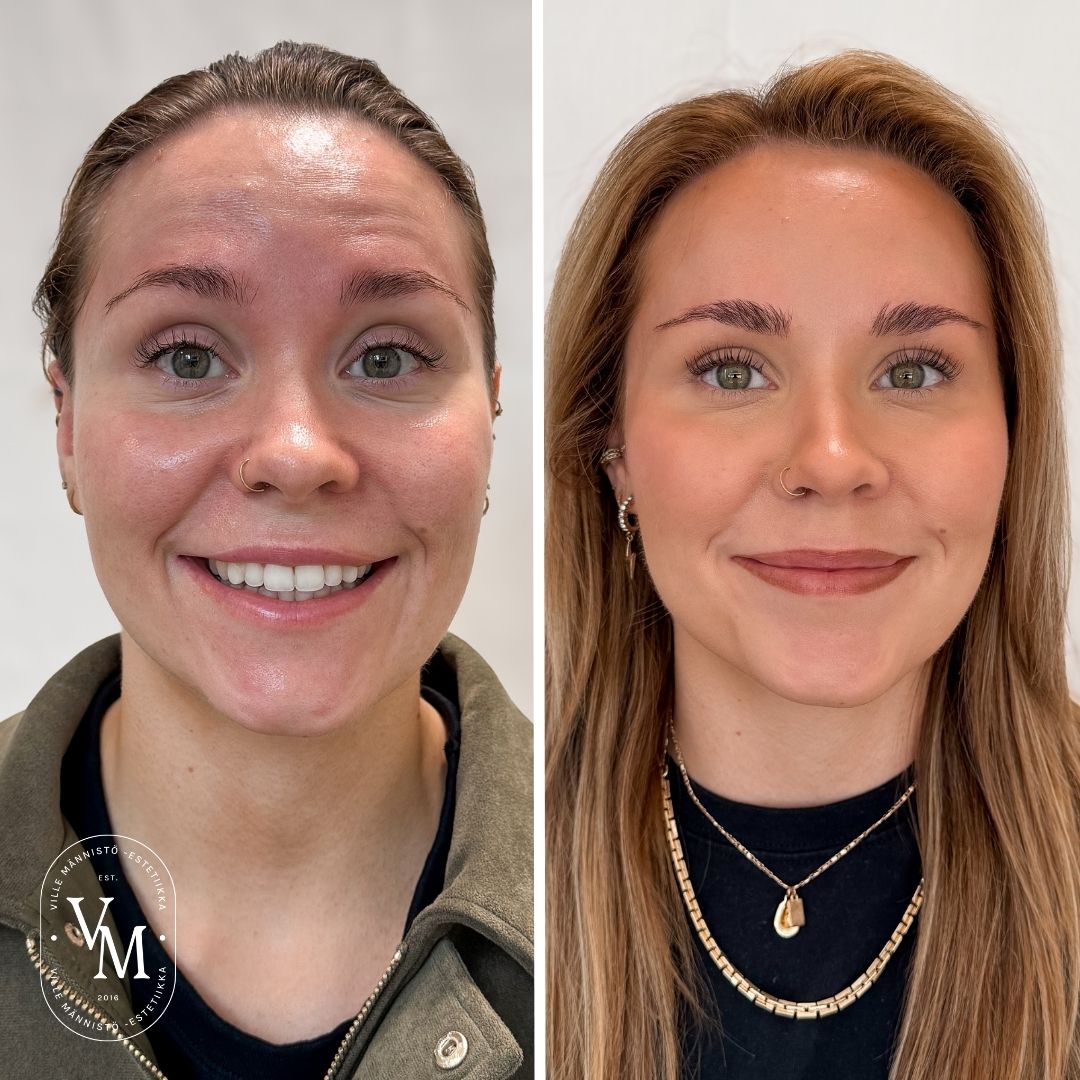
To treat bruxism, Botox is injected into the jaw muscles
For Ronja, bruxism has also caused migraine attacks.
Bruxism (teeth grinding) and other disorders of the masticatory system are common problems.
According to estimates, as many as about half of the population experiences symptoms of bruxism from time to time. About 10% suffer from significant symptoms.
Botox treatment for the jaw muscles is highly effective for bruxism. The procedure is tailored to each individual based on facial muscle function and the patient’s symptoms.
This treatment is suitable for a surprisingly large number of people, but not quite everyone. Ultimately, the decision to undergo Botox treatment is made by a dentist who is certified to perform medical botulinum toxin treatments.

Bruxism is the grinding of teeth
Bruxism refers to involuntary and repetitive grinding and clenching movements. These occur either during sleep (nocturnal bruxism) or while awake (wakeful bruxism). Both sleep-related and wakeful bruxism can cause similar unpleasant symptoms.
Bruxism places particular strain on the masticatory muscles (the masseter muscles at the corners of the mouth and the temporalis muscles at the temples). Constant grinding often causes pain in the facial area, headaches, fatigue, and many other related symptoms.
Many people are unaware that they suffer from bruxism until they notice the related problems it causes.
(Ville Männistö)

Botulinum toxin treatment of the masticatory muscles is surprisingly effective at reducing bruxism. The goal of the treatment is not to completely eliminate teeth grinding, but to reduce muscle strain and the associated symptoms of bruxism: headaches, facial pain, jaw stiffness, daytime fatigue, and tooth damage.
If bruxism is left untreated, the tendency to grind one's teeth and its associated symptoms may worsen.
Sometimes nocturnal bruxism is not diagnosed until a dental exam, when the dentist notices damage to the teeth caused by grinding.
(Ville Männistö)
Your eligibility for botulinum toxin treatment will be assessed during your appointment. A dentist will evaluate your eligibility for the treatment. Read more about treatment options for bruxism.
How Botulinum Toxin Treatment Affects the Masticatory Muscles
Bruxism, or teeth grinding, places particular strain on the masseter muscles. In cases of chronic bruxism, muscle activity increases significantly.
Botox treatment reduces the activity of the masticatory muscles in a controlled manner. As tension in the masticatory muscles decreases, so do the strain on the jaws and the unpleasant symptoms caused by the activity of these muscles.
In the jaw muscles, botulinum toxin treatment works the same way as it does in other muscles: it relaxes the muscles and reduces their excessive activity.
(Ville Männistö)
Botox does not eliminate the various causes of teeth grinding, but it significantly reduces bruxism and its associated symptoms.

Botox for the Jaw Muscles – A Procedure Worth Considering
Teeth grinding, jaw clenching, and tension in the chewing muscles affect daily life more than many people realize. Most often, teeth grinding bothers people at night, but some of us grind our teeth—or bruxism —even while awake. Nighttime teeth grinding often goes unnoticed and undiagnosed, whereas daytime bruxism is much easier to detect.
If left untreated for a long time, teeth grinding can cause facial pain, persistent, vague headaches, daytime fatigue, and tooth wear—and even chipped teeth. For this reason, teeth grinding should be treated.
Botulinum toxin treatment—more commonly known as Botox —can, in some cases, be an effective and safe way to alleviate and interrupt bruxism. However, it is important to remember that treatment for bruxism almost always begins with a bite splint.
If you have a teeth-grinding problem, you should first consult a dentist who can identify and recognize all the symptoms of bruxism and the available treatment options.
I perform botulinum toxin treatments for teeth grinding every day at all of my clinics. In addition, I train doctors and dentists in the use of botulinum toxin to treat occlusal problems. I am currently working on my doctoral dissertation, which focuses, among other things, on botulinum toxin treatments for the masticatory muscles.
(Ville Männistö)
The chewing muscles relax, but they do not become paralyzed
Botox safely and effectively reduces the overactivity of the jaw muscles. Small, precisely targeted doses of Botox are used to treat bruxism. In some cases, the muscles of the base of the skull and the neck and shoulder area may also be treated.
Botox relaxes the jaw muscles. As the muscles' biting force weakens, the symptoms of bruxism also subside.

Botox treatment does not completely paralyze the jaw. Eating, speaking, and other functions remain normal.
Botulinum toxin treatment for bruxism is not the only medical use for botulinum toxin. Botulinum toxin is also used to treat migraines, excessive sweating, and various neurological conditions.
Here's how botulinum toxin treatment for the masticatory muscles works
Botulinum toxin treatment for the masticatory muscles is a quick but meticulous procedure. Safety considerations and an individualized assessment play a key role.
A typical treatment process proceeds as follows:
- Assessment. The patient’s condition and symptoms are assessed. The function of the masticatory muscles is examined, and the size and activity of the masseter muscles are evaluated. The condition of the teeth is also taken into account.
- Treatment Decision. If botulinum toxin treatment is an appropriate option, the next steps are to plan the injection regimen, draw up a treatment plan, and administer the treatment.
- Procedure. Botulinum toxin is injected in small, targeted doses primarily into the masticatory muscles: the masseter and temporalis muscles. The injection phase usually takes only a few minutes.
- Follow-up. We will go over the aftercare instructions, and a follow-up visit can be scheduled if necessary.
Botox treatment is not suitable for everyone who grinds their teeth; rather, it is used as a carefully considered part of a comprehensive treatment plan for bruxism.
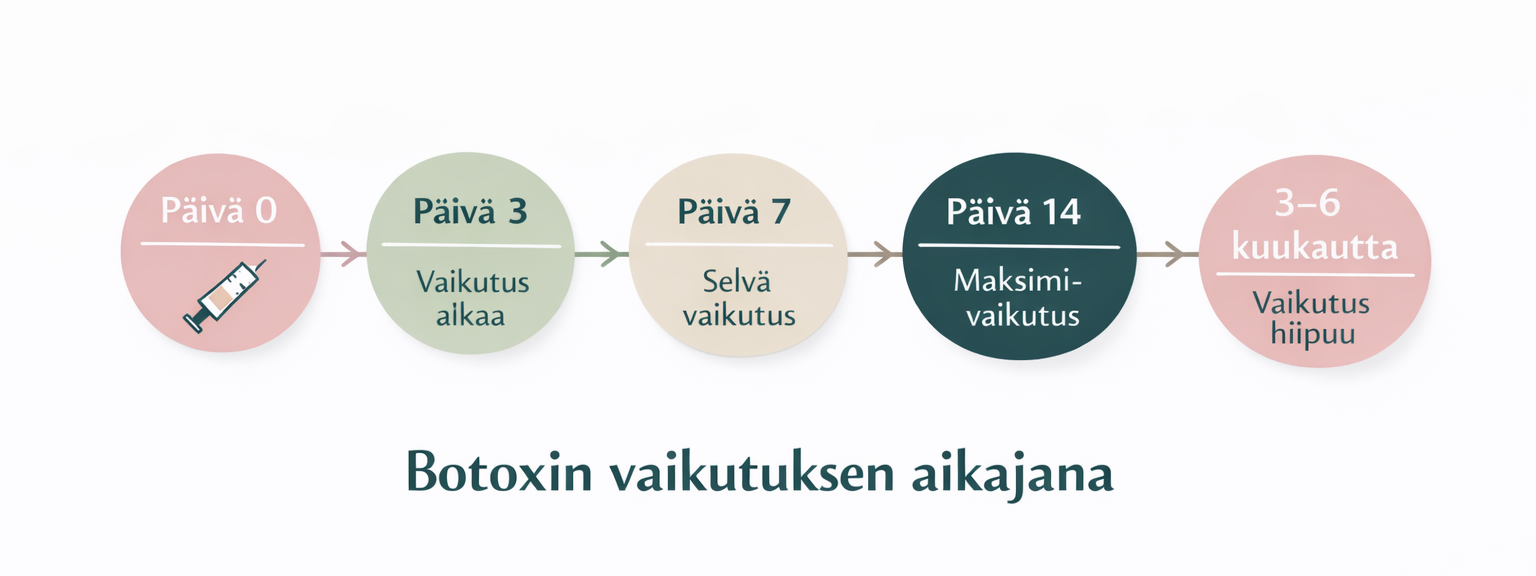
The effects of Botox treatment usually begin within a few days and peak after about two weeks. The effects of the treatment typically last for about 3 to 6 months.
In addition to bite splints and Botox, comprehensive treatment may also include massage of the masticatory muscles or self-guided stretching and relaxation exercises.
The price of Botox treatment for the masseter muscles starts at 290 euros
The cost of Botox treatment for bruxism at VM Aesthetics 290 to 690 euros. The final price depends on the following factors:
- Does the patient purchase the botulinum toxin medication themselves, or is the clinic’s medication used?
- Is the patient eligible for a botulinum toxin medication covered by Kela?
- How extensive is the treatment?
Price at VM Aesthetics
- €290 – treatment using the patient's own medication
- €490–520 – prescription medication, standard treatment
- €690 – clinic-grade medication, comprehensive medical botulinum toxin treatment
Kela reimbursement
In most cases, botulinum toxin is a medication covered by Kela. If your bruxism is accompanied by headaches and our doctor determines that botulinum toxin treatment is medically justified, the medication can be prescribed. In this case, the cost of the medication is 40% lower than it would be without Kela coverage.
Once the Kela annual prescription drug limit is reached, the patient pays only €2.50 per prescription for botulinum toxin medication.
The diagnosis and prescription will be provided by Dr. Laura Juopperi. You can contact me regarding the prescription, for example, by filling out the contact form.
(Ville Männistö)
Botox Treatment for Bruxism: Mechanism of Action
Botulinum toxin acts at the neuromuscular junction by blocking the release of the neurotransmitter acetylcholine from the nerve ending.
When a nerve impulse does not activate the muscle as strongly as before, the muscle contraction weakens and the constant tension in the masticatory muscles decreases.
This mechanism of action of botulinum toxin is utilized in the treatment of bruxism with botulinum toxin.

Botox for bruxism relaxes the jaw muscles
Botox treatment affects nerve transmission in the muscles, which is visible and felt as relaxation of the masticatory muscles. In some cases, it has been reported that muscle relaxation may continue to affect the function of the masticatory muscles even after the effects of Botox have worn off, but this is quite rare.
Of course, botulinum toxin does not eliminate the underlying causes of bruxism, such as stress.
The response to treatment varies from person to person, and it is impossible to predict the response before the first botulinum toxin treatment. Many people experience significant relief from Botox treatment, but for some, the results are disappointingly minimal.
In most cases, maintaining the results of Botox treatment requires follow-up treatments 2–3 times a year. In the best-case scenarios, after a few botulinum toxin treatments, the jaw muscles seem to “forget” their tendency to clench. However, this is extremely rare.
(Ville Männistö)
Botox for bruxism is a well-studied treatment
Botulinum toxin has been studied for the treatment of masticatory muscle pain and temporomandibular disorders (TMD). In several clinical studies, botulinum toxin treatment has been found to reduce masticatory muscle pain and muscle hyperactivity.
- In a clinical trial involving 149 patients, pain levels decreased on average from 8/10 to 3/10 on the VAS pain scale during a six-week follow-up period.
- Some studies have reported that botulinum toxin treatment also reduces the frequency of headaches and tenderness in the masticatory muscles.
However, the research evidence is somewhat mixed, and everyone responds to botulinum toxin treatment at least somewhat differently.
I have participated in a study that examined the effects of botulinum toxin treatment on masticatory muscle-related temporomandibular disorders.
The study was published in the peer-reviewed *Journal of Craniofacial Surgery* and is available in the PubMed database:*Temporomandibular disorders and masticatory muscle dysfunction* – research article.
(Ville Männistö)
Although botulinum toxin is an unparalleled treatment for bruxism, it is worth noting that current treatment guidelines do not consider botulinum toxin injections to be the primary treatment for teeth grinding.
Bruxism is primarily managed using a bite splint and other conservative treatment methods. Botulinum toxin treatment for bruxism is not mentioned, for example, in the Current Care Guidelines.
Experiences with Botox for Bruxism
- Many patients report feeling more relaxed after botulinum toxin treatment: their headaches decrease, tenderness in the jaw muscles eases, and the quality of their sleep improves.
- Some patients also notice aesthetic changes: as the masticatory muscles relax, they may shrink in size and the lower face may take on a more streamlined appearance.
- Based on Ville’s clinical experience, botulinum toxin treatment is a significant help for some patients in managing the symptoms of bruxism.
Matilda's bruxism was cured with Botox
A car accident triggered Matilda's bruxism. Botox provided the solution.
“Botox injections have been a huge help to me. The symptoms caused by bruxism have decreased significantly.”
– Patient Feedback, Helsinki 2024
Read more about patient experiences
Bruxism – Botox for the Jaw Muscles – FAQ
What are the symptoms of bruxism?
The symptoms of bruxism range from mild jaw stiffness to severe pain in the masticatory muscles and recurrent headaches. In cases of prolonged bruxism, teeth grinding wears down the teeth and puts strain on the jaw joints.
Common symptoms of bruxism:
- headaches, especially in the morning
- pain in the face and temples
- jaw tension or tenderness
- jaw clicking, grinding, and other noises
- tooth wear or chipping
- in some cases, changes in the shape of the lower face (enlargement of the masseter muscle)

In cases of chronic bruxism, the strain can extend beyond the jaws and masticatory muscles to the neck and shoulder area. In such cases, the symptoms may become more complex and prolonged.
In chronic bruxism, the masticatory muscles are easily overloaded. This constant state of tension can affect other parts of the body as well—even the entire body—although symptoms are usually concentrated in the head area.
Constant teeth grinding can lead to hypertrophy (muscle growth) of the masseter muscles. This is evident as a more pronounced jawline and a wider lower facial contour.
(Ville Männistö)
Is Botox for bruxism the same as Botox for the masseter muscle?
In the treatment of bruxism, botulinum toxin is often injected into the masseter muscles at the corners of the mouth, among other areas. For this reason, the treatment is sometimes also referred to as “masseter Botox.”
When treating bruxism, Botox is injected not only into the masseter muscles but also into the temporalis muscles, which are located at the temples.
That's why Botox for bruxism is much more than just Botox for the masseter muscle.
How much does Botox treatment for bruxism cost?
The price of Botox treatment for bruxism at VM Aesthetics 290 euros when using the patient’s own medication. The price of treatment using the clinic’s medication is 490–520 euros, depending on the brand. The price of comprehensive medical botulinum toxin treatment is 690 euros.
Is botulinum toxin treatment for bruxism just a fad?
Bruxism is a more common condition than people realize. If left untreated, it can lead to serious problems that disrupt daily life and can be surprisingly expensive to treat.
Awareness of bruxism has led to an increase in the number of botulinum toxin treatments.
Since this involves addressing an actual health issue, I would approach the matter from the perspective of well-being rather than trends.
(Ville Männistö)
Temporomandibular disorders (TMD) are the most common causes of pain in the mouth and face after toothache. According to estimates, up to about half of the population experiences symptoms of temporomandibular disorders from time to time, and about 10% suffer from significant symptoms.
(Source: research literature on temporomandibular disorders)
Is Botox treatment for bruxism covered by Kela?
In some cases, yes. If bruxism is accompanied by headaches, for example, and a doctor determines that botulinum toxin treatment is medically justified, it can be prescribed. In this case, the price of the medication is 40% lower than without Kela reimbursement. Once the annual medication cap has been reached, the copayment for the medication is 2.50 euros.
Does Botox help with bruxism?
The injection usually feels like a slight pinch on the skin, but the actual pain is usually mild and short-lived. The procedure takes only a few minutes, and anesthesia is generally not needed. If necessary, an anesthetic cream can be used.
Does Botox for bruxism make the lower face look narrower?
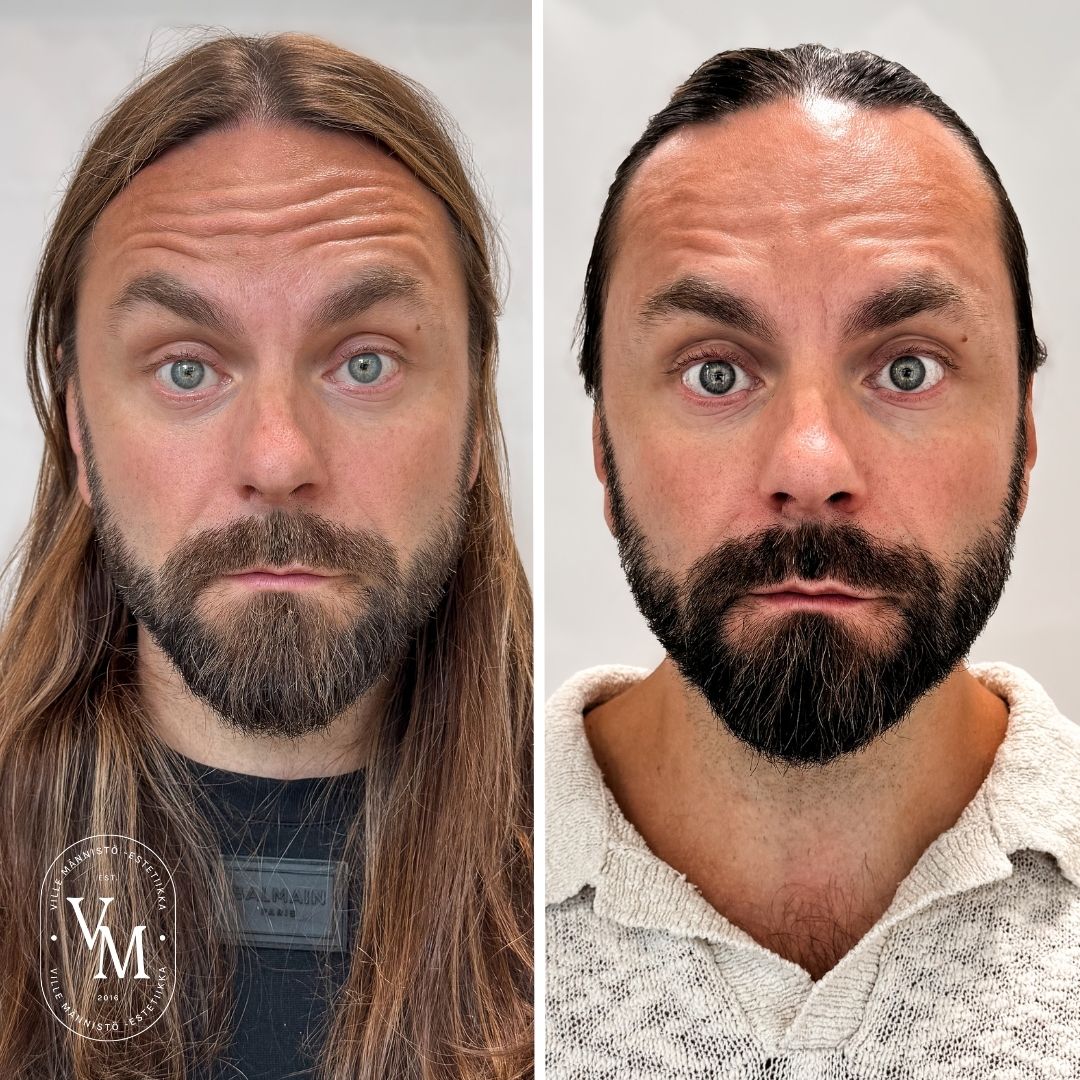
Bruxism often causes the outer chewing muscles—the masseters—to grow larger.
When the chewing muscles are constantly being exercised, they grow just like any other muscles. A dentist can spot a severe bruxist just by seeing the patient’s face as they walk through the door of the examination room. Well-developed masseter muscles make the lower face wider and more robust than normal.
At the very least, just by looking inside the mouth, a dentist can make the correct diagnosis, since the effects of teeth grinding are visible on the teeth, the tongue, and even the inner surfaces of the cheeks.
(Ville Männistö)
The masticatory muscles may shrink as a result of botulinum toxin treatment, as the load on them decreases and muscle activity declines.
Changes in muscle size occur because a muscle that has been in constant use loses some of its load and may, over time, atrophy slightly.
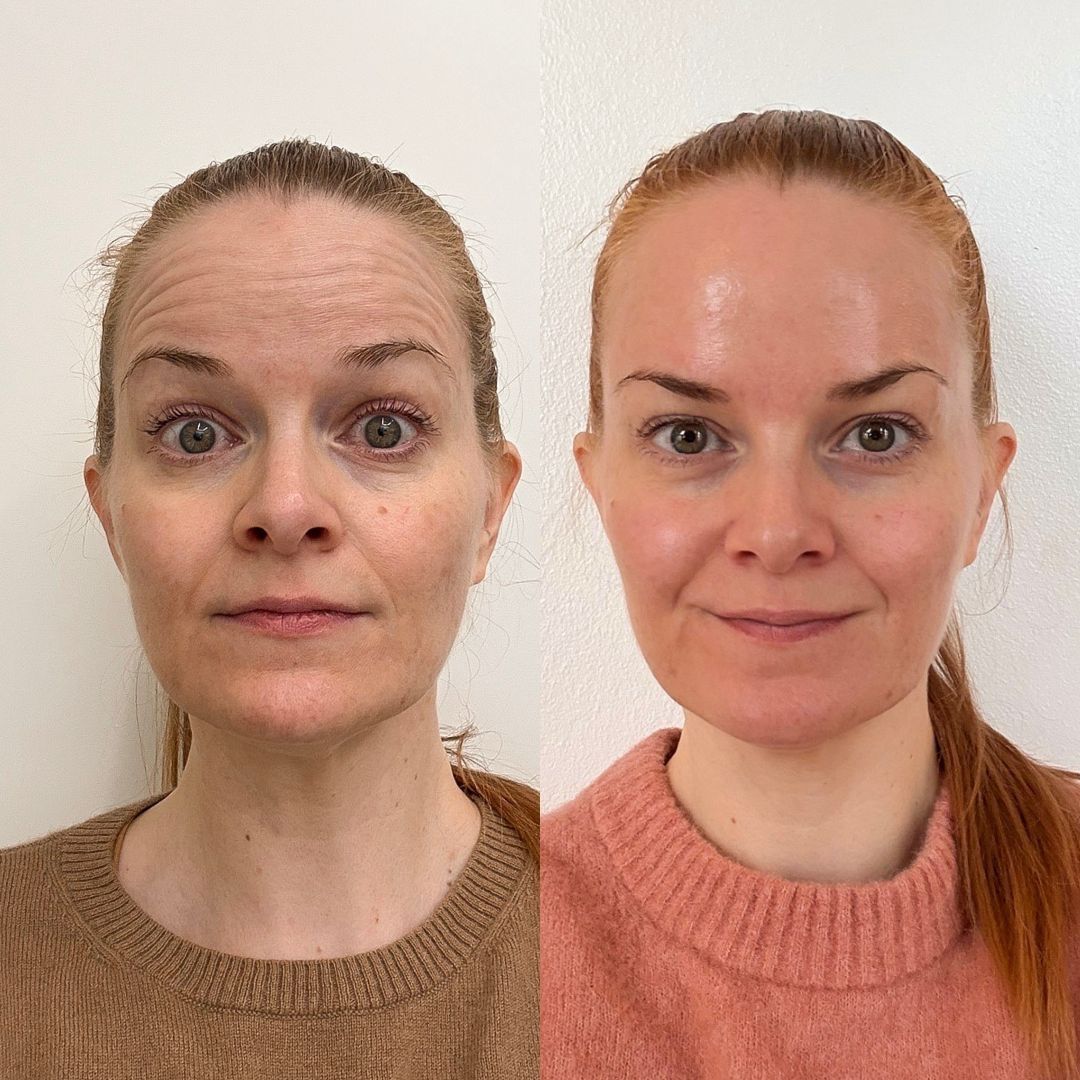
The effects of Botox treatment can be seen in the facial area. The result is not—nor is it intended to be—merely aesthetic. The greatest benefit of the treatment is that it reduces the constant tension, tightness, and pain experienced in daily life.
When do the effects of Botox treatment begin?
The effects of botulinum toxin (Botox) treatment are not immediate. Botulinum toxin blocks the release of acetylcholine at the neuromuscular junction, causing muscle contraction to gradually weaken.
How long does Botox affect the jaw muscles?
The effects of Botox treatment usually last about 3–6 months. The duration varies from person to person. In some cases, the tendency to grind one’s teeth can be eliminated permanently after just a few Botox treatments.
Can Botox replace a bite splint?
No. A bite splint is the primary treatment for bruxism. The splint protects the teeth from wear. Botulinum toxin treatment complements splint therapy by reducing overuse of the masticatory muscles and alleviating symptoms associated with bruxism, such as facial pain and headaches.
Is Botox treatment safe?
Botox treatment is generally considered safe when performed by a trained doctor or dentist. However, the treatment is not suitable for everyone. Contrary to popular belief, the medical use of botulinum toxin is actually a fairly old invention. And that is why there is already a wealth of scientifically valid data on the long-term effects of botulinum toxin.
The side effects of Botox treatment are mild and temporary. If the injection is not administered correctly, it may affect facial muscle function or appearance. These issues are unpleasant but temporary.
Is botulinum toxin treatment guaranteed to work for bruxism?
Botulinum toxin treatment often reduces bruxism by reducing excessive activity in the jaw muscles.
The response to treatment varies from person to person, and the first Botox treatment should be viewed as a trial. Even the most experienced dentist cannot guarantee that Botox will definitely work.
What Is Severe Bruxism?
Severe bruxism refers to very intense and prolonged teeth grinding that causes damage to the teeth and jaw joints. The teeth may become worn down or, in the worst cases, even crack or chip.
In these situations, botulinum toxin treatment (Botox) can provide crucial relief by breaking the cycle of teeth grinding.
Why is the treatment of bruxism primarily the responsibility of a dentist?
Bruxism, or teeth grinding, is related to the functioning of the mouth and masticatory system. The dentist evaluates the condition of the teeth, bite, and masticatory muscles as a whole.
Since bruxism can cause tooth wear and other changes in the oral cavity, treatment is primarily based on a bite splint and other conservative methods. In some cases, botulinum toxin treatment can complement this approach. Botox is rarely the first-line treatment, and patients should not rely solely on botulinum toxin. A dentist understands bruxism as a condition and can design the most effective comprehensive treatment plan tailored to each individual.
(Ville Männistö)
Is Botox for bruxism mentioned in the Current Care Guidelines?
No, it isn't. Bruxism is primarily treated with a bite splint.
However, botulinum toxin treatment may be used for a valid reason if
- Overactive masticatory muscles cause pain and other symptoms that interfere with daily life
- Orthodontic treatment is not sufficient or appropriate for patients with bruxism
Together, the bite splint and Botox form a particularly effective treatment package:
- A bite splint protects teeth from wear
- Botox reduces teeth grinding
Botox for the jaw muscles—where can you get the treatment?
Botulinum toxin is used to treat bruxism at many healthcare facilities. Due to budget cuts, the number of botulinum toxin treatments in the public healthcare system has decreased. At private medical clinics, Botox for bruxism is a fairly common service.
I perform Botox treatments for the jaw muscles in Espoo, Vantaa, Tampere, Pori, and Forssa.
(Ville Männistö)
The safety and outcome of the treatment depend in particular on the practitioner’s experience, knowledge of anatomy, and injection technique.
What other medical Botox treatments are available?
In addition to bruxism, botulinum toxin is also used for, among other things,
- for the treatment of migraines
- to reduce excessive sweating
- for the treatment of white finger disease
Botulinum toxin treatments for migraine and bruxism share some of the same principles and injection sites. Although the mechanisms of action are not entirely the same, there are significant similarities in the practical implementation of the treatment.
An Oral and Maxillofacial Surgeon's Perspective on the Treatment of Teeth Grinding
Treating bruxism is important. Early treatment reduces tooth wear and other changes caused by stress on the masticatory system. Untreated bruxism can sometimes cause serious damage to the teeth. All dentists are certainly aware of this.
(Ville Männistö)
Botulinum toxin has been used to treat bruxism for quite some time, with very good results. Botox treatment is typically very well tolerated. However, the success of the treatment requires medical expertise, knowledge of facial anatomy, and experience with botulinum toxin treatments.
The masticatory muscles are located near other facial muscles whose function may be affected by botulinum toxin if the injection is administered in a suboptimal location. In such a situation, the treatment outcome may be less than optimal. In addition, side effects may also manifest in the appearance or even the function of the face.
Aesthetic changes in the facial area are often noticeable. That is why planning and administering Botox treatments require a solid understanding of anatomy and experience with facial muscle function, Ville emphasizes.
At the same time, it is important to remember that botulinum toxin treatment is generally considered a safe procedure. Serious complications are rare, and any aesthetic changes, such as facial asymmetry, are temporary. Even in the worst-case scenarios, side effects and aesthetically unsatisfactory treatment results last only a few months.
Studies show that
- Botulinum toxin reduces muscle activity at the neuromuscular junction
- Many studies have found that pain symptoms are alleviated
- Botulinum toxin treatment is rarely the first-line treatment for bruxism
- The response to botulinum toxin treatment varies from person to person