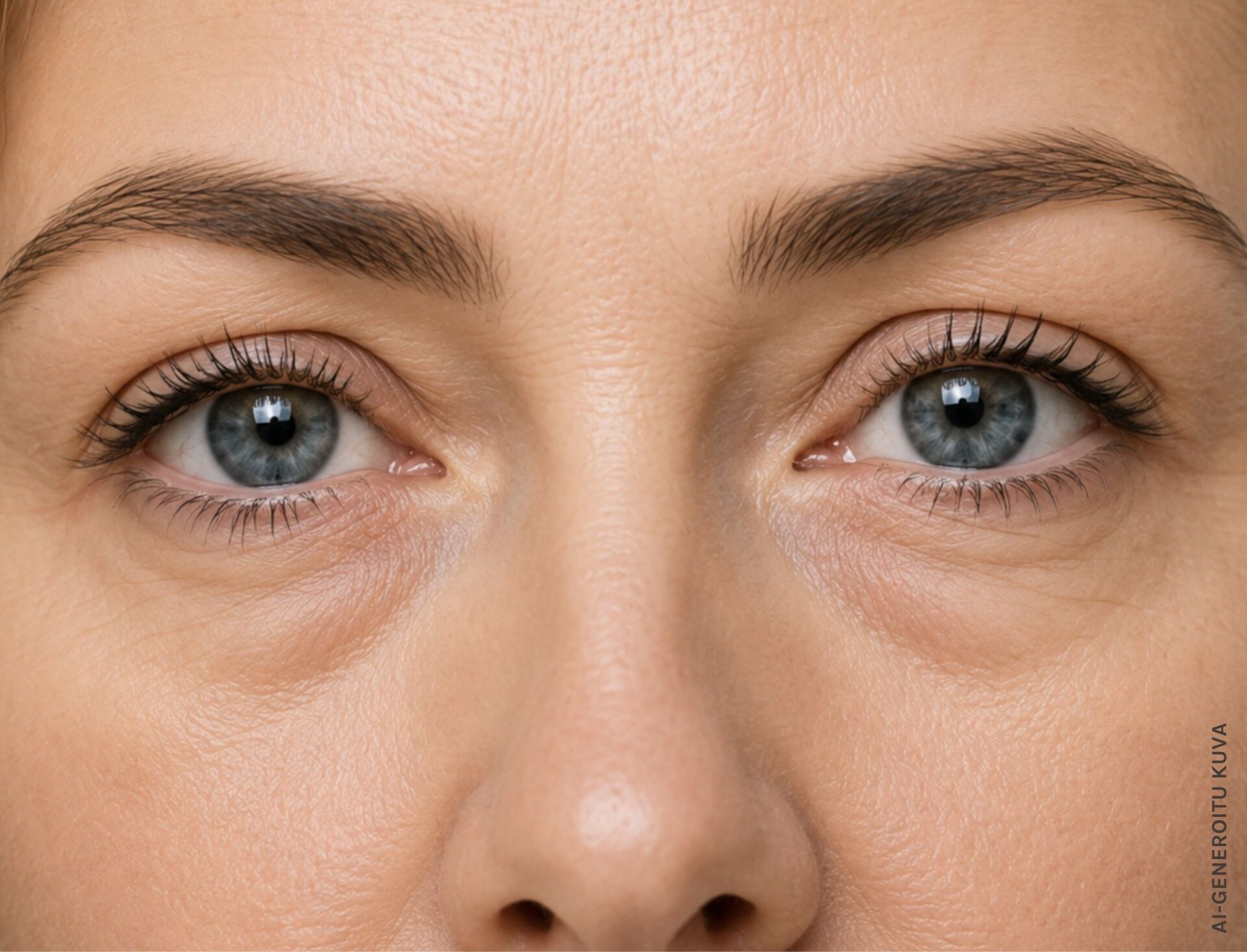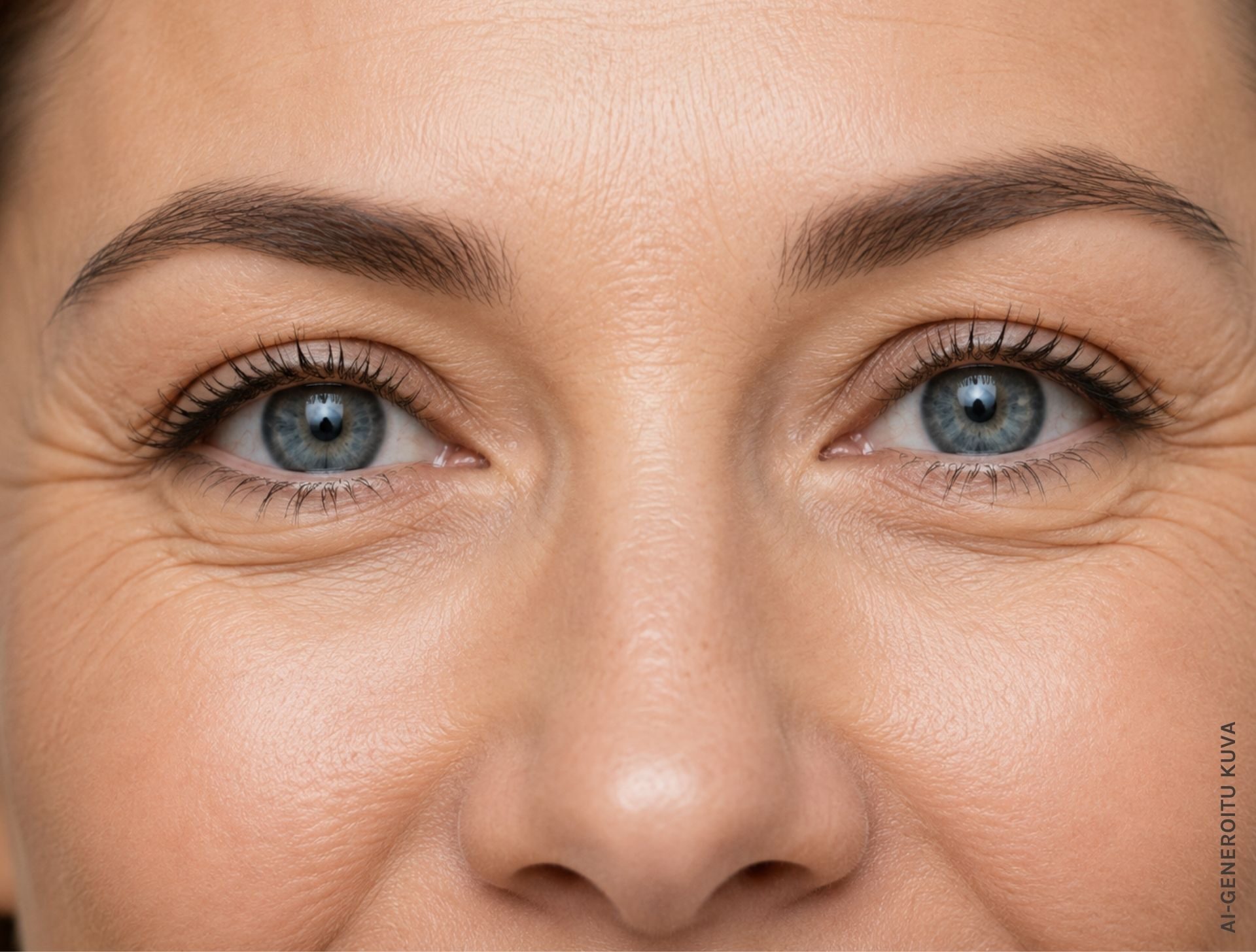
Dark circles under the eyes, eye bags, crow's feet—what can you do about them?

The area around the eyes reveals the inexorable passage of time. Perhaps your eyes look tired, even if you’ve slept well. Dark circles, puffy eyes, crow’s feet, and fine lines under the eyes are common reasons for seeking a consultation with an aesthetic nurse.

Treatments for the eye area have advanced at a rapid pace over the past two years. Right now is the perfect time to update not only the contents of your makeup bag but also your beliefs about aesthetic treatments for the skin around the eyes.

In this article, we'll explain what causes problems around the eyes, how you can prevent them, and what kinds of treatments are effective in different situations.

This article is based on an interview with nurse Essi Ojala.

Essi Ojala treats dark circles under the eyes, eye bags, and crow's feet

Many people talk about under-eye bags, even though the real issue is actually something else entirely. When we identify the real problem, we can also find targeted solutions to solve it.

At the clinic, the most important thing isn't to perform the trendiest eye treatment. The most important thing is to determine the cause of the problem.

Once the cause of an aesthetic problem is identified, the most effective treatment can also be determined.


Panda Eyes and Other Aesthetic Issues

eye bags, dark circles under the eyes, crow's feet

The area around the eyes is often the first place where signs of aging begin to appear.

  • Dark circles under the eyes can make your face look tired, even if you're getting plenty of sleep.
  • Under-eye bags and puffiness around the cheeks can alter the proportions of the face and make the eyes look heavy.
  • Crow's feet and wrinkles under the eyes are a sign of life's joyful moments. Still, many of us wish they were a little less noticeable.

Problems around the eyes aren't just caused by the skin

  • Aging affects skin cells, collagen, adipose tissue, muscles, and even the facial bones all at the same time.
  • That is why two eye-area problems that appear similar may require completely different treatments.
  • Good skincare keeps the skin around the eyes in good condition, but aesthetic treatments are needed for deeper signs of aging.

Sun exposure exacerbates all aesthetic problems. The delicate skin around the eyes, which is prone to damage, needs year-round sun protection. And, of course, when spring arrives, it’s time to break out the sunglasses.

Not everyone wants cosmetic treatments—and not everyone needs them either

Aging is a natural part of life, and there’s no need to hide crow’s feet or fine lines around the eyes unless they bother you personally.

If you constantly look tired and your reflection in the mirror doesn't match how you feel, you're welcome to visit Essi's office.

Free consultation

A Thousand and One Causes, a Thousand and One Consequences

The skin around the eyes ages faster than the rest of the face. The reason is simple: the skin around the eyes is thinner and more susceptible to damage than elsewhere on the body. In thin skin, even the slightest change becomes visible quickly and clearly.

Problems around the eyes are rarely caused by a single, specific factor. Most often, they result from the combined effects of multiple factors.

Reasons that explain aesthetic changes in the skin around the eyes:

  • aging
  • genetic makeup
  • allergies and sinus problems
  • monitoring
  • the sun's UV radiation
  • squinting and other repetitive facial expressions
  • smoking and heavy alcohol consumption
  • diseases

Dark circles under the eyes, eye bags, crow's feet, and the "jelly roll" effect are all problems affecting the same area of the skin. However, each problem is approached from a slightly different angle.

Sometimes the problem is a lack of volume—that is, a lack of fat—under the eyes. If this is the case, the treatment should restore volume to the area. Other times, the problem is thinning or dry skin around the eyes, in which case the treatment should strengthen and nourish the skin’s surface.

Treatments are always selected based on the individual's needs.

Essi Ojala

Dark circles under the eyes—why, oh why?

Polynucleotide Treatment Before and After: polynucleotides review
Dark circles under the eyes respond very well to polynucleotide therapy. (Essi Ojala)

Dark circles under the eyes are one of the most common cosmetic concerns. However, dark circles aren’t always caused by fatigue. The cause may lie in thin skin, blood vessels visible through the skin, increased pigmentation, bone structure, or even lifestyle factors.

  • Aging causes the skin around the eyes to thin. This thinning is due to a decrease in collagen, elastin, and hyaluronic acid. Blood vessels also show through the thinned skin more clearly than before.
  • Facial structure plays a big role. Deep eye sockets and tear troughs running from the inner corners of the eyes toward the cheeks cast shadows. And the furrows, hollows, and shadows create a dark appearance.
  • Genetics plays a significant role. Some people inherit thin skin around the eyes or stronger-than-usual pigmentation. Sometimes, the shape of the face and bone structure determined by genes can also accentuate the darkness under the eyes.
  • Allergies and sinus problems can cause dark circles under the eyes. Inflammation dilates blood vessels and slows blood flow, which can lead to the formation of so-called allergic dark circles under the eyes.
  • Pigment changes cause the skin to darken. UV radiation, skin inflammation, and repeated rubbing of the eyes can increase melanin production, particularly around the eyes.
  • Lifestyle habits are easily visible under the eyes. Lack of sleep, dehydration, excessive screen time, smoking, and alcohol can make the blood vessels more prominent and cause the area under the eyes to appear darker than before.
  • Sometimes an underlying medical condition may be the cause. For example , iron deficiency can sometimes manifest as darkening of the skin under the eyes. Blood with low oxygen levels is darker than normal, which is why it shows through easily under the thin skin around the eyes. Any changes—whether long-standing or sudden—should be evaluated by a healthcare professional.

Free, non-binding consultation

Dark circles under the eyes—what helps with them?

Treating dark circles under the eyes starts with an accurate diagnosis. If the dark circles are caused by pigmentation, the problem is treated in one way. However, when the dark circles are related to thin skin, visible blood vessels, or facial bone structure, the solutions are quite different.

  • Home Remedies. Eye creams containing caffeine, vitamin C, or hyaluronic acid can brighten the eyes and reduce dark circles. Getting enough sleep, using sunscreen, staying well-hydrated, and sleeping with your head elevated all support the health of the eye area.
  • Microneedling. When performed as a series of treatments, microneedling stimulates the skin’s own production of collagen and elastin. As collagen and elastin levels increase, the skin around the eyes becomes firmer and brighter.
  • Mesotherapy. The active ingredients administered to the area around the eyes moisturize the skin and can also support collagen production and brighten a tired appearance.
  • Polynucleotides. Polynucleotide treatments support skin regeneration and collagen formation. Polynucleotides are suitable for dark circles under the eyes, especially when the darkening is caused by thinning of the skin.
  • Profhilo. The brand-new Profhilo protocol has been developed, among other things, to treat dark circles under the eyes. Profhilo’s honey-like, widely diffusing hyaluronic acid brightens dark circles under the eyes without adding excessive volume.
  • Laser treatments and chemical peels. These can also help with dark circles under the eyes when the darkening is due to the exceptional translucency of thin skin.
  • Filler treatment, or tear trough filling. Tear trough filling can reduce the darkening caused by structural shadows in carefully selected patients. However, tear trough filling is not the primary solution for everyone.
    “In many cases, collagen-stimulating treatments that improve skin condition produce a more natural, beautiful, and long-lasting result than tear trough fillers,”, notes Ville Männistö.

Mesotherapy and polynucleotide treatments achieve much the same results, but in very different ways. Polynucleotides work to rebuild and strengthen the skin. Skinko e mesotherapy nourishes aging skin.

Sometimes a client benefits from a series of treatments in which these treatments are alternated.

Essi Ojala

Book a free online consultation with Essi

Tear Trough Fillers in Espoo: Before and After Results
The number of filler treatments for tear troughs has decreased. Nevertheless, filler treatments still have their place in modern aesthetic medicine.
Dark circles under the eyes, tear trough filler
This illustration of the tear ducts was drawn by Ville Männistö more than five years ago.

Are you interested in aesthetic treatments for the skin around the eyes
?

Book an appointment for a free, no-obligation consultation with nurse Essi Ojala. If you'd like, you can also start with a video consultation.

Book an appointmentPhoto consultation

Dark circles under my eyes—where did these come from?

Eye bags are also a common reason for visiting Dr. Essi’s office. Eye bags can develop, for example, as a result of aging, genetics, fluid retention, or the weakening of the supportive structures around the eyes. Sometimes it’s just morning puffiness after a salty dinner; other times, it’s a permanent anatomical change.

  • Aging weakens the supportive structures around the eyes. As collagen and elastin decrease, the skin loses its firmness, and the fatty tissue that fills the eye sockets may protrude more noticeably under the lower eyelid.
  • Genetics play a role. Sometimes under-eye bags are already written into your genetic makeup.
  • Fluid tends to accumulate easily under the eyes. High intake of salt and alcohol, hormonal fluctuations, or sleeping on your stomach can lead to swelling and puffiness under the eyes.
  • Allergies can also cause swelling around the eyes. Histamine increases the permeability of blood vessels. Fluid leaks from these permeable vessels into the surrounding tissues. Constantly rubbing itchy eyes also makes the swelling worse.
  • Lifestyle choices show up under the eyes—for better or for worse. Smoking, UV radiation, constant stress, and lack of sleep weaken the skin. Neglected skin loses its firmness permanently much faster than well-cared-for skin.
  • Eye bags can also be a symptom of an underlying medical condition. Prolonged, severe, or unilateral swelling may be associated with, for example, thyroid dysfunction, a skin condition, or kidney disease.

dark circles under the eyes

Get Rid of Under-Eye Bags with Home Remedies

Mild under-eye bags can be alleviated at home, especially if they are caused by fluid buildup or temporary swelling. Home care cannot eliminate permanent under-eye bags associated with aging.

  • Cold therapy. Cool gel masks, cold spoons, or cool tea bags constrict blood vessels and quickly reduce swelling.
  • Eye creams. Products containing retinol, peptides, hyaluronic acid, or caffeine can strengthen the skin and reduce the appearance of puffiness with long-term use.
  • Sleep with your head slightly elevated. An extra pillow helps reduce fluid buildup in your lower eyelids overnight.
  • Pay attention to your lifestyle. Getting enough sleep, moderating your salt intake, avoiding alcohol—especially in the evenings—and not smoking all help boost the well-being of the area around your eyes.
  • Don't forget sunscreen. UV radiation accelerates collagen breakdown and is guaranteed to speed up aging around the eyes.

Get Rid of Under-Eye Bags with Cosmetic Treatments

In aesthetic medicine, the goal is not merely to conceal under-eye bags but to rejuvenate the skin around the eyes. Treatments that improve the condition and appearance of the skin also boost fluid circulation, thereby reducing under-eye puffiness.

  • Microneedling activates collagen and elastin production, stimulates fluid drainage, and strengthens the delicate skin around the eyes.
  • Mesotherapy. Moisturizing and collagen-stimulating mesotherapy solutions can strengthen the skin and reduce puffiness and early signs of sagging.
  • Polynucleotides promote skin renewal, fluid circulation, and collagen formation.

Surgically removing eye bags

What if the bags under your eyes are caused by excess skin or fat?

"If the bags under the eyes are significant, injections may not provide sufficient relief; instead, lower eyelid surgery is needed," Essi explains.

Malar Bags

malar bags: eye bags on the cheeks

Malar bags are a different condition than the usual under-eye bags. The problem with eye bags visible on the cheeks is not limited to the skin or fatty tissue; fluid accumulates in the cheek area as the supporting framework that holds the tissues together weakens. This is why eye bags on the cheeks are a challenging area to treat.

  • Lymphatic circulation can be supported. Gentle lymphatic massage, adequate hydration, and reducing salt intake can help relieve mild swelling.
  • With targeted and properly selected laser treatment, it is possible to tighten the skin and melt away small deposits of fat without surgery.
  • It's best to avoid filler treatments. Hyaluronic acid binds water to itself and further accentuates the "malar bags" problem.
  • Even a standard lower eyelid surgery may not necessarily solve the problem. Standard blepharoplasty targets the bags under the lower eyelids and does not correct the bags at the temples.
  • In severe cases, a midface lift may help.

Magpie's toes are memories of happy moments

chickweed

Crow's feet are expression lines that form at the outer corners of the eyes. Many people find them charming, as they are a sign of laughter, joy, and a life well-lived.

What causes corns?

  • Aging is associated with a decrease in hyaluronic acid, collagen, and elastin. A decrease in hyaluronic acid leads to dryness and thinning of the skin; a decrease in collagen leads to sagging; and a decrease in elastin leads to a loss of elasticity. As the skin dries out and loses its firmness and elasticity, temporary expression lines become permanent wrinkles.
  • Smiling, laughing, and squinting affect the thin skin around the eyes. The muscles around the eyes contract thousands of times a day. Over time, these repetitive movements cause permanent wrinkles to form in the skin.
  • The sun accelerates skin aging. UV radiation breaks down collagen and significantly speeds up the formation of crow's feet.
  • Lifestyle choices matter. Smoking, lack of sleep, and neglecting your skincare routine accelerate premature aging of the skin.
  • Genetics also play a role. Skin thickness and elasticity, as well as the timing of age-related changes, are part of our individual genetic code.

Prevent and Treat Warts

You don’t need to treat crow’s feet unless they bother you. If you want to reduce the laugh lines at the corners of your eyes, your options range from home remedies to cosmetic treatments. However, the goal isn’t to erase the signs of a smile.

  • Protect your skin from the sun. Using sunscreen daily and wearing sunglasses helps prevent both UV damage and constant squinting.
  • Focus on active ingredients. Look for skincare products that contain retinol, peptides, and hyaluronic acid.
  • Make the right choices in your daily life. Staying well-hydrated, not smoking, getting enough sleep, and maintaining healthy eating habits can reduce strain on the area around your eyes.
  • Botox, Botox, and Botox. Botox treatment relaxes the muscle that causes crow’s feet, which softens expression lines and slows the formation of new wrinkles.
  • Microneedling and laser treatments. These procedures stimulate collagen production and strengthen the delicate skin around the eyes.
  • Filler treatment for the temples. If you’re bothered by crow’s feet and the entire temple area is sunken, you should consider filler treatment.

Botox Espoo Corns

Are you interested in aesthetic treatments for the skin around the eyes
?

Book an appointment for a free, no-obligation consultation with nurse Essi Ojala. If you'd like, you can also start with a video consultation.

Book an appointmentPhoto consultation

Wrinkles under the eyes

The skin on the lower lip is the thinnest area of skin on the entire body, so it loses its elasticity sooner than other areas of skin. As collagen and elastin levels decrease, superficial expression lines gradually turn into permanent wrinkles. This process is accelerated in particular by UV radiation, dry skin, repetitive facial expressions, and smoking.

  • Take preventive measures early. Daily sun protection, sunglasses, and not smoking help slow down the aging of the skin around the eyes.
  • Focus on hydration. Eye creams containing hyaluronic acid, peptides, and retinol can strengthen the skin and soften fine lines with long-term use.
  • Take care of your skin's well-being. Adequate hydration and gentle skincare help keep the skin around your eyes more supple.
  • Aesthetic treatments. Microneedling, polynucleotides, mesotherapy, laser treatments, and—in carefully selected cases—botulinum toxin treatments can improve the condition and appearance of the skin and reduce wrinkles around the eyes. In some cases, the best solution is tear trough filler.
Wrinkles under the eyes - Profhilo
The latest treatment protocol for Profhilo is suitable for reducing under-eye wrinkles. As a treatment, Profhilo carries fewer risks than tear trough fillers. The results are excellent. (Essi Ojala)
Botox price: 270 euros
Botox smooths out not only crow's feet but also the wrinkles under the eyes to some extent. This Botox treatment was performed by Ville Männistö.

Jelly Roll Botox

A "jelly roll " refers to the small bulge that forms under the lower lip when smiling. A jelly roll is caused by a strong contraction of theorbicularis oculi muscle around the eye. Some people find a jelly roll charming. If the bulge is bothersome, it can in some cases be reduced with a small amount of botulinum toxin.

  • Jelly roll Botox is an off-label treatment. In this procedure, a very small amount of botulinum toxin is injected into the orbicularis oris muscle of the lower lip.
  • The dosage is very small. Typically, only 2–4 units of botulinum toxin are used per eye.
  • The effects are visible quickly. Results begin to appear within a few days, peak after about two weeks, and generally last from 6 weeks to 3 months.
  • The success of the treatment depends on proper patient selection. Jelly Roll Botox is suitable for people whose bulging is caused by excessive activity of the orbicularis oculi muscle, rather than by fatty tissue or fluid buildup.
  • This treatment requires special care. The area around the eyes is anatomically sensitive. An excessive dose or an injection in the wrong spot can cause, for example, temporary drooping of the eyelid.

Free photo consultation

Free consultation with Ville Männistö at VM Aesthetics

VM Aesthetics Espoo
Cookie Settings

This website uses cookies to provide the best possible user experience. Cookies are stored in your browser and help us recognise you when you return to the site. They also help us understand which parts of the website you find most useful and relevant.