
Botox Treatment for Excessive Sweating—Does It Work?
Botulinum toxin blocks the nerve signals that activate the sweat glands, resulting in a significant reduction in sweating. The results of the treatment last an average of 4–9 months.
Botox treatment for excessive sweating is suitable for people whose sweating interferes with their daily life, work, or leisure activities and who have not found sufficient relief from antiperspirants or other conservative treatments.
Sweating usually begins to decrease within a few days, and the final treatment results are assessed after about two weeks.
Botulinum toxin does not address the underlying cause of excessive sweating. The effect is temporary, so treatment is usually repeated 1–3 times a year.
Excessive sweating is not caused by poor physical condition or nervousness
Excessive sweating, or hyperhidrosis, refers to a condition in which sweating is significantly more profuse than is necessary for the body’s temperature regulation. The most common form of excessive sweating is primary hyperhidrosis, which has no identifiable underlying medical cause. Secondary hyperhidrosis, on the other hand, is caused by factors such as medication or another underlying medical condition.
Although excessive sweating is a fairly common condition, there are still many misconceptions about it: it is not caused by poor physical condition, nervousness, or poor hygiene.
Excessive sweating makes daily life considerably more difficult for many people. Sweating can cause problems at work and in social situations. Often, excessive sweating significantly reduces one’s overall quality of life.
Ville Männistö

What does excessive sweating mean?
Excessive sweating, or hyperhidrosis, refers to abnormally heavy sweating that exceeds the body’s normal need for thermoregulation. In other words, sweating occurs in greater amounts than the body needs to maintain a comfortable temperature. Excessive sweating can occur, for example, in the armpits, on the palms, on the soles of the feet, on the face, or on the head. Excessive sweating can significantly interfere with daily life, even if the person is completely healthy.
- Primary hyperhidrosis. The most common form of hyperhidrosis. It often begins in adolescence, and no specific underlying medical condition can be identified as the cause. It is believed to be caused by the nervous system stimulating the sweat glands more intensely than usual. The condition often runs in families.
- Secondary hyperhidrosis. Hyperhidrosis can be caused by a medical condition, medication, or hormonal changes. In such cases, the most important thing is to identify and treat the underlying cause.
- It’s not a matter of poor hygiene. Excessive sweating is not caused by being dirty, being overweight, or being in poor physical condition. Nor does nervousness explain most cases of excessive sweating, although stress can make the symptoms worse.
- The effects can be surprisingly significant. Sweaty armpits, damp palms, or slippery soles can make it difficult to work, participate in hobbies, and navigate social situations.
Excessive sweating is a common but often overlooked condition. The good news is that there are now several effective treatments available. Botulinum toxin treatment is one of the most well-studied and effective options.
How common is excessive sweating?
Excessive sweating is a much more common condition than many people realize. According to recent population studies, approximately 4.8% of the population suffers from primary hyperhidrosis. This means that about one in twenty people suffers from excessive sweating without any underlying medical condition.
In Finland, this amounts to roughly more than 250,000 people, according to Ville Männistö.
Symptoms of excessive sweating usually begin during adolescence or early adulthood.
Excessive sweating tends to run in families. Research findings indicate a significant genetic predisposition.
Excessive sweating, however, remains an underdiagnosed condition. According to studies, only about half of those suffering from excessive sweating seek medical attention, even though the symptoms can impair quality of life just as much as many of the best-known skin conditions, such as acne, psoriasis, or atopic dermatitis.
Primary and Secondary Hyperhidrosis
Doctors classify excessive sweating into two main types: primary and secondary. It is important to distinguish between them, as treatment depends largely on the cause of the excessive sweating.
- Primary hyperhidrosis. Sweating usually begins in adolescence without any identifiable underlying medical condition. The symptoms are often symmetrical and occur primarily in the armpits, palms, soles of the feet, or on the face. The underlying causes are believed to be a genetic predisposition and overactivity of the nervous system that regulates the sweat glands.
- Secondary hyperhidrosis. Excessive sweating is caused by some other factor, such as a hormonal disorder, an infection, a neurological disorder, medication, or menopause. Sweating is often generalized and may also occur at night. In such cases, the most important thing is to identify and treat the underlying cause.
Primary hyperhidrosis is clearly more common than secondary hyperhidrosis. Secondary hyperhidrosis is often caused by an underlying medical condition or medication that requires treatment.
If excessive sweating begins suddenly in adulthood, affects the entire body, or is accompanied by other general symptoms, you should consult a doctor before starting any botulinum toxin treatment.
How does excessive sweating affect daily life?
Excessive sweating is a troublesome problem. Many people who suffer from hyperhidrosis have to change the way they dress, their work habits, and their social behavior because of their sweating.
- Visible sweat stains appear on the clothes.
- Shaking hands can feel awkward.
- Moist palms make it harder to handle computers, tools, or sports equipment.
- Excessive sweating of the feet can increase the risk of blisters, unpleasant odors, and slipping.
- You may need to change your clothes several times a day.
- People even start to avoid social situations, public appearances, or light-colored clothing.
Many people experience constant anxiety and fear that others will notice their sweating.
How does Botox help with excessive sweating?
Botox treatment is one of the most effective and well-researched solutions for localized excessive sweating. The treatment does not affect the sweat glands themselves but blocks the release of the neurotransmitter acetylcholine. When the release of acetylcholine is blocked, the sweat glands do not receive the signal to produce sweat.
Botox significantly reduces sweating but does not interfere with the body's normal temperature regulation, since the treatment area contains only a small portion of the body's total sweat glands.
The effects of the treatment usually last for several months. Once the effects have worn off, the botulinum toxin treatment can be repeated.
Botulinum toxin blocks the nerve signal to the sweat gland
Sweat glands do not function on their own; instead, they wait for a signal from the nervous system to start producing sweat. Botulinum toxin blocks this signal, causing the sweat gland to enter a sort of dormant state.
Botox works like a light switch: when the switch is turned to the “off” position, the light is still there, but electricity no longer flows through it. Botox works in much the same way. It does not remove the sweat glands; it merely blocks the nerve signals that control them for a few months.
Ville Männistö
Botox does not interfere with the body's normal temperature regulation
Many people fear that Botox treatment for excessive sweating prevents the body from cooling down normally. However, that fear is unfounded, says Ville.
Botox affects only the treated area—such as the armpits—and not the sweat glands throughout the entire body. The body is still able to regulate its temperature normally, since only a fraction of the sweat glands have been treated.
Because of its localized effect, Botox treatment for excessive sweating is considered a safe and effective way to reduce sweating that interferes with daily life.
For which areas is Botox treatment for excessive sweating suitable?
Botulinum toxin is suitable for treating several areas of localized excessive sweating. In Finland, its official indication is excessive underarm sweating.
However, based on international research evidence, it can be concluded that Botox is suitable for treating excessive sweating in many other areas besides the underarms.
Ville Männistö
- Excessive underarm sweating. The most common and most extensively studied indication. The response to treatment is excellent, and the effects usually last for several months.
- Excessive sweating of the palms. Treatment can make it easier to shake hands, use a computer, and perform tasks that require precision. The injections are more painful than those in the armpits, so anesthesia may be used.
- Excessive sweating of the soles of the feet. Botox can reduce foot sweating and the associated practical problems, such as slipping, blisters, and unpleasant odors.
- Excessive sweating of the face and forehead. Treatment can reduce visible sweating—for example, on the forehead, along the hairline, and on the head—when the symptoms interfere with daily life or work.
The treatment area affects, among other things, the dosage, injection technique, and duration of treatment.
Excessive underarm sweating

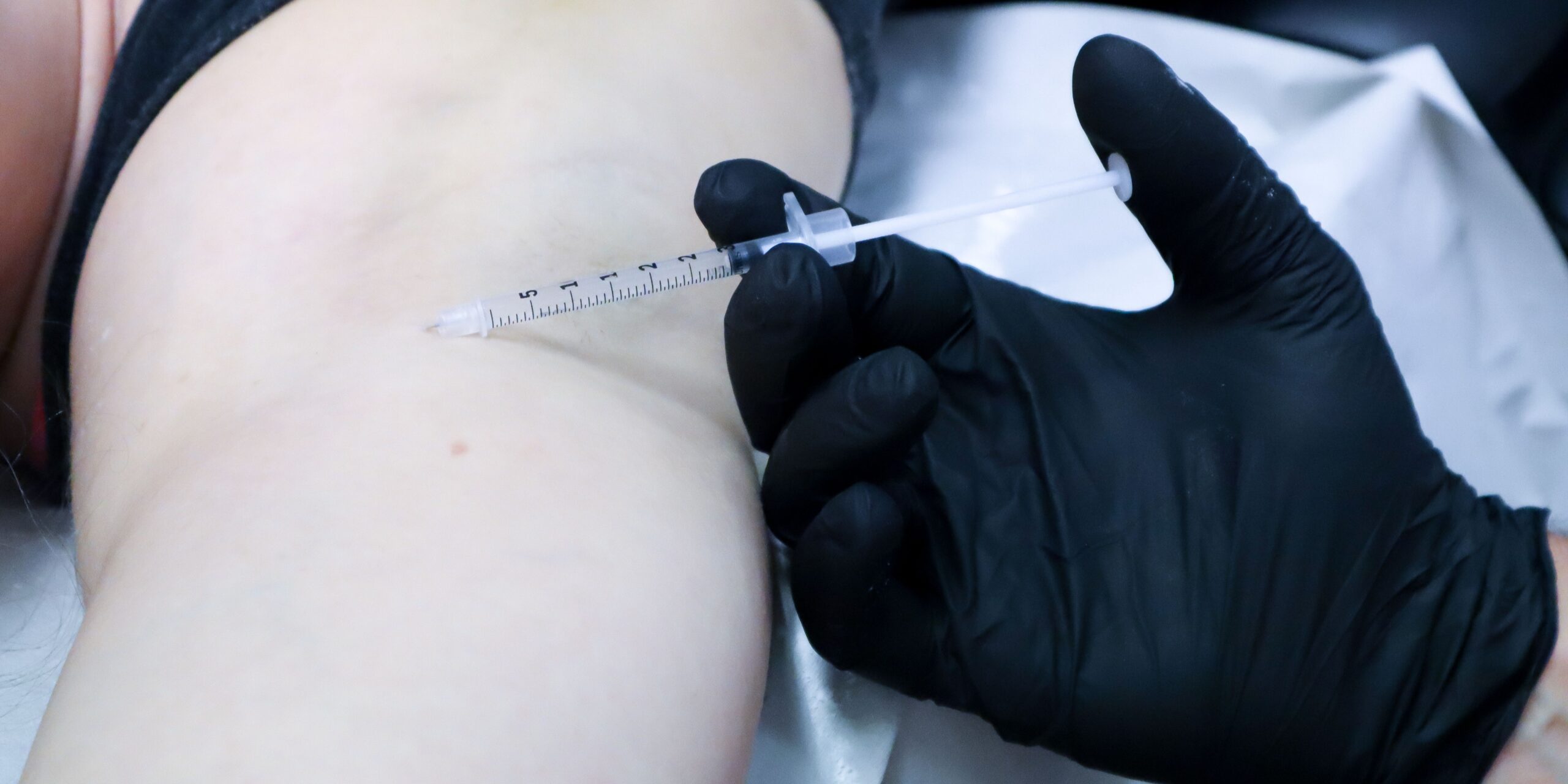
Excessive underarm sweating is the most common and most extensively studied indication for botulinum toxin. During treatment, botulinum toxin is injected in small doses into several sites in the underarm area. As a result of the treatment, the nerve signal to the sweat glands is blocked, and sweating is significantly reduced.
The effects begin within a few days and are at their best about two weeks after the procedure. The results usually last 4–9 months. After that, the treatment can be repeated.
Excessive sweating of the palms
Excessive sweating of the palms can interfere with a surprising number of everyday situations: shaking hands, using a computer, working with customers, and tasks that require precision.
Botulinum toxin is also effective at reducing sweating on the palms. However, Botox treatment for the palms is more painful than Botox treatment for the underarms. For this reason, it is often performed under local anesthesia. The effects typically begin within about a week and last for about six months.
Some patients may experience temporary muscle weakness in their hands, which is why the treatment should be performed at a clinic by an experienced professional, Ville points out.
Excessive sweating of the soles of the feet
Excessive sweating of the soles of the feet can cause chafing and unpleasant odors. It can make activities such as sports or long workdays uncomfortable.
Botulinum toxin can also significantly reduce sweating on the soles of the feet. However, due to the thick skin and dense nerve supply, the treatment is quite painful.
On the soles of the feet, the effects of Botox usually last 4–6 months.
Excessive sweating of the face and forehead
Excessive sweating on the face and forehead can be particularly embarrassing, since it's hard to hide facial sweat.
Treatment for sweating on the forehead, face, and hairline is typically performed using the Microbotox technique, in which botulinum toxin is administered in very small, superficial injections into the outer layer of the skin. The goal is to reduce sweating without affecting facial expressions.
When performed correctly, the treatment is effective and looks natural. The treatment requires the expertise of an experienced professional.
Here's How Botox Treatment for Excessive Sweating Is Performed
Botox treatment for excessive sweating is a quick outpatient procedure that usually takes about 20–30 minutes. Before the treatment, the doctor will confirm that the condition is localized excessive sweating and not, for example, caused by an underlying medical condition.
Consultation
During the consultation, we’ll discuss the nature of your symptoms, any underlying medical conditions, medications you’re taking, and previous treatments for excessive sweating. At the same time, we’ll assess whether botulinum toxin is appropriate for your specific situation.
Sometimes excessive sweating is a symptom of an underlying condition. In such cases, the underlying condition must be treated first, and only then should the symptom be addressed.
The potato starch test pinpoints the area of sweating

If necessary, the area of excessive sweating can be identified using an iodine-starch test, also known as the Minor test. The area to be treated is brushed with an iodine solution, after which potato starch is sprinkled on it.
The areas where you sweat the most turn dark. After the Minor test, the injections can be precisely targeted at these exact areas.
Marking of Injection Sites
Once the sweating area has been identified, injection sites are marked on the skin approximately 1–2 centimeters apart. This ensures that the botulinum toxin is distributed evenly throughout the entire treatment area.
Course of Treatment
Botulinum toxin is injected into the surface layer of the skin at several small injection sites using a very fine needle. After the treatment, you can usually return to work and your normal daily routine right away.
How many injections are given?
The number of injections depends on the size of the treatment area. About 10–20 injections are typically given per armpit. More injections are usually needed on the palms and soles of the feet.
Does the treatment hurt?
Most people describe Botox treatment in the armpits as feeling like little pinpricks. The palms of the hands and the soles of the feet are more sensitive than the armpits. For this reason, treatment of the palms and soles can be performed under local anesthesia.

When does Botox start to work, and how long do the results last?
The effects of Botox treatment for excessive sweating usually begin to appear within a few days. The final results of the treatment can be assessed after about two weeks.
Sweating usually remains minimal for 4–9 months, depending on the individual’s response. When sweating gradually begins to return, treatment can be safely repeated. For most people, 1–3 treatment sessions per year are sufficient.
Initial Effects
Sweating usually begins to decrease within 2–7 days of treatment. The effect gradually increases. The results are at their peak and can be assessed about two weeks after the injection.
Duration of Treatment Outcome
The results of Botox treatment for excessive sweating typically last 4–9 months, after which sweating gradually returns to the treated area.
When is it a good idea to renew your treatment plan?
It is advisable to undergo repeat treatment when sweating begins to interfere with daily life or work again.
Is Botox treatment for excessive sweating safe?
Botulinum toxin has been used to treat excessive sweating for over 20 years. The efficacy and safety of Botox treatment have been evaluated in numerous randomized studies and international treatment guidelines. According to studies, Botox treatment for excessive sweating is safe when performed by a healthcare professional with knowledge of anatomy. Side effects are generally mild and temporary. Possible side effects are related to the needle pricks or, in rare cases, to the anatomy of the treated area.
Possible side effects
- Pain at the injection site. The most common side effect, which is usually mild and temporary.
- Minor bruising. Minor bruising may appear at the injection sites, but it usually goes away within a few days.
- Temporary muscle weakness. Particularly when treating the palms, some patients may notice a temporary decrease in grip strength or fine motor skills.
- Treatments for the head area. In the treatment of excessive sweating on the forehead, transient weakness of the forehead muscles may occur in very rare cases.
- Allergic reactions are extremely rare. Serious side effects are exceptional when treatment is administered properly.
Who should not undergo this treatment?
- During pregnancy or while breastfeeding.
- For individuals with a known hypersensitivity to botulinum toxin or the excipients in the product.
- If there is an active skin infection or inflammation at the injection site.
- For patients with neuromuscular disorders (such as myasthenia gravis or Lambert–Eaton syndrome) who have not been evaluated by a specialist.
- For patients whose excessive sweating is caused by an untreated underlying medical condition. The underlying medical condition requires medical evaluation before any botulinum toxin treatment can be administered.
What do studies say about Botox treatment for excessive sweating?
Botox treatment is one of the most thoroughly studied treatments for localized excessive sweating. Its efficacy, safety, and impact on quality of life have been evaluated in numerous randomized studies and international treatment guidelines.
Treatment Recommendations for Hyperhidrosis
- Botulinum toxin is one of the established treatment options recommended in international guidelines for the treatment of localized excessive sweating.
- In Finland, the official indication is excessive underarm sweating, but international guidelines also recommend botulinum toxin injections for severe excessive sweating of the palms, soles, and the face and scalp.
- Treatment is recommended especially when antiperspirants are not effective enough or when their side effects prevent their use.
Research Evidence
- Several randomized, placebo-controlled studies have shown that type A botulinum toxin effectively reduces sweating.
- The effects usually begin within a week and last an average of 4–10 months, depending on the area being treated.
- Repeated treatments have been shown to maintain their effectiveness without losing efficacy over time.
Experiences with Botox Treatment for Excessive Sweating
- The vast majority of patients experience a significant reduction in sweating as early as after the first treatment session.
- Studies have shown high patient satisfaction with the treatment of both underarm and palm hyperhidrosis.
- Many patients seek repeat treatments on a regular basis because they respond well to treatment.
Impact on Quality of Life
- Reducing excessive sweating makes everyday life, work, hobbies, and social situations easier.
- Studies have shown that botulinum toxin treatment has significantly improved the quality of life for patients suffering from excessive sweating.
- Many patients report that, after treatment, they are able to wear the clothes they want, shake hands naturally, and participate in social situations with greater confidence than before.
Botox treatment for excessive sweating costs 290–690 euros
at VM Aesthetics , the price for a Botox treatment at VM Aesthetics is 690 €. This price includes a consultation with a doctor, the procedure itself, and the botulinum toxin required for the treatment.
If the botulinum toxin treatment is performed using the patient's own medication, the cost of the treatment is 290 €.
Extensive research evidence shows that when treating excessive sweating, the effects of botulinum toxin last for several months. For most patients, 1–3 treatment sessions per year are sufficient.
What factors might affect the price?
- Areas to be treated. The underarms, palms, soles of the feet, and face require different injection techniques.
- The amount of botulinum toxin used. The required dose varies from person to person depending on the severity of sweating and the area being treated.
- The complexity of the procedure. For example, treatments on the palms and soles of the feet are technically more challenging and may require anesthesia.
Is the treatment covered by Kela?
Kela may reimburse 40 percent of the cost of botulinum toxin prescribed for the treatment of excessive sweating (hyperhidrosis). The medication is eligible for Kela reimbursement only if a doctor has made an appropriate diagnosis and prescribed the medication.
Any reimbursement from Kela applies to the medication, not the procedure itself.
Frequently Asked Questions About Botox Treatment for Excessive Sweating
Can sweating spread to other parts of the body?
Not usually. Botox treatment for excessive sweating affects only the treated area. In some patients, sweating may seem to have increased in other parts of the body. However, this so-called compensatory sweating is extremely rare following botulinum toxin treatment.
Does Botox prevent all sweating?
No. The goal of the treatment is to significantly reduce excessive sweating, not to eliminate all sweating. The body’s normal temperature regulation is maintained, as the sweat glands outside the treated areas function normally.
Can I use deodorant as usual?
Yes, you can. Once the injection sites have healed, you can use deodorant and antiperspirant as usual. However, many people find that they no longer need strong antiperspirants as much as they did before treatment.
Can I exercise after Botox treatment for excessive sweating?
You can resume light daily exercise immediately. However, it is best to avoid strenuous exercise, saunas, and hot baths for the first 24 hours to allow the botulinum toxin time to bind to the treated area.
How much does Botox treatment for excessive sweating cost?
A medical botulinum toxin treatment using the patient's own medication costs290 € at VM Aesthetics .
At other times , the price of Botox treatment for excessive sweating is €690.
This price includes a consultation, the procedure, the botulinum toxin needed for treatment, and a follow-up visit scheduled a few weeks later.
Does Kela cover Botox treatment for excessive sweating?
Kela may reimburse part of the cost of botulinum toxin prescribed for the treatment of severe hyperhidrosis, provided that a doctor has made the diagnosis and prescribed the medication. Any reimbursement applies to the medication itself, not the injection treatment.
Can Botox for excessive sweating be administered at the same time as cosmetic Botox?
Yes, you can. Medical treatments for excessive sweating and cosmetic Botox treatments can—and should—be performed during the same appointment. In that case, the price for cosmetic Botox treatment is 100 € per area.
The total dose is always tailored to the individual.
How many times a year is the treatment performed?
For most people, 1–3 treatment sessions per year are sufficient. Treatment is repeated when sweating begins to return and the symptoms start to interfere with daily life again.
Can the treatment lose its effectiveness?
In the vast majority of patients, botulinum toxin remains effective even with long-term use. A decline in treatment response is rare, and the formation of potential neutralizing antibodies is exceptional in the treatment of hyperhidrosis.
Summary
Botox treatment for excessive sweating is suitable for people whose sweating interferes with their daily life, work, or social situations.
Botulinum toxin effectively reduces sweating for several months without disrupting the body's normal temperature regulation.
If antiperspirants are no longer enough or excessive sweating is affecting your quality of life, you can contact a doctor at VM-estetiikka. The contact form can be found at the bottom of this page.
Author of the article
Ville Männistö is an oral and maxillofacial surgeon specializing in aesthetic medicine who performs both aesthetic and medical botulinum toxin treatments on a daily basis. He trains healthcare professionals in the safe and effective use of botulinum toxin.
In addition to his clinical work, Ville is conducting research for his dissertation. One of the sub-studies in his dissertation focuses on botulinum toxin treatments. Combining clinical work and research helps ensure that VM-Aesthetics’ treatments are based on up-to-date research evidence and best practices.
This article is based on international treatment guidelines, systematic reviews, and peer-reviewed research evidence*.
Based on current knowledge, type A botulinum toxin is one of the most thoroughly studied treatments for localized hyperhidrosis. The research evidence is particularly strong for underarm hyperhidrosis. Convincing research evidence has also been accumulated regarding the treatment of excessive sweating of the palms, soles, and face.
* Sources
- International Hyperhidrosis Society.
https://www.sweathelp.org/ - American Academy of Dermatology (AAD). Hyperhidrosis: Diagnosis and Treatment.
https://www.aad.org/public/diseases/a-z/hyperhidrosis-treatment - International Hyperhidrosis Society. Botulinum toxin for hyperhidrosis.
https://www.sweathelp.org/hyperhidrosis-treatments/botox.html - Lowe NJ, Glaser DA, Eadie N, et al. Botulinum toxin type A in the treatment of primary axillary hyperhidrosis.
https://pubmed.ncbi.nlm.nih.gov/12963912/ - Solish N, Bertucci V, Dansereau A, et al. A Comprehensive Approach to the Recognition, Diagnosis, and Severity-Based Treatment of Focal Hyperhidrosis.
https://pmc.ncbi.nlm.nih.gov/articles/PMC7781989/ - Ylitalo, L. Excessive sweating. Duodecim. 2011;127(22):2437–2438.
https://www.duodecimlehti.fi/duo99864
